
Translated material
"The funniest now is true"
Interview of the writer Alexei Salnikov: About the play and the film "Petrova in the flu" and the new "Funny" novel
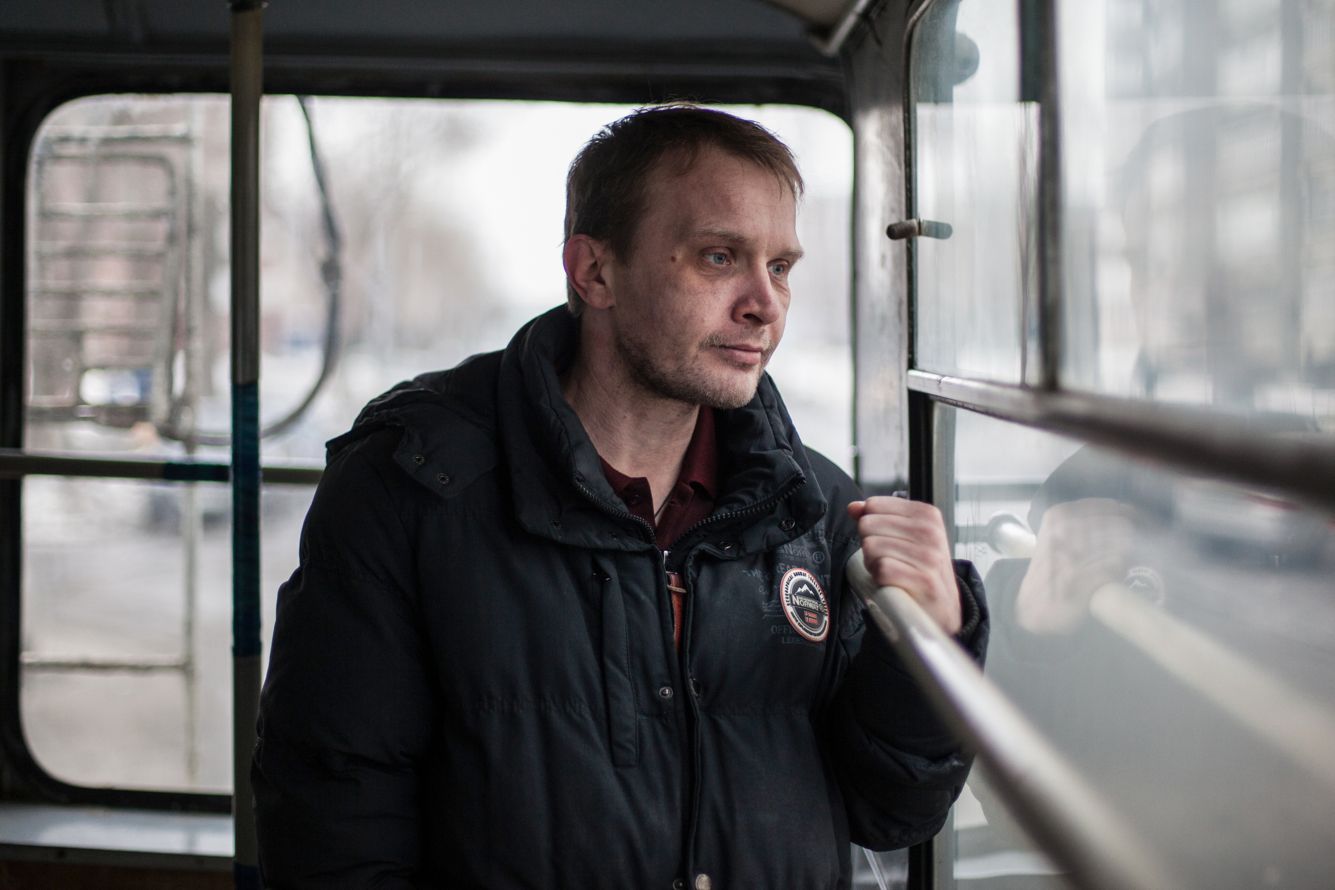
The bestseller of Alexei Salnikov “Petrovs in the flu and around him” - about the life of a simple Yekaterinburg family, on the eve of the New Year of the flu - in 2020 went far beyond the borders of bookstores. Director Anton Fedorov staged the performance of the same name in the Gogol Center, and Kirill Serebrennikov prepares a film adaptation with Chulpan Khamatova and Ivan Dorn. Salnikov himself in 2019 released the novel "Indirectly", and now works on a new book. Medusa learned from the writer how to make a funny book, which is his new novel about and how he himself evaluates the “Petrov” in the theater and cinema.
-The Gogol Center staged a performance according to your novel "Petrova in the flu and around it." What are your impressions of your first setting on your text?
- I did not even expect that I would get such a great pleasure, because I don’t really like the theater really. But in this case there was something amazing, incredible sight in itself. There, even the actors could not say anything, just move around the stage, such was an incredible scenography. Well, with the words an even greater effect turned out, in this production so many things were built on the voices: on a polyphonic chatter in transport, on the voice of the Snow Maiden ...
- And what is there, in her voice?
- There is such a real Ural dialect. We [in Yekaterinburg] sometimes talk on the outskirts of the city. I do not know how the director thought of eavesdropping him somewhere. Maybe our news watched.
On the stage there is a huge trolleybus arranged as a box, like a Christmas route, only huge. I was still surprised how the director would embody on stage all these small household details, which are described in the book. So this trolleybus is simply packed with everyday life - these carpets, which are nailed on the wall, completely output the life of the Petrovs, from walls to ceiling. And this trolleybus simply turns in the process of the play by different sides. I understand that this is a symbol of time. There, at the end of the performance, children, dressed by hares, leave to the present to become passengers of the trolleybus from the very beginning of the performance. Here is such an unexpected interpretation.
- You allowed the director to interpret your text as he wants?
- Yes.
- Where is such indifference to the fate of their text?
- Books write to get rid of all this, these images, thoughts. So this is not indifference, it is more likely curiosity, to watch how your text is comprehended by an outsider - this is no less interesting than the spelling itself. And to look at the play, set with one hundred percent accuracy in the text, it would be boring, people do not go to the theater after all, but for interpretation. Not just a whole festival is dedicated to the Chekhov play “The Seagull”, where different productions of one play show.
I don’t even know what I had to do so that I was outraged by the interpretation of the director, I am so tolerant of everything a person.
- Many screenwriters consider the original text to be sacred.
- I have an absolutely opposite opinion. What I put into the text, I myself know. I am always trying to look through the eyes of a person who himself did not read the text. In the play, for example, there is a wonderful scene where Petrov Jr. finds himself after an illness in the hands of Father Petrov, and other characters immediately melt them in different directions. That is, he began to grow up - and his growing up hesitated from his father; This is great, I didn’t even think about it. This interpretation came directly to me. It’s not even in the interpretation of the matter, but how much the director was attentive to the text. The smallest details were noticed, the duality of the characters was very well indicated: one actor played several characters, and for example, Petrova Jr. and Petrov Sr. played the twins in childhood. In the play, several characters are in conjunction of comparison with each other. Petrova and Snegurochka, a friend of Petrov, who succeeded. There is a certain tension between them in the book, for that they were created to interact with each other with the help of details.
Aida was two. Moreover, on the stage they were very similar people, but outside the stage it turned out that they were not at all like. And in general, the fact that children play in the play is for some reason pleasing, because the performance is an adult.
In fact, I wanted to quietly come to the performance and screw it quietly. But after I watched him, he could not restrain himself and immediately wrote to Kirill Serebrennikov that the performance was just a dump of the head. And the actors and director caught me at the exit, we talked very well. They told how it was interesting for them to make a scenic multiple - there, in the play, such an interesting cocked chatter at different noise levels appears in the performance.
- What does it symbolize?
- That absolutely always all conversations are repeated, the same.
- Actors were the way you imagined heroes?
- The wife of Petrov - there they chose such an interesting type, she is played by Yana Irtenieva. It is shown so cruel and at the same time a warmly loving person. Interestingly, she plays both Petrov’s wife and his mother. She somehow definitely fell into the image, but I do not need anything else. I was struck by the episode when she stands on stage with a broken nose. In my imagination, when I wrote it, it was very abstract, and when I saw her with this blood, smeared on my face, it was very struck by me.
The main character, actor Semyon Steinberg is an absolute hit. When I wrote a novel, I created the protagonist from friends and strangers, their words, manners, and himself, of course. All the same, in the imagination, these images were very blurry, this is not something specific. And here are real people, it's nice to see. I really liked that I saw them live, finally.
- Semyon Steinberg really looks like a book by Petrov - a sad, reflecting, poor, recognizable “little man”, causing sympathy and pity. The ideal Russian literary hero. And you also made it to the sick flu.
- When we get up in the morning and look in the mirror in order to shave and brush our teeth, we are all the same sad and unhappy on the fact that we got up early, and this does not depend on the social status or on the financial situation. Morning it is morning, an unpleasant time. This is not an advertisement for yogurt, where the sun shines and all the joyful jumps, no, in the morning all evil and sad. Here my character is in this morning state all day, because he has a middle -aged crisis, and even flu. I looked here “one day in ... Hollywood”, there the hero DiCaprio is also sad and desperate - everything leaves, everything is sad, a wonderful acting image, as if he were taken from Russian classics. In principle, all real heroes are.
- And who is your favorite literary hero?
- Ostap Bender. Here recently I also liked Dostoevsky in his own letters. He is also a literary hero there, in these letters, he still literally processes his life. He is some tired, tortured, firmly knowing that everything will end poorly. Previously, I was more intolerant of him, he loved his texts, but he believed that he was still a man, with his game addiction. He himself confirms her in letters repeatedly, but still he, being sick and terribly dependent, figured out his debts, helped the family of his deceased brother, helped the stepson. And quite hotly helped. And the worst thing is that his relatives did in the end is that his stepson was simply lost somewhere after the funeral of Dostoevsky, his fate is unknown. They just wiped him out of the story of a famous family. At the funeral, he was recently mentioned in passing, and then the void. Also a plot for a book or a film that would be said "this is how it does not happen."
- The film by Kirill Serebrennikov on Petrov is ready?
-The film has been shot, but preparation is underway, sounding, something like that. But the trailer was shown to me, this is great. The film turned out to be very comical, there is even a scene of the suicide of this Sergey - it is very funny. Or was it that I just laughed in joy that I saw my book on the screen. And very dynamic! I understand that this is a trailer, but there is so much cheerful running around. The disappearance of the corpse from the heat is very well played out, the maniary of Petrova is well visualized, I have more speculative text, and there are real scenes of murders and violence.
It seems to me that these two productions - the performance and the film - were made absolutely independently, as if two of them were distinguished from the “Petrovs”, divided into something very funny, cheerful crazy, and something filled with meanings and symbols.
I liked how to recently film Yana Wagner, her Wongozero, though in the series "Epidemia" her text was greatly shoveled. Well, this is understandable, otherwise it would be such an arthouse - they would have rode, sad, and have been in the car for a very long time in the car ...
- On the trailer was the feeling that the original text was greatly changed?
- Not so much. Well, I don’t have such an attitude as Stanislav Lem to Solyaris - it’s good for me and that. Yes, and the matter came to the cinema when I had already calmed down about the "Petrov", got rid of them, even wrote another novel. I no longer perceive this text as mine. I wrote it rather furiously, and sometimes the heroes there were acting on their own, contrary to my writer's intention. For example, Petrova was supposed to cut a person, but when I began to write this chapter, she took and did not. It happened so by chance, so the logic of the text worked.
Surprisingly, of course, that for two productions they chose this particular book, which is not filled with either a dialogue or action. Serebrennikov said that he just liked the book.
- What place in the book is your favorite? Which episode is still impossible to film and it remains only in the text?
- I liked to describe the first -aid kit of the Petrov family. In this description, the whole story of the family, it is so careful and long. I remember how I liked to describe it. It probably will not work to film it, well, no need to.
- When you wrote “indirectly”, your last fantastic novel about how the magic of poetry changes the world, they said that your writer's mission has been fulfilled. Are you satisfied with how you accepted it, how did you understand? Is there any feeling that he was underestimated?
- Yes, I had peace and complete peace, I realized that I did everything for what I live for, then the inertia should go. It seems to me that he was very appreciated, I did not expect at all that so many people would be read, and I no longer expected that so many people would understand him. Still, I have been engaged in poetry for many years, all my life I am surrounded by poets and people associated with poetry, this is a special closed world. And many are not familiar with this topic at all. How can you "misunderstand it"? This is a novel, a work of art, whoever wants to, so he understands him.
Now I want a new book to be funny on its own. Even when I wrote the “department”, I had this idea, I giggled. And so she grew up in a novel. There will appear an element of science fiction, pure science fiction, but not in the spirit of the Sorokinsky satire, but more with a more fun, such a description of the world of social networks through the prism of cultural studies. A fun book can be written in any condition, you can be sad and evil. It is one thing - your own state, and quite another - the state of the second person who invents all this. The protagonist of the new novel is a man under 50, 10-15 years older than me, that is, the nineties he lives much more fun than me.
- For some, the nineties are tragic time.
- Lord, but we have no time - everything is tragic. All the time some Savior should come to pull the country out of the pit, then, however, this Savior does not go away. My hero is not cheerful in itself, he becomes funny in context. And so he is comic with his seriousness.
- What is needed for the novel to be funny?
-It is worth remembering that the humor is different for everyone, and the novel will seem wildly ridiculous to someone, and for someone it will be black and hopeless, because the funniest now is true. You find it now (and you also need to look for it), express it and sometimes laugh yourself from surprise, and then you return at the editing and think: “What a longing, at least hang”. So here. There is no definite answer, as always.
-10 years ago you worked on your first novel “Department”, not even suspecting that someone would read it at all. Now your name is known, you have received prestigious literary awards, a performance has been staged, the film was shot by the famous director. How do you work now, has the approach and work itself changed? Is there a difference?
- No. You just write - and that’s it. You are also tormented when some phrases seem clumsy, you also drive something into the Wordfon, if something comes to your head in the middle of a walk, or a trip. As before the film adaptation and theatrical productions. Only calmness is more, because for now you know where you will send the manuscript. And then how it goes.
Now, working on this novel, I am happy to look at what has already been published, and I think - I can’t write like that. Of course, I like to write something new, and not move along the old rut. But I remain the same person, so some sores of the text will be in the new text too - all sorts of descriptions, all this, I can’t get rid of them, unfortunately.
The novel “Department”-it was written by itself, it is just an amazing phenomenon, the heroes acted, talked, committed some actions. After the New Year's booze, I opened the computer and with horror found that one of the heroes had already died - I did not remember how I wrote it. “Petrov” is such a box with all sorts of small things, I don’t have such a house, but still every trash lies along the shelves, moronic magnets hang on the refrigerator. I acquired the most idiotic in Kaliningrad-for some reason I bought a hefty magnet with the inscription "Kaliningrad", which does not hold on the refrigerator on its own only if it rests on other magnets. Or a plush mouse, which was given in a pharmacy for a purchase from two thousand. "Indirectly" is a feeling of completeness. I wrote what I wanted to write all my life, for which I was engaged in poetry. He is for his own and his own, and it is very expensive. As a photo album, which we do not have in the family.
Maria Lashcheva