
Translated material
Knight, priest, raven
Anton Dolin - memory of actor Max von Syudov
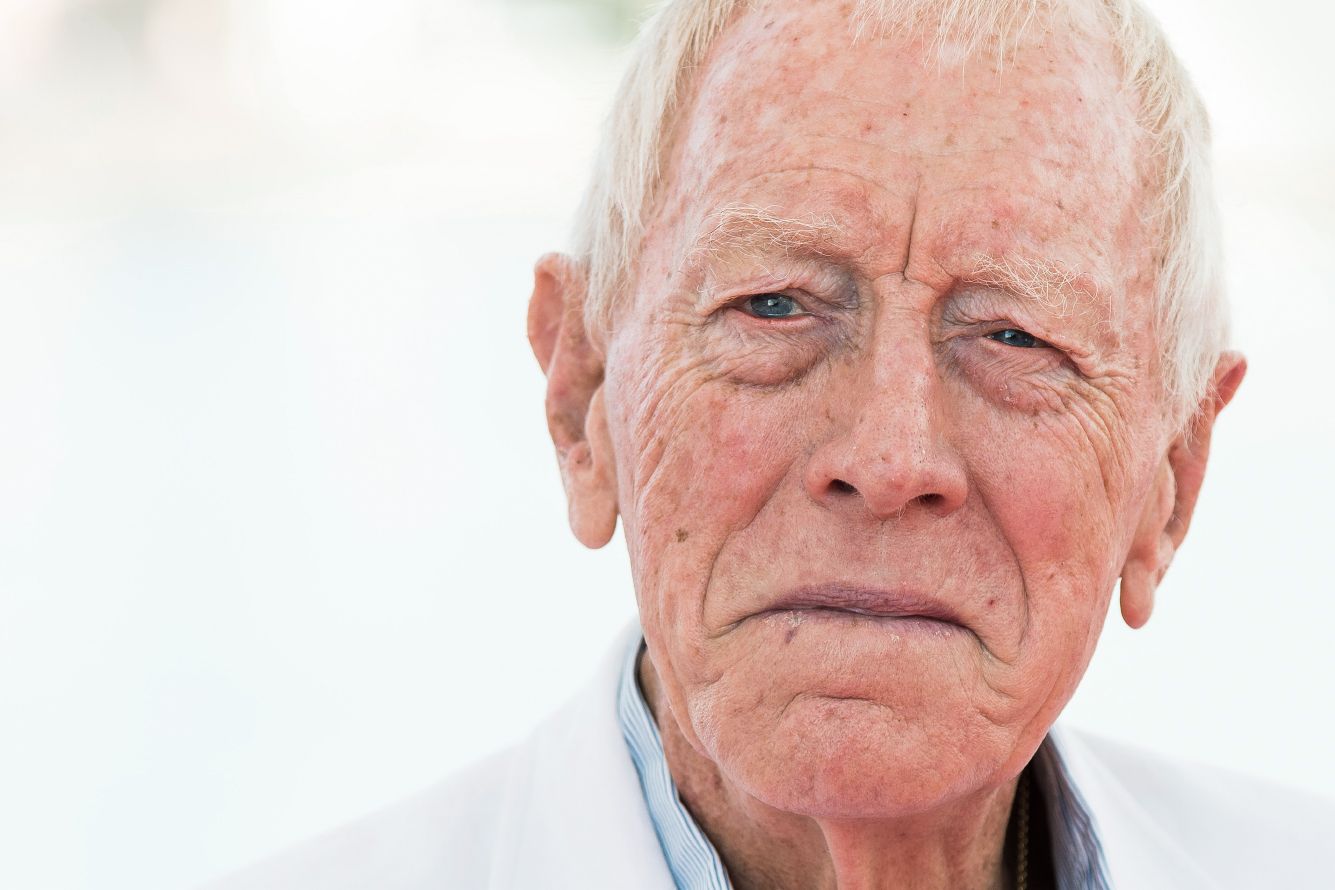
In France, at the age of 90, Max von Sudov died . The great actor, who is considered to be both fans of intellectual cinema of the 1960s and fans of the Game of Thrones, recalls film critic Anton Dolin.
Usually, when beloved artists die, we do not regret epithets for them. Everyone who was not indifferent to us is outstanding, or even great - there is no objective scale for such assessments. With Max von Sudov, everything is more complicated. He was not indifferent to millions of people for about sixty years, and there will be few any epithets for him. People comparable to him by meaning, world cinema in the whole story knew a little - maybe a dozen names will be gained, or maybe not. You can’t even say “the era” left: he managed to belong to too many eras in his 120 roles.
In order to realize the importance of Max von Syudov for cinema, it is enough to recall 11 roles in the paintings of Ingmar Bergman. Almost all are the main ones, some of them (at least in the “face” and “hour of the wolf”) self -portraits of the director. Bergman began to make a movie and even gained fame before he met Von Syudov. He also had a background - the young actor managed to play with the teacher of Bergman, director Alfa Sheberg, in the Frequena Julia (35 years old, and he will get the role of August Strindberg, the author of the legendary play). However, the star hour for both came at the same time: in 1957, the “seventh seal” and “strawberry glade”, still reckoned with Bergman’s masterpieces, were released almost simultaneously. The role of the knight of Antonius Blok in the first of these paintings (he starred in both) made the actor a name. It’s like the sculptural features of the face and a high awkward figure resembling a medieval wooden statue, his deep, quiet voice and piercing look, which he did not even look away in the face of his death, offering her a party in chess, were forever remembered by the audience.
Despite the expressive appearance, Bergman has always been different, his work never came down to types. The impenetrable hypnotist and magician Fogler in the “face”, a grief-murdered father of the Mr. In the “girlish source”, a broken and uncertain husband in “Through dull Glass”, a musician-player in the “shame”, torn by the internal demons of the artist in the “hour of the Wolf”. A series of these roles would be quite enough for a biography.
It still seems to be a tragedy of the collapse of the tandem - when Dyudov, thanks to the popularity of Bergman’s paintings, increasingly began to invite to act in the United States, and mutual cooling began. The last was the “Touch”-a film (by the way, shot in English), which Bergman himself considered a tragic failure. The director after that called Sudov in his last, according to the plan, the picture-he was supposed to play a sadist-episcop at Fanny and Alexander, but did not work out.
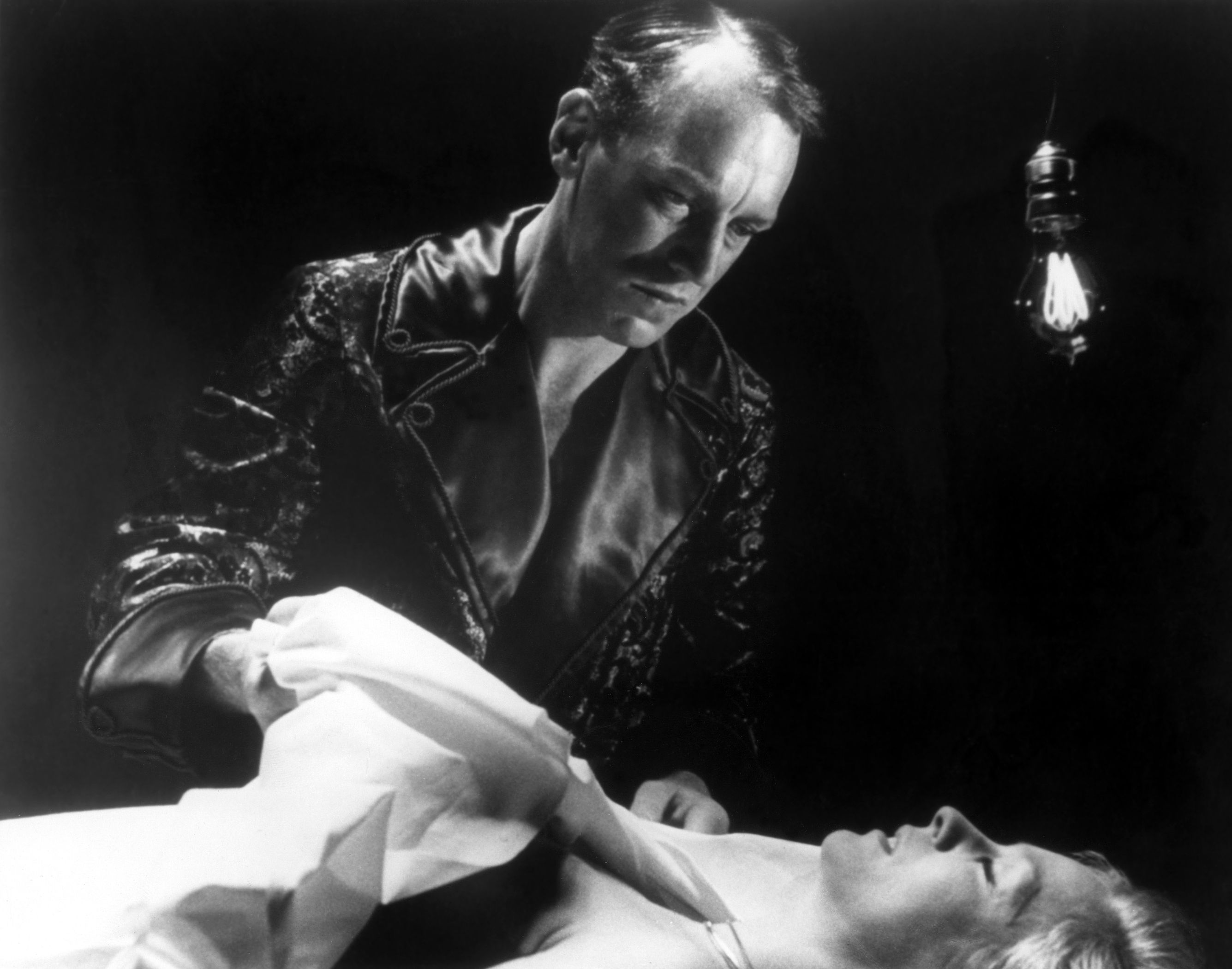
The opposition of the “early Max von Syudov” suggests itself-when he was a favorite of Bergman and almost played the role of Jesus Christ-and the late, Hollywood, which began with the same Christ: in the rabid, but overwhelmed by the stars “the greatest of the ever-told stories”, George Stevens. In fact, the artist as if deliberately sought expressive characteristic roles in purely genre cinema. It was so remembered to the broad masses. Michael Anderson (by the way, according to the script of Harold Pinter), played the juicy role of the leader of the gang of neo -Nazis, nicknamed October, in the spy “Kwiller's Memorandum”. Colonel Kosnova - in the Kitchev “letter from the Kremlin” by John Houston. Killer Zhuber - in the spectacular "three days of Condor" Sidney Pollak.
And how to forget the villain of all the villains - the head of the Spectrum organization Ernst Stavro Blofeld from “Never say“ never ”” - one of the most memorable films about agent 007? In general, his ominous European appearance was good for flat and frightening characters of the Cold War. But there were also monumental images that had nothing to do with the present-Ming ruthless in Flash Gordon, King Ozrik in Konan-Warvar, Judge Fargo in Judge Dredde.
From the height of his position, ignoring the imaginary break between the “high” and “low” genre, between art and entertainment, Max von Sudet was simultaneously starred among the best directors of the world - sometimes in their best films. The role, perhaps, brought him the greatest fame - Merrin's father in William Fridkin’s “Exploring Devil”, the key masterpiece of “New Hollywood”, which is still stably included in the lists of the most terrible horror in history. “Flight to victory” - from among the brilliant paintings of the aforementioned Houston. “Duet for the soloist” is not the most famous, but the subtle drama of Andrei Konchalovsky. “Dune” is damned by the author himself, but the invariably fascinating fantastic saga David Lynch. “Hannah and her sisters” is one of Woody Allen’s most original and deep paintings, which, as you know, was Bergmana considered a standard for himself. They were on the list of those who considered it important to work with Max von Sudov, and Ridley Scott, Martin Scorsese, Stephen Spielberg - and also, not least, Lars von Trier, who called the actor from the author in Europe. It was the voice of the hypnotist, introducing the hero - and at the same time, the viewer - into a state of trance.
At the same time, even ceasing to work with Bergman, Max von Sudov remained the messenger of the Swedish and - wider - Scandinavian cinema. In the early 1970s, the audience of Europe and America reveled in the epic dilogy of Yana Truel “Emigrants” and “Settlers”, which would be unrealistic without the acting feat of Sudov. And in the 1980s and 1990s, he played in two paintings by Bill August, each of which was awarded the Cannes “Golden Palm Branch”-“Pelle-Stewer” (his beloved role in it) and “good intentions”, according to the autobiographical prose of the same Bergman.
In addition to Christ and Strindberg, Max von Sudov managed to play Nizhinsky and Freud, the apostle Peter and Satan, Nansen and Gamsun, Tsar David and Yujin Omber. He had a special connection with Russia - from the professors of Serebryakov in the "Uncle Van" and Preobrazhensky in the "dog heart" to Alexander Bukhanovsky in "Citizen X" (O Chikatilo) and Admiral Petrenko in the recent Kursk, who became his last role.
The viewers of the new generation will remember him with a noble old man who refused to give the secrets of the Jedi to the first order in the seventh episode of Star Wars, and, of course, a three -eyed raven from the Game of Thrones, which we firmly knew: he will continue to live after death.
Anton Dolin