
Translated material
The name of the London patient
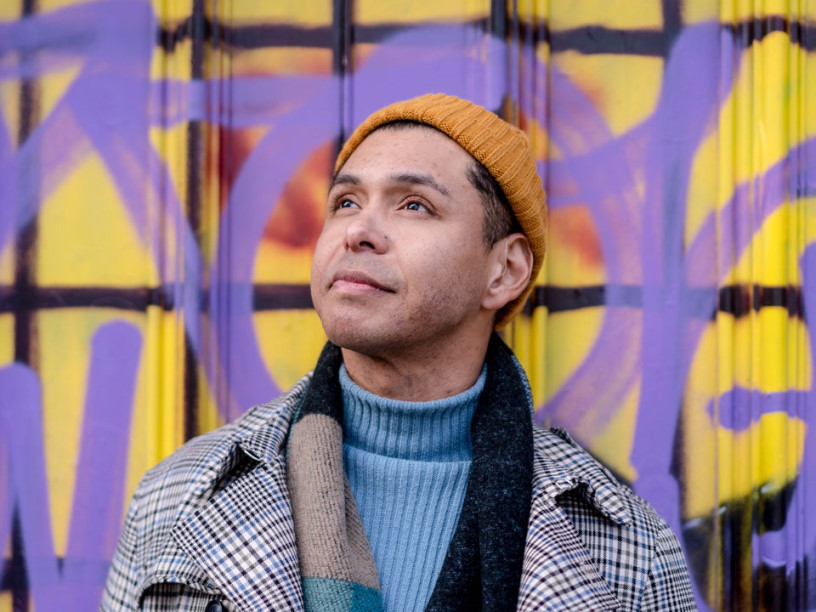
I decided to abandon the anonymity of the second person, who was completely cured of AIDS. Last year, it became known that he acquired invulnerability to the virus after treatment for leukemia. At that time, he did not accept antiretroviral therapy for 18 months, but the tests do not show him the presence of active viral particles. Then he became known as the "London patient." Now, in an interview with New York Times, he said that his name is Adam Castileo and he lived with AIDS since 2003.
The story of Adam Castilieo is similar to the story of his predecessor - Timothy Brown, the “Berlin patient”. Both of them transferred the transplantation of donor bone marrow from a person, genetically immune to infection with AIDS.
The fact is that the human immunodeficiency virus, to get into the cell, uses one of the proteins on the T-lymphocytes membrane, for most virus strains this is the CCR5 receptor. In some people, a mutation of a genet that encodes this protein is found in which 32 pairs of nucleotide bases falls out of it (this genetic version is indicated by CCR5 -δ32). If a person inherits such a mutation from both parents, the AIDS virus will not be able to penetrate its cells, and a person will be invulnerable to this disease. A mutation in one copy of this gene is present in approximately 10 % of Europeans, and in two, respectively, in 1 %. How this mutation managed to spread so widely, it is unclear. There is an assumption that she could protect from the bubonic plague.
Timothy Brown lived with HIV for about ten years, taking medications that suppressed the activity of the virus. But in 2007, he discovered acute myeloid leukemia - a malignant disease of white blood cells. He was ahead of the bone marrow. In such cases, patients preliminarily undergo special chemotherapy and irradiation so that all their own hematopoietic stem cells of the bone marrow be killed. Together with them, all the cells that have become malignant also die. Then the hematopoietic stem cells are transplanted from a genetically compatible donor. For Timothy Brown, there were more than 200 compatible donors, but Dr. Her Hutter, who treated him, set an additional task: among suitable donors, he found a genetically resistant to HIV. The treatment ended successfully, and Timothy Brown was cured of leukemia and got rid of HIV.
Adam Castilekho was diagnosed with acute myeloid leukemia in 2012, and the doctors also found a donor for him, which had a mutation of CCR5 -δ32. The difference from the history of Timothy Brown is only that Adam did not undergo radiotherapy in the treatment of leukemia. Last year, Adam Castilekho confirmed the remission of cancer and the lack of HIV virus in the blood, but for some time he decided to maintain anonymity. Now he revealed his personality, saying that he wanted to become an ambassador of hope for other patients.
In addition to cases of Berlin and London patients, doctors made several more similar attempts. In 2014, a message was made about two such patients in Australia. One of them got the bone marrow of the donor with a heterozygous mutation of CCR5 -δ32, which, although it does not give a complete guarantee compared to the homozygous option that was obtained by Timothy Brown and Adam Castilieo, but still reduces the likelihood of cell infection. In the second case, Australian doctors have hope for the reaction " transplant against the owner ." Most of the patient’s cells infected with virus were killed during chemotherapy, new cells from the virus are free and, moreover, perceiving their predecessors as foreign objects, they will destroy the remaining infected cells. According to 2017 data, such an effect of transplanted bone marrow cells completely suppressed the activity of HIV in six patients, only one of which received a transplant with a mutation CCR5 -δ32.
But this method does not always lead to success. In 2008 and 2010, in Boston, transplantation was carried out by two patients with HIV, sick lymphoma. After some time, they stopped taking medications against HIV, and there was a hope that the virus would not return. However, he returned - in one patient 12 weeks after the abolition of drugs, in another - after 32 weeks. This does not pose a direct danger to the life of patients: having begun to take antiretroviral drugs, they can again take control of the virus. It is assumed that the return of the virus is associated with its ability to create its own backups in the cells of the patient's nervous system.
However, it should be remembered that bone marrow transplant can hardly become a standard HIV treatment method. This is a difficult tolerated procedure with a ten percent probability of death. Many AIDS patients will not be able to survive it. Today in developed countries, most patients feel acceptable, taking a combination of antiretroviral drugs. However, there is hope to defeat the disease by modifying the patient's own bone marrow so that blood cells obtained from it are resistant to HIV.