
Translated material
The presumption of danger
As a distrust of power and lack of information generate panic in school chats
Social networks and parental chats panic. But if in social networks they discuss the abolition of trips and the purchase of buckwheat, then the parental chats are more concerned with quarantine measures and a new children's game with the steps. The anthropologist Alexander Arkhipova tells Irina Lukyanova about the laws on social networks.
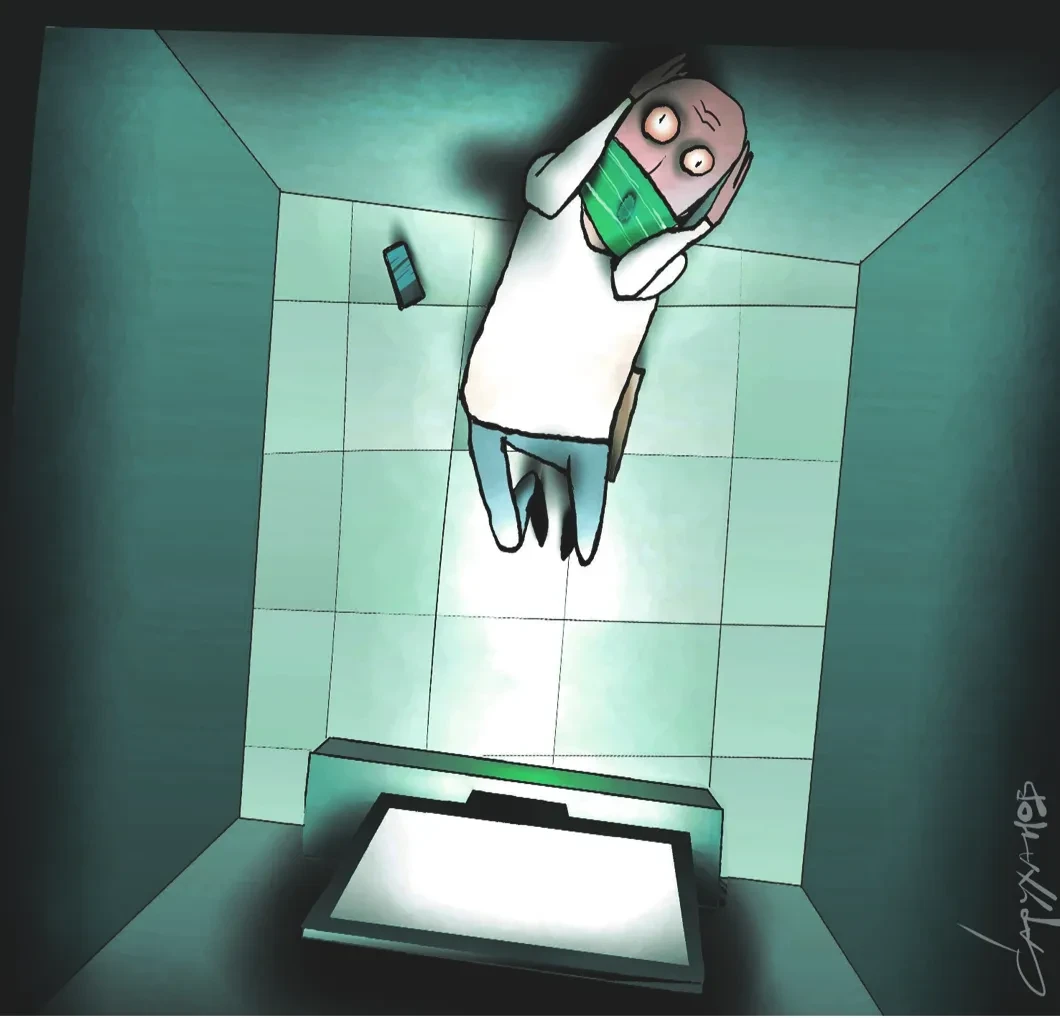
Everyday life is destroyed: nothing can be planned. Teachers complain: you can’t go anywhere in an organized manner with a group of schoolchildren - neither the theater nor to the museum: police officers are approaching right there and demand to dissolve their children home. In schools, the temperature measure the incoming - which means that one school employee should be at the door all day. Plans for the next spring holidays are burning with a blue flame.
At the same time, in some classes, parental chats calmly discuss the upcoming graduation evenings (by the way, what will happen to them?) And they broadcast the order of the Department of Education about the two -week quarantine, but in others they blazing with horror and panic.
The second of March, a well -known fake audio community flashed through social networks and chats, beginning with the words: “Helen, good evening, I have not very good news.” If anyone missed, then in it an excited female voice reported that in Moscow twenty thousand infected with coronavirus would die a lot of people - and the authorities hide the information because they need to adopt a new draft of the Constitution. The authorities immediately responded, saying that such fakes were thrown from abroad to destabilize the situation.
Of course, everything bad comes to us from abroad-especially to poison our children and undermine the state’s defense capacity. Here is a new dangerous game, they write to us, came to us from Israel. In fact, the story of a terrible game wanders around the world, probably, probably, it penetrated the Russian segment of the Internet from the Russian -speaking Israeli: even there, the Ministry of Education reacted with a special letter.
The essence of the game is that three people are standing nearby, two along the edges offer the third in the middle to jump together on command, but they themselves do not jump, but make him a footboard, which is why he falls and can break his head. Therefore, in English sources, the game is called SkullbreakingChallenge. Several videos are distributed through social networks and chats, where adults, trained people are obviously performing this trick on the camera. Parents panic: tell everyone, warn the children so that they do not play it.
Why do parental chats become such a nutrient medium for the spread of panic?
Alexandra Arkhipov
Anthropologist (RANEPA)
- Let's see what is happening with modern parenthood. There is a good modern study of the Canadian folklorist and anthropologist Andrea Kitt, who wondered why people are not sectarians, but ordinary educated parents from the middle class, refuse to instill children. One of its main conclusions is that the modern concept of parenthood orders you to be a supermama or a superpap.
A monstrous responsibility for the child is being triggered at the parent. He is constantly under pressure that he is not a good parent, and tries to calculate everything, protect the child from everything in advance. In the case of vaccinations, it turned out that parents who fell a lot of incomprehensible medical information are trying to figure out and ask questions to medical workers, but they only intimidate their consequences of refusing vaccinations. And a wave of refusal of vaccinations is born out of fear of being a bad parent and from the contrast of incomprehensible official medicine.
In Russia, we also see a high level of distrust of the power structures: the court, police, official medicine - and a very high level of so -called weak ties. If your tooth hurts, you are looking for a good doctor from your friends. So parents, if they feel danger, turn to other parents. The parent chats are included here. In the modern concept of education, the school is a place of provision of services, and parents are customers who can influence it (unlike the Soviet school, where the state was responsible for everything, and the parents had almost no influence).
And the phenomenon of the parent chat, which we have been studying for several years, is a way of creating an informal parent community, which often develops a position, an alternative school. In parental chat, as a rule, there is always a mother who leads everyone. It most often sends such warnings and accumulates its symbolic capital, acting as a bearer of information that is important or not important.
So, two years ago, panic flashed through the chats: they said that a certain woman in blue tried to photograph the children and lured them to the car. When people were asked whether they checked the information or not, they said:
“I don’t know whether it is true or not, but just in case I will cross it.” This is a presumption of danger. “Maybe specifically this message and garbage, but the danger is waiting for children everywhere.”
Such a presumption of an existing danger leads to the fact that people feel the need to warn others, even if they themselves do not believe in it. In 1991, the French sociologist Capferra studied rumors and leaflets about translated “tattoos with Mickey Mouse”, supposedly containing LSD: the child licks them and is poisoned.
26% of the number of those who did not believe the leaflet with fake data, nevertheless discussed it with others, and 8% of the number of those who did not believe even distributed the sheet itself further. You can not believe in rumors, but spread them in order to feel that you are doing everything to save yourself and others from coronavirus, women in blue and kidnappers of children's buds.
In several cities - say, in Perm - a month ago there was already a panic that spread through urban publics of the "overheard" type. But in a fake about Lenochka, the story acquired a plot finished: yes, the authorities are hiding from us - why are they hiding? -Due to the adoption of the constitution.
Further, complex psychological mechanisms come into business. One of them is associated with a sense of lowering control. Fake arose on the second of March. By this time, a panic had been going on about coronavirus for a month. People are scared by both the medical side of the matter and the socio-economic one, which acts even more: the fight against the epidemic is worse than the epidemic itself.
And here on the first of March they report that in Moscow the first case of coronavirus, and all its contacts, 24 people, also in quarantine. It becomes clear: the enemy is already here. And the next morning this fake appears.
Fear of the virus and its socio-economic consequences lowers a sense of control. The more you lose control, the easier you give it to an external agent. The famous experiments of Adam Galinsky and Jennifer Witson are devoted to this: when a person caused a decrease in a sense of control, he begins to believe in the theory of conspiracy for a while.
Everyday life collapses, the feeling that you are not controlled by tomorrow - it is absolutely real: business trips and children's holidays are breaking away, and people find themselves in quarantine. As a result of this, the willingness to disseminate any information increases: this is how you in paradoxically regain a sense of control, because in these fakes, it is explained who is responsible for this!
In a situation where people a priori trust the state little and do not believe in the rationality of its device, this readiness is even higher. And the parental community, carrying hyper -realization for their children, adds pepper here.
As for harmful games, we also played such in our childhood. A person is involved in the game, but he does not know the trick on which the game is based. Such games are often accompanied by small acquaintance (“Do you want to show you Moscow?” - “Show me,” they pull it in the ears). In my childhood, there was also a game when they asked to jump and put a bandwagon. In our infantry childhood, we either participated in this or not, but there were no videos. And now, thanks to Tik-Toku, you observe this directly.
At the same time, adults prefer not to remember that once they themselves were engaged in such nonsense. And the videos are subject to accompany that this is a special game in order to lime our children, and foreigners are involved in this. A view from the side recorded a long -existing game - and everyone was horrified.
In the same way, they were horrified in 2017, learning about the game “Run or Die”, where the children cross the street in front of the nose of the cars. But she appeared more than a century ago: gymnasium students had fun in St. Petersburg, running in front of the tram. These games can be dangerous - but they were always like that. As a rule, they arise in adolescence - and, as anthropologists believe, this is a way that a teenager tries to get control of his own body and his own life: how much I can be lifeless, whether I can withstand such a trick or not.
But the parents, whose experience is torn from children's experience, receiving such information from outside or seeing the game with their own eyes, believe that this is a new terrible threat, enemies spread it, and "we must save everyone from it." This situation is amplified by the sensation that many modern parents have:
That my experience (courtyards, walks, football, rubber bands) differs from what my child lives (gadgets, gadgets, gadgets), and therefore "I do not understand his games."
It is not necessary to assume that in the near future, the panic will come to naught: no one knows how long it will have to be self -invalid for two weeks in quarantine, what will happen with plans for spring and summer.
Finally, preparations for a popular vote regarding constitutional amendments continues - and such events are traditionally held in schools, and if there is a great way to bring all existing infections to school, then here it is. Therefore, parents are watching, chats are awake and constantly bring something new, terrible. So we will win.