
Translated material
"See you with you if I am alive"
The last book of Eduard Limonov will be released after his death. Its publisher Felix Sandalov said what this text is
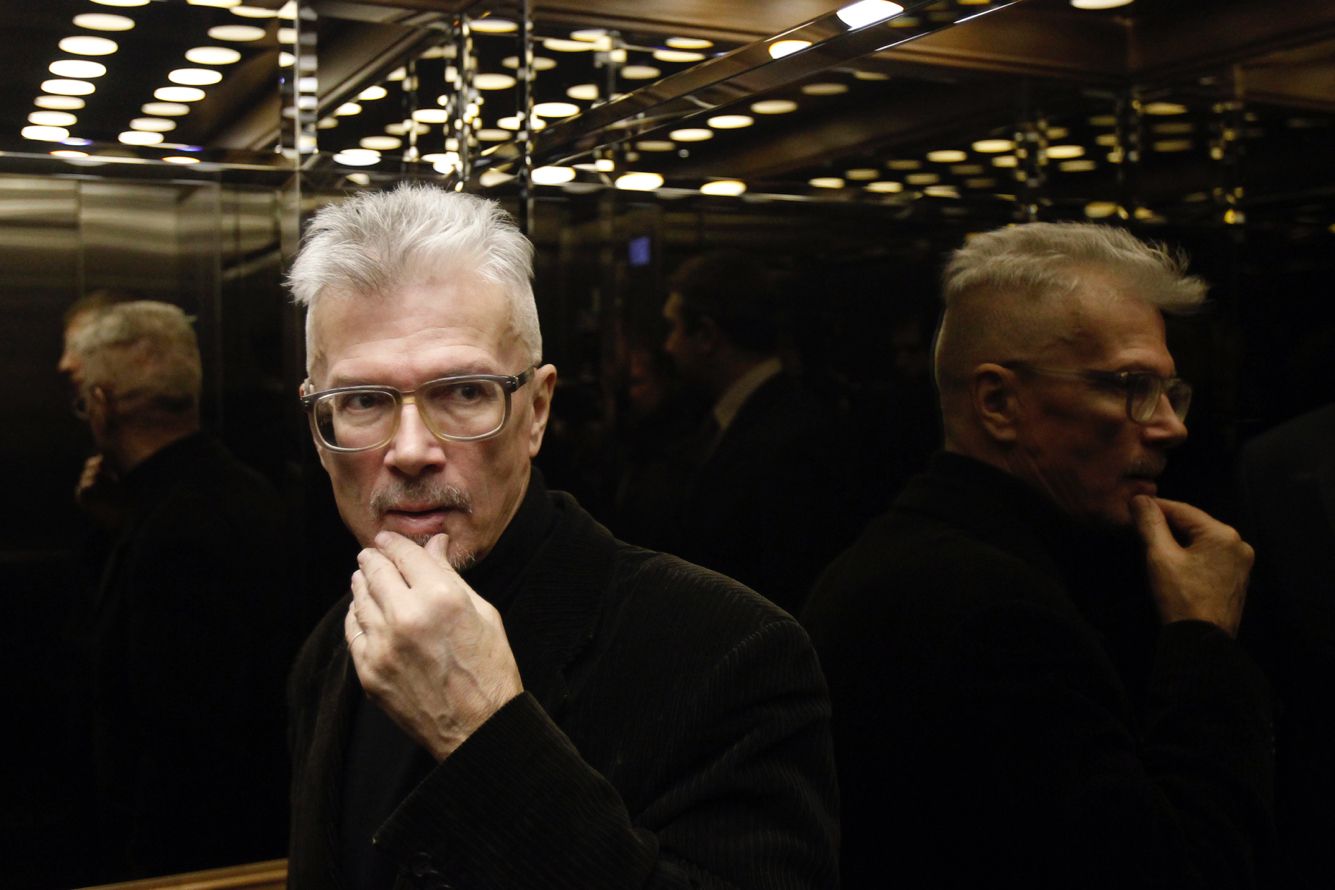
March 17 at the age of 77 - after hospitalization and two operations - the writer and politician Eduard Limonov died. Shortly before his death, in mid -March it became known that Limonov’s new book “The Old Man travels” was going to print the publishing house Individuum. Medusa talked with the editor -in -chief of the publishing house Felix Sandalov, who met with Limonov a week before his death and had already read his last book.
The idea to contact Limonov arose recently. Then I still did not know that he wrote a new book, but I knew that for me and our publisher it would be a great honor to print the great Russian writer Eduard Limonov - and give him a duty for everything he did. At that moment, of course, I thought it as a giving duty and honors to a living person.
We decided to contact him and find out if he had any text. I noticed that in recent months he began to write less articles - and he usually writes quite a lot. So I suggested that he focused his strength on some kind of text. So it turned out.
For the first time, we phoned him on February 4, and it turned out that shortly before he had just finished the new text - so coincided. About a week we waited until this text was deciphered - Limonov wrote it by hand, then I looked at him and decided that he was beautiful and we had to publish it.
After that phone call, we continued to communicate by e -mail - he answered us quite quickly and almost instantly agreed to be published.
About a week ago, my colleague and I, producer Polina Ryzhova, came to his house to sign the papers and discuss the cover - we did not hear any concrete wishes from him. He accepted us in his Moscow apartment near Mius Square-in the building of the 20s of the last century. I had never been there before, but my friends from the “shift” who reprinted the old Limonov texts went there to him and told me about their visits - these stories coincided with my impressions. His apartment is quite ascetic - not in the sense of poor, but without excess furniture and details.
A picture hung in his office, there was a large writer with an armchair, on the table - a stationary computer. Such a thorough workplace without any trinkets and a million things, everything was functionally in it. I remember that Indian aromatic sticks burned.
Limonov gave us his books: “The Philosophy of the Feat”, “The Party of the Dead” and “There will be an affectionate leader”, signing them “as a keepsake”. I still remember that in parting he told us: “See you with you if I am alive.” We just shrugged, and although we understood that he had age, but I did not think that it could end so quickly.
I have already read his new text twice - the book is called “The old man travels”, it is built on small essays and sketches related to his trips and movements that begin in childhood, and then very frivolously jump into a very recent past.
The book has no task to describe in detail the author’s life - ideas and feelings arise in these flashes. This is a very piercing work, you can call it a traverse in shape. But it turned out to be so pulsating and places hallucinatory - not in a bad, but in a poetic sense. The text has memories of different years with amazing accuracy in detail. I have already met this property in the elderly-when consciousness begins to unload very clear details of the circumstances that took place 50-60 years ago.
A very nicer feeling appears from the book - this is not that summing up the results, but, at least looking back, an attempt to realize some things. Including what the same NBP for him was.
Limonov is a symbol of freedom and waywardness. We understand that periodically he had drills, but he always retained his charm - and even in this showed his independence. For a whole generation of readers, he was a bridge to European and American culture - a Russian writer who exists in the context of world literature. Limonov is the brightest example of a modernist heritage, he made his life a very powerful statement and was always real: no matter what he did, he did it very sincerely.
In his last book, he writes about very simple and sincere things. For example, there is such a sketch in which he argues that he drank beer, and then - like any Russian person - he wanted to drink vodka. Late Limonov has a very direct presentation, to some extent his style can be called “Akynsky” - what I see, then I sing. And, on the one hand, the traverse genre obliges this, but on the other hand, we have a kind of cultural attitude that the writer must somehow comprehend what he saw and reflect.
Perhaps in another case it would have embarrassed me very much, but here it is not even the magic of the surname, but the magic of his writer's voice. I read and thought that the ability to work with the Russian language is so complicated, there seems to be no show -off style, but there is a rhythm that works powerfully - this is a natural gift.
Recorded Sasha Sulim