
Translated material
This is a "tower"
China began to refuse Rosneft hydrocarbons due to US sanctions
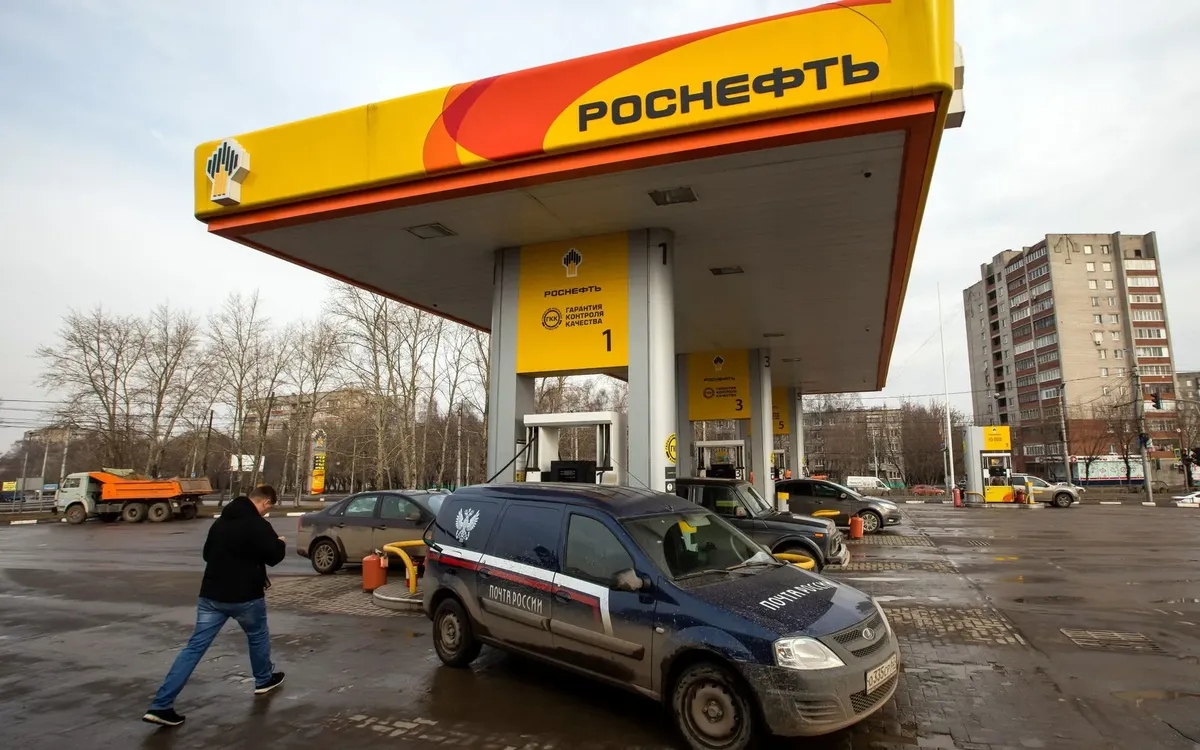
In previous crises, when the ruble fell, columns twisted by hoses appeared on some gas stations, the lines were built on others - it became more profitable to export oil products.
This time there is no fuel deficiency; Perhaps it will not be. Because both raw oil and products from it are almost nowhere to export.
On the night of March 19, Bombardier landed at Krasnoyarsk Airport with a M-Yil regronomer, on which Igor Sechin flies, in the city they saw a motorcade that swept first, a few hours back to the airport. Nothing is officially announced about the goals of an unplanned visit, but the main Gossmi of Russia also state, if not collapse, then something close to that: China began to refuse Rosneft hydrocarbons due to US sanctions. The Chinese state-owned company Sinochem Group directly indicated in the context of the competition of oil for the purchase of oil with a supply in May-June that Rosneft and her daughters cannot participate in the tender. This was preceded by Europe’s refusal from Russian oil in favor of Saudi.
In addition to collapsing sales markets, Rosneft has problems in operating plans within Russia. “Vedomosti”, more than other media outlets, aware of Sechin’s concerns, write that the depreciation of raw materials will not allow Rosneft (as well as Gazprom Neft) this year to use tax benefits at Vankorsk and Privuskoye fields, the business will lose 120 billion deductions from the tax on the extraction of minerals. At the price of oil above the basic ($ 42.45 in 2020), the companies would receive a fixed deduction of 60 billion from the purchase deposit since 2020 using the retroactive force of the law (the bill is still being developed). The same amount could reach the scheduled deduction on Vankora (and also the benefit is not applied if the barrel falls below the base price, on March 12, the State Duma approved this bill in the first reading).
The dimensions of this benefit are tied to Rosneft's expenses for the arrangement of the recently propardated new oil and gas cluster East Oil in the Krasnoyarsk North (Taimyr). At the end of last year, this structure was transferred from Moscow to Krasnoyarsk, and Sechin promised the president the production of Rosneft with an Arctic cluster of up to 100 million tons of oil by 2030. The cluster includes a boat, Suzunskoye, Tagul, Payyha and other deposits; The reserves have not yet been confirmed. The costs of the implementation of this Arctic project can be up to 10 trillion rubles, said Pavel Sorokin, Deputy Minister of Energy of the Russian Federation. In September, the head of Rosneft asked Putin to speed up the allocation of tax benefits of 2.6 trillion rubles for East Oil.
But at a new price of oil and even more so with the prospect of deprivation of financial benefits, the project is obviously unprofitable.
Earlier, Pavel Sorokin reported that the production of oil here, taking into account all tax benefits, will remain profitable at the price of oil $ 35–40 per barrel.
No encouraging decisions at the alleged meeting of Sechin with the Krasnoyarsk governor Alexander Uss were made, otherwise this would be immediately informed of all their previous conversations, where the East Oil was promoted. From Krasnoyarsk, the M-Yil board headed for Taimyr (Norilsk).
So far, one thing is pleasing - the prospect of avoiding gasoline deficiency.
As for other hydrocarbons, it is clear that the “power of Siberia” (while the gas pipeline rocked in China has been stopped for prevention) is not deployed and the Siberian cities of the gas itself in the foreseeable future are not seen, which means to continue to live under the caps of the smog.
Prices in Krasnoyarsk for fuel are stable for the last days and weeks; Experts believe that in the next few weeks they will remain like this: AI-92-41,1–41.45 rubles. per liter, AI-95-43.4–43.6, AI-98-48.5–49.9, DT-37–52, premium DT-49.9–58, premium 95-44.3–49.9.