
Translated material
Is it true that the pandemic has improved the environmental situation around the world?
And what will happen when we defeat coronavirus
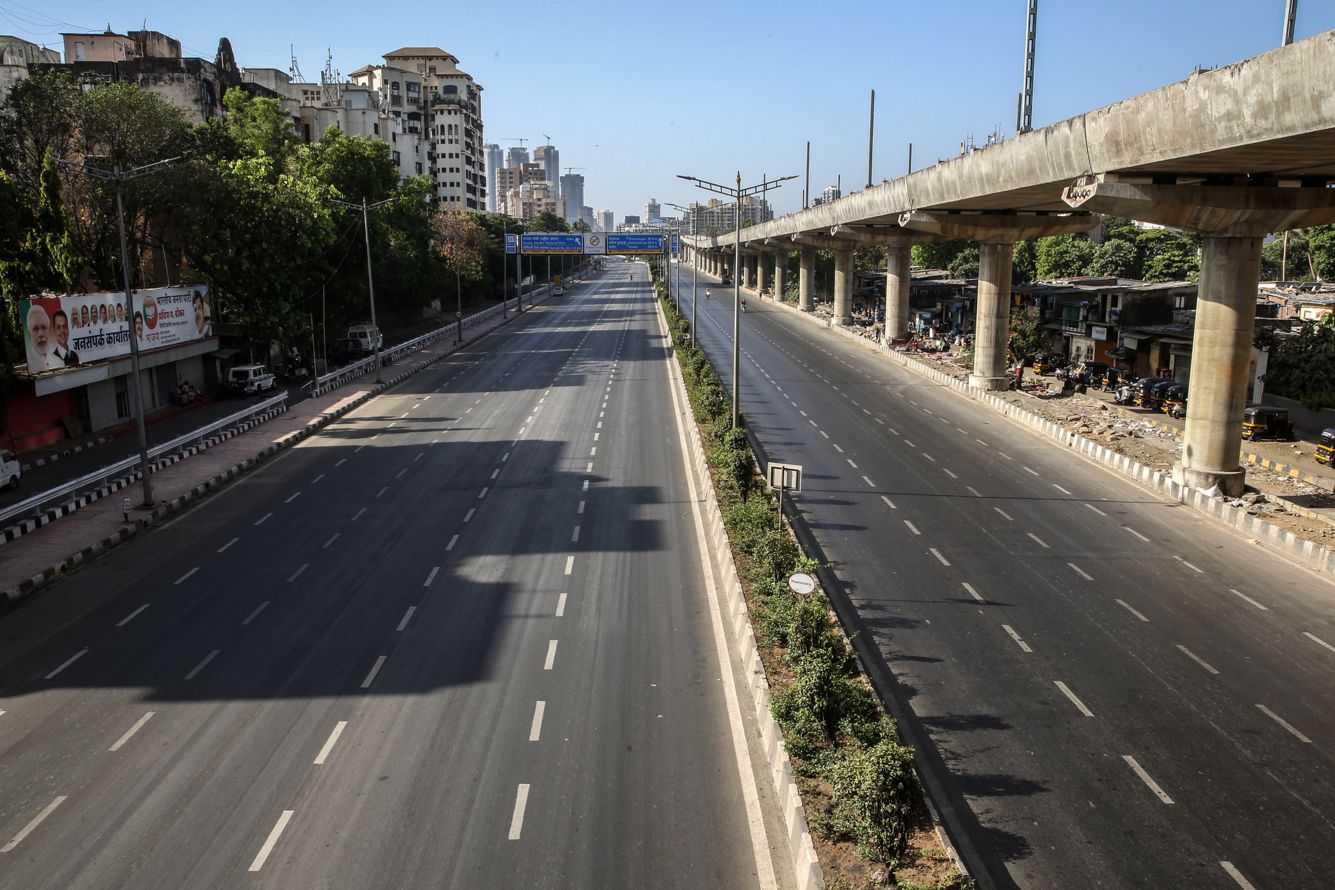
In mid -March, when Italy was already quarantine, among the alarming news about the coronavirus, joyful ones appeared: in the empty channels of Venice, the water was cleaned so much that swans and even dolphins returned there. Unfortunately, this is not true : animal viral pictures are taken, apparently, in other places. But the pandemic of coronavirus really already affects (positively) on the state of the environment. International air traffic has declined sharply, stock markets collapsed, like oil price, and the world economy was on the verge of a new recession . Reducing the consumption of fossil fuel means a decrease in carbon dioxide emissions from its burning. However, the effect will be short -lived: after the pandemic, emissions that affect the climate change will most likely recover from the economy and travel.
What has already changed?
Analysts of the Finnish Center for Energy and Clean Air Studies CREA calculated that in a month since the end of January, Co₂ emissions in China decreased by 25% of the level of the same period in 2019. The publication of Carbon Brief notes that over the year in China, the world leader in terms of greenhouse gas emissions, they can be reduced by one percent or more. This is a small, but symbolic decrease for a developing country, which prefers the development of the economy to contain climate change (although China is involved in the international climatic policy, there is no question of an absolute decrease in emissions, only about restraining their growth).
In addition, the air on the streets, apparently, became cleaner. For several months of the spread of coronavirus, scientists have already managed to register the emissions of harmful nitrogen dioxide (No₂) and carbon monoxide (CO) from industry and vehicles - primarily in the same China, where the traditional decrease in emissions associated with the Chinese New Year, this year strengthened strict quarantine measures. In the same place, European satellites saw a decrease in air pollution with small -dispersed particles by 20-30% of typical levels. The European Space Agency noticed a similar decrease in emissions in Europe and especially in northern Italy. The road intensity has already significantly decreased in large cities of the United States and even in Moscow , so improving the quality of air can be expected in Russia.
Will this have at least some positive effect on the health of those who breathe this air?
Apparently, yes. When China in 2008 very sharply limited emissions into the atmosphere for the sake of the Olympic Games in Beijing, a decrease in the number of premature deaths from cardiovascular and other diseases associated with air quality, several studies were recorded . And when Moscow was covered with smoke from natural fires in 2010, mortality from the same diseases increased sharply in the city.
Another thing is that direct - in the form of deaths from complications - and indirect ones - from a decline in the economy and forced changes in human behavior - there will clearly be more losses. Between 1990 and 1997, greenhouse gas emissions in Russia due to the collapse of Soviet industry have decreased more than doubled, but it is unlikely that anyone will consider it a great environmental success. The general director of the Ecological Investment Center Mikhail Yulkin, in a commentary for Medusa, said that the price of such a reduction in emissions in monetary terms per ton of greenhouse gases was “prohibitive”, and any other method of improving the environmental situation will cost cheaper. “Still, we have no task of saving nature from us. There is a task to make our life in harmony with nature better and safer. This means that we need to look and find other ways to reduce the load on the climate, not by destroying a person and civilization, ”Yulkin said.
What will happen when the epidemic will end?
Experts agree that the respite for the atmosphere of the Earth due to coronavirus will be temporary: as quarantine measures and the restoration of the global economy are weakened, the emissions will also almost certainly return to the usual levels. When in 2009 the global GDP decreased by 2.2%, greenhouse gas emissions fell 1.3% , after which they instantly recovered in 2010.
Moreover, [in an interview with CNN ], an employee of the Asian division Greenpeace, Sho expressed fears that, without systemic environmental reforms, the desire of the Chinese authorities to compensate for the losses over the months of downtime will again lead to a sharp increase in the atmospheric pollution, which will more than block all its decrease.
Nevertheless, there is a hope that at least one environmental improvement will be long -term - this is a ban on trade in wild animals introduced by China. The ban began to act after the discovery of the focus of the coronavirus infection in the city of Ujan, a large center of such legal and illegal trade. 27 billion dollars of the global illegal market of wild animals is orders of magnitude less than the likely losses for the global economy from the epidemic. However, it was not so easy to close it. China promised to ban the trade in wild animals back in 2003 after the SARS epidemic, WHO experts write in SARS . How the global epidemic was stopped. ” In 2002, Koronavirus, who called Sars, "jumped" to a person through animals - a cave.
Olga Dobrovidova