
Translated material
Wait for the vaccine on the quarantine or relax and get sick. What if the pandemic lasts at least a year?
The number of COVID-19 cases in the world exceeded 307 thousand people. 92 thousand recovered. 13 thousand died. When will it end? No one knows. We publish the column of the publisher of the Reminder project Maxim Kashulinsky, in which he is looking for an answer to an important question: how to make plans and just live in conditions of complete uncertainty.
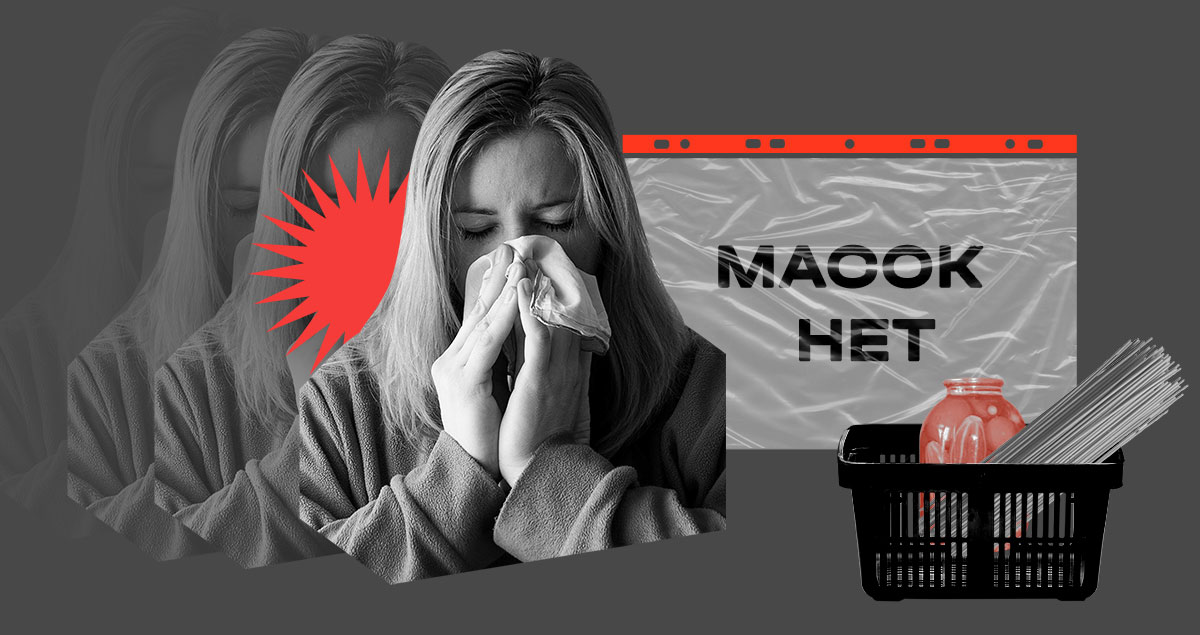
The main feature of today's events is that everything changes too quickly. The behavior of people, companies and governments, the very picture of the world, as it were, lag behind events. All solutions and concepts quickly turn out to be irrelevant.
A month ago, you could weigh the pros and cons, discussing the trip to Italy, where the first cases of infection were noted. Today, the number of deaths from coronavirus exceeded China there, and it is no longer possible to fly to Venice or Milan, even if it is very necessary.
A couple of weeks ago, investors thought whether a successful moment has come to buy shares, and now many get rid of not only shares, but also from bonds and gold - tools that traditionally served as protection for capital.
Is it possible to imagine a commandant hour in Moscow and New York? The cancellation of planned operations due to the lack of doctors and chambers? Transfer of elections to the USA? It seems that not, but then the moment comes when it is already possible, and we overload our consciousness, pulling it to a new version of reality.
It is not easy to do it. Not wanting to part with the usual world, where there is a stable job, trips abroad, campaigns with friends to restaurants and theaters, our brain comes up with excuses. The two are the most common: “I (us) will not affect” and “It will end soon.” Both allegations calm, return balance and help to live, can be believed in them, but are there any grounds under them?
"It won't touch me"
It is unreasonable to go into negation. The virus does not see borders, does not distinguish between nationalities and status: cases of infection are noted on all continents, in 176 countries, politicians, businessmen, stars and ordinary ambulance drivers are sick.
Yes, part of the population may feel in relative safety. It is known, for example, that children and young people are less likely to become infected with a new coronavirus infection or tolerate the disease easier. Scientists do not know exactly why this is happening, but there is a hypothesis that explains the low child mortality from the Covid-19 (it is close to 0%) by the fact that the child still did not have an immune response to the disease. An adult immunity, joined in work on full force, provides a bear’s service: the lungs affected by the virus are quickly filled with dead immune cells that have completed their work and water, which leads to a sharp restriction of oxygen and in some cases to death.
Among people under the age of 40, the number of deaths is minimal - only isolated cases, as we know from the examples of China and Italy . But this does not mean that the virus is completely safe. Data from the United States, where the epidemic is gaining momentum, show : out of the 2500 first American patients, 705 were at the age of 20–44 years, and 15–20% of them were hospitalized, and 4% were in intensive care. The chairman of the Russian respiratory society, the pulmonologist Alexander Chuchalin recalls that the coronavirus infection in the case of a severe course of the disease can lead to damage to the lungs - fibrosis. This means that after recovery, a person will remain with a diagnosis that will sharply reduce the duration and quality of his life.
But the main risk for young people is not a disease, but its transmission: you can relatively easily and even asymptomatically transfer the infection and infect elderly parents or elderly people in a store or metro. Foreign figures in patients starting from 50 years crawl up.
Perhaps the virus will not kill you, but uses your body to take away life from someone else.
"It will end soon"
Usually, two arguments lead to the thesis: the cessation of the spread of infection in China and Korea and the onset of the warm season in the northern hemisphere.
The Chinese example shows that strict measures to prevent the spread of infection are working: March 18 and 19 in Jun, the epicenter of the epidemic, and not a single new case of infection was recorded throughout the province of Hube. But the epidemic in a single territory can stop completely only if the virus dies in the last medium and on all surfaces where it hit. So far, the most part of the population has not developed immunity and so far people with the asymptomatic course of the disease come into contact with others, the risk of resuming the epidemic remains.
“I think it's too early to celebrate,” comments on Chinese statistics a professor of epidemiology from the University of Hong Kong Kooling. “It is possible that the second wave has already begun in China, but it is still impossible to fix it.” Using the early diagnostic methods and experience gained from the beginning of the year, China can restrain these outbreaks, Rain Mcyntire, professor of global biosystalism from the University of New South Wales in Australia, believes , but she also notes: “Even if we assume that the number of those infected are 100 times higher than [Chinese] statistics, which is less than 1% of the population, which means that most citizens are still not protected from virus. "
On the cessation of the epidemic with the onset of summer, too, should not be hopeful. Influenza and a cold to May-June are naught, and this is not because the high air temperature and sunlight “kill” viruses (in the end, viruses successfully work in our body at 36.6 degrees and sunny Italy), and because with the onset of warm season, people begin to spend less time in closed spaces-in fact, these are the same current measures. Social Distancing, only accepted annually and of their own free will: schools and universities are closed, premises and transport are ventilated, many go on vacation or go out of town. All this slows down the spread of infection.
In addition, there is a hypothesis that the effect is influenced by the relative humidity of the air that increases in the summer - in a humid environment, larger drops are formed during coughing and sneezing; They settled faster, not having time to get into the respiratory tract of people nearby. In dry air, on the contrary, more small drops are formed, carrying viruses. The smallest of them can be in limbo for up to three hours.
Read also algorithms against pandemia: how IT companies cope and help to fight coronavirus
Should these circumstances, as well as hygiene and isolation measures that we use now, work with the new coronavirus? Of course, the difference is that immunity has already been developed from influenza and acute respiratory viral infections, which means that these viruses have a limited number of goals. The coronavirus has a much wider target audience - the entire population of the planet.
The infection of the virus is determined by the reproductive number R₀: This is the average number of people that infects one infected. For the new coronavirus, it is approximately 2 (although there are higher grades). In conditions of unlimited contacts, the number of infected ones grows exponentially, one person infects two, two - four, etc.: 1, 2, 4, 8, 16, 32 ... If so, then the epidemic comes to naught only when half of the population develops immunity, because then every second person will not become infected from our example, and the spread of the infection will become linear: 1, 1, 1, 1 ... ...
If R₀ were 3, then the immunity should already be 66.6% of the population to stop the epidemic. For measles, whose r₀ is 12, immune protection should have 91.6%. That is why even 10% of the population should not refuse vaccinations.
What next?
This leaves us only two options: to get sick or wait for the vaccine.
The New Scientist magazine devoted the theme of the last number to create a vaccine from coronavirus. Having talked with leading scientists, journalists came to the conclusion that the option available for wide use may appear no earlier than 12-18 months. And this will be an unprecedented speed: it took five years to create a vaccine from the Ebola virus, with which he was also in a hurry.
American Moderna, one of many companies working on the problem, has already begun the first tests. Its prototype may work, or maybe not. In any case, before launching mass production of vaccines that could be introduced to hundreds of millions of people without risk, there should be a lot of time. The New Scientist recalls that Moderna is working on an RNA vaccine-this is a new vaccine class that have already been well studied, but so far none of them have been approved for people's use.
If the deadlines are just such, then it is worth assuming that the epidemic in one form or another will be with us until the middle of next year. So, one must be prepared that the restrictions that are now introduced everywhere, including the overlap of borders and local quarantines, will remain with us for a long time.
The epidemiologist Neil Ferguson of the Imperial College in London, whose models of the development of the epidemic take into account the British government when making decisions, notes that measures to mitigate and contain the epidemic, especially social distance, "will be necessary for many months, possibly until vaccine appears."
The Ferguson team proposed several scenarios for the development of the situation in the UK and the USA. Here are two of them:
- From the end of March, the deterrence has been underway, which includes the isolation of sick, home quarantine for members of their families and social insulation of the population - reducing 75% of contacts outside the house, school and offices, reducing contacts at workplaces by a quarter;
- The same set of measures is used, with the exception of quarantine, but the closure of schools and 75% of universities are added.
The first scenario can significantly reduce the load on the healthcare system in the first months - compared with the hypothetical option, when no measures are taken (black line). The second allows you to reduce the load even more, without going beyond the capacities in hospitals. But he also implies a steeper second wave, which will begin in the fall, after the restraining measures are canceled.
“The more successful there will be a temporary deterrence strategy, the stronger in the absence of the vaccine the next epidemic will be, since people will accumulate less people who have been ill and developed,” the Ferguson group said.
It is the restraint of the load on the healthcare system is the main goal of the measures now introduced in countries where the number of infected ones is growing. The number of patients with severe symptoms in need of professional assistance in China was 19% (from confirmed cases of Covid-19), and in Italy, where the older population was 29%. As soon as this stream begins to exceed the throughput of the resuscitation chambers, doctors have to refuse one of the patients in help, and mortality increases. Probably, not only from coronavirus, but also from other diseases: resuscitators and apparatus for maintaining life for all.
What can you hope for?
One of the solutions is the mass distribution of cheap and reliable cords on coronavirus. “Make tests, tests, tests,” advises all countries the General Director of the World Health Organization Tedros Adhan Goebreesus. Mass testing and the premises in the isolation of infected helped to stop the spread of the epidemic in South Korea: the country held more than 220,000 tests, revealing 8,200 cases of the disease. As in the case of China, this does not mean that the virus is defeated, but the country has time for respite.
In Russia, mass testing for the virus, apparently, will become possible within a month - when private companies begin to make tests. Most likely, over time, express tests will also appear, which can be done as quickly as possible-the subsidiary of AFK Sistema claims that the test that can give out the result in 30 minutes is ready to make. Perhaps testing passengers, employees, services of the service sector will become a routine case over time. This will allow you to return to offices, resume the air traffic and work of the service sector where it is stopped.
It is also possible that doctors and scientists will find funds that can treat the disease or significantly soften its effect - dozens of drugs and methods are now tested around the world. But no medicine will be able to undergo a full -fledged procedure for the state approving in a short time; As Denis Protsenko, the chief physician of the city clinical hospital No. 40 (in Kommunarka), said in an interview, not evidence -based medicine works, but “observation medicine”: “Both positive and negative aspects of therapy are formed and formulated literally before our eyes.” Doctors try medicines for HIV, malaria and much more. If the funds are found, then the load on the healthcare system will not become so strong even with the next outbreak of infection, and it will be possible to cancel or postpone restrictive measures.
Closing borders, quarantine and reduction of contacts between people are able to suppress the spread of infection in a separate country or city. But these measures have limits - the further they act, the more the economy will plunge into a larger crisis and the higher the degree of social stress. And when measures are canceled, the risk of a second wave is returned.
We only win the time that is necessary in order to create a vaccine, find a medicine or expand the power of hospitals.
The blow that the months of restrictions and prohibitions will be inflicted on the global economy cannot even imagine. The entire education system will also suffer, since schools and universities will be forced to constantly close, and the number of foreign students will be sharply reduced. The whole fabric of social life will also change: communication, rest, entertainment. Not to mention a significant reduction in income that promises a global recession.
But the catastrophe opens up new prospects. Perhaps education integrates distance forms faster, and as a result, a reform of the entire system will occur. The same can happen to the healthcare system, if telemedicine methods and the use of artificial intelligence perfectly prove themselves during the crisis. The historian and author of several bestsellers Yuval Harari notes that the epidemic reveals a lack of healthcare systems built only within the boundaries of individual states: access to quality medical services in Iran or China suddenly becomes also important for protecting from epidemics of Americans or Israelis.
Harari believes that the crisis gives us all a chance to feel the unity and unlimited possibilities of joint work and free exchange of information. “If this epidemic leads to an increase in disunity and distrust among people, then the virus will win. And, conversely, if, thanks to the epidemic, global cooperation will increase, this will become a victory not only over coronavirus, but also over all future pathogens. ”
It is difficult to get involved in the fact that the epidemic and restraint measures and quarantine are for a long time. Perhaps some miracle will happen, and the world will quickly recover. But, as one of the entrepreneurs noted in our article , it is better to "love this new reality and adapt to it." Just in case.
Did you like the material? Subscribe to the weekly email newsletter Reminder!