
Translated material
The beginning of the autocracy in Russia
Boris Kupriyanov - about four books that will not fall into other reviews
There is a type of publication that for some reason pass below the radar of book observers. We eliminate this invisibility and suggest paying attention to non -obvious books, almost every of which belongs to the genre of excellent historical research. How do they differ from mediocre research? Not only clearly posed problems and support on documents. Perhaps the main difference is that such studies are consonant with our era - and it doesn’t matter whether it is about the development of the Arctic in the XVIII century or about the methods of state construction under Ivan the Terrible.D.N. Alshits. The beginning of the autocracy in Russia. The state of Ivan the Terrible. SPb.: Science, 2019
Who wrote?
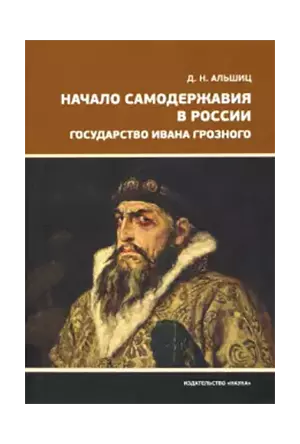 During the nearly century of life, Daniil Natanovich Alshits (1919-2012) managed to manage a lot. The first publication-a 48-page brochure about the Tatar-Mongol invasion-went in 1939 at the "Library of the Red Army". The last lifetime, in 2010, are military memories of the defense of Leningrad.
The historian, playwright, satirist and remarkable source of Alshchets experienced in his own skin the entire twentieth century, including the Leningrad blockade, for 10 years in camps (he left half) under Article 58-10 (“Propaganda or agitation containing the overthrow, undermining or weakening of Soviet power or to commit separate counter-revolutionary crimes, etc.”).
And another 35 years of work in the manuscript department of the State Public Library named after M.E. Saltykova-Shchedrin, teaching and even some scientific hooliganism-supposedly Alshitz found in unusual archives the 10th chapter of Eugene Onegin, which, of course, wrote himself.
Of the many historical works, Daniil Natanovich is the majority about the era of Ivan the Terrible.
What is the book about?
“The beginning of the autocracy in Russia. The state of Ivan the Terrible ”is a reprint of the 1988 book, published in the wonderful“ soft ”scientific and popular series of the“ Academy of Sciences ”. The book, as the name implies, describes the formation of autocracy under Ivan the Terrible. The stages of this process, its phases and consequences.
For Daniel Natanovich, work with sources, documents of the era is very important. The historical document can tell the archivist more than excavations, and he diligently tries to convey the “speech” of the document to the reader.
Why read?
“The beginning of the autocracy in Russia” is a great example of a deep book written simply, but not simplified. The book makes the head work, but does not give a “bribe” to the reader. The Genre of the Book itself, unfortunately, is quite rare in the current times. Alshits shows that Ivan the Terrible legitimized his autocratic power was completely thought out, manipulating sources and forming a new state ideology; as an oprichnina occupies an increasing and large role in the state, germinating from just a system of control of the king’s personal estates; How John “crushes”, “captivates” the boyars and what these gifts turned around.
In fact, until a certain point in Russia - according to Alshitsa - combined two states, the old boyar and the new, the autocracy controlled by the oprichnina, and this continued until the young management system absorbed the ancient.
“One of the most important directions in the ideological struggle of the Terrible for the establishment of sovereignty was the historical justification of the origin of the Russian autocracy. Until now, it seems, no attention has been paid to one remarkable fact. Grozny himself, and after him the official documents of his time, obscured that he was the first Russian king. Terrible sacrificed his priority to the first king in order to affirm the idea of the origin of the Russian autocracy contrary to the historical truth. He created an idea that his wedding in the kingdom was nothing more than the adoption of his parental, ancestral and generally primordial royal crown of Russian autocrats. ”
Philip Dolnger. Hanseatic Union. The trading empire of the Middle Ages from London and Bruges to Pskov and Novgorod. M.: Center Polygraph, 2020. Translation from English by L. Igorevsky
Who wrote?
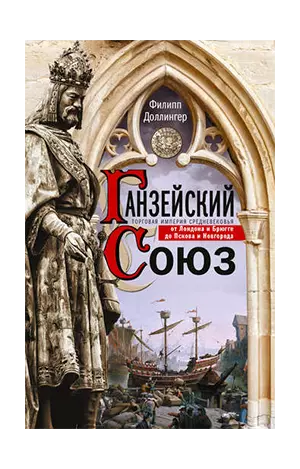 Like Alshitz, Dolinger (1904–1999) lived for almost a century - 95 years. He was born and died in Strasbourg, the capital of the former Alsace, about the border of this territory, for which Boshi and the frogs spilled tons of blood, they say rather the French name and rather the German surname of the scientist. A student of the founder of the Annals School Mark Blok, Dolinger has been engaged in the history of Hansa almost all his life and is rightfully one of the most influential specialists in this matter.
What is the book about?
About the Hanseatic Union-this major political and economic alliance of the trading cities of North-West Europe-they heard everyone, but few people know how and why the most powerful non-governmental unification of the Middle Ages arose. The book describes the history of the Hanseatic Union - from sources to decline and dissolution. Dolinger accordingly structures the narrative: the first period - from the Commercial Union to the Union of Cities from XII to XIV centuries.; The period of dawn from the XIV century and the decline until the XVII century.
Why read?
The Hanseatic Union originated in the dawn of the Middle Ages in the 12th century, and finally broke up only in 1669-34 years before the founding of St. Petersburg. The Strasbourg historian shows that the commercial union was successful, the union of cities became necessity, and in modern times, the network structure lost the nascent new, not feudal order.
It is all the more surprising that the “amorphous community” (the author believes that this should be called the Hansa), which had no army, nor fleet, nor its own currency, dominated 500 years from Novgorod to London.
Dolinger pays special attention to the late period of the phenomenon and approaches the study of the Hanseatic Union, based not from the wealth of cities, but from their influence on neighboring territories and the movement of goods. So, London and Novgorod significantly influenced the success of the Hansa, but including Gansa because of them rolled up.
“The goods from the east, which were transported through Zunda to Western Europe, remained about the same as they were in the XIV and XV centuries. The only new export goods that were carried through Danzig were Selitra and Potash, until then unknown. However, the comparative significance of traditional products has changed noticeably. Russian furs no longer occupied the most important place in the turnover of Lubeck and Livonian cities - perhaps because they were now taken out by the other way, through Leipzig and Frankfurt. The wax, although he lost his former significance, still remained a relatively important product. Forest trading from the end of the XV century. It decreased markedly, and this trend became more and more noticeable by the end of the XVI -XVII centuries, perhaps because the forest reserves along the banks of the Vistula and in the lower reaches were almost exhausted. But the side of forest processing - ash, tar and resin retained significance. They were exported annually to several thousand fins. Hemp and flax, the demand for which was strengthened due to the growth of shipping in all countries (equipment and sails), served as sources of welfare for the Livonian ports, which mined them mainly in Lithuania and Belarus. At the very beginning of the XVII century. Hemp and flax accounted for 60% of the total exports from Riga. ”
Yuri Tchaikovsky. A look from the Arctic on the history of Russia. Essays. Name index. M.: Partnership of scientific publications of KMK, 2020
Who wrote?
 Yuri Viktorovich Tchaikovsky (1940) is a versatile scientist, he is more often considered an evolutionist, although the Arctic has long been included in the sphere of his scientific interests. The author of many articles and books is largely interesting as a type of scientist who is not hidden in a dusty office, and “with all the honest people” can clearly and sharply formulate the issue and then demonstrate the methods through which he will solve this issue.
What is the book about?
The book consists of 8 essays and applications to them. Essays are devoted to some “dark places” in the history of the development of the Arctic, which turned out to be unnoticed or ignored by other researchers.
For example, Tchaikovsky is investigating the fate of the legendary dowel of the Yakutsk vessel, on which Chelyuskin swimming, who circled Taimyr (Dan Simmonsu, with a well-known dexterity of documentary material, would be enough for another “terror”).
The publication is equipped with cards, which is important - and a large number of illustrations.
Why read?
If there were not 350 pages in the book, and the author would limit himself to the first, where he describes the method, approaches to research, then reading would have already been formed.
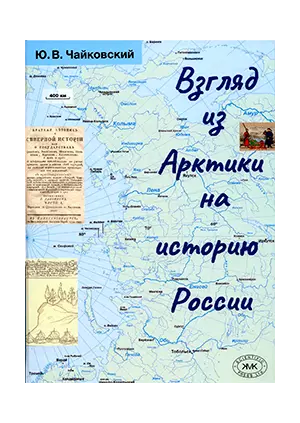
If the cover of the book came out just like a postcard, it would already be worth buying. There, a map of Russia flaunts with a completely uncharacteristic expansion: the North Pole is on the left, and meridians scatter from it; The east is upstairs, and the west is below. Norwegian thromseo perched in the lower left corner, in the upper left - Alaska, in the upper right - Hokkaido. Only now the European part of Russia has not placed on this card, and the problem is not in the projection error, but only in an unusual presentation.
Tchaikovsky notes that the history of the development of the Arctic is mainly written by polar explorers who (it should be noted as an exception, the book “Arctic Mirrors” of Yuri Slovkin) know the north and his inevitable deprivations, but are not able to analyze the historical context in which their predecessors traveled. In historical studies of the development of the North and Siberia, climate and moral changes that have occurred in 300 years are not taken into account. And this is all the more strange if in the research of Europe and European Russia these and many other factors to ignore simply indecent.
Yuri Viktorovich shows that the discoverers of the Russian Arctic, unfortunately, were more suffered by deprivation and if they entered into confrontation, then more often with power and each other than with nature. Well, the North often remained an observer of the victorious and losers - an observer of icy, indifferent, cruel.
“The most warlike were remembered by the Russians in the north of the West Siberian Arctic, almost exterminated in the 17th century, apparently, for this. But Anika began the development of the North of Siberia precisely among the Ents, and nothing was heard about the warrior with them. No, he was by no means kind, willingly and skillfully ruined recent partners, he even had a gesture. But his state in the state led a more smart one than all of Russia, eastern politics - the Stroganovs understood that on the newly occupied land they would have to live. But the pioneers who write much more about, obviously did not understand this, as the authorities did not understand this: everyone selflessly ruined what they lived in. <...> Anika Stroganov created, with the assistance of the three sons and the royal complained letters, as if the Northern Empire - from Murman to Vali and from the New land to Chusova (southern tributary of the Kama), almost repeating the outlines of the former Novgorod Republic. His “power”, by the way, suffered little from the oprichnina and from the Troubles. ”
Zoya Yurkova. Modui architect: the perfect capital in projects. Petersburg Emperor Alexander I. St. Petersburg: Kriga, 2019
Who wrote?
 Zoya Vladimirovna Yurkova-architect, historian of architecture, in the 1990s and zero worked in the committee on state control, use and protection of historical and cultural monuments, author of books and many articles on the history of St. Petersburg. In a word, a wonderful researcher in love with his city.
What is the book about?
The book tells about the completely forgotten by the general public architect Antoine Francois Modui, who worked in St. Petersburg at the court of Alexander I and seriously influenced the appearance of the northern capital, which we know and love. Yurkova, relying on a huge amount of documents, explores the architectural concept of the capital of the empire, not at all under Peter, but under Alexander I by the efforts of the French architect, who was completely lost in the shadow of Karl Rossi. At the same time, the author intensively emphasizes the most important role that the emperor played in the formation of the views of the city as a customer.
Why read?
The city at the mouth of the Neva will always and is rightfully called the city of Petrov - in honor of the will of the Great Tsar, who laid the capital in places that are of poor for living. Great realized utopia. Probably, even before the Pushkin’s “Copper Horseman”, no one doubted whose city it was. However, when we represent Petersburg, we most often recall not Trezini, but the majestic structures of another era - the first third of the XIX century. Analyzing the architecture of the city, we see its unity and monolist, solemnity. But this is not a legacy of Peter.
So the city became by the will and plan of two people - Alexander I and the architect. Despite the stable myth - they say that the city was built at once “this is” - it was the modes, as they would say now, making its own adjustments, managed to achieve a unique urban planning integrity.
The plans of Peter Petrovsky, Yekaterininsky and Alexandrovsky were not consonant with each other and demanded the finest settings. Types of squares, pavilions, architectural rhymes seem natural to us. In this, Zoya Vladimirovna sees the genius of Modui.
Perhaps this is a too picturesque metaphor, but probably the loss of memory of the architect speaks of its organic, complete entry into the body of the city. The author of scientific, but also exciting labor returns the name of one of the creators of St. Petersburg, showing how “simple” harmony is achieved and art.
“In the development of the Great Russian society, a huge role belongs to the natural-climatic and wider-the geographical factor. Since Russia is an agricultural country with a harsh climate and nonsense lands, "the entire lifestyle of the population of the historical nucleus of the territory of Russia was the process of survival, the constant creation of conditions for satisfying only the most necessary, from century to century almost the same needs." In strict natural-climatic conditions under the wrong lands and, accordingly, low yields were primarily required to “agree” with the whereabouts and natural environment, which a person could not manage and to which he was forced to adapt. Hence the mentality of behavior - superstitious fear of unpredictable weather fluctuations and all that, according to the peasant, could affect the crop and, accordingly, on the physical existence of himself and his family. Hence the reluctance to change anything, to use something new, so as not to violate the fragile balance of forces, on which the fate of the crop depended, and therefore survival. Therefore, we have so many people transmitted from generation to generation of folk signs about the weather, about types of crop. At its core, Russian Christianity remained pagan - our Orthodox always believed in the evil eye and damage and had an extensive bestiarium, closely associated with the environment. Everyone knows the dream of Tatyana Larina, in which she sees strange creatures and unusual forest inhabitants. In school practice, he is still interpreted as a satire on a provincial secular society and is compared with the ball at the Larins, where the local elite appeared. It is unlikely that a young naive girl has a cold appreciating view of the environment. In fact, the characters of her sleep are the world of invisible spirits and creatures in which the Russian village and the province lived, on which, along with the god and the host of the Orthodox saints,, as believed, well -being and, most importantly, human life. ”