
Translated material
The Great Leader defeats the virus
How India introduced the most strict three -week quarantine in the world
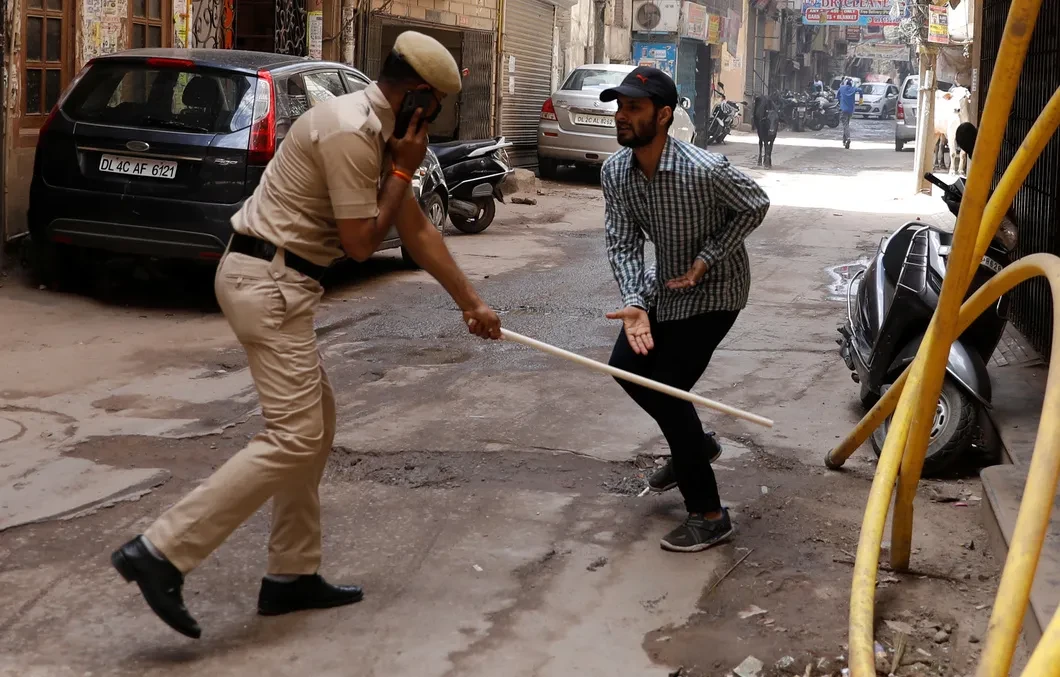
In recent days, the domestic layman, neurotized by rejuvenation, rejuvenation and coronavirus, which already seemed to be, but they are not yet, with anxiety and a bad foreboding, observes the visual side coming from brotherly India. Police there walk in pairs along the streets of empty cities and wet with bamboo sticks of random passers -by.
They urinate everyone indiscriminately: old people, women, children and even foreigners. The psyche of the European of the European video cameras (the Indians themselves are more calm) strengthens the fake groan of those who have not managed to evacuate compatriots, who are now allegedly discriminated: the natives are looking at them incorrectly, they are shocked and generally rotted almost like those who arrived in Moscow.
The picture develops low -use, because it scares potential parallels: the Indian people are perceived with us not only as fraternal, but also as a godly, and if there you can walk along the ridge with sticks of carriers of traditional values, not even an hour, they will cross the experience here.
I’ll try to make a small fraction into the holy cause of dispersing misunderstandings, based on personal experience: 35 years of yoga, vegetarianism and the last 13 years of joint living with Indian people on their territory. The comprehension of all the depths of the soul there is clearly not enough, but an adequate interpretation of the visual series observed today, I hope it will work.
It all started with the fact that on March 19, 2020, the great populist and master of political performance Narendra Modi turned to the nation with a fatherly appeal. In fact, there is no nation in India, but there are hundreds of different peoples and nationalities who speak 447 languages and 2 thousand dialects, but the Prime Minister, part-time-the leader of the nationalist right-hand Party “Bharatia Dzhanat”, tries to not notice such trifles and believes all his subjects who profess exclusively Hinduism.
So, Modi turns to fellow citizens with a request (keyword!) To voluntarily accept on Sunday, March 22, from 7 a.m. to 9 pm Janata Curfew - an unknown story, “People’s commandant hour”.
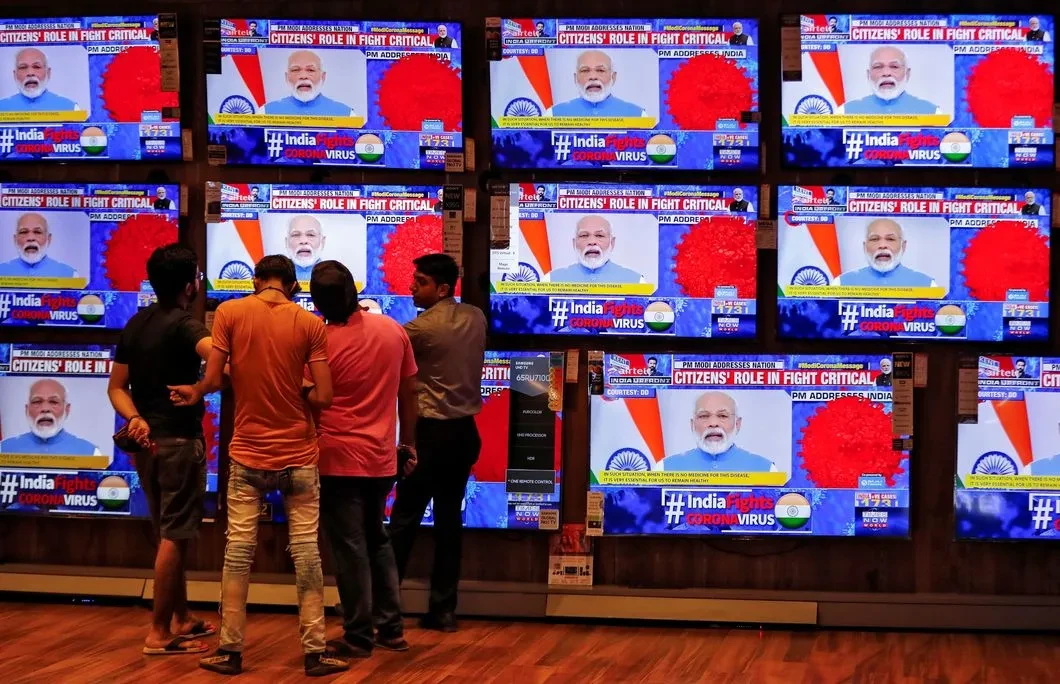
This unknown follows from the definition of “commandant hour” as a ban declared by the state power to be on the streets and in public places at a certain time of the day to people who do not have the appropriate permission. The commandant hour acts in the conditions of the declared emergency, usually in wartime, and its implementation is controlled by military units and the state police.
Since no emergency, especially martial law in India, was declared, Modi “commandant hour” did not impose, but proposed in the form of a non -existent - “folk” - deviation.
The essence of the action was that the prime minister asked citizens to take on voluntarily two unreleased obligations for the sake of delaying the spread of coronavirus: from 7 in the morning to 9 pm remain within the walls of their home, and at 5 p.m. to go out together on the balcony and roofs and clap their hands, rose in the “ghant” and blow in Shankha as a sign of solidarity with those who are struggling with those who struggle with those who struggle with those who struggle with those Coronavirus at workplaces.
Analysts, as expected, focused on the symbolic sound of a “national commandant hour”, since there was no practical, especially the medical meaning in it: 14 hours of self -removal - nonsense for the virus, which is ready to patiently wait.
However, even in the symbolic aspect of a demarche, analysts missed something very important. For some reason, everyone led on the chaff of solidarity, general national action, a single impulse, patriotism, subordination of selfish interests to communal ones, and at the same time they ignored the directly opposite-disconnecting-subtext of the appeal of Modi.
Firstly, “Ghant” (bells) and “Shankha” (sea shells) are attributes of Hindu religious rituals. Neither Christians nor Muslims hold the bells and shells at home, so they will have to be content with “second -rate” clapping in their hands to demonstrate national solidarity.
It seems to me that such discrimination looks from the outside as a nationalist provocation, inappropriate in a situation where citizens seem to be called to demonstrate the solidarity of a single nation?
“What are you blowing in your roof? Ah, you do not blow, but only clap ... wrong, it means you are some kind. Well, well. "
Secondly, it is not clear with whom Modi offered Indian citizens to solidarize, because at the time of the announcement of the “national commandant hour”, March 19, it was recorded in India-you won’t believe it! - 199 cases of infection with coronavirus (31 of them - from Italian tourists), of which 20 have already managed to recover, and only four, to great sadness, died.
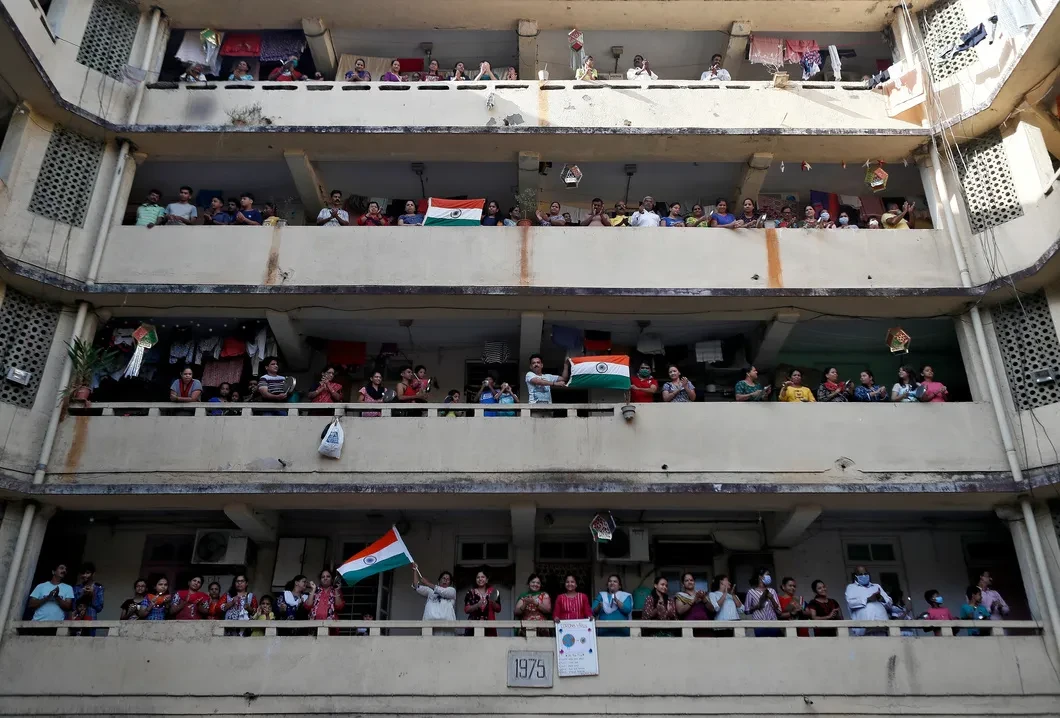
And then 1 billion 400 million of the inhabitants of India, the Prime Minister offers to go to the balconies-bins and get together and get in the honor of those who selflessly heal at this moment 199 patients in the vast vast country. Not even funny.
Obviously, Narendra Modi was very scared. I was frightened of what is happening with coronavirus in the world, and what could theoretically happen in India. The Prime Minister cannot be condemned for this fear:
In 1918, for several months, the Spanish flu took the lives of 18 million Indians (6% of the population) - more than people around the world over the four years of World War I died.
Despite the fact that the Covid-19 is even remotely compared with the deadly “Spanish”, it can be assumed that for India, with its missing national mentality, ideas about public and individual hygiene, even a coronaviral trifle can turn into a catastrophe.
Well, wonderful. We admit that Narendra Modi was really scared for the health of the nation and, having seen enough of the Internet rollers about the singing arias on the balconies of Italians, called on fellow citizens to do something similar in a voluntary order.
So, Sunday has come, March 22. With voluntariness, as one might expect, Indian citizens did not grow together. Especially in terms of understanding where and why the father of the nation called them. At exactly five in the afternoon, one part of the population began to blow in the sea shells, the other - to ring the bells, a minority with irregular religions - clap.
Someone was doing this on the roof, someone on the balcony,
But the majority is on the street!
People gathered in the squares and, blurring with their unique ones - from ear to ear - cheerful smiles, clapped their hands, packed and rang in a single impulse of solidarity and fraternity - with their neighboring coronavirus, with those who are fighting against coronavirus, with Muslims, Christians and all of humanity. This is India, baby!
Most of all, however, I was shocked by the information background, on which the "People’s Commandant Hour" unfolded. Sincerely, not understanding the medical meaning of home seat, the Indian man tried to rationalize the initiative of the prime minister in his original mood. Local Twitter, Votsap and Facebook were flooded with explanatory notes of the following content:
"Hello! I beg you not to leave the house after 10 pm and until 5 a.m. From the air will be scattered by drugs that kill Covid-19 !! Share information with all your friends, relatives and family members. Thank you! This applies to Delhi. The whole city. Sprayed from helicopters. "
Similar messages were distributed in other large cities - Bengalu and Chandigarkh.
A special excitement of hermeneutics stimulated the ritual planned at 17.00. The idea of honoring doctors who selflessly save 403 patients from foreign influenza (so many of them were already March 22), in its pure form - who would doubt it, so the people interpreted the event in accordance with ancient traditions.
The legend of Bollywood actor Amitabh Bachchan wrote on his Twitter:
“March 22 will be Amavasya, the darkest day of the month. Viruses, bacteria and evil spirits reach at this moment maximum strength and influence! Clapping in the hands and vibration of the "Shankha" reduce and destroy the potential of the virus. The moon goes to the new Nakshatra Revati. The accumulated vibrations also contribute to the improvement of blood circulation. ”
Another folk idol, Radzhininanth, was decorated with Hyutyub and Twitter by a post, combining deep knowledge in the sofa virology with the subtle art of expression of love for the father of the nation: "The prime minister’s call to conduct on March 22 the national commandant hour will help India to avoid the decisive, third stage of the communal spread of coronavirus in the country."
The post of Radzhininantha managed to read and repost tens of thousands of Indians before Twitter removed him for the spread of inaccurate information.
The court and the case, the “people's commandant hour” passed, and on Monday the people threw the people into the streets to share impressions, and most importantly, to rejoice that in comparison with the monetary reform of 2016, when Modi overnight, without any warning, reserved the savings of several generations, the new initiative of the authorities turned out to be completely unassuming.
Naive Indian brothers. Truly, the ability to study with examples of history is not among the advantages of the God -bearing peoples of the planet.
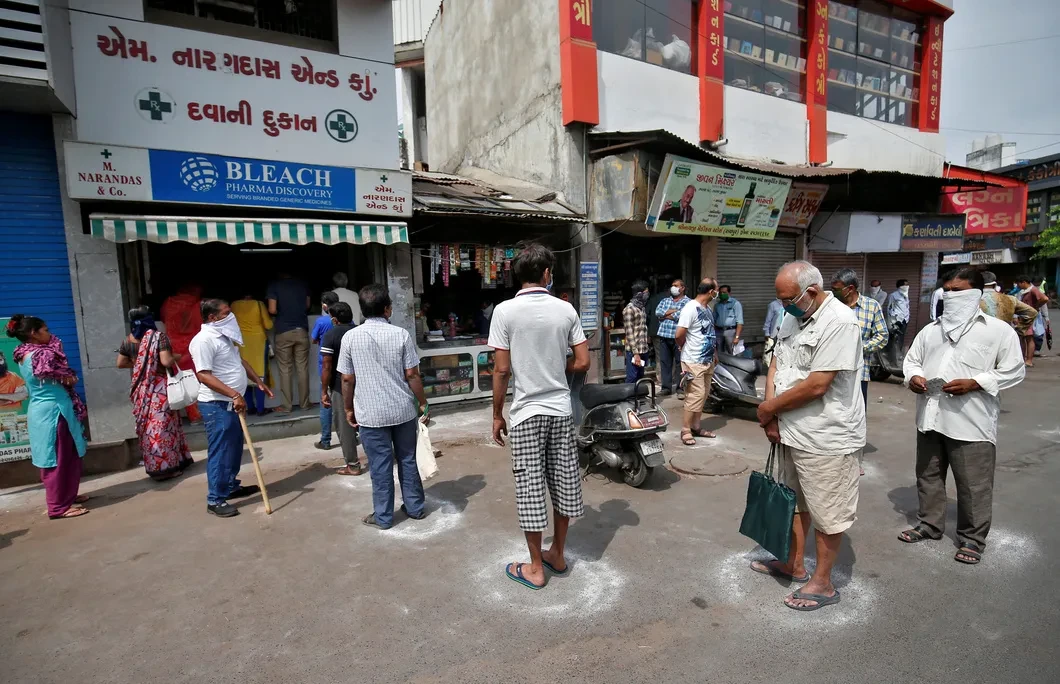
The very next day, Narendra Modi, in television circulation, set the fellow citizens before a new fact: starting from the nearest midnight, it is necessary to “forget what it is - to leave the house to the street,” because a forced Lockdown (strict isolation) for three weeks is introduced throughout the country.
The stick beatings with which the Internet is full is the reaction of the authorities to the physiological inability of Indian citizens to sit at home. The point here is not in the pathological community of Indians, who do not think of existence without mutual communication 24 hours a day, it is desirable-non-stop, but that almost the entire population of the country earns money on the street: in trading shops, on the roadsides, in the fields, in the jungle, at construction sites, refueling, tea and dining rooms.
The Internet in India is a place for the exchange of likes, emoticons and wishes for a happy marriage life, the most advanced-for purchases of Chinese trifles in the Flipkart online service. All. There is no more Internet. There is no distance online laundry outside the city of Bengalu, serving the call centers of the American and British business, in India. Do you want to earn something? Go outside!
And here is the father of the nation, just like in history with monetary reform, without any warning, it puts the nation before the fact:
From midnight from home - not a foot! On the 21st day. You will go out of the threshold - we’ll beat it!
The population took a couple of hours to purchase a three -week food supply for the population. It should be borne in mind that in India no one has Kharch at home and does not make stocks in principle: the Indians are used to always consuming everything fresh: it ended - walked to the nearest shop of 25 meters and was cooked.
Why are there such torment? For the fact that in two months the epidemic 571 people fell ill with new flu (as of March 24), and 10 of them even died.
And this is in a country where 26 thousand 703 people die every day, but the population still continues to grow exponentially!
As a compensation for its insane, in terms of disproportionate and inappropriateness of action, the authorities promised to write out 15 thousand Rupia ($ 2.1 billion) for the development of healthcare infrastructure. And transfer another 22 billion to the poor.
The amount seems impressive, but this is an optical illusion. 22 billion is $ 16 per person. Not even enough for the funeral. Those who will certainly die from hunger.
And to whom are they going to pay? 90% of the inhabitants of India are employed in the shadow economy, are not listed anywhere, many have no bank accounts for which subsidies can be received.
Another problem is labor migration. Tens of millions of people perform forced work in large cities located far from their native villages. Their families survive only thanks to the regular money transfer of breadwinners.
Now the breadwinner is ordered to sit at home and die off hunger. Themselves - in the field, their families - remotely. Of course, they do not sit at home, go out onto the deserted streets, senselessly wandering around in search of some kind of production, flanching bamboo sticks from police officers and, in the end, leave the cities, stealthily making their way to their native places. Hundreds of kilometers on foot, because public transport also does not function.
I have no desire to enter into discussion about the real danger, which is the flu version of 2020. I am not an epidemiologist, not a virologist, I don’t understand anything about it. My dissertation is devoted to mass psychoses, hallucinations and the intricacies of manipulating the crowd, so the only thing I can say on the merits of the question:
Humanity did not survive such mass hysteria and dug for consciousness on a planetary scale even on September 11, 2001. What is happening today in the world is beyond all rationality.
I have no desire to reproach the Indian authorities for caution. It’s just that in my view such caution borders on madness. Or maybe with a crime.
Since the beginning of the epidemic at the time of writing this article in India, 19 people died from coronavirus. Can another 1000 die? Probably they can. And they may not die. Nobody knows this for sure, because we have nothing today but not confirmed hypotheses, hype, horror stories, tantrums and irresponsible forecasts claiming scientific.
But we can say with confidence that a lot of people will die directly because of the Lockdown of Modi. Without any hypotheses, by virtue of only common sense: it is impossible to sit for 21 days at home, not to earn anything, not to feed children and old people and manage to die at the same time.
When I evaluate the actions of the Prime Minister, I am not leaving the feeling of dejavu. In 2002, as the first minister (governor) of the state of Gujarat, Narendra Modi did not prevent bloody pogrom on religious grounds, which cost the lives of 790 Muslims and 254 Hindus. He was then accused for a long time of ethnic cleaning and genocide, but in court he was not able to prove guilt, so the only punishment for the politician was the ban on entry into the United States and EU countries.
Since 2014, Narendra Modi and his party of nationalists have been steering from the state, but the whole country. And here is what is characteristic: the rhetoric of power is pure and noble. Apparently, her thoughts are also pure and noble.
However, whenever I try to objectively evaluate Modi’s demarches - from the profanation of environmental reforms by the subbotniks to collect pieces of paper on the street (the program “Pure India”) and the installation of public toilets to the exchange of cash banknotes, the Law of Citizenship and now Lokdown - nothing but populism, economic ignorance and religious arrogance, I am not in these symbolic tins. I find it. And from this anxious feeling that many Indians of a bright future will not see by no means because of the coronavirus, only intensifies.