
Translated material
The Ministry of Internal Affairs recognized the "error"
The police beat Boris Martynov, threw drugs and accused of sales. He managed to prove his innocence. How does it happen?
Boris Martynov is unknown, he does not have money for high -class lawyers and no legal knowledge. But there is drug addiction and criminal record. In practice, this means that Boris is most vulnerable to attempts to falsify a criminal case against him under Article 228 of the Criminal Code of the Russian Federation - “Purchase and storage of drugs”.
The quality of the court and investigation according to the 228th causes the greatest number of complaints in Russia, and the article itself has long been called "People's". According to official figures, more than a quarter of the entire prison population of Russia sits on charges related to drug trafficking. Martynova is 35 years old, lives in Krasnogorsk near Moscow. He does not have an official place of work, a drug addict and previously judged for drug storage. Boris has repeatedly passed the rehabilitation programs in attempts to get rid of addiction. Treatment helped, but several times he had disruptions. In general, Boris Martynov was not at all like a person whose history could get out of the practice of using the “anti-drug” article of the Criminal Code of the Russian Federation. However, this happened in an amazing way.
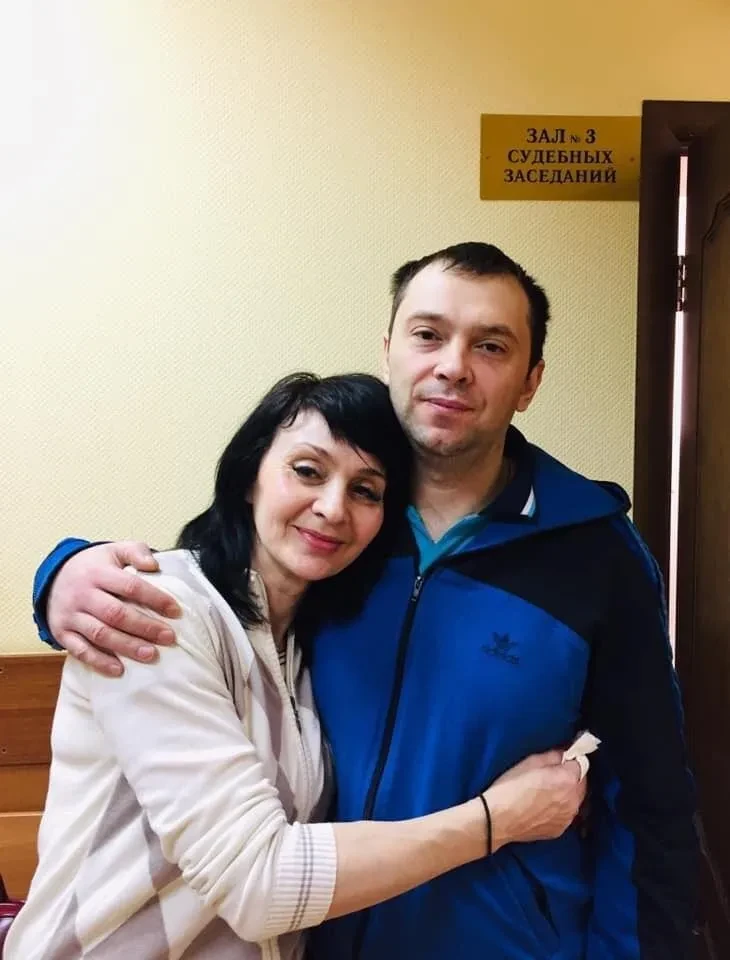
This story began on November 1, 2018, when Martynov met his friends, and in a forest belt on the outskirts of Krasnogorsk they used the newly acquired heroin. The whole drug, which they bought, as always, used it themselves - no one simply had free money for an extra dose. This is important. Because the consumption of narcotic drugs in Russia, of course, is prohibited, however, only administrative liability is provided for this: a fine of up to five thousand rubles or administrative arrest up to 15 days. There is no question of criminal liability for drug consumption. At least should not go.
Nevertheless, immediately after Boris and his acquaintances used heroin, three drunken aggressive men came out to the clearing where they were. Martynov recalls that at first he decided that these men had a lot of crossing alcohol somewhere nearby and are now wandering around the environs in search of adventure. Men attacked Boris and his acquaintances. Only when Boris noticed that his two friends were lying down, with his hands behind his head, he guessed that, apparently, the attacking - police officers. Martynov also lay down on the ground. According to him, this did not stop the beating - they continued to strike.
Only after this is one of the attackers with the words: “Here, look who we are,” showed Boris the certificate of a police officer.
After the detention of Boris, along with three acquaintances, they delivered to the department for the control of drugs of the Ministry of Internal Affairs in Krasnogorsk. Almost immediately, upon arrival, Martynov became ill - his heart fell ill, and the police called him an ambulance. Doctors, having examined the patient, made a preliminary diagnosis of “autonomic dystonia syndrome” and, importantly, did not record any injuries.
Boris describes his presence in the department as follows: “Entered the office, put in a chair. We are still in handcuffs, sitting. Employees were constantly leaving in the office, there was some kind of chaos. At some point, one of the police officers brought a bottle of vodka, they drank. ”
A further description of events is a version of the investigation confirmed by all witnesses. After some time, the employees finally decided to engage in the supporters, and, as follows from the indictment, two of the police officers - detectives Sergey Seliverstov and Spartak Sevumyan (both participated in the detention and, according to the witnesses, were very drunk) - began to ask them questions. First of all, they were interested in exactly who acquired heroin. The answers of the detainees did not suit them, and the police moved to violence.
“Seliverstov with a strong blow to my chest drops me from a chair, I fall with a chair to the floor, he takes the same metal chair on which I sat, and the same metal stool inflicts me several blows on the face and body in the chest area,” Boris recalls.
Then Sevumyan also connected to the beating - the lying Martynov was beaten with his feet. Boris was broken by two ribs and defeated his face: later doctors recorded the bruises of soft tissues, the hematomas of both eyes with hemorrhage in the left.
“Then (and to the present moment, in principle) I was in a shock state, as they beat me for no reason,” says Boris. “I got the impression that even if we are now killed in the department, it will remain unpunished.” Therefore, when after some time Martynov was again brought into a separate office, where the Seliverstov and Sevumyan were already sitting, and forced to turn his pockets, then, having discovered a bundle unknown to him in one of his pockets, he almost did not argue:
“I said that since they already decided that it was mine, it turns out that this is mine.”
The witnesses appeared in the department only in the morning, a few hours after the events described. During this time, Boris managed to sign several documents, the text of which did not even read - there was no sense. And even later - at about seven in the morning on November 2 - Boris's mother Natalya Martynova arrived in the department.
“About six, my son called me on a mobile phone from an unknown number and said that he was detained by police officers and was in the Ministry of Internal Affairs in Krasnogorsk,” recalls Natalya. - I immediately went there. I was met by a thin police officer who refused to introduce himself and present a certificate. He refused to explain what my son was detained for, and led him out of the office on the second floor of the building. Boris stood on his feet with difficulty, bending over, holding on to the ribs, his face was swollen and hematomas around his eyes were visible, his face was in the blood. The blood was fresh, and his clothes were also in the blood. He asked to call him an ambulance. "
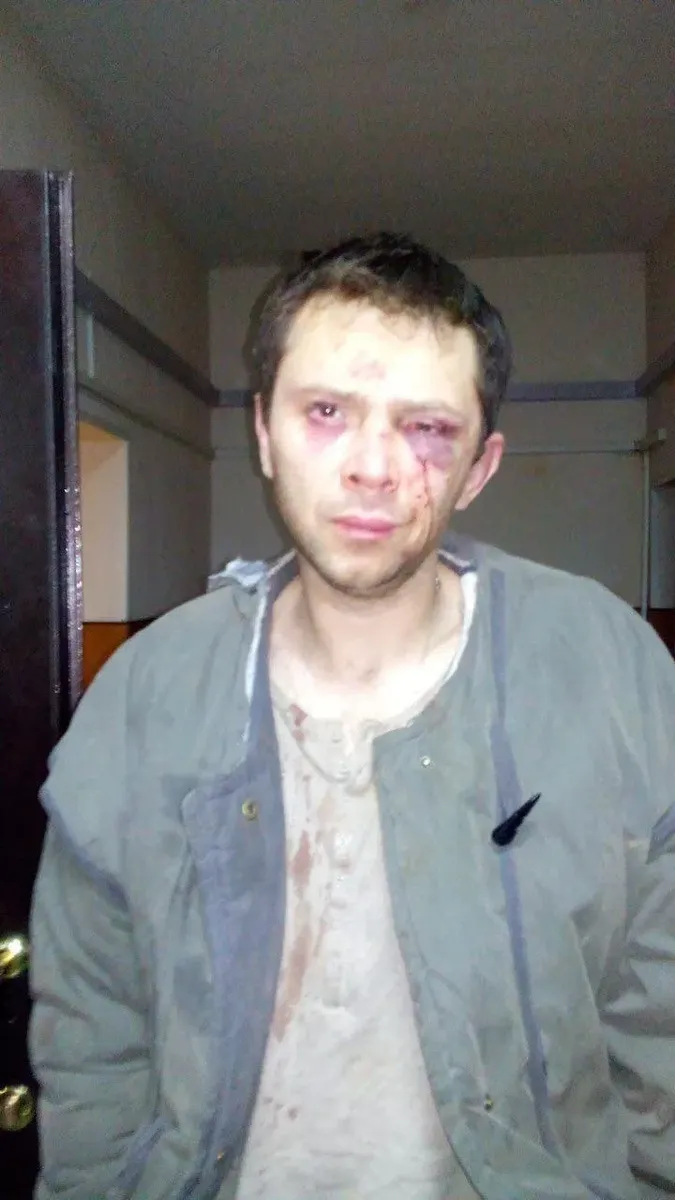
Natalia was able to photograph her son on the phone. Boris told his mother how he received bodily harm.
After the operatives took him to the examination (as a rule, if a person has injuries, this is necessary in order to be accepted in the IVS), where Martynov officially recorded bodily injuries. Then-to the investigator-to document the results of the night "operational-search measures." On November 3, 2018, the Krasnogorsk court elected Boris, who was in the status of a suspect in the criminal case of drug sales, a preventive measure in the form of detention. In the pre -trial detention center, Boris had to spend another eight months.
Natalya Martynova decided to fight for her son.
“The lawyer immediately said to me:“ What is the article, 228? Without options, forget! " She recalls. - No, can you imagine? What is this lawyer, why is he needed? "
Natalia wrote appeals to all instances, went to personal receptions, and in March 2019 she turned to human rights activists to the “Committee against torture”.
“We began to collect evidence on the beating of Boris by operatives and seek a normal verification of this fact from the UC, but it was with the criminal prosecution of Boris himself,” says Peter Khromov, lawyer of the Committee. - This is the standard scheme of our activity, with the rare exception, we are engaged in only the work on torture. At that time, when we took up this story, Martynov’s case on drugs was already in court, there were meetings. Boris’s lawyer was according to its intended purpose - such as a rule, at best, are uninitiated, and at worst, they also play along with the investigation.
But Natalya Martynova built a good scheme of interaction with her son’s lawyer: she asked the lawyer to voice her questions at court meetings.
And, simultaneously, learning from the lawyer how exactly the meetings take place, she wrote questions that she considered necessary - not official positions, but precisely such hints “by hand”, simply sound thoughts of the person interested in the process. For example, she wrote questions that should be asked to one or another witnesses. The lawyer asked them. And in the end, there were many important and inconvenient for the investigation of the moments in the protocols of court hearings. ”
Meanwhile, the work on proving torture continued. On June 24, 2019, the Investigative Department of the State Pedagogical University of the IC of Russia in the Moscow Region opened a criminal case under paragraph “A” of part 3 of Art. 286 of the Criminal Code of the Russian Federation ("excess of official powers with the use of violence"). First, in relation to unidentified persons, and a few months later, the investigation was determined by the accused - detective Sergei Seliverstov and Spartak Sevumyan.
The latter was detained in the fall of 2019, at first he denied everything, but by the end of the investigation he gave a confession and is now in the bench. But Seliverstov will never be able to appear before the court: while the investigation was coming, in August 2019 he was shot dead in the Saratov region. According to reports, the murder is in no way connected with professional activities, occurred after dismissal from the bodies of the Ministry of Internal Affairs and is of household in nature.
The consideration of the case of drug distribution in court brought unexpected results - witnesses caused by the court at the insistence of the defense gave evidence that refuted the version of the investigation and the testimony of operatives. As a result, Krasnogorsk City Court first freed Martynov from a pre -trial detention center on a recognizance not to leave, and then, September 13, 2019, decided to return the criminal case to the prosecutor’s office to “eliminate obstacles to its consideration”, in other words, for work on mistakes.
After that, the situation, although slowly, with the application of great efforts, began to unfold towards the law. So, on February 17, 2020, the same Krasnogorsk investigative department opened a new criminal case - this time to toss Boris drugs and falsification of criminal materials against him. Such actions are prohibited by Article 303 of the Criminal Code of the Russian Federation. In this matter, however, there are no accused yet.
And on February 28, 2020, the criminal prosecution of Boris was finally terminated. Martynov, with the support of the “Committee against torture”, took more than five months - the court returned the criminal case of Boris to the prosecutor's office on September 13, 2019, but all this time the Ministry of Internal Affairs could not decide on this unprecedented step, because it was necessary to stop the persecution on rehabilitating grounds.
Simply put, this means that the Ministry of Internal Affairs had to officially admit that they were mistaken. And the Russian system is not ready to recognize your mistakes.
“And the point is not only that Martynov can now recover compensation for illegal criminal prosecution and for eight months in a pre-trial detention center, and not only that one of the current employees of the Ministry of Internal Affairs will now be responsible for what happened,” explains Peter Khromov. - For law enforcement agencies, this is also a matter of prestige. For some reason, in Russia, the system is terribly painful to recognize its own imperfection. Although, in my opinion, this imperfection is absolutely obvious to everyone who lives in Russia. For example, an investigator of the Ministry of Internal Affairs, who signed a decision on the termination of the criminal prosecution of Boris Martynov, is unlikely to personally responsible for that story - this policeman has no relation to her at all, consider it.
However, Natalya Martynova said that the investigator was angry when Martynov gave his resolution. Grinkled due to the fact that they decided to read it before signing it in receipt, and then also expressed Natalia that, they say, there is no smoke without fire, and therefore Boris was guilty of something, since it was brought up for him. He, apparently, perceived the need to stop the persecution as an annoying injustice. "
However, the investigator refused to draw up a decision in accordance with the law and include an explanation of Boris’s right to rehabilitation.
“This right includes the right to reimburse property damage, eliminating the consequences of non -pecuniary damage and restoration in labor, pension, housing and other rights,” says Khromov. - The state is obliged to fully compensate for the harm caused to a citizen. The prosecutor on behalf of the state is obliged to make an official apology to the rehabilitated for the harm caused to him. After all, it was the prosecution authorities that approved the indictment in sending the case to court and supported the charge there. Until now, official apologies have not been apologized. We will continue to fight: we will file a complaint in court. ”
Although the criminal prosecution of Boris was terminated, the very case of the "anti -drug" Art. 228 of the Criminal Code of the Russian Federation continues to exist, because, in theory, the investigation must be established where the drugs that were thrown into the Martynov pocket came from the police department. It remains only to hope that in the end it will be done. Although so far this hope is still very far away.