
Translated material
"The hostess forgave me rental until the fall"
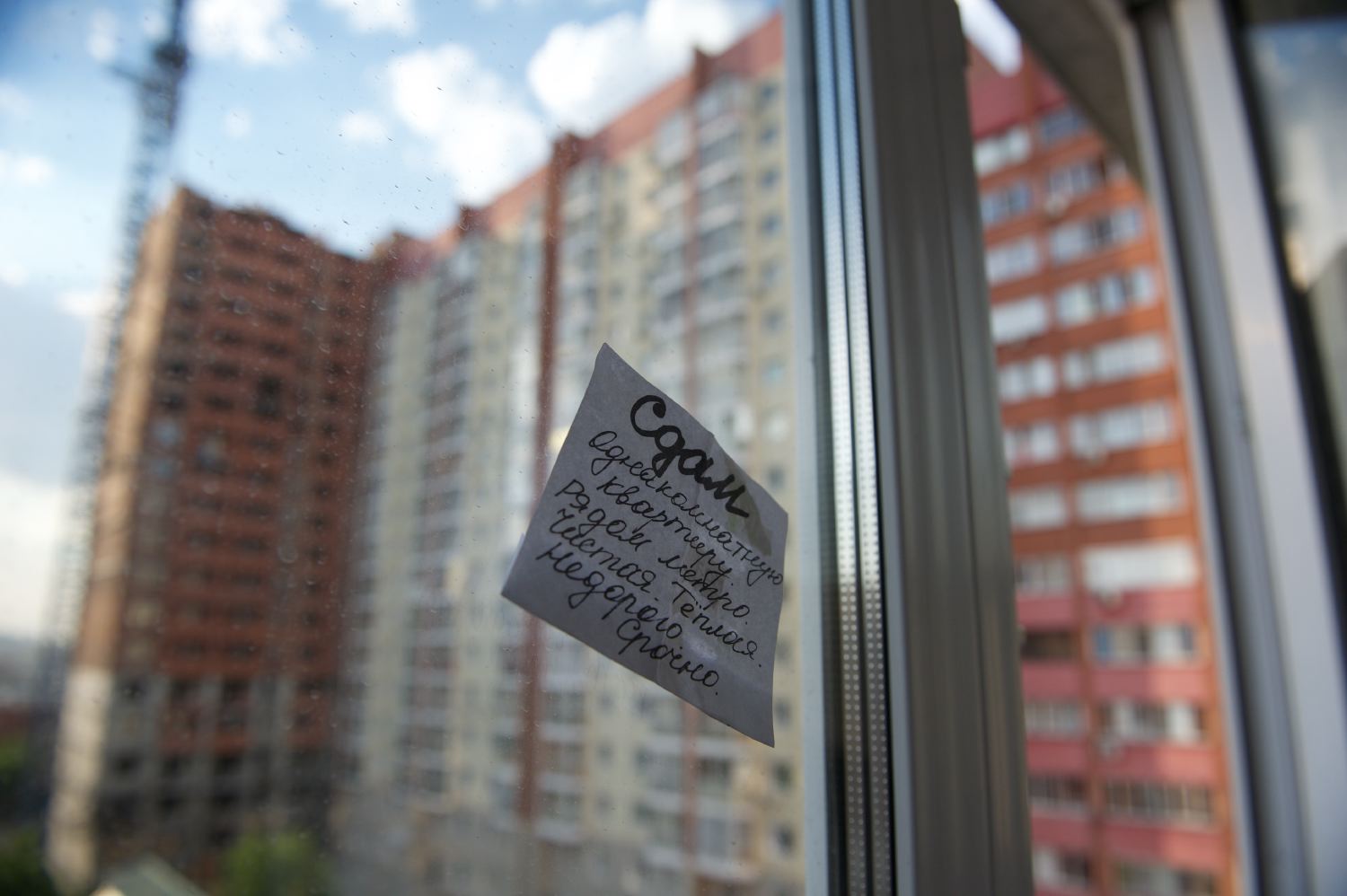
In the rental market - a full captain. Commercial structures cannot pay for renting their premises and with great difficulty agree on delay and discounts. But the rental of apartments is definitely not expensive, and many victims of the Covid-19 even agree on significant discounts or rental holidays
The mother of three children, St. Petersburg Julia Burakova, says that after the abolition of a number of business events, her income as a freelancer was greatly reduced. She rented an apartment in Moscow, in the area of the New Cheryomushki metro, for 55 thousand rubles, but in mid -March she decided to move with the children to the country in the Leningrad region. Suddenly The lessor herself proposed to leave things in the apartment: trying to give someone housing now, in her opinion, it is pointless. “For me it was a complete surprise: the world, it turns out, is not without good people,” says Julia Burakova. “The hostess is ready to wait until the fall, if my situation changes, we can return.”
Freelanger photographer Marina Besvonova tells that she canceled the household owner of housing until the summer. "Cho, he says, tolerate, it’s hard for everyone now."
There are many similar stories at the moment. Ekaterina Gerashchenko rents an apartment in the Korolev near Moscow, the tenants were not able to pay a few months ago. “I was morally ready at a 50% discount and for a delay in payment of several months,” recalls Catherine. It would not be easy for her to drive a woman with children out into the street, but to lose this completely There was no income. Fortunately, the Zhilka still found a job and did not have to expel anyone.
Read also Instructions: how to live in Russia in the era of the Pandemia "Such Affairs" has collected recommendations, tips and ideas for what is also allowed to do on quarantine
According to CIAN, in early March, the average cost of renting a one-room apartment in Moscow was 37.1 thousand rubles per month, in St. Petersburg-28.5 thousand rubles. Formally, there is no possibility of influencing the owner: it is impossible to oblige him to reduce the rent, explains Julia Galueva, deputy general director for legal issues of the Amulex NUS. “Nevertheless, when it comes to relationships between two individuals, the owner of the apartment and its employer, they have the right to decide either about changing the rent, or the exemption from it at any time of the contract and for any period,” the expert explains. Many owners are voluntarily ready to make concessions to tenants. “If you have problems with payment at the present time, do not worry, let me know, I’ll go towards you, wait,” the call of one of the landlords on Facebook quoted on Facebook as a Facebook. Users in the comments confirm: there are enough examples, and experts predict that many Russian landlords will have to cut expectations from rental income.
The March survey of the Center for Strategic Development (CSR), conducted among top managers of more than 500 companies, showed that each fifth Russian structure is already planning to reduce salaries. Negative sentiments prevail in all industries, segments and concern everyone, from small to large business, with the exception of the energy sector and resource mining, the study says. Many companies surveyed by the CSR expect revenue in the next two to three months, and 56%already see a negative impact on the execution of contracts, as a result, by the end of 2020, the companies are waiting for a reduction in turnover by 23%, and profit by 19%. One of the priority measures to combat the crisis of adaptation of the company calls precisely personnel changes and optimization of the wage fund. Most expects that by the end of the year the number of employees will be reduced by 16%.
In the USA, meanwhile, Keep your Rent (“Do not pay rent”) is gaining popularity. The participants in the movement suffered due to the economic crisis of the last weeks and refuse to pay for rental housing in April. Members of the movement today are in Toronto, Ottawa, Montreal, Los Angeles and Portland-only a few thousand people. The purpose of the movement is to put on the authorities to resolve the issue with the support of tenants of housing affected by the distribution of Covid-19. In addition, Keep Your Rent calls all the residents, regardless of the financial situation, skip the rental payment as a sign of solidarity with those who cannot afford it.
Russian tenants of commercial real estate, whose companies were faced with strong losses, are often harder to agree with the owners of the premises. In Yakutsk, the store owner said that the lessor offered a 20% discount on April, but only if paying a week ahead of schedule. “I decided to show the middle finger and move out in May,” she wrote on Twitter. The co -founder of the field service of the Kiwi Catering banquets in the same Yakutsk said that he received a 25.9%discount from the lessor. And the founder of the chain of stores "Mom, buy!" Daria Zarykovskaya said that the owner of the premises in St. Petersburg himself announced a discount on April at 20%. But the representative of the Voronezh network “Pizza Day” (controls three establishments in the city), for example, says that one of the tenants of the network refused to consider the situation for force majeure, does not see the reasons for panic and is not ready to endure losses.
Not only private owners of premises, but also state structures are reluctant to make concessions to tenants. According to one of the Moscow restaurateurs, on the basis of the decree of the Moscow Mayor “On the introduction of an increased readiness regime” and the order of the Government of the Russian Federation on delaying rental payments for three months for small and medium -sized businesses, he asked for a lease of the Scientific Institute. But he refused the request. As the lessor explained, the delay is provided only in relation to property included in the special list of the city hall. There was no this room in it. The second argument was that the lease agreement was concluded according to the results of an open auction, and a change in conditions unilaterally is not allowed. The owner of the premises found the decrease in revenue against the background of the spread of the COVID-19 with ordinary entrepreneurial risk. And the lack of funds, violation of obligations by counterparties, the financial and economic crisis and changes in foreign exchange rates do not belong to insurmountable forces, the lessor said. In addition, he reminded the restaurant that a financial reserve of 300 billion rubles was created in the Russian Federation to reduce the negative impact of the COVID-19, a moratorium was introduced to verify small and medium-sized businesses, expanded program lending and restructuring credit rates, etc. The provision of a deferral can only lead to an increase in the rental debt, the owner of the premises counted.
Read also Life after bankruptcy, a pilot from Irkutsk, talks about what could be worse than financial failure
The owners of large shopping centers explain: the easiest way to get vacation to those who are easier than others will subsequently cope with the consequences of the crisis are large tenants whose work allows objects to get additional customer traffic. It is almost impossible for representatives of small businesses working in shopping centers as island trade. It is not easy to predict how the situation will develop. The study of the Central Administration of the CSR notes that it is possible to formally raise the question of the impossibility of paying rent now in two cases: due to a sharp devaluation of the ruble or an unprofitable decrease in attendance. But if in the first case the practice has already been formed, the courts are inclined to preserve the previous terms of the contracts, then in the second it is completely unclear how they will regard the pandemia of the coronavirus.
Coronavirus Pandemia Russia