
Translated material
Cape Town Letter: Apocalypse here for a long time
The whole planet sits on quarantine. In the South African Republic, police accelerate crowds who do not want to isolate with water and rubber bullets, the black slums of the Cape Town are declared a zone of military operations, in the city center, the mountains are burning, the rich white under the cartoon is recorded by storiz. Ksenia Mardina moved to South Africa ten years ago and in her letter tells how Koronavirus came to the country where the Apocalypse has long become familiar and overlap on the economic collapse, unemployment, millions of HIV-infected and daily shootings of gangsters.
 The “World on Fire” newsletter every day we send you a letter to tell you what is happening in the world
I
Fire and storiz
“The virus does not take black,” Cynthia said, she was Nyaray, the nanny of my two -year -old son. From Zimbabwe, she, like thousands of African immigrants, arrived in South Africa to work and took a pseudonym, which is easier to pronounce and remember.
There was a second official day of the coronavirus epidemic. President of South Africa, Sirl Ramafos, has already announced a state of emergency, closed schools and air traffic with affected countries. There were 60 sick people in the country, among which there were not a single black. Synthia and I stood in the kitchen of my house.
“They say you need to stay away from the whites,” she explained, catching my surprised look. And then she added: - But I, of course, do not believe this. We can all become infected.
The racial question is manifested in South Africa with the emergence of each new problem. He takes different forms and comes from new corners, appearing on the agenda with the constancy of malaria mosquitoes, which hatch from stagnant swamps every season. The racial question is hidden both for pandemia and how any cataclysms experience in the country.
The “World on Fire” newsletter every day we send you a letter to tell you what is happening in the world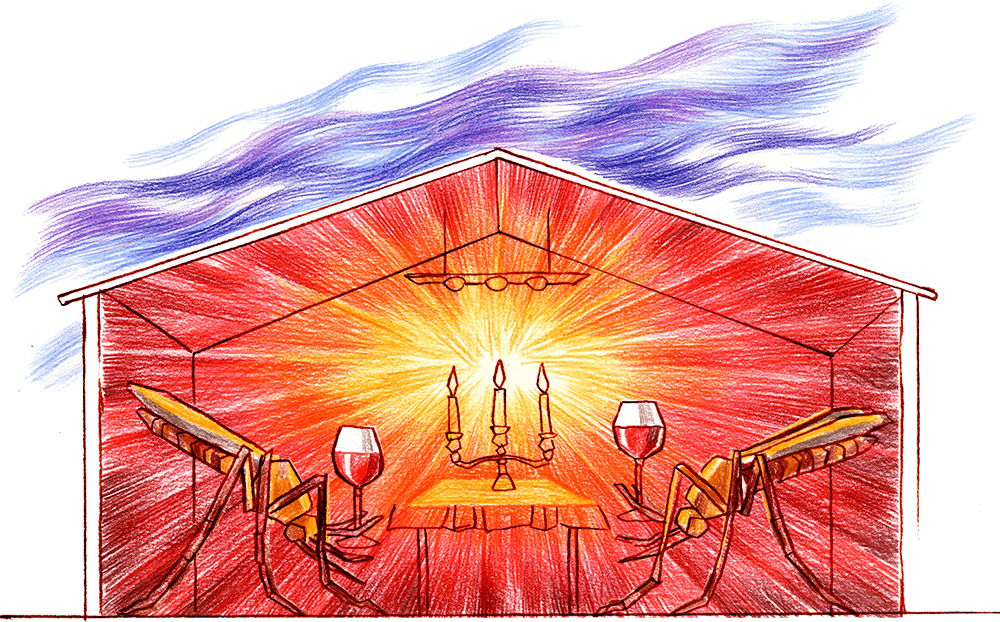
The president’s speech about the introduction of a state of emergency effectively coincided with mountain fires right in the center of Cape Town. The city is wrapped in the slopes of the dining room of the mountain and mountains of the lion's head, on which all evening of Sunday, March 15, shrubs burned with an orange flame - meters from residential buildings. The brown-brown sky, the roar of fire helicopters and the ranks of the audience shooting storiz-fires flared up in the rich, and therefore mainly white areas. Instead of panic and save the acquired, everyone continued to drink Sunday Chardona, entertaining subscribers with cheerful lives.
The same fires have repeatedly happened in the slums - the poor areas of the cities of South Africa, where the black population lives. During an apartheid, blacks, meters and hinds were forbidden to live in good areas of the city - green, beautiful and close to the center. Special reservations were built for them, often in the most uncomfortable climatic conditions. In Cape Town, these are the plains south of the dining room of the mountain, where the sun bakes in the summer, and in winter constant floods due to heavy rains. People live in shacks made at best made of thin drywall, and in the worst - from plywood, slate and plastic. Most often they live whole families with a total income of $ 150-200 per month and one smartphone for all. It does not occur to anyone, even local millennials, to write down the story at the moments of the fire.
II
Quarantine in slums
On the third day, the epidemic of Cynthia said:
-He still takes blacks, but not as much as the whites.
By that time, the first case of infection in black was confirmed, and the theory of racial immunity to the Covid-19 virus cracked. Cynthia still came to work, taking a few simple but important precautions: instead of going to us on two minibuses, she agreed with a friend who brought her back and forth along with two more neighbors. Upon arrival, she immediately processed her hands with a sanitizer and changed clothes. And, of course, she put her daughter and husband on home quarantine.
True, home quarantine in a life in African slums is not the same as home quarantine somewhere in Madrid or London. Buying with dressing paper and pasta for a month will not work: there is no place to store it, nor the money for which it is bought. The house is a very small area, usually one room, more often without sewage. In addition, the majority are paid not monthly, but by days, so two weeks of missing work means half less income per month. Skipping work means hunger, you can’t frighten coronavirus.
Letter from Almaty: that during the plague Konstantin Nagaev , Irina Shcherbakova , Julia Prokopova a letter from Kazakhstan - about closed borders, martial law, underground feasts, expulsions of coronavirus with songs and self -identification with prostitutesApocalypse in Africa is familiar. Hundreds of years of slavery and forty -six - apartheid, its more civilized variety of South African origin. Economic collapse, millions of HIV-infected, shootings of gangsters, in which someone innocent, 30 percent unemployment and electro-crisis die every day-electricity has been regularly disconnected for five to five hours a day for five years. How lucky. No one warns in advance.
More about crime. The basic rules of life in a private house - put an electric fence higher, grilles for each window and in the corridor inside the house and pray. You look, it will carry it, but most likely not.
III
Ubuntu
My personal meeting with the apocalypse occurred in Johannesburg 10 years ago, when I first arrived in the city center.
Until 1994, Johannesburg was the most developed, beautiful and fashionable place on the whole continent. Bankers and owners of gold mines built skyscrapers, calling them their surnames, architecture imitated New York, and in stores fashionable outfits for white ladies were sold-it was forbidden to wear and buy this with black. After the abolition of the apartheid, the bankers and ladies rushed out of the center, away to the suburbs, where they built large houses with high fences wrapped in barbed wire - in the hope that they will not be cut in their own bed by those who had recently sweeping their floors.
The center of Johannesburg was filled with people who could not appear on the streets for half a century after six in the evening - black, methys and Indians. Thousands of immigrants from neighboring African countries joined them. They occupied abandoned buildings and apartments. Unable to find a job, more and more people began to trade weapons and drugs. Johannesburg from the advanced African metropolis turned into one of the most dangerous cities in the world.
How I drove smuggling and robbed the household appliances Anna Cherkai , Konstantin Valyakin , Evgenia Vlasova Ethiopian mafia, robberies, fake documents and a mess of cows, glass and Coca-Cola. The same story about the life of ordinary African smugglers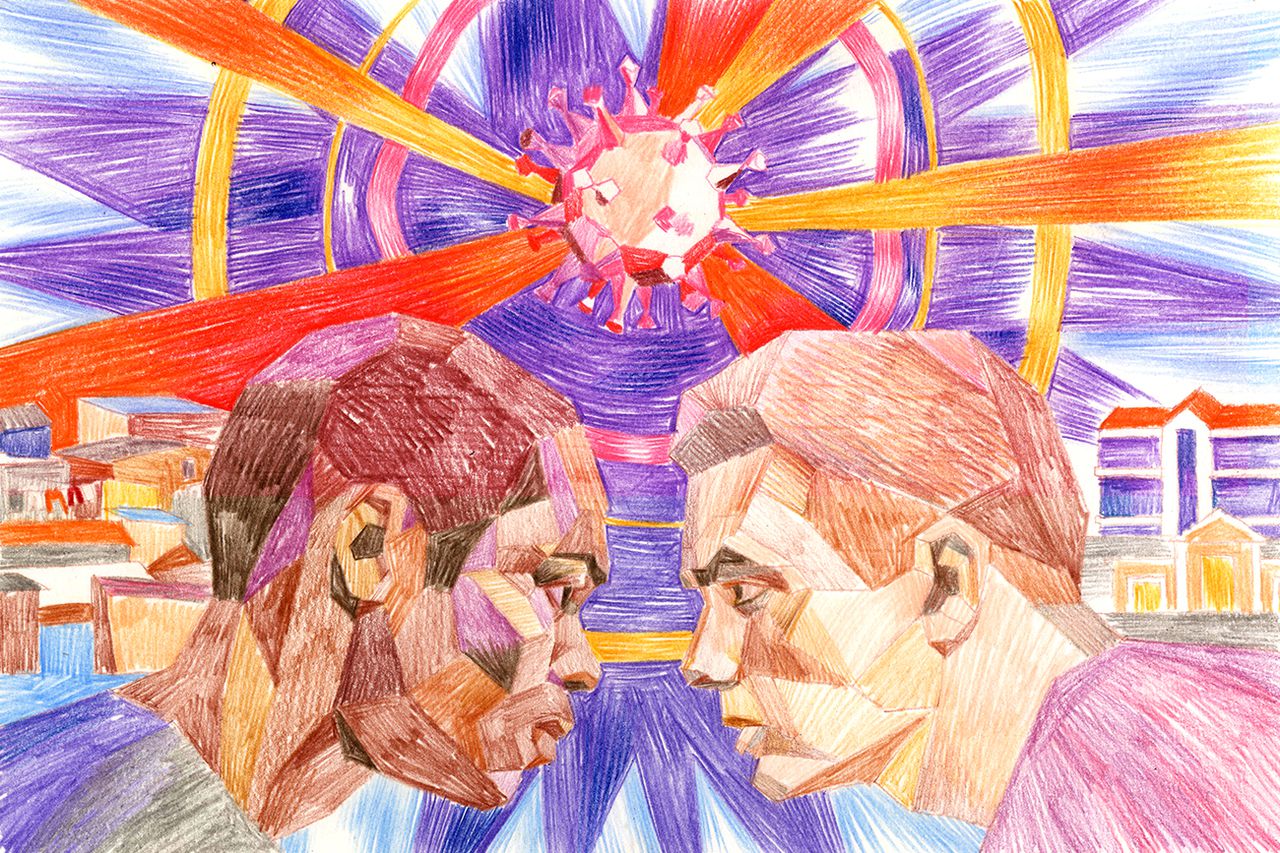
Twenty -five years have passed since then. Crime, covering all the cities of South Africa, is not that she slept - rather, on the contrary. But they learned to live with her. As well as with poverty, HIV, power outages, fires, floods, droughts, weak currency and corruption. Over time, those South Africans who did not emigrate to Australia and did not die in shootouts, developed an effective philosophy of attitude to the world and themselves. It is called Ubuntu, and this is the reason why I have been living here for almost ten years.
Ubuntu is the word of the language of Bantu, which literally means "I am because we are." For the first time I ran into this concept before I recognized the word itself. This was on my very first visit to Johannesburg. One evening, we sat with my boyfriend at that time, local South African, and his friends. They drank, fried meat - a traditional pastime here. Then his brother called him. The brother was breaking through the wheel. He was a little drinking. That's all - and there were six of us - suddenly they got up and went to help the brother. I, who lived in Moscow, seemed to me twenty -one years old, seemed like a sweet madness. Why go if you can call the service? But no. Brother in trouble, I need to help - barbecue will wait.
The second story happened to me later, after I moved here to live. Once I ordered a skirt in an online store-and missed the size. The skirt had to be sought hard. As a newcomer in the city, I did not know any tailors and asked my friend’s advice. She gave me the number of a friend, and we agreed that he would shed a skirt for five bucks for me. I cured, paid, I didn’t remember him anymore until I got to the South African Fashion Week. The collection of this tailor, which turned out to be the most famous young designer, closed the show. He recognized me and nodded affably, noticing among the audience. I still tell this story, nine years later, although I have seen such actions since then more than once.
Ubuntu is the word of the language of Bantu, which literally means "I am because we are"Mutual assistance exists not only for whites. All wealthy white families help the families of their cleaners - they pay for training their children or advanced training courses for themselves. My husband’s family taught the son of a nanny programming, after which he received a job in Amsterdam and left for Holland. I want to pay for advanced training courses to my housekeeper so that she becomes a teacher working with young children. This will give her a chance to get a higher paid job. If, having received a new profession, she will decide to stay with us, I will be glad - this is better for our children. And if it leaves, nothing also - plus us in karma.
During the epidemic, the community - between the rich and the poor, between white and black - is felt especially acute. A few days before the beginning of the full quarantine, the Cape Town united in the group of mutual assistance Cape Town Can. All signed residents were distributed through the WhatsApp charts of their areas. Good, that is, wealthy, areas put in pairs with the poor, so that the white housewives finally had a chance to dull their eternal guilt. Each group has a manager who reports how to help today: buy 10 kilograms of soap, collect parcels with basic things like rice and toilet paper, or just sacrifice money. The story that was particularly impressed, occurred three days before quarantine. In the largest shelter for dogs, all pets were dismantled - more than a hundred - in one day.
A logical question arises: how is the philosophy of Ubuntu combined with high crime? Last year, Cape Town's slums were declared a military zone and introduced an army into them, trying to somehow control the shootings and showdowns between drug lords. Why, since everyone is so friendly and so care about each other, it is in South Africa that the highest statistics are not just crimes, namely cruel?
IV
The boat takes a gun
Personally, I became a victim of criminals only twice, and quite a little thing. For the first time, they climbed through our apartment on the ground floor through the open window I left, until we were at home for a week. They carried out a TV, a computer and for some reason my sneakers. The second time I stole a bag hanging on the back of a chair in a cafe on the street. In fairness, I left her unattended for five minutes, moving at another table inside the cafe. When I realized, it was too late. Together with the bag, the rights lying in it disappeared, which I still have not restored. It was two years ago.
Mostly the white are robbed: they have something to rob. And the fight against crime here does not occur at the expense of the police, but due to the community of people. This is especially noticeable among the Boers - the first colonialists of South Africa, the descendants of the exiled Dutch. Boers are usually harsh, red -faced, burned in the sun after long hours of work in the field. Most live on their own farms and are very cleverly managed with weapons. There is a story about how to one old woman - from the drills - robbers burst into the house. The old woman sat in a chair with a gun. And, without getting out of this chair, she shot all the robbers.
-The drill will always come up with something! - My friend Helen loves to repeat. She is a typical, classic South African. Her ancestors came to the country from Ireland and Scotland, and Helen inherited pale skin, reddish hair and old family kilts from them. At her wedding, they should have played on a bagpipe. If not for the epidemic: because of it, the wedding was postponed for an unknown time.
How we killed in order to pay off the debts by the postal service , Konstantin Valyakin , Ulya Gromova is the same story of the reader of samizdat, who, together with his wife, killed a familiar because of money, and then took all the blame on himself and sat down in the colony for 18 years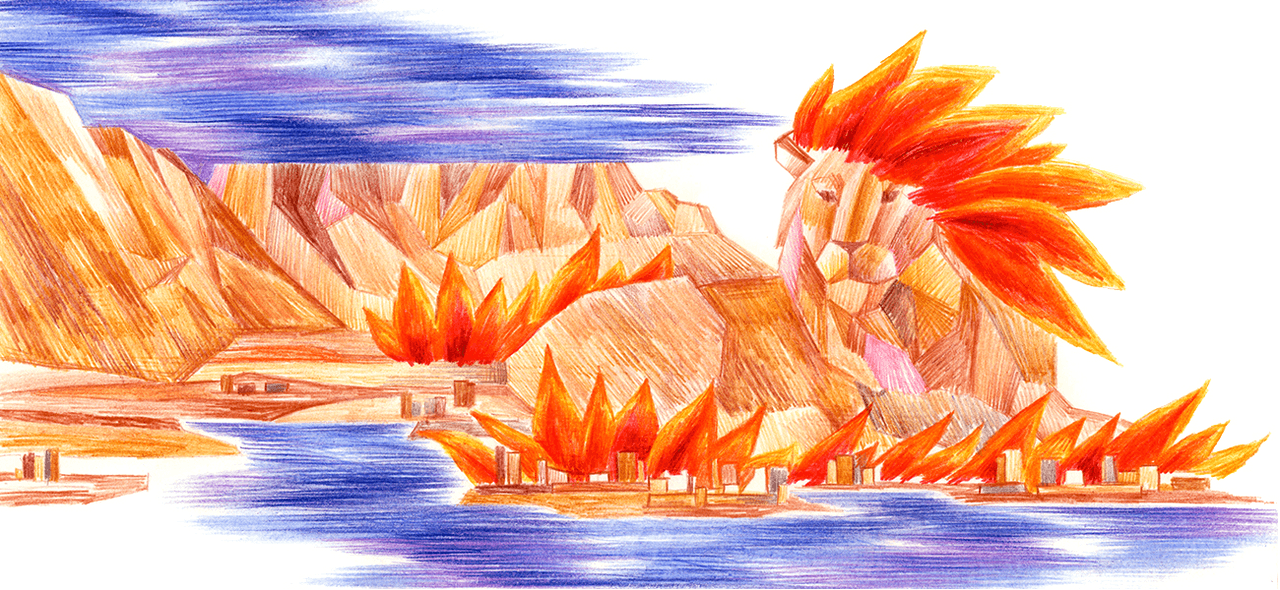
Helen is proud of his roots, but loves the spirit of South Africa even more: to unite and not be afraid. Being a girl of fragile physique, she always wears a stun gun in a handbag - but not simple, but one that in a second from a small tube is spread out in such a serious baton the size of an umbrella. Once, at a dinner in a Vugan cafe, she confidently showed me the principle of work and advised me where to buy the same.
Of course, Helen has nothing to do with the descendants of the exiled Dutch, but loves to quote their classical expressions, and necessarily on Afrikans, Broish.
The Boers themselves will not brag with electric shockers - they will not say anything at all, they will simply pull the weapons at the right time and use it for their intended purpose, if they have to. My ex-boyfriend, because of which I ended up in South Africa. Not the most typical: he is an intelligent director who grew up in Johannesburg and does not know anything about how to breed and shave sheep. His ancestors would look at him with condemnation. But even his canonical distinctive features of the drills, or Africaners, were noticeable. The national passion for brandy, rugby and meat is transmitted here with mother's milk. Just like readiness to quickly, laconly and mercilessly mobilize and protect yourself, your family and neighbor from ill -wishers.
Helen and my ex -guy are people of the opposite warehouse of mind and character, but they agree with each other in one thing: to unite against the enemy is easier than for a common idea. For the past 25 years, such an enemy in South Africa has been crime. Ubuntu appeared as a result of a situation in which island mentality does not work. Here you can live, only knowing the neighbors, without turning away from those who were in trouble, and quickly mobilizing in emergency situations. I am grateful to all the problems that are here because they taught me to take care of others and feel the care of myself. I needed to move ten thousand kilometers from the house to see how important this is actually.
IV
Triple African "Shipr"
Life in fire over the past ten, twenty, twenty-five years has become more or less familiar. Turn off the electricity - we will light the candles and turn on the spare generator. From crime you can protect yourself with an electric fence, alarm and compliance with safety rules: do not walk the streets at night alone, do not leave the windows open, leaving the house. The risks of economic instability can be minimized by smart financial planning and diversification of income sources. From depression there are pills, vinyl, meditation.
But suddenly a virus became a common enemy, which seemed to put all the above problems on steroids and in a greenhouse. What to do if all this is multiplied by ten in a week, and after two - exponentially - by one hundred, it is not yet clear.
Ten years of life in another country is already a real emigration. Once upon a time, the expression about “life in emigration” sounded pathetic, dramatic, not about me. About five years ago it changed. Then I began to feel that everything suddenly became serious. I am a little less funny in Russian. Sometimes I forget the right word. Of course, I understand the Russian mentality perfectly, but every year it becomes more inconvenient, as part of its own body, which does not work as good and smoothly as at 20 years old. But you won’t throw it out and not replace your own leg?
Machete and Tseches: on the Volga in Africa, Boris Tumanov , Olga Prokhorova, the correspondent of Soviet “Izvestia” recalls her car travel in Africa in the seventies: a pastor with a machete and a pastor with a mistress, crocodiles and mountain pathsSupporting on the African philosophy of Ubuntu, Russian mentality gives interesting results, as if in the laboratory of the alchemist. It turns out such a double hardening, a triple "Shipr".
The ability to survive in any conditions, which seems to be transmitted to each Russian person genetically, is especially useful in Africa. No, not that I had to survive really, as the inhabitants of the slum do-I am still a privileged girl from a good Moscow family. But if you need to open a business, and even two, find investments in a city where I knew three people, win several businesses for this without any knowledge about business, please. Russian pressure in African conditions is a rocket. It’s scary to fly on it, but fun, and you can fly through the flame: burning mountains, slums on fire, closed boundaries, empty supermarkets. Graffles, tears in the eyes, but the rocket flies smoothly somewhere forward.
V
Arrest for a run
On the fifth day of the state of emergency, friends began to send links to pneumatic pistols to my husband-in case of social unrest after three to four weeks without food and work. The husband books a trailer in order to break and go to the desert, leave the zombie apocalypse. The nanny came to work - it was her last day. From Monday - only we and Toddler, one on one. We thought: we will fly on our Russian-African rocket and hope that the virus will not take and we will definitely fly somewhere.
A week later it turned out that we were flying to hell. Of course, this was obvious for a long time, but either optimism on the verge of dementia, or too philosophical view of the world whispered that this may not be so.
When they announced full quarantine, they forbidden to leave the house in the next three weeks and released the army on the streets of slums to disperse crowds with water and rubber bullets, a whisper. There was an inexorable awareness that the devils are already very close.
How I was stuck in infected China Dmitry Kandiranda , Konstantin Valyakin , Ksenia Kuznetsova The very story of the reader who, together with the girl, lived for almost a month illegally in a tent in infected China without money and documents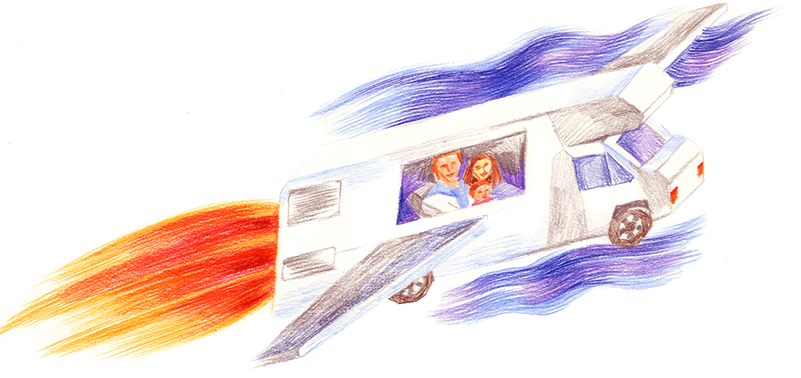
In Cape Town, everything is closed except for grocery stores, pharmacies and banks. За первые три дня карантина полицейские успели поразгонять толпы людей водой и резиновыми пулями, арестовать полтысячи человек за неповиновение новому закону, полагающему сидеть дома. В столкновениях с армией случайно убили уже трёх человек. Местная валюта упала на 17 %. И даже интернет-кабель, который соединяет ЮАР с миром, сломался в глубинах океана где-то в районе Кении.
Мы же тем временем сидим в прекрасном доме, который находится в прекрасном районе. Весь карантин — в том, что в десять вечера жители домов выходят на балконы аплодировать врачам. Мы печём булочки, едим мороженое каждый день, уже один раз ходили на незаконную пробежку по району, за которую нынче можно и загреметь за решётку, и ведём длинные дискуссии о-том-о-чём-нельзя-не-говорить.
Оказывается, лучшее, что можно сделать на благо общества в 2020-м, — это не делать ровным счётом ничего. Как тебе такое, Нельсон Мандела?
Вечная война новозеландских маори Семён Шешенин , Егор Мостовщиков , Лена Гордеева Как победить врага его же оружием, возродить свой народ, заставить всех себя уважать, попасть в Марвел, DC и Дисней и завести себе Таику Вайтити