
Translated material
General conspiracy of everything against everything
The most noticeable books of the week according to Gorky
Grigory Yudin (recognized in the Russian Federation as a foreign agent) about why it is not necessary to believe those who believe that it is not necessary to believe in public opinion polls; Finally, in Russian is one of the main novels of Irish modernism, written by Martin about Kaina on the face of the dead; Ilya Yablokov - about the reasons for the spread of conspiracy theories in Russia from top to bottom; Richard Lahman - about how the states were replaced by all other forms of concentration of power, and Dmitry Volodykhin - about the construction of post -commuted Russia on the love and oblivion of the old cooks. The most curious book novelties are in the Friday review of Ivan Naprenko.Grigory Yudin. Public opinion, or power of numbers. SPb: European University in St. Petersburg, 2020
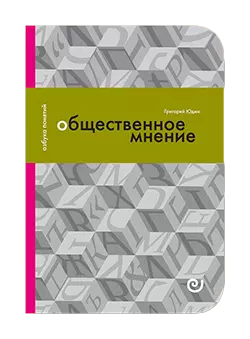 In Russia, there was a rather skeptical attitude to the results of polls of public opinion (“lie”, “smear”, “real numbers hide”), although the authorities use them both for managerial decisions and in order to present the results of a hundred -capacity of the society as a mirror: they say, look, an expensive Russian society, and (most often it is implied) to put up with.
However, the numbers shown to the public are not at all meaningless - or at least go beyond the limits of political technology, if you approach them with a rather critical tool. It was such an instrumentation that the sociologist and political philosopher Grigory Yudin gathered in his book. For this assembly, the author needed a thorough historical excursion - both in the history of the concept of “public opinion” and in the history of the concept of representativeness (and why it is sometimes fundamentally unrealistic - therefore, surveys do not reflect, but constructs reality), in the specifics of the existence of polls under totalitarian regimes, in the conditions of neoliberal democracy and, finally, plebiscitable doctrines (hello, Russia).
The author’s conclusions are rather sober than aged. Listing in conclusion the questions that a reasonable person should be asked, faced with the data of the next survey, he proceeds to the liberating perspective. Surveying technologies consistently reduced living people to numbers. The future of real, not plebiscitic democracy is behind those who can “see public opinion outside the polls, catch the matters that are ripening in society and rely on them without falling under hypnosis of numbers”. It sounds even pleasantly, not to find?
“How did it happen that with the word“ democracy ”, we immediately think about the elections?
The idea that people should show themselves in politics precisely through voting was relatively recently. Elections, surveys and other forms of electoral policy were in the center of our ideas about democracy less than a hundred years ago. When today we identify democracy with voting, we think in the categories that were proposed by theorists of plebiscite democracy. But the most interesting thing is that the task of these thinkers was not at all to strengthen the power of the people. On the contrary, they set themselves the goal of reducing it if possible, but so that the masses still remain in politics.
Gallup public polls grow from this theoretical tradition. When Gallup expects to save American democracy through regular surveys that will instantly report citizens' opinions on important political problems, it proceeds from the fact that in order to strengthen the people it is necessary to strengthen the vote. Polls, like other plebiscitte technologies, gradually lead to the fact that in our minds there is a strong connection between a series of concepts: “democracy”, “public opinion”, “elections”, “polls” ”.
Martin about Kain. Cemetery dirt. M.: Corpus, 2012. Translation from Irish Yuri Andreichuk
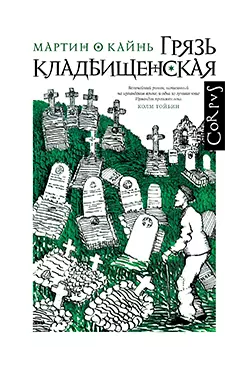 Irishman Martin about Kain published in his native language the novel “Klabishchenskaya Dirt” in 1949 (a year before, the publisher refused to take up publication because he calculated the text too “Joyce” - and here we still need to guess, insulting this or a compliment). British translation had to wait until 2015.
This is partly due to the fact that the work was originally positioned as equal to Joyce and Beckett, partly with the fact that under the terms of the contract the transfer should completely arrange the publisher. As a result, an ideal literary object has arisen, which has a tidy status of a cult modernist novel, but too frustrating the translators to take a chance to approach it.
In the zero, with the change of publisher, - broke through. In 2015, the first English translation was released, in 2016-the second, and in 2020 we are already reading Russian. What and what are we reading about?
“Cemetery mud” is an endless and plotted chatter of those who are dead. The conversation of spirits and the dead, buried on the western bank of Ireland during the Second World War. The dead are endlessly gloomy, interrupt each other, gossip, mock, complain about ... life and dream what would happen if they had gained it again. One wants to rebel from the dead in order to punish the “whore”-a slide, the other altter to swear to Hitler, and some-curse sister by a bag of potatoes.
The gossows of the dead are unimaginably languid and boring, how boring are the conversations of all living things if they listen to private chatter from Vladivostok to San Francisco. The revelation that each of us is able to think through with its personally arranging depth of affect, but something else is hiding behind it: Martin O Kain is a fighter for preserving the Irish language, confident that the language is alive while books are written on it. And if these books speak the voices of the dead, well, Martin, give five, Erin Ger Bra! We are alive while our dead wash a friend of bones.
“ - ... I love Hitler. This is a guy ...
- If England beat, the country will plunge into anarchy. The economy has already collapsed ...
- ... Here you are, the same -eared tailor! It was you who left me here to lie fifty years before the deadline. The genus of the single -eared is always more than the same way! Knives, stones, bottles. You didn’t fight like a man, you stabbed me ...
- ... Let me say. Let me say ...
- Cross with force to protect us, Lord! - Living or dead? And these are all here, are they alive or dead? They are chattering exactly like on Earth! I thought that from the hour, as I was brought to church, I had a sung, I did not need to work hard, troublesome, worry about the weather, be afraid of the storm, I will be given peace ... What is this fuss in the mud of cemetery? ”
Ilya Yablokov. Russian conspiracy culture: conspiracy theories in the post -Soviet space. M.: Alpina Non-Fikshn, 2020
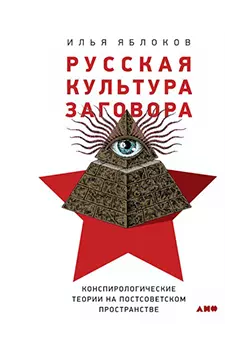 If you come to a regular book and find a shelf of a “priority calculation” (rather she will find you herself), then the headlines that are difficult to confuse with something will catch you: “Rothschilds VS Rockefeller: the secret intake of antiquity David?”, “Why did Trump hide the weapon of the day x?”, “Koronavirus: Putin knew about everything since 2000?” etc.
These are the literary batteries of the air workers of the war, inconspicuously, but stubbornly, every day leading an endless battle with reptilians, Jews, Masons, Nitrogadians, Gabists (emphasize the right one). These are artifacts of the theory of conspiracy that it is customary to make fun of, sometimes allowing yourself to grunt “well, there is something in this”, “the truth is always somewhere nearby”.
Of course, there is and, of course, nearby. The historian and teacher of the University of Lida, Ilya Yablokov, shows why conspiracy theories act as a completely legitimate means of rationalization and comprehension of reality.
However, in addition to this, obvious, the author is asking much more interesting questions: why and in this form such theories are common in the post -Soviet space? How is the introduction of such theories in society is established (it turns out that the option from above-down is more typical than others)? Why did the conspiracy tools from 1991 to the tenths of the tenthly fired in the imperious suitcase as a proven means to inspire his own powerlessness? And why, finally, such a stubborn “conspiratorial” manipulation of the “security forces” as a result can play against them, against the state - against the backdrop of the imputed inability of the society to discuss significant problems and its purposeful demobilization?
“In 2012, Vladimir Yakunin, at that time, the head of the state company“ Russian Railways ”, a member of the Near Circle of Putin and the dean of the faculty of political science of Moscow State University, gave a lecture called“ New World Class and Call of Humanity ”. At the beginning of the lecture, Yakunin said that in New York in the skyscraper of the Empire-List-Building on the top floor there are meetings of people who manage global policies and finances. Yakunin admitted that he had visited one of these meetings and saw how these people make decisions and give orders to the world's largest banks and investment companies. The message of the Yakunin lecture, given to students of Moscow State University, was as follows: in order to survive, Russia must isolate itself and rely only on its strength and resources, and above all, on natural wealth. This is not to say that the statements of Yakunin made a sensation. Almost no one noticed them. Another thing is important: on the second ten of the political regime under the leadership of Vladimir Putin, the use of conspiracy theological rhetoric has become a noticeable representative of the financial and political elite. <...>
After 1991, the Russian conspiracy culture made an amazing evolution. She borrowed from official and unofficial conspiracy the elements of anti -Western and anti -Semitic concepts and at the same time the efforts of numerous public intellectuals successfully transferred American and European ideas about the world conspiracy to Russian ground. Less than 30 years after the collapse of the iron curtain, Russians, Europeans and Americans, who had perceived each other for half a century as military and geopolitical opponents, returned. ”
Richard Lahman. States and power. M.: Publishing House "Delo" RANEPA, 2020. Translation from the English maxim Dondukovsky
 The slightly exaggerated slogan of Richard Lahman could take a quote from an interview with Ilya Yablokov, which we published a couple of years ago and whose book also appears in the review: "Do not trust the elites in any situation."
Lahman, an American sociologist and explorer Elite, aims to show how and why over the past half a century of states became the main power institutions throughout the planet, taking control of the widest and most diverse powers in the field of social and economic welfare, health and security of citizens. If you slightly turn inside out inside out, then it turns out how exactly the States became the king of the mountain, having shoved many other politicians, or forms of Power (from which, of course, it follows that the present could be different).
The question that Lahman is especially interested in if the existing centers of power are essentially contingent: will they be able to cope with the ninth shaft of a new type of challenge - from the pandemic to the world economic crisis - or, thanks to the dexterity of the elites, we have to observe the rapid, in the spirit of the times, the metamorphosis of states as the main form of policy? Thinking about this is interesting, but we will see to live.
“The extreme version of this pattern is the Democratic Republic of the Congo, which is the polar opposite of democracy of India. Belgium systematically eliminated the native hierarchies and political networks, ultimately killing and condemned for hungry death from 4 to 8 million congratenses (Hochschild 1999). With independence, there were two Congolese elites: the ethnic leaders of the local level and the rudimentary state, which itself was divided between the left faction, headed by Patris Lumoboy, and the military under the command of Joseph Mobutu. Mobutu at the Belgian and probably American support killed Lumumba and abolished his faction. Mobutu (who replaced his name to Mobutu Secec and renamed the Congo to Zair) robbed the state, limiting their appetites only by the need to bribe local elites, while foreign firms extracted resources, as was the case in the colonial era. By the 1990s, support from Europe and the United States overpassed the support of provincial elites from Rwanda and Uganda. In the Congo, as in many other African countries, where there are no non-state national elites and where independent steps are difficult due to extensive foreign intervention, the period of dictatorial central government is replaced by the period of the civil war of provincial elites, and vice versa. A civil conflict in the Congo is extraordinary that in the war, which became the "world African" 1998-2003, seven neighboring countries were involved. "
Dmitry Volodykhin. Medieval Moscow. The capital of Orthodox civilization. M.: Center Polygraph, 2020
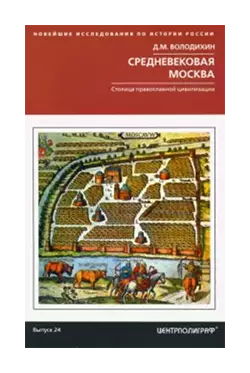 The historian and writer Dmitry Mikhailovich Volodyikhin are known to many as the author of the term “folk-chistori”, which denotes the totality of pseudo-scientific works and concepts, causing people more or less familiar with the object, grinding tooth. The classic example is the new chronology of Fomenko and Nosovsky, who believe, in particular, that the Battle of Kulikovo, also the battle of Kalka, took place in Moscow, etc. The term "folk-chistori" is purely ours, Russian, abroad more often use the Pseudohistory expression boring in their straightforwardness.
Here, of course, there is a desire to drive up to the author’s work on a crooked goat, but if you do not turn around, then you will puff. Volodykhin is kind, neat, dug in documents. Yes, his text breathes a feline Pozorokinsky mood, but never reaches propaganda intensity.
The author’s task is to show what was based on the self-reproduction of Moscow as the third Rome in the 16th-XVII centuries and earlier. For this, he does not make the most obvious, but thorough visits - for starters through the printing, telling how Ivan Fedorov not only gives the ROC and the state the most powerful tools on the routes of education and proselytism. He demonstrates how Cyrillic printing gently takes southern and eastern Europe under the wing, and the printing school of hieromonk Timofey sees a hybrid position between the school and the university.
Volodykhin finds other keys to self -identification with the second Jerusalem in the architectural initiatives of Nikon; The coek of overcoming the Time of Troubles is that “the people, with unbearable pain, cleansing themselves from sin, makes their king an innocent open” - well, the newly acquired peace and greatness of the city connects the unprecedentedly active construction of the “Posad Baroque” Fedor Alekseevich.
With the unconditional historical and descriptive honesty “medieval Moscow”, Volokhin looks more like the analysis of historical cases convenient for the author, working to proof of the initially put forward thesis. Perhaps, he does not pull the heading of the series “The latest research on the history of Russia”, but “strong, slightly packed historical reverence for the reassure of the nerves of the offended Russian man” is quite suitable.
“A terribly impersonal country needed all sorts of servants. Even in those who had previously been fluctuations and treason. Many, very many have been forgiven, following the logic of Pozharsky. And having forgiven, they gave things, they gave the opportunity to show good qualities for the benefit of the power. The new, post -commutional Russia will be built on love, on reconciliation, at oblivion of the old cooks, and not on revenge.
Both well and right. "