
Translated material
"Test for the Patriarch"
Whether the Russian Orthodox Church Pandemia will help to move away from the “business in relics” and return to religious and social service
The Russian Orthodox Church was not ready to test coronavirus. Different dioceses and monasteries are looking for their answer to the question of what will happen to Easter. It is clear that the churches will have to part with many types of familiar "business on grace."
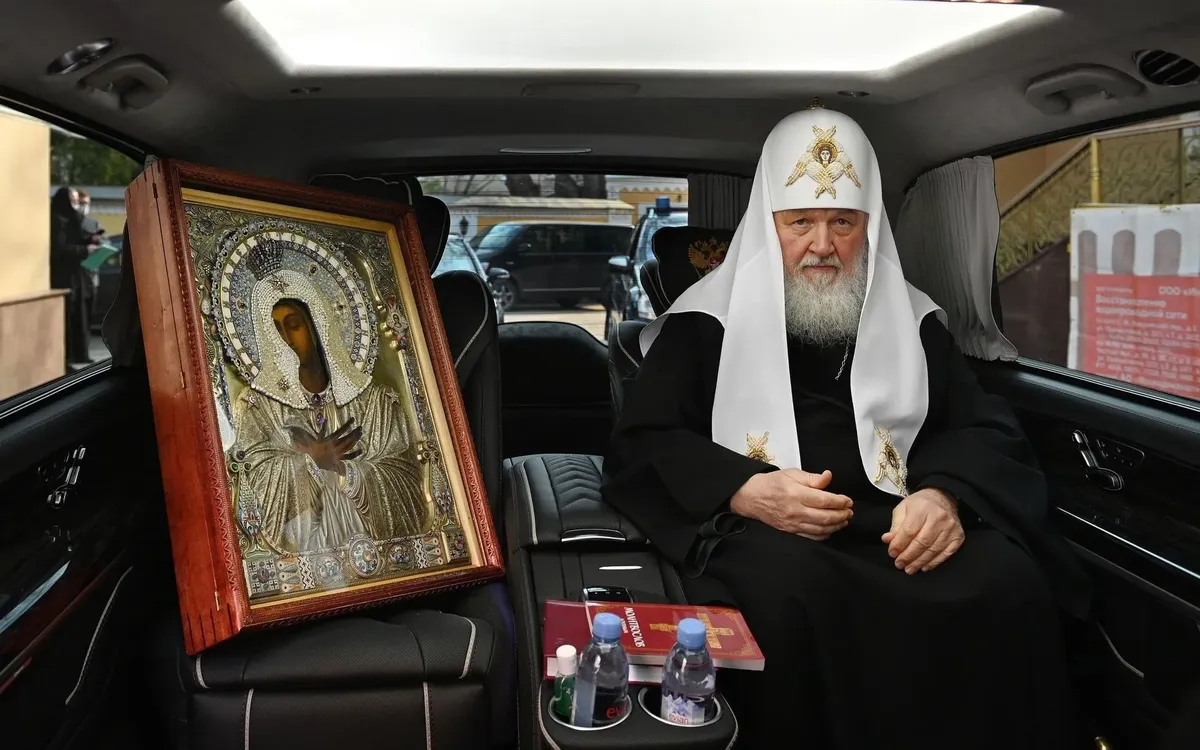
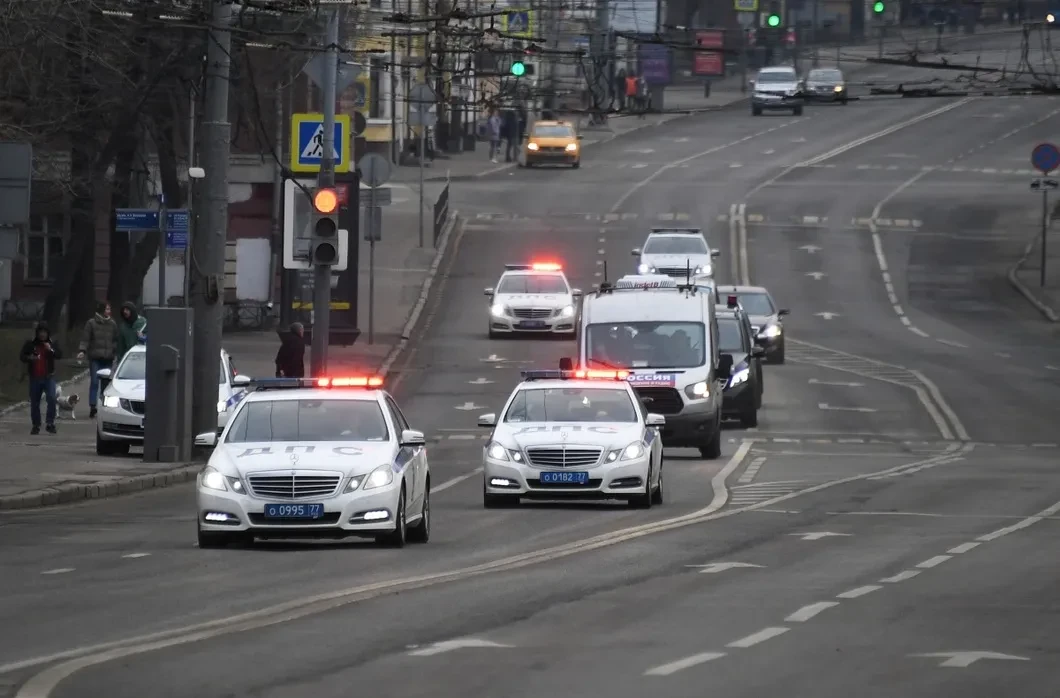
On the evening of April 3, Patriarch Kirill took the icon of the Mother of the Mother of God “Trushing” in his house church in Church in Pure Lane, placed her in the Greater Mercedes Lux class and, accompanied by nine guards with flashing lights, went to go around Moscow along the Moscow Ring Road. The audience of the Orthodox television channels “Savior” and “Union” showed the appearance of this Mercedes on the air for two hours, urging them to pray with the patriarch.
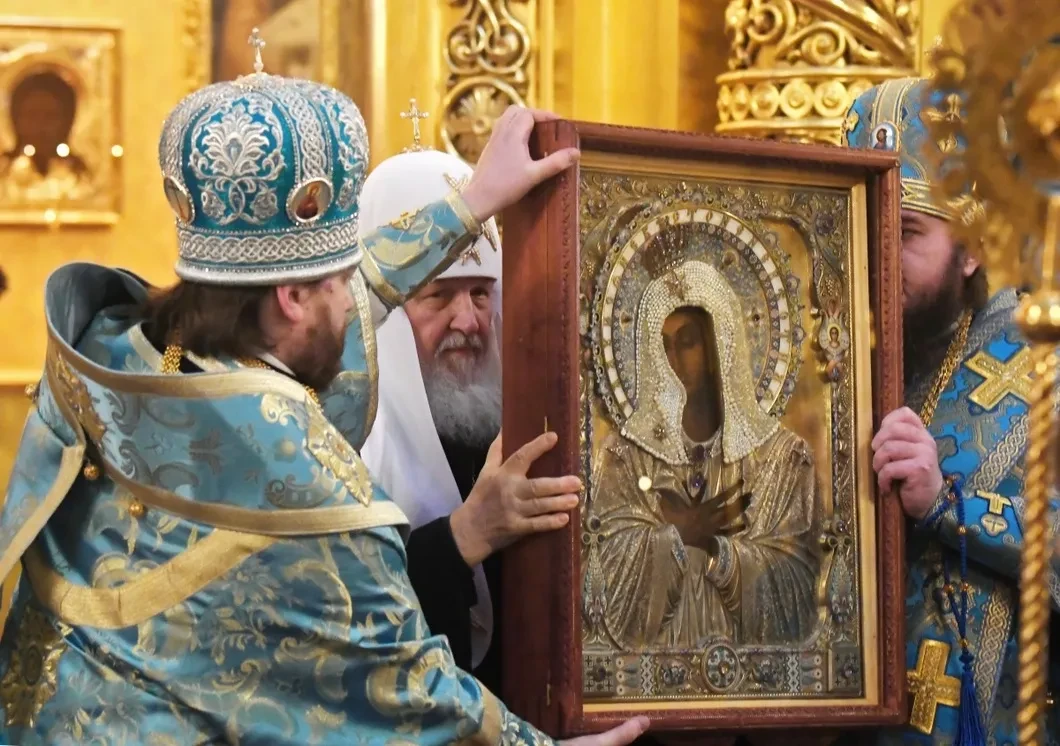
In the history of Russia, there were precedents of the processions around the capital during dangers, including “pestilence”. But traditionally, the patroness of Moscow in such situations was considered the Vladimir Icon, now staying in the Tretyakov Gallery. Popular in recent years, mythology about the miraculous salvation of Moscow in the fall of 1941 states that, by order of Stalin, the city flew by the Kazan Icon. Her miraculous list is located in the Elokhov Cathedral, where, in fact, the patriarch went after his detour of the "old" Moscow.
The fact that this time they elected “tenderness”, analysts saw the “political sign”, no matter how wild it sounds in the current conditions. The fact is that this icon was in the cell of St. Seraphim of Sarov and is revered as the patroness of the Diveevsky monastery founded by him in the Nizhny Novgorod region. And in recent years, one of the main financial trustees of the Diveevsky monastery was Prime Minister Mikhail Mishustin, who is headed by an informal “Diveyevsky club”, uniting a number of higher Russian officials and large businessmen. This is a closed Orthodox community with some more widely known Athos Club, which includes George Poltavchenko and Alexander Beglov.
It looks that, having chosen the Diveevo icon instead of Moscow, the patriarch sent a certain “political signal” to the mayor of Moscow and the prime minister of Russia.
After all, the position of the latter relative to quarantine measures sounds much softer, and the Moscow Patriarchate is very afraid that Moscow parishioners may “not let” in temples for Easter.
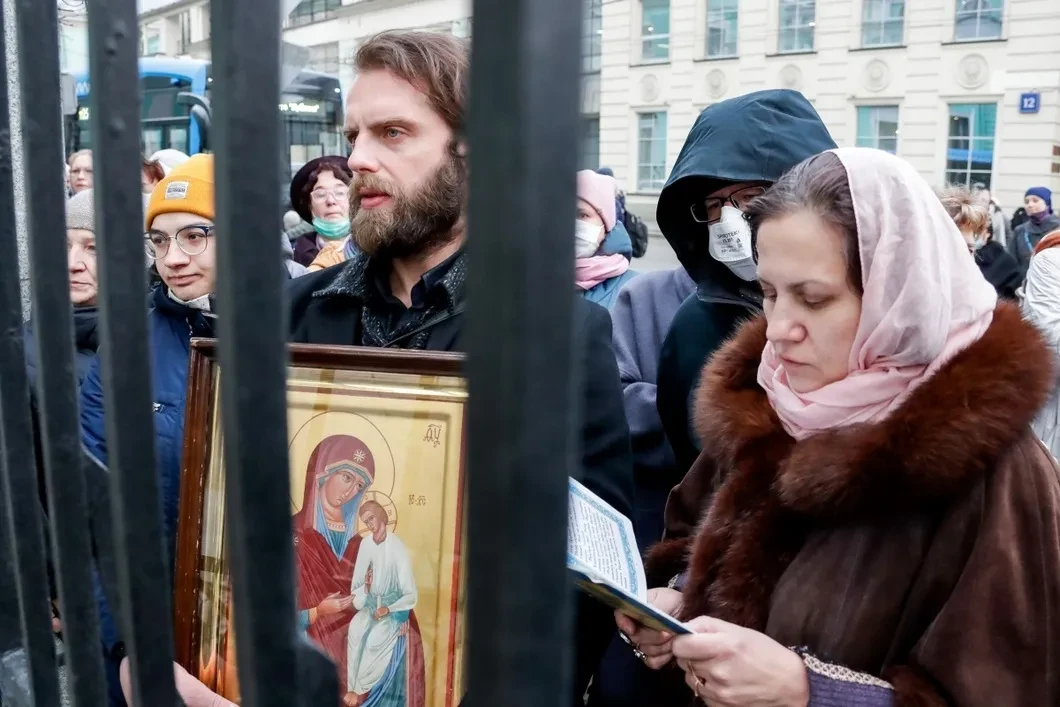
A week ago, the Patriarch categorically rejected the right of the authorities to limit the visits of temples during actual quarantine. The Patriarchate stated that such a restriction is possible only if public transport ceases to walk and shops close. Temples were proposed to equate with "life support structures." On March 27, by direct order of Cyril, the legal department of the Patriarchate called the anti -constitutional order of the governor of St. Petersburg on the termination of free access to the temples.
But on March 29, the Patriarch turned 180 degrees and called on his flock to “go into the desert” of his dwellings,
Following the example of the ancient ascetics of Maria Egyptian, and stop visiting temples. He hinted that he was doing this against his will, because "51 years I preached the opposite." On April 3, Cyril secured the call in a special message to the episcopate, the clergy, the monks and the laity of dioceses in the Russian Federation.
Who is Maria Egyptian and what does her example encourage her? She led a dissatisfied lifestyle in Alexandria - the richest city in Egypt - and once went to Jerusalem with the aim of "sexual service" of pilgrims aboard the ship. The repentance of Mary occurred at the moment when some invisible power did not let her into the temple of the Holy Sepulcher. Then she vowed to leave the world and go to where the Virgin will indicate to her. Such a place turned out to be a lifeless Zaordan desert, where Maria was in complete solitude, eating roots and dry herbs, spent 47 years.
The tough measures of the Moscow authorities, which, however, in practice are gradually softened, led to a surge of apocalyptic sentiments among the Orthodox.
The social networks were filled with calls in no case do not take QR codes, which were planned to be introduced as passes for each exit from the house. The confessors of some monasteries recalled the prediction from the 13th chapter of the Apocalypse, that in recent times, "no one will be bought or sold, except who has this drawing." The Moscow Patriarchate, given the mood of a significant part of its flock, at one time even achieved the abolition of total digital identification programs with electronic passports, and many Orthodox processes in microwaves to “neutralize” the action of the chip mounted in the documents. Another apocalyptic sign is seen in the inaccessibility of temples in self -isolation mode. Here they usually resemble the prophecy of the Monk Lavrenty Chernigov, who said that after the era of atheistic persecution "all temples will be in the greatest gospel, more than ever, but it will not be possible to go to those temples."
Diocesan administrations in different regions of Russia publish circulars in which they hint at their disagreement with limiting measures and for the forced nature of submission to them. For example, in the Krasnodar Territory, where one of the most stringent regimes was introduced in Russia, Metropolitan Isidore wrote to the abbot that the diocese was forced to reconcile “in the context of the authorities refusal to make visiting temples to the list of exceptions”. Church old-timers recall the restrictions imposed on the Church during the 1970 cholera epidemic with “godless” authorities: access to temples was open, but it was forbidden to apply to the icons, distribute consecrated water, and in some places to take communion. They also recall how in the 1830s during the cholera epidemic, Metropolitan Filaret, now glorified in the face of saints, did not comply with the order of Emperor Nicholas I himself and held a massive procession in Moscow.
The next year, when there was a new outbreak of cholera, the emperor lost and came to the procession to Moscow.
The current Moscow Patriarchate does not think about such a front - the case is limited only by detours, and more often - by the flights of cities and regions with relics and miraculous icons. These fairly cost events are accompanied by a mass reduction in church staff. In this regard, the Russian Orthodox Church does not differ from small and medium -sized enterprises, which have nothing to support employees in quarantine conditions. For example, Metropolitan of Kemerovo and Prokopyevsky Aristarchus (Smirnov) ordered "to take measures to optimize the staff of the workers."
And given that most church workers worked at all “without registration”, receiving fees by unaccounted fed (there are no cash register in the temples), which has now ceased to act, such
“Optimization” can affect 70% of church staff.
Metropolitan Tikhon (Shevkunov) looks very impressive against the general background: he freed all parishes from diocesan contributions and offered them medical masks and disinfectants at cost. By the way, according to the number of views in YouTube, the “antiviral” sermon of Tikhon was significantly bypassed by the patriarchal.
It is believed that “Easter behind closed doors” will cause irreparable damage to the church economy, two -thirds of the revenue part of which were collected in the near -passion period. This is partly the case, but you need to keep in mind that
Under Cyril, the church economy - at the level of the parish - was much more dependent on the budget infusions and the help of large sponsors than on the donations of ordinary parishioners.
It is here that the main blow will be inflicted on it. The Russian economy will be difficult and difficult to recover after a month of downtime, and not only the regional, but the federal budgets will not be able to support ballast in the form of various kinds of “building -based churches” and multi -billion dollar projects of “monastic complexes”.
Putin’s words that non -working days can be reduced in the case of a favorable epidemiological situation were perceived in the church as “a test for the patriarch”. If he finds some “religious means” in order to influence the “destructive towers”, he will receive the popular celebration of Easter, and if not, then no. But the church people will perceive the closed temples as a sign from above-because this was not the case in the entire 1000-year history of Russian Christianity: neither in 1937, nor during the war. Archpriest Andrei Tkachev, who fled from the Khunta Poroshenko from Kyiv to Moscow and recognized here the “beloved preacher” of the patriarch, so summarized the conciliar reaction of the Moscow clergy:
“If suddenly there is Easter home, and I do not exclude such an opportunity, then it will mean that we destroyed everything. They destroyed, at least, at the level that we, out of fear of death, refused to truly believe in the winner of death. ”
The Moscow Patriarchate is quite reasonable not to restore after such a blow to the previous number of parishioners, which has already been reduced in recent years. “Business on shrines” may completely collapse - in the form of various kinds of “tour” relics, pilgrimages to miraculous icons and trading “shrine” such as “zemstvo from the groove of the Mother of God” or “water from the source of the Monk Seraphim”. All this business was built on faith in the “automatic” effect of shrines on the human body and, in fact, was an alternative to a serious Christian faith, requiring a change in his life, moral norms and rules of behavior. After the experience of the “charismatic helplessness” of the Russian Orthodox Church, the new calls “come to heal and not forget about donations” will sound much less convincing than before this experience.
Like them
How do other local Orthodox churches answer the challenges of pandemia?
On April 2, the Synod of the Elladsky Church (Greece) decided to serve Easter at closed doors, and transfer the popular solemn service to the departure of this holiday - on May 26, in the hope that by this time quarantine will be removed.
The Georgian Patriarch Elijah II is trying to find a compromise with the authorities of his country, urging to serve on Easter in the open air and in compliance with the social distance.
The Ukrainian Church of the Moscow Patriarchate is trying, as far as possible, to challenge the prohibitions of the authorities, but there it is more political in nature associated with interfaith competition, which was aggravated during the reign of Petro Poroshenko.
The main shrines of the Orthodox world are closed - the Holy Mount Athos , where infected monks have already been identified, and the temple of the Holy Sepulcher in Jerusalem . It seems that the Jerusalem Patriarchate agreed with the Israeli authorities on the execution of the blessed fire on Easter this year - but in a closed temple with the participation of only a few representatives of other local churches.
Of course, such a picture will greatly undermine the propaganda of past years that the fertile fire is sent directly from the sky,
Moreover, if people are not allowed into the temple, then he goes straight to the square in front of him ...
***
The Coronavirus test turned out to be unprecedented for most religious denominations. Therefore, their confusion and bewilderment are understandable. So far, it can only be argued that Orthodoxy will not come out of this test the same: such a “divine intervention” will put an end to many superstitions that have been tearing around the Christian faith, will shake the blasphemous “business on grace” and help the Russian Orthodox Church return to the sphere of religion and social service itself.