
Translated material
"Here hell knows how to teach"
How teachers comment on the transition to distance learning and what to do with it
The educational administrations of Russian state universities, accustomed to terrorize teachers in accordance with the requirements of Rosobrnadzor, were not ready to switch to remote teaching. American universities are autonomous and therefore a little more adapted to such sudden maneuvers.
How the University of Ratgers switched to distance learning
On March 7, the administration of the American University in which I work made a newsletter among teachers about a possible transition to online learning.
Among other things, teachers who did not have the experience of such teaching gained access to site methodological recommendations. On March 10, the administration announced an early exit for the spring holidays since March 12 (in most American universities in mid -March, students are provided with weekly holidays) and the resumption of study from March 23 in remote form.
The advantage of American universities over Russian - in modern learning management systems (Learning Management Systems), which allow teachers to create internal courses for students. There, students can access the materials and perform the necessary verification work. Ratgers uses the Canvas and Sakai platform for this.
In the USA, Blackboard occupies 31%of the market, Canvas - 30%, Moodle - 18%. They are used for both auditorial and online learning. Now, for example, the Deputy Head of the Department of Political Science of the University of Ratgers conducts webinars to teach teachers some additional functions of the systems that they already use.
Why are Russian universities not ready?
Briefly: because they are state and, for the most part, do not have training systems.
On March 13, when the campuses of American universities have already closed, the next meeting of the operational headquarters of the Government of the Russian Federation to prevent a new coronavirus infection took place. On March 14, the Ministry of Science and Higher Education of the Russian Federation recommended Russian universities to switch to distance learning.
At the Portaelete recommended by the Ministry of Organization on the organization of the transfer of teaching into a remote mode. However, there are no recommendations to the teachers' actually.
Since March 16, the sites of the universities of Russia are full of orders of rector on stamp forms on the transition to distance learning. Having talked with teachers and students from the Higher School of Economics, the Financial University under the Government of the Russian Federation, the Moscow State Regional University, the Higher School of Technology and Energy of St. Petersburg State University, the Novosibirsk and Kemerovo State University, the Kemerovo State Medical University, I found out that the universities are very different in their ability to organize distance classes.
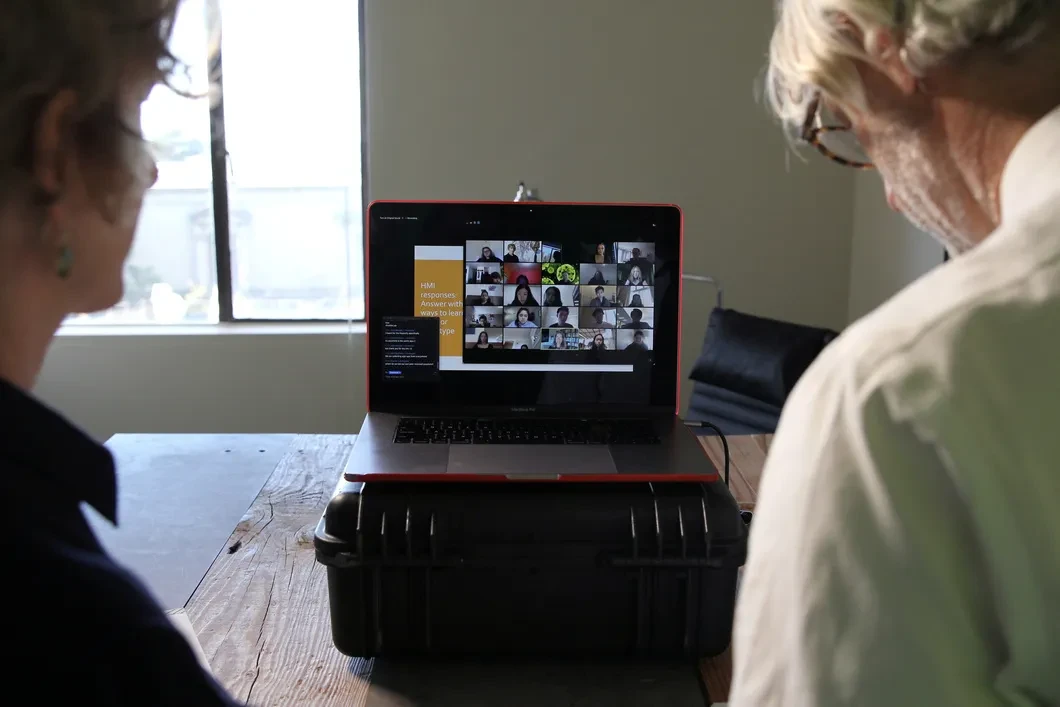
A little better business in the Higher School of Economics, however, the situation differs in faculties. The worst of all at Kemgma, because there always were only day -time full -time training. It can be assumed that in other medical universities in Russia the same bad situation due to the specifics of the training of doctors.
Obviously, the translation in online laboratory courses in natural science disciplines, in which students conduct experiments and experiments, is difficult for a university in any country. However, at the Ratgers medical faculty there is a computer program that allows virtual operations.
Here are some answers of Russian teachers to the question of how they will switch to online dating:
“We have a madhouse here”, “but xs”, “yes, to be honest, hell knows”, “I don’t even know what to tell you,“ they told you to come creatively in the first pairs. ”
In universities with current programs of online discussions, they are trying to teach teachers new ways of delivery of material and testing knowledge.
In the same universities where there were no distance programs, teachers are forced to create groups on social networks and email. Lectures and seminars are replaced by conference calls, knowledge control is carried out through tests in Word documents, completing tasks in workbooks, preparing and protecting the presentation in Skype.
The main problem is the absence of many universities in learning management systems that would automate many processes. For example, I would not have to use tests in Word documents. The KemSU uses the external system of distance learning "Prometheus".
Not a single Russian university has yet solved the problem of final exams in subjects and state exams to receive diplomas.
At the Financial University, the methodologists issued an order according to which, the heads of the departments are offered to choose from the three models of the exam: remote testing according to the schedule lasting up to 2 hours, a hybrid method (combination of testing and conversation), an oral survey. The use of programs, such as Proctor Track, is not provided.
A similar approach is problematic for two circumstances: firstly, online testing without proactoring services does not provide proper control over students. Secondly, the synchronous approach (schedule exam) does not take into account possible problems with the speed of the Internet.
The idea is considered to give students the opportunity to pass certain disciplines on Coursera and count as a discipline from the curriculum.
What are the basic principles of remote teaching?
A year ago, I went through an online office, and in the autumn semester I held my discipline “interested groups: political lobbyism” in remote mode.
In the first half of the spring semester, I taught my course in the audience, now in a calm mode I begin to do this completely through Sanvas. What tips can I give:
The basic principle: online teaching is radically different from the auditor;
Attempts to literally “reproduce” audit experience are ineffective;
Teachers know that in an ordinary audience it is not always possible to concentrate students' attention, in a conference call this task is not possible.
Remote teaching is more laborious, since it requires an extremely detailed organization of the training course. What is usually discussed in the audience must be painted in detail on the subject’s website.
It is rational to make a program of your discipline for 3-4 pages with a list of topics and literature for each of them. Obviously, monstrous multi -page RPDs that requires the Rosobrnadzor for accreditation are now absolutely unsuitable.
If the university does not have a training management system, but there are a majority, then you can use the Google Classroom service to create a site website.
However, the Higher School of Economics offers Russian universities to use his system. The problem is that it is now operating about 70 courses, and hundreds of thousands of disciplines with four million students are taught in the Russian higher school.
The choice of forms of knowledge control depends on the number of students registered for the subject.
Forms suitable for 20 students are not suitable for 100.
In the first case, you can use, for example, discussion forums where students should discuss the materials read using video/audio/text posts. In the second, testing is more rational.
It is also important to understand that in the online course the lesson lasts 7 days, and not two hours as in an audit format. In each module (week), throughout the semester there should be the same tasks on a certain day of the week. Students get used to systemicity and regularity.
True, both options are possible only when using one of the training management systems, which was discussed above.
The choice between synchronous and asynchronous delivery of educational material depends on the number of students and access to a high -speed Internet.
In the conditions of pandemia, it is impossible to proceed from the fact that students have the opportunity to join the conference call at Skype/Zoom/Webex at a certain time.
Firstly, family responsibilities for monitoring/caring for younger brothers/sisters may arise, since schools are closed. Secondly, access to a quick Internet can vary among students. Therefore, it is possible to record video lectures only if there is confidence that all students have access to it.
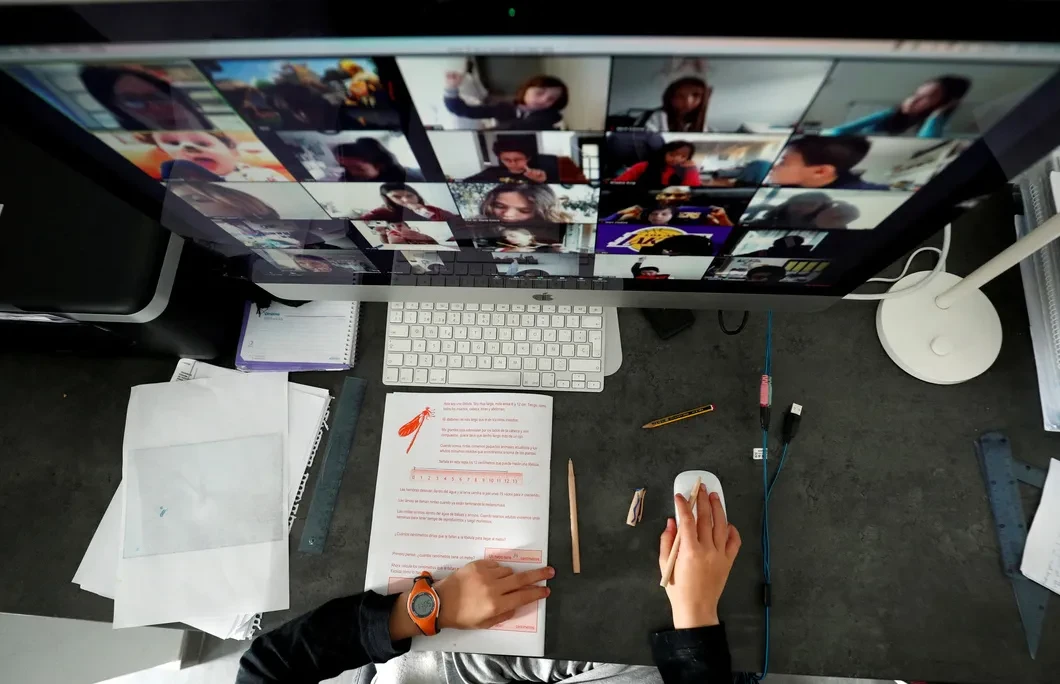
For example, there is a problem with this in the dormitories of the finalist. Finally, when the inhabitants of the cities massively move to their apartments, the emergence of problems with the speed of home Internet is inevitable. For example, for the EU Netflix and YouTube decided to reduce the quality of the video to reduce the load on the network. Educational material can be provided in the form of good old textbooks, monographs, scientific articles. This is possible if the university is debugged with remote access to the library.
Recommendations for saving time at correspondence with students: In online courses, descriptions of tasks for homework should be more detailed than for the usual audit ones. It is also necessary to prepare standard comments on completed tasks and typical texts of letters.
Finally, in online discussion, for final exams, the Pructortrack application is sometimes used, which allows you to identify the personality of the student who passes the exam and control his behavior during the exam.
PS
Autonomous universities in the United States organized in order to move to distance learning, while in many universities controlled by the state, the situation is much more complicated.
In addition, in Russian universities, education is often perceived as “grace from the state”, and in American - as a service paid by the client. As a result, American universities are extremely concerned about the convenience of the educational process for students, while Russian ones are not.
This is manifested in the fact that in the United States, the university administration encourage asynchronous presentation of material, and in the Russian Federation it is only a synchronous presentation (conference calls with students).
However, according to my observations, teachers in the USA and the Russian Federation, who had not previously had experience in teaching online, choose the most understandable synchronous distance teaching to students.