
Translated material
"What flew into my head, then said"

Why do Russians come up with fakes about coronavirus - and how they apologize for them
During the pandemic, Russian courts fined several dozen people who sent Fakes about coronavirus in social networks. The authors of the legends about antiseptics, which allegedly spray from helicopters, that troops are pulled into cities, and about dying people, the information about which the authorities allegedly hide, the police are looking for together with the FSB officers. Moreover, on April 1, the president signed a law that provides for criminal punishment for fakes. The Investigative Committee has already initiated three things under the new article. How the Russians think of launch fakes about coronavirus on the network and why they do this, Maria Karpenko found out for the “cold”.
In order not to miss the main materials of the "cold", subscribe to our Instagram and telegram .
Sillar and secret press conference
In early March, the inhabitants of Nizhnekamsk began to massively send each other in WhatsApp vocal message: on the recording, the woman said that the city would soon be covered with quarantine. “In short, girls,” she says. - Now I talked with my mother -in -law. My husband’s sister works in rehabilitation. In general, the husband’s sister says that our city the other day will be covered for quarantine for two weeks. They held a press conference. They asked to buy products for two weeks, but so that there was no excitement. It will be generally forbidden to go out into the street, if caught, they will impose a fine. Just the other day, they will close the city, everything will close: all shops, gardens, schools. There will be nothing to work. ” ( This message was recorded on March 16, when neither federal nor regional authorities have not yet required to comply with the self -isolation regime. However, now in Tatarstan one of the most stringent insulation regimes, and hundreds of people have already been fined for its violation . - approx. Ed. ).
A few days later, the Tatarstan police reported that she had found a woman whose voice sounded on audio recordings. The magistrate court fined the 28-year-old Oksana Garipova, who worked as a hairdresser, for 30 thousand rubles for the abuse of freedom of mass media (part 9 of article 13.15 of the Code of Administrative Offenses; such a punishment for the distribution of fakes by the State Duma introduced in the legislation back in 2019). For a long time, the police did not have to look for a woman for a long time: she herself turned to the regional television channel to apologize for the spread of Fake. “In fact, no one conveyed anything to me - I just joked for fun, so to speak,” she explained to the viewers.
Oksana Garipova told the cold that she recorded a voice message for her friends and sent eight people to the chat. This idea occurred to her after she herself received a similar message with alarming information in WhatsApp - only it was recorded by a male voice. “In that message [there was] almost the same thing, [what I said]: what will be closed [city], and so on. And I decided for the sake of interest, for the sake of a joke of girlfriends to entertain. Moreover, all this is constantly said on TV, all this news about coronavirus, this is all, ”Oksana explains.
When asked why the message of an unfamiliar man influenced her, she replies: “I just listened - and you can say, almost the same thing flew into my head. As they say, that flew, then said. ”
Oksana’s husband’s sister really works in a rehabilitation center. Very soon, the voice message came to her and herself - and in indignation she began to call a relative. The mother -in -law called - “scolded”, says Oksana: “I felt guilty, I still feel this guilt. For my part, it was not good and ugly, the act is not suitable for anything. ”
The woman admits that she tried to make her message be believably: “Yes, I tried to make the [friends] believed. I tried to improvise, apparently I did very well. But the improvisation got out of control, you understand. ” At the same time, she insists that she recorded a voice message for the joke: “I thought that [friends] would be jokingly perceived. They didn’t believe me. ” Oksana says that the chat participants immediately “laughed” together, but cannot answer the question of why, in this case, one of the friends sent the audio recording further: “Maybe they also decided to send further as a joke. They themselves do not say which of them [sent the message] - they refute. "
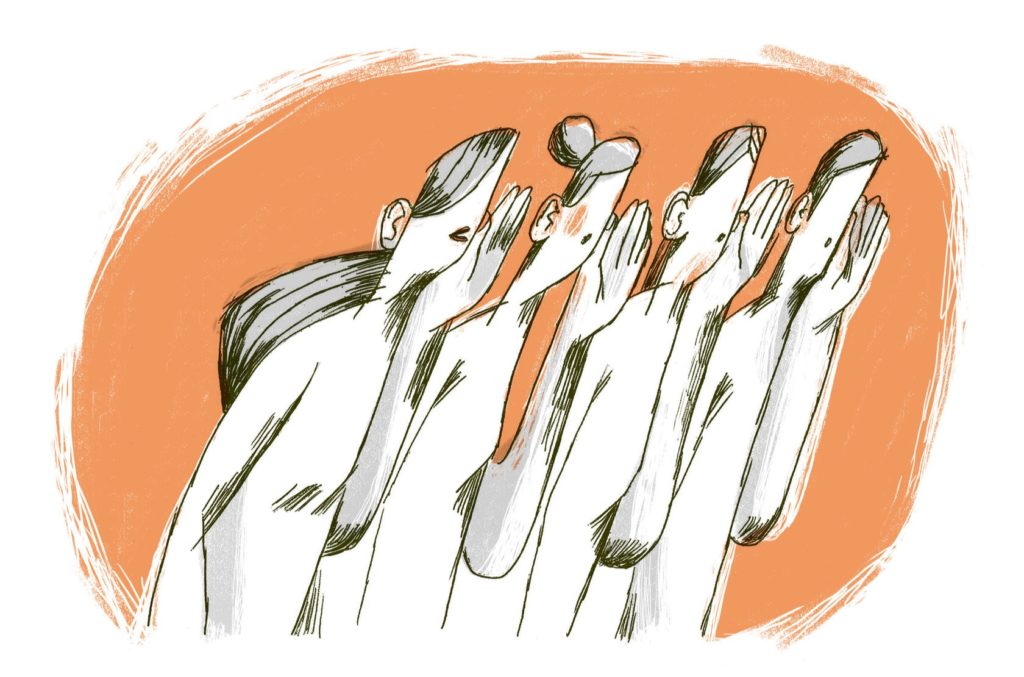
Oksana herself claims that he does not believe information sent to social networks and instant messengers. Including, according to her, she also did not believe that audio with an unfamiliar male voice that pushed her to work: “Now it is full of fake messages in social networks, but I do not believe in any of them, so I believed that they would not believe it either. And people went a panic, not expected at all. ” Oksana says that she knows how to distinguish reliable sources from dubious: “I am a lover on the Internet to climb. There can be a lot to attach something, but I already know where the truth is and where not. I look, firstly, are there any mistakes, spelling. Secondly, which site published a message. I take the information - only that in the "Yandex" in the media they write, and I do not believe anywhere else. The Vesti channel has its own site, somehow I rely more on them. Channel One also has its own. I know that they are already proven. ”
Oksana doubts that the Russian authorities give citizens all the information about the pandemic. But he believes that the lack of data is beneficial for people: “In any way, not everything is said so as not to develop panic. Because people are very panic, they believe in everything. If they believed in my message ... If the authorities reported everything, then in general there would be a madhouse in the country. And so a madhouse, but it would be even worse. ”
Hospitalized in the capsule
The 29-year-old resident of Lipetsk Elizaveta Kuzmina ( the name of the heroine was changed at her request ), working as a consultant in the mobile communications salon, was at work when an alarmed husband called her. He said that to their home-in a 20-meter room in the former dormitory, where the family lives with two daughters,-police officers came. Elizabeth never had problems with the law, but the police, as it turned out, came to her. So she found out that she was accused of spreading fake information about coronavirus.
The court reacted condescendingly to Elizabeth Kuzmina: he set her 15 thousand fine - half as much as the minimum amount that the law provides for. She says that the fine, however, will hit the family budget greatly: they pay a mortgage for the room with her husband. “I didn't want to scare anyone,” says Elizabeth. “I think this [punishment] is not very fair.”
In early March, in a working chat in WhatsApp, Elizabeth saw three posts from a colleague. “In general, girls, information from the military. Soon they will close the city, they will not let anyone go there or back. Stock up with food and medicine. Now the administration resolves the issue of closing the city, ”they said; An alarming news was accompanied by the story that some “dude” was taken “in the capsule” with a diagnosis of “coronavirus”, and the entrance, where he lived, was closed, “they don’t let anyone out or release anyone, they check those who remained.”
Only a minute was required to Elizabeth to send all three messages to the parental chat of the kindergarten, where her daughter goes. She says that neither excitement nor fear, having read these messages, did not experience, because she did not believe the information: “In principle, this cannot be. If something had happened, then the authorities would have reported this. Many have small children, relatives in other cities - if it were planned to close the city, the authorities would have warned. ” But to the question of why she decided to disseminate messages that she considered false, Elizabeth cannot answer. “They sent me, I sent it, that's all. I don't know, I don't know. Don't know! I can’t say what was guided at that moment, ”she repeats.
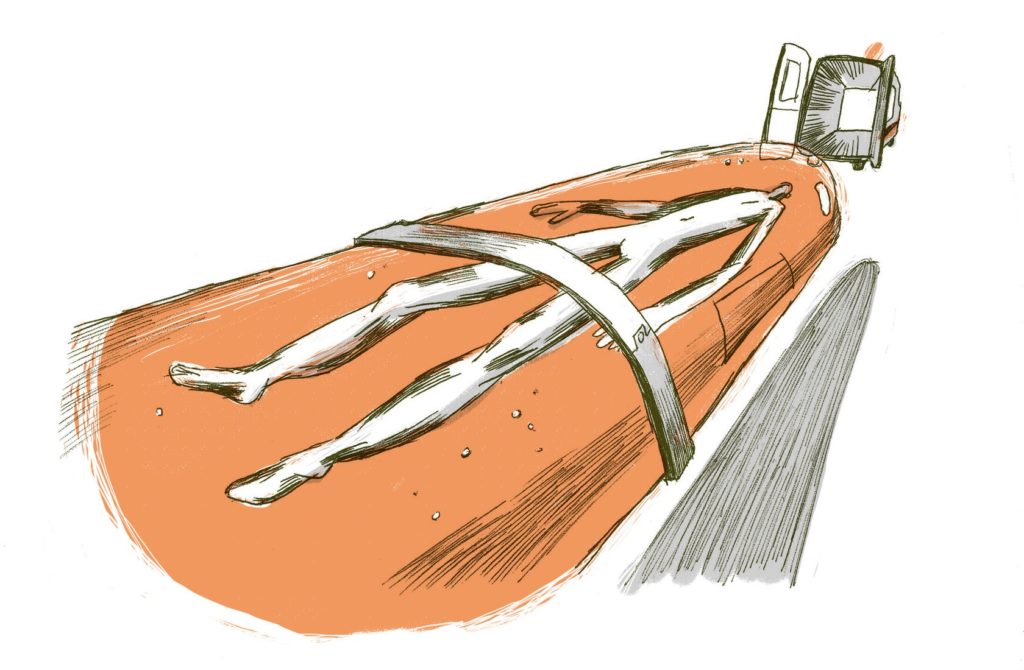
According to Elizabeth, neither colleagues in the chat of mobile communications salon, nor parents in the chat of the kindergarten believed the messages sent. Nevertheless, someone sent the information further-but no one admits this. Elizabeth explains this: “Probably because they subconsciously think: suddenly it is true! Suddenly, after all ... I myself, a small part of consciousness, probably admitted that this could be true. " She says that she sent messages to the parental chat, including in order to “help, warn, show that the situation is serious, so that they don’t really walk along the streets with young children.”
At the same time, Elizabeth believes, and reads the news about Koronavirus on the governor’s Instagram: “I think they do not hide information about the epidemic. Well, if they hide it, then only so as not to scare the people even more. ” In court, she pleaded guilty and repented. But from the fact that correspondence in WhatsApp brought her to trial, still in shock: “Okay, if a person himself came up with this from his head - then yes. And I just sent it-and besides, not somewhere in "Odnoklassniki" for everyone, but a group of their loved ones. "
"I'm now, the star of YouTube, or what?"
Since mid -March, several dozen people throughout Russia learned that their comments on VKontakte and voice messages in WhatsApp fell into the field of view of law enforcement agencies. The police are not limited to protocols on an administrative offense: they record the apology of the authors of fakes on the video, and then hang the videos on their sites and in social networks. “I wrote a commentary in the Gulag group that before the start of official statistics in Kazan there were already eight infected ones,” 20-year-old Kirill Khaminov, a student of the engineering college from Bugulma, says in one of these videos. "Where did you get such information from?" - clarifies the voice behind the scenes, obviously belonging to the police officer. “I came up with,” the student answers, looking down. "For what?" - continues the voice. Cyril is silent. The court appointed the student 30 thousand rubles of a fine, considering that with his comment he “created a threat of massive violation of public order and public security” (Kirill Khaminov refused comments).
On the sites of regional departments of the Ministry of Internal Affairs - a whole parade of apology. “I shot this video for fun,” the 28-year-old worker of the factory from Ussuriysk admits to the camera, who sent a video to his colleagues with a story that everyone had picked up the virus at his enterprise. “Do not perform such actions as I did,” calls the Russians a 20-year-old student of a medical university from the Irkutsk region, who sent vocabulary to classmates that there were dozens of infected people in the region. “When I heard from some acquaintances that we already have 60 people with a confirmed diagnosis in Penza and there are almost a thousand under suspicion there ... I decided to ask users VKontakte what they know about this,” explains , turning his back to the cell, the 27-year-old SMM-driver from Penza. - I realized that in vain I asked this question, and I am very sorry that in principle I asked it. I do not advise anyone to start this topic once again. ” “I apologize to the citizens who believed in my inaccurate information,” a 33-year-old resident of Novokuznetsk, who retold the story of the death of a young man with coronavirus, heard from a relative working in her hospital, also repents . “Excuse me again.”
An apology in the police department was brought to the camera by a resident of the city of Salavat in Bashkiria Irina Yamaletdinova ( the name was changed at the request of the heroine ). On March 27, she wrote a post in the VKontakte community that several people in her city were infected with coronavirus and were in the hospital. “Forgive me, please, I admit my guilt, I repent, forgive me, please. Do not make my mistakes, do not repeat, ”Irina says in the video.
However, the fact that the video with an apology was posted on the network was a surprise for Irina, she says. “When they interviewed me - garbage - they said that this species would not go anywhere,” she was indignant. -I only allowed it because of this, I would not allow me to be removed. I'm in shock in general. I'm now, the star of YouTube, or what? ” She recalls that the police asked her to record a refutation “for a report” and even explained what exactly I need to say and how to apologize: “And here Iraera is a turn - they put it in all groups.”
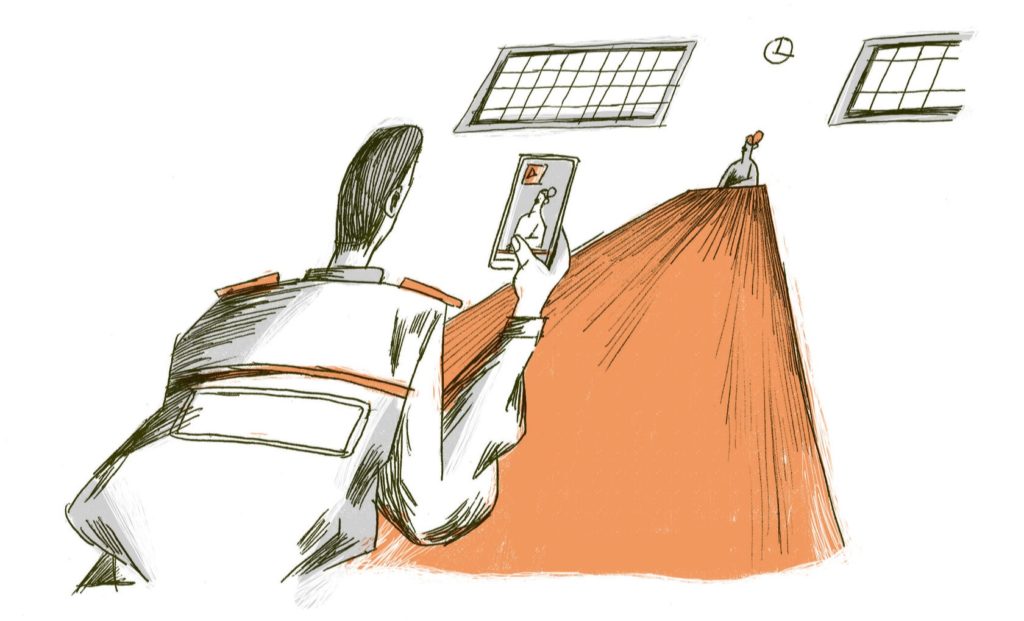
Irina posted the publication, which the police drew attention to the SLV Life group, the main community of the city. “I just heard, [what] people on the street [about sick coronavirus] were talking. I heard - I think I have to put it up. I went from the hospital, just laid out, and that’s it. Yes, just like that, to do ***** [there was nothing], ”she explains her decision. For the first time in her life, Irina decided to lay out a post in a group of 40 thousand people. Remember what exactly made her to get the phone and share information, she cannot: “I finally did not think. I don't know what encouraged me. There is no answer to this question - why. Well, I wrote and wrote. ”
Irina says that usually the information about the epidemic draws “from the TV”. At the same time, she is sure that the authorities inform the Russians not the whole truth: "Maybe panic do not want." However, Irina herself had no concerns that she would have a panic of her post: “Yes, what’s not, I didn’t think about it at all. I am such a person - once, I did it, and then I thought. ”
It will be difficult to pay a fine-15 thousand rubles: she works as a saleswoman, salary-eight to nine thousand rubles a month. “In connection with these events, porridge is generally in my head. Where can I get fifteen mowers? I'm a single mother. I also have an autoimmune disease, ”she says. To the question of whether she still believes information about those who have infected the virus heard on the street, Irina answers carefully. "Don't know! Most likely no! So you say something right now, and then op ... ”she says cautiously. But then he adds: “Well, just the same people from whom I heard it-they also took this information from somewhere.”
"I wanted to achieve the truth by deception"
In mid-March, the 25-year-old locksmith Ivan Merkushev after a shift at the factory, as usual, was waiting for the bus. From boredom, he listened to the conversation of two unfamiliar women who stood at the stop next to him. They said that a woman, infected with coronavirus, died in one of the Perm hospitals. “Once again, everyone is silent,” thought Ivan.
Information that comes from the Russian authorities, Ivan - the worker of the Perm Engineering Plant with secondary education - stopped trusting six years ago, after the accession of Crimea. “I used to be a patriot. But the Internet is teeming with videos, where the President of the Russian Federation first says: "There are no Russian [Russian military in the Crimea] there." And then suddenly - they were there. They contradict themselves on TV every day. Always hid important information from the people, ”Merkushev said to the cold.
In a situation where the authorities are not telling the truth, the journalists must inform her, the workers continues: “But since they are all corrupt or obviously feeding the state, I trust gossip from the people more. Simple strangers at a bus stop. "
A few days after he heard the conversation at the bus stop, Ivan leafed through the tape on VKontakte - and came across the publication of the Perm news agency about the number of coronavirus infected by coronavirus in the region. In the comments, he saw a replica of an unfamiliar girl that there really were more sick. At that moment, Ivan remembered the conversation at the bus stop - and decided to share knowledge with others. “Four to five days ago, a woman died of coronavirus in the first medical unit. The information was not issued about this, ”he replied to a comment. Administrators who were inquiring who is the source of this information, Ivan assured: "The person is reliable." And he advised: “You guys need to look for an anonymous source among the hospital staff. You are the media! Flag in your hands! Want - you will find. ”
Now Ivan admits that he "ducked" and "committed stupidity." “I wanted to achieve the truth by deception. I wanted to give a reason to journalists to try to figure it out. This is a natural human desire - to achieve the truth, ”he explains.
The court appointed Merkushev a fine of 30 thousand rubles. This is all his monthly salary. To pay this amount, the worker had to take a loan. “Unpleasant, but not critical,” he sighs. - In general, I still believe in the version of women at a stop. Official information for me is either incomplete or continuous lie. ”
Gum effect with heroin
The general distribution of fakes is a situation typical of any emergency, says psychologist Olga Makarova, who has worked as the head of the emergency response department of the Emergency Psychological Assistance of the Ministry of Emergencies for more than ten years. In a tense situation, when vital changes take place every minute, people feel the shortage of information and begin to actively look for it-and because of a strong emotional involvement in what is happening, they become susceptible to any data, including inaccurate. “This is characteristic of a situation of stress: when we experience anxiety and fear, we have a decrease in cognitive abilities, we perceive the information less critically, the so -called“ tunnel vision ”arises,” says Makarova.
The motivation of the creators of fakes is different, she explains. “Passing on the other information, especially emotionally significant for the majority, a person can assert himself, raise his significance in both his own eyes and in the eyes of others. Для некоторых владение информацией, осведомленность и способность ее сообщить может быть удовлетворением потребности во власти, — говорит психолог. — Мотив других может вполне благородным: чувство солидарности и заботы об окружающих. Такой человек чаще всего испытывает тревогу, и передавая слух дальше, чувствует эмоциональную разрядку: передал слух — значит, разделил тревогу с другими». А кому-то распространение такой информации просто приносит удовольствие, добавляет психолог: «Наблюдать за реакцией людей, которым ты сообщил что-то шокирующее, может быть приятно. Способность менять эмоциональное состояние людей тоже позволяет почувствовать власть».
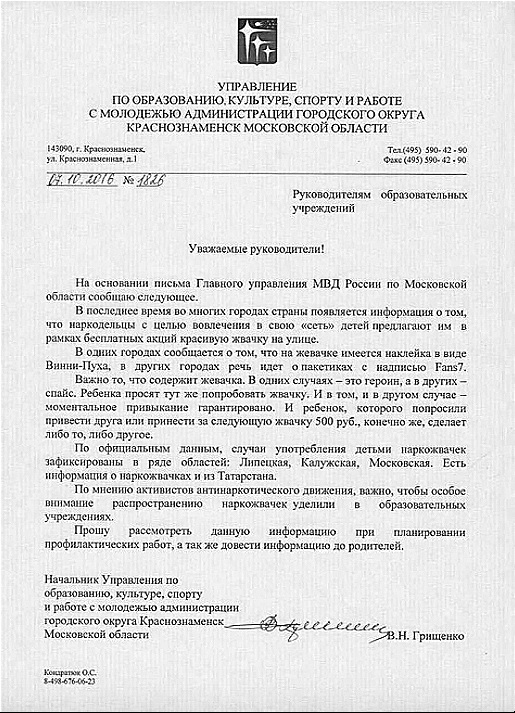
Как вспоминает антрополог, старший научный сотрудник РАНХиГС Александра Архипова, в 2016 году начальник управления образования Краснознаменска Виктор Грищенко разослал директорам школ письмо на официальном бланке, предупредив их о том, что злоумышленники раздают детям у школ красивую жвачку с наркотиками. Чиновник фактически переписал старую легенду, которая рассылалась в родительских чатах, однако в письме сослался на письмо ГУ МВД. «"Эффектом Грищенко" я называю ситуацию, когда человек верит в информацию, которую получает, вовлечен в панику, знает, что есть враг, с которым надо бороться и спасать людей вокруг. Чтобы убедить окружающих, что опасность реальна, он жертвует правдой — создает источник более надежный, чем «женщина в чате», — объясняет Архипова. — Такой человек усиливает авторитетность источника, потому что руководствуется презумпцией опасности». Именно так, по ее словам, поступил рабочий Иван: «Он верит, что власти информацию скрывают (как и Грищенко верил, что опасность наркотических жвачек реальна), и, чтобы убедить всех в том же самом, усиливает свой аргумент ссылкой на "надежного человека"».
Чем меньше люди верят официальной информации от властей, тем больше они склонны делиться друг с другом непроверенной информацией, соглашаются все эксперты. «В ситуации, когда снижается доверие социальным институтам, возникает вера "таким, как я": "Я не верю медицине как институту, но верю знакомой медсестре"», — объясняет Александра Архипова.
Фейк распространяется всегда из-за наличия «презумпции опасности», подчеркивает она. «Есть такое понятие, как "цензура коллектива": сообщество определяет, какую информацию распространять, а какую нет. Фейк станет распространяться по цепочке, только если конкретная информация будет соответствовать ожиданиям сообщества о том, что важно и опасно в данный момент. Движущая сила этой цепочки — ожидание опасности», — объясняет она.
Именно поэтому, считает Архипова, мотивы своих действий не могут объяснить ни Елизавета из Липецка, ни Ирина из Салавата: «Презумпция опасности подействовала прямо на них. Они чувствуют необходимость передавать информацию. Людям в ситуации опасности важно упрочить социальные связи, особенно когда они распадаются, и для этого мы делимся информацией, которую считаем важной». Передавая такую информацию, человек, с одной стороны, проявляет заботу об окружающих, а с другой — это может повысить его социальный статус, говорит антрополог.
«Уголовное наказание за фейки — это тоже порождение паники»
Закон о фейковых новостях, принятый Госдумой весной прошлого года, до сих пор применялся мало, и причина тому — внутренне противоречивые, допускающие неограниченно широкое толкование формулировки, отмечает адвокат, правовой аналитик международной правозащитной группы «Агора» Станислав Селезнев. Но в марте этого года число таких судебных процессов резко возросло, а в апреле дела «посыпались, как из рога изобилия», говорит он, — «при этом практически все оштрафованные моментально начали признавать вину, даже не пытаясь защищаться».
Как показывает практика, у правоохранителей возникают сложности с тем, чтобы доказать, что распространитель фейковой новости заранее знал, что информация недостоверна, отмечает Станислав Селезнев. Вероятно, именно поэтому наказывают обычно только одного человека из цепочки распространения фейка, а не всех. В свою очередь, Александра Архипова подчеркивает, что «сложно отличить вклад в создание фейковых новостей тех, кто придумал текст, от тех, кто передавал их дальше и во время передачи насыщал новыми смыслами». «Поэтому настоящий автор таких фейковых новостей, передающихся по цепочке — коллектив», — отмечает она.

В начале апреля российские власти ужесточили наказание за фейки — теперь за их распространение может грозить уголовная ответственность. Панике подвержены не только обычные люди, но и законодатели, считает адвокат Борис Пейгин: «В условиях пандемии, страха и неизвестности законодательство начинает бурно развиваться — наказание за фейки ужесточается, и этот процесс выглядит непродуманным. Уголовное наказание за фейки — это тоже порождение паники, как и сами фейки».
Важно, что под новые статьи УК подпадают не только заведомо ложные сообщения о произошедших событиях, но и личная оценка действий властей, не совпадающая с официальной, указывает Селезнев. «Как будет доказываться заведомость и ложность? Очень просто — если ваша информация противоречит пресс-релизу органов власти, значит, она недостоверная. А раз она недостоверная, то, очевидно, — заведомо ложная, поскольку вы либо не проверили ее достоверность, обратившись к властям, либо, что еще хуже, получили официальную информацию, но распространили сведения, ей противоречащие», — рассуждает аналитик «Агоры» Дамир Гайнутдинов.
Новые нормы Уголовного кодекса о фейках не перестанут применяться и после окончания эпидемии, обращает внимание Станислав Селезнев. «Их жесткость и "открытый" характер будут и далее оказывать явный охлаждающий эффект на всю общественную дискуссию по любому общественно-значимому вопросу», — считает он.