
Translated material
"Russia will simply be removed from the market"
Why do we better agree with Saudi Arabia about something? Answers Mikhail Krutikhin
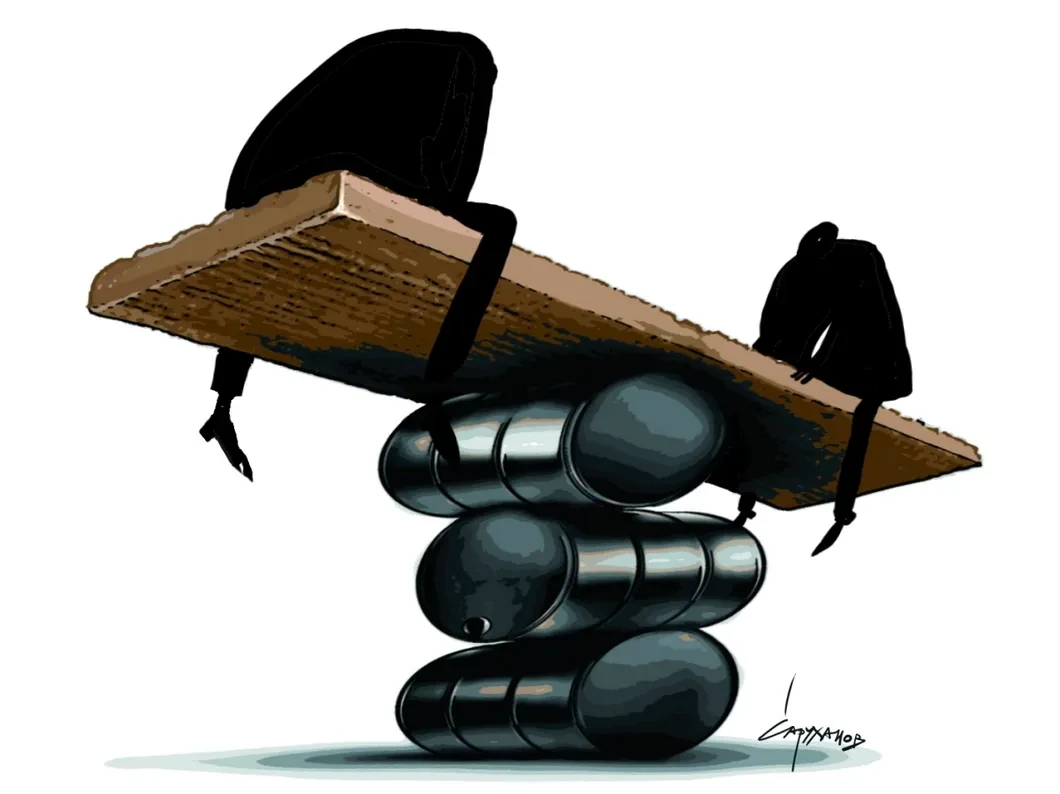
At the price of oil of $ 32 per barrel, Saudi Arabia “as a sign of respect for the request of the President of the United States of America Donald Trump” called the OPEC+ countries to meet in a video conference format. And on April 9, a month after Russia's exit from the transaction, after the "oil war", declared in response to the Saudis, the parties will meet. If they manage to agree, then the price of oil may grow a little. The chances of this are evaluated in a conversation with the “new” partner of the Rusenergy consulting company Mikhail Krutikhin.
Expert card
Mikhail Krutikhin is an orientalist, a specialist in the field of oil and gas industry, an analyst, partner of the Consulting company Rusenergy.
- Mikhail Ivanovich, do you believe that the Saudis will cease to be offended, and Russia will return to the deal with OPEC?
-It is unlikely that something will work out on April 9. There are chances that the parties will accept the declaration that prey must be reduced. Then they will bring her to the “big twenty” court. There will also be accepted something like a declaration. And only then a new meeting of the OPEC will take place, where, perhaps, they will agree on something. But the chances of this are not one hundred percent. As I understand it from the positions of some participants, in particular Russia, they demand that not only those who still enter the alliance, but also other countries are reduced to prey. In particular, the United States, Norway.
- Norway seems to be ready to agree.
- So far, Norway said that she would look, and will be, perhaps, at this meeting by an observer.
- What abbreviations do Russia and Saudis achieve for themselves? What is the difference in positions?
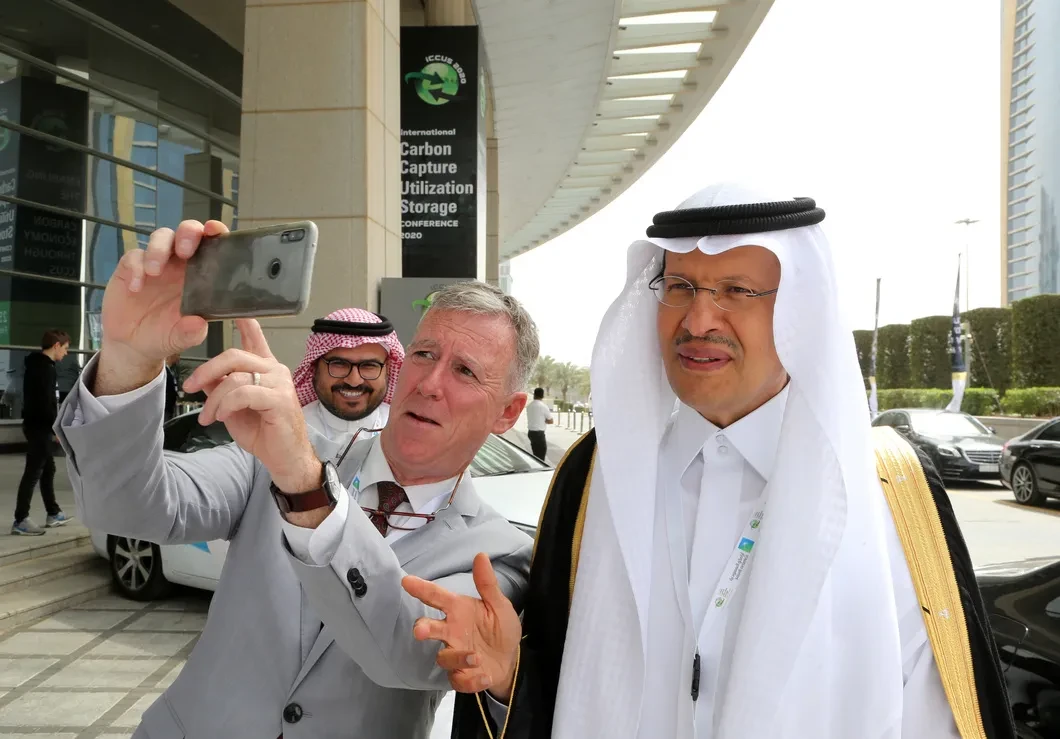
- The Saudis want the reduction to be counted from the condition at the end of the first quarter. By this time, they themselves, the united Arab emirates, and Kuwait has already significantly increased prey. Russia is of the opinion that it is necessary to take the average value for the first quarter - and already from this level, much lower, to count. The difference is that if you count on the “Saudi” version, then Russia will have to reduce its production by one and a half million barrels per day, this is 75 million tons per year. I doubt that Russia is ready for such a reduction.
- And what abbreviation Russia is ready?
-I agree with Vice President Lukoil Leonid Fedun, who said: the maximum amount for which Russia can technically reduce production is 300 thousand barrels per day. This is really maximum. At the Saudis, at the end of the quarter, the prey had about 10.5 million barrels per day. If they reduce by one and a half million, they will go out to the same prey that they had before.
But Russia, if the parties agree, will have to reduce production very much.
Moreover, in the past three years, Russia has participated in the OPEC+agreement, but has not reduced anything, but only increased the prey. Although she made beautiful statements about what was reduced as a sign of solidarity. They caught Russia on this - and demanded reduction.
- Well, they didn’t catch it now, it was known that Russia actually does not reduce production. But everyone somehow suffered.
-Yes, they caught Russia all the time, but somehow agreed. They agreed to take into account all the prey, but without taking into account condensate. It was a trick from Russia, but it was accepted. Because Russia's statements influenced the futures market, pushing the price a little up.
This happened on naked statements, without a real reduction in prey.
- Can't you do the same? Or now the Saudis will look after Russia?
- And not only Saudi Arabia. Now the Americans have made an interesting proposal: let's, they say, a natural decrease in prey caused by a decline in economic activity due to coronavirus, we will call the country's contribution to a global decrease in prey. The same was proposed by the British, Canadians. Whether they have such a trick will pass - it is incomprehensible. But such a picture may turn out that all countries are in one way or another, even if formally, reduce prey, and Russia will be a violator of the global convention. Because it is not even technically unable to seriously reduce the prey.
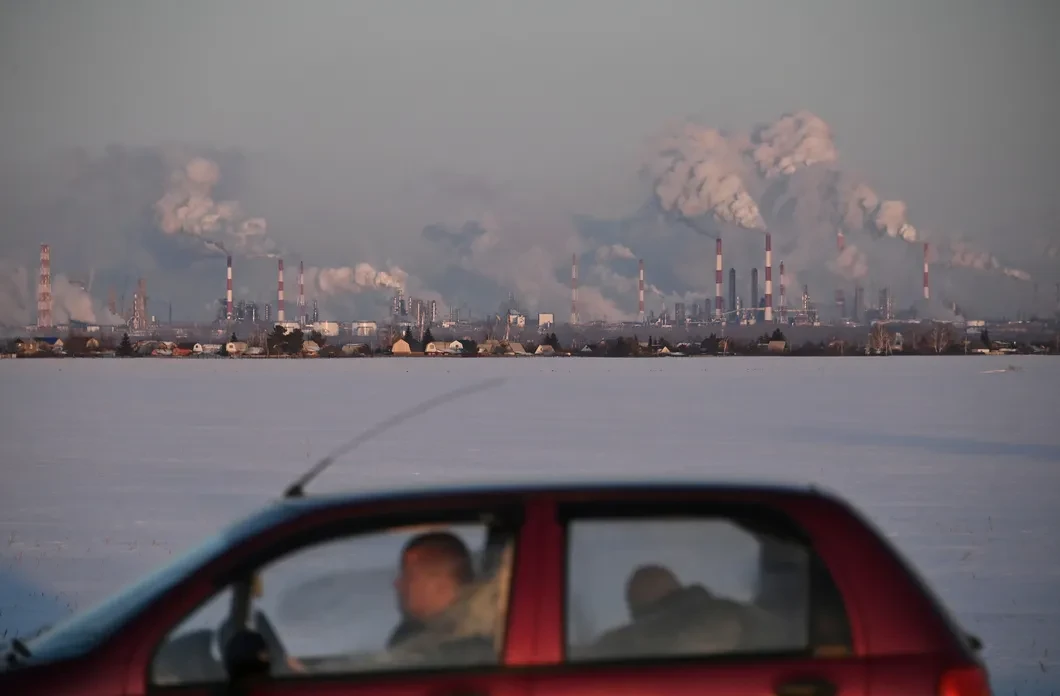
And then it will be possible to expect various measures against Russian companies.
First - against state, and then against all Russian oil exporters.
- What measures?
- Maybe in the form of sanctions, or maybe - in the form of an embargo for the purchase of oil from them. In general, everything moves towards this. I think that Americans with the Saudis will be able to agree, especially since they have something to share in political and military-political. And Russia will remain aside - in the role of the guilty.
- Why did you say that Russia cannot seriously reduce prey? Can't or don't want to?
- It cannot. Let's take for example almost the same deposits in Saudi Arabia and in Russia. In Saudi Arabia there are 150 wells, which have about a thousand to two tons per day. Russia needs about two thousand wells to get the same amount of oil. Saudi Arabia has a fountain oil, it itself is coming. Russia has less than two percent of such wells, and 82 percent are rocking machines. If you drown out such a gigantic number of wells, they will begin to overgrown with paraffin, in the north - freeze, then it will be even more expensive to run them. And some will be launched and impossible. That is, Russia cannot work on such a reduction technically, is not able to.
- And the negotiation partners probably know this?
-They probably understand, but what is the point? They promised - reduce.
- If Russia had not left the deal with OPEC in early March, if the Saudis were not offended, would we talk about such a reduction anyway? Or then would everything be softer?
- I think that in the end it would still be necessary to reduce, because prices would still fall. Only everything would happen not so sharply, much more smoothly, and, perhaps, the reduction would not be required in such a volume. But the story in early March was very ugly.
- Why did you need to leave the alliance, anger the Saudis?
- Apparently, they underestimated the partners. In particular, they underestimated the potential and stamina of American shale companies, underestimated the Saudi opportunities, but overestimated their own. We overestimated the capabilities of the National Welfare Fund, monetary accumulations of oil companies, and the quality of stocks in Russia. And at the most sick moment, when there is also coronavirus, they decided to hit the world oil market in order to disable competitors, and then say: we are on horseback, we are fine.
These cheap show -offs were very expensive for Russia. As a result, Russia will be the culprit of this crisis.
- The oilmen who told the president that it was impossible to do this with the Saudi princes were mostly. How did it happen that they were not listened to? What did those who made the decision count on?
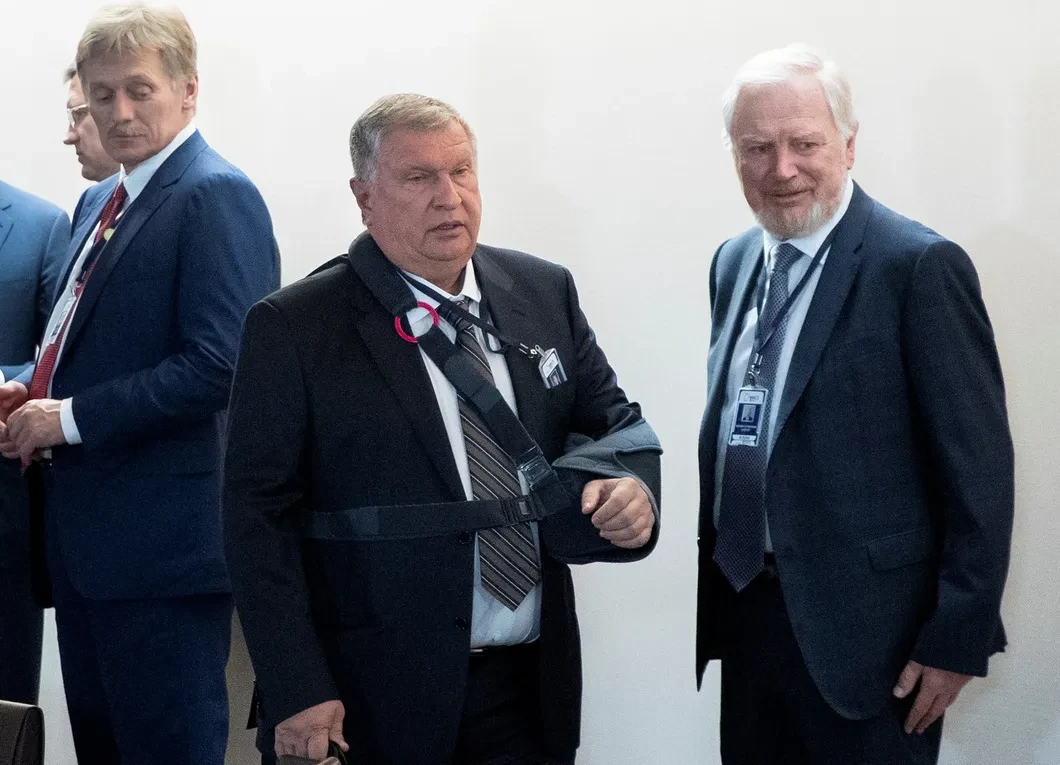
- Let's remember the meeting on February 12. Then the oil workers told the Ministry of Energy and the Ministry of Finance that the Saudis should be persuaded very smoothly to continue their former tactics. We will accumulate, they said, a little more money, while the oil is more or less, and then look. Prices, of course, will decline, they said, but smoothly. And there was the voice of Igor Sechin, who insisted: we must beat competitors in the most sore spot and abruptly leave. And when on March 1, a meeting was held at the Vnukovo-2 airport, Sechin told Putin that it was pleasant to hear: we would be a great energy power, everything would depend on us, we will put all to their knees. He perfectly understands what and when to tell the president.
-And the rest?
- The rest of the oilmen either nodded their heads or were silent.
- That is, you can just talk about it like that without calculating the consequences?
- And what, there are few examples of how the consequences did not calculate? And the Sechinsky plan "East Oil" ( the new project "Rosneft" on Taimyr, introduced by Putin in early February - I.T. )?
Oil will be there at the price of Chanel No. 5! But the project is driven. Or the power of Siberia-2: Does someone calculate the consequences there?
The point is not at all in any counted consequences there, the main thing is window wings, show-offs. And what kind of money it will cost the country - no one counts this. The main thing is to show that we are a great power.
- At what minimum oil price is it still profitable for Russian companies to produce it?
- In February last year, the Deputy Minister of Energy estimated the average cost of Russian oil as follows: $ 25 per barrel plus taxes. Plus taxes! At the same time, you can still work somehow. The company IHS Markit, which prepared the IPO Saudi Aramco, compared the cost of Saudi oil and Russian Saudi.
In 2019, if the decision on a new project was made for Saudi oil, then the price was to hold on the level of $ 17 per barrel on the market. If the decision was made according to the Russian new project, then the price of $ 42 per barrel was required. With old projects, on 2019 estimates, Saudi oil required a price of $ 10, for Russian-about twenty.
- At such prices, what are the capabilities of Russia to increase production?
- There are no possibilities. According to official figures, 70% of Russian oil are difficult to recover reserves. To begin to develop these deposits, you need a stable price of $ 80-85 per barrel. And 30% with us are easily extracted oil with a not very high cost. When the price falls, relatively small volumes of oil become profitable, they need to be dumpled, drew up with all means. What they do with us. And if the company comes to a new deposit, then from the moment it begins to spend money on the project, until the investment begins to pay off, you need to wait from 7 to 15 years.
Who is ready to wait 7-15 years now if the planning horizon today is not even three years old today, but less?
No one is sure of the future. Not only in prices are not sure, not that in the demand for oil in the world, so we have tax conditions in the oil industry several times a year. That is, it is generally unknown what will happen next. Who will plan a project that will pay off in 15 years? Therefore, no one goes to new oil.
- Our main “Wanderbildikha” is Americans with their shale oil. At what prices can they increase prey?
-For them, $ 40-45 per barrel is a very good price.
-That is, by the way out of the transaction with OPEC, we still managed to reduce them and force them to stop prey?
-If by the end of the year, at least as a result of some statements, the price will jump up to $ 40-45, all shale oil will go again, its production is very easy to revive, it is easy to return to stopped wells, resume hydraulic explosion-completion of work on a drilled well. They have a colossal potential. It is not necessary to bury shale oil, it will stand. But if our wells have to be jammed now, then many deposits will simply be lost. Well, if you return to life, 20 percent will succeed.
- You do not believe that Russia and Saudi Arabia will agree on April 9. And when can they agree? And what in the end?
-The most optimal option is that everyone accepted some quotas and together went to reduce prey. Someone will really begin to reduce. Someone will begin to enter a natural decline in these quotas due to coronavirus. But Russia has nothing to answer in this game. Russia here looks like impotent. She can neither quickly reduce production or promptly increase. Our industry has no such flexibility. And who will the Saudis and Americans begin to blame what is happening on the market? One who is not able to fulfill obligations.
I expect at first, as I already said, some sanctions for Russian state-owned companies-Rosneft, Zarubezhneft, Tatneft and so on. Then, perhaps, in general, the embargo for oil trade with Russia. Then no one will need to reduce prey, world prices will be supported only due to the fact that Russia will be removed from the global market. This will be a colossal blow to both the Russian oil industry and the Russian budget.
- How man -made can this situation be considered? Would it still happen due to the crisis or brought a gap from OPEC to this?
- I think the role of Igor Ivanovich Sechin, who convinced the president, is very great here, which was so necessary for the greatness of Russia. Such a situation could have developed without it, but not now, not so fast. Sechin acted as a radical process accelerator.