
Translated material
Peter Stolypin
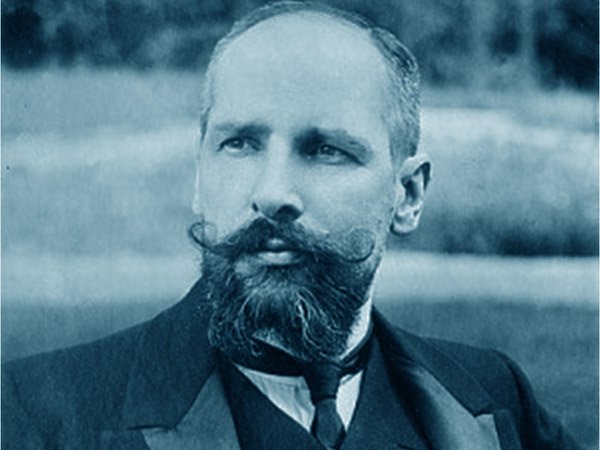
On April 14, Peter Stolypin, Russian Prime Minister under Nicholas II, author of the famous agrarian reform, was born.
Personal business
Pyotr Arkadievich Stolypin (1862-1911) was born in Dresden. The father of the future politician was a military man, so the family often moved, eventually settling in Vilna. The Stolypin was already finished in Orel, after which he entered the natural department of the Physics and Mathematics Faculty of St. Petersburg Imperial University with a degree in agronomy.
While still 22-year-old Stolypin married the rich and noble Olga Neidgardt. Five daughters and a son were born in a marriage.
Information about the beginning of Stolypin’s career is contradictory, however, it is known that having barely graduated from the university, he received the rank of college secretary (10th in the tables of ranks; usually graduates received the 14th and very rarely-12th ranks). Three years later, he became a titular adviser, and in 1889 - at the age of 27 - he was appointed Kovensky district leader of the nobility and the chairman of the Coven court of world intermediaries. Already here one of his main concerns was an increase in the performance of peasant farms. By the end of the service in Kovno in 1902, Stolypin was already a state adviser.
The surprise for him was the following appointment - the Grodno governor, initiated by the Minister of Foreign Affairs V.K. Pleve. In this position, Stolypin began to actively reform agriculture: to introduce fertilizers, reclamation, and the development of cooperation. At the same time, those anti -revolutionary attitudes began to manifest itself, which later largely determined his policy: already on the second day of work by the governor, he closed the Polish club, where, in his opinion, “rebel sentiments” dominated.
The next appointment was the post of governor of the Saratov province. Here Stolypin met the news of the Russian-Japanese war, to which he reacted with Skepsis-"a war, not brightened up by a sacrificial impulse, is sad and heavy." Here he was also found by the revolutionary events of 1905, which demanded the next strict decisions and personal courage. Witnesses talk about cases when Stolypin resolutely entered the raging crowd without weapons and without protection and already calm it down.
This activity of Stolypin was not limited to the cessation of unrest. On his initiative, several “folk clubs” were created from the Black Hundreds who organized counter demonstrations every time revolutionary performances began in Saratov and threw stones. In addition, Stolypin began to resort to the use of troops - not only against revolutionaries, but also against the peasants, among whom unrest flared up; Arrests and searches often were of a rampant character, and without sacrifices.
The zeal of the young governor attracted the attention of Nicholas II. In April 1906, another sharp jump takes place in Stolypin’s career: he was appointed Minister of the Interior. The beginning of his work in the new post coincided with the start of the I State Duma, which mainly consisted of representatives of the left parties, which openly conflicting with the authorities. In this way, the Duma did not last long in this form and was already dissolved in July; Stolypin, while retaining the post of Minister of the Interior, received the position of prime minister. In this post, he tried to attract popular public and party leaders to the government, but to no avail.
The relations of the new prime minister and the II State Duma were not easy, where the Socialist -Revolutionaries and members of the RSDLP were represented in abundance, who continued revolutionary activities during the presence in parliament. The reason for her dissolution was actually the Stolypin “government message about the conspiracy”, in which he reported on the preparation of terrorist acts against the emperor, Grand Duke Nikolai Nikolayevich and against himself.
The III Duma, formed according to the new electoral system, which increased the representation of landowners and wealthy citizens, was already considered the brainchild of Stolypin. The Oktyabrists, who were in the Center, provided Stolypin with the adoption of the necessary bills, in particular, regularly approved the budget proposed by the government.
One of the radical initiatives of Stolypin was the adoption of a law on military field courts. The minister knew about terror firsthand - by this moment several attempts were already committed on him. The explosion in the Stolypin mansion on the pharmacist island in St. Petersburg took away several dozen lives, and a week later a law was adopted that introduced special courts from officers who were only in charge of cases where the crime was obvious. In accordance with it, the trial of the court took place within a day after the crime, the case could understand no more than two days, the verdict was carried out at 24 hours. The defendants were deprived of the right to defend themselves.
The main case of Stolypin was the agrarian reform, which began in 1906 and aimed at destroying the traditional rural structure of life - the peasant community - and giving the peasants the status of full owners of the land. The purchase of private ownership (primarily landowners) lands through the peasant land bank on very preferential lending conditions was encouraged. About 3 million people moved to Siberia, where most of them remained (about 18%returned to the European part of Russia). In 1910, the famous "Stolypin" cars were created for immigrants, some of which were allocated for cattle and inventory.
Stolypin died in Kyiv as a result of the next attempt. Police informant Dmitry Bogrov went to the city opera Theater, where the Prime Minister, along with Nicholas II, listened to the opera “The Tale of King Saltan”, and fired at Stolypin twice. For several days, the doctors fought for the life of Stolypin, but in vain - on September 5, 1911 he died. His will said: “I want to be buried where they would kill me,” and Stolypin was buried in the Kiev Pechersk Lavra.
The versions of the initiators of the murder vary greatly: either Bogrov acted “on his own behalf”, or behind him stood one of the revolutionary parties, or the security department.
What is famous
 Peter Stolypin
Stolypinsky agrarian reform was the main step towards a change in the traditional peasant structure in the history of Russia. The death of the minister and the followed events - two revolutions and the civil war prevented her.
The introduction of military courts and other repressive measures were also unprecedented. In just eight months of their existence, military courts on “political crimes” issued 1102 death sentences, 683 people were executed. The scale of these repressions were unprecedented for the country. For comparison-for the entire period of 1825-1905, the state for political crimes issued 625 death sentences, of which only 191 was carried out.
What you need to know about
Stolypin was a second cousin Mikhail Lermontov. At the same time, the attitude to the famous relative in the family was restrained: according to the memoirs of the daughter of Stolypin Mary, “relatives did not love him for unbearable character. Especially one aunt of my father did not endure him so much that so to death and did not agree that something worthwhile could come out of the pen of this "unbearable boy".
Direct speech
About revolutionaries and state policy: "They need great shocks, we need great Russia."
On the application of the law: “You cannot say hourly: you have an old flint gun; Using it, you can hurt yourself and outsiders; Throw a gun. An honest sentry will answer this: as long as I was at the post, as long as they did not give me a new gun, I will try to skillfully act old. ”
About military courts: “The state may, the state is obliged, when it is in danger, adopt the most stringent, most exclusive laws in order to protect itself from decay. There are, gentlemen, fatal moments in the life of the state, when state necessity is above the right and when it is necessary to choose between the integrity of theories and the integrity of the Fatherland. ”
On the need to master Siberia: “Our eagle, the legacy of Byzantium, is the two -headed eagle. Of course, one -headed eagles are strong and powerful, but, cutting off our Russian eagle one head, facing the east, you will not turn it into a one -headed eagle, you will make it only bleeding. ”
Leo Tolstoy about military fields: “The most terrible thing is that all these inhuman violence and murders, in addition to the direct evil that they cause to the victims of violence and their families, cause even more, the greatest evil to all the people spreading quickly, like a fire on dry straw, the corruption of all classes of the Russian people. This corruption is spreading especially quickly among the simple, working people because all these crimes exceeding hundreds of times that has been done and are done by simple thieves and robbers and all revolutionaries together, are committed under the guise of something necessary, necessary, necessary, not only justified, but supported by different, inseparable in the concepts of the people with justice and even holy institutions: Senate, Senate, Senate, Senate, Senate, Senate Synod, Duma, Church, King. ”
9 facts about Peter Stolypin
- The wife of Stolypin Olga Neidgardt was the great -grandson of Alexander Suvorov.
- One of Stolypin's teachers at the university was Dmitry Mendeleev, who put him “excellent” in the chemistry exam and later spoke with warmth about the student.
- Two predecessors of Stolypin were killed at the hands of the revolutionaries as the Minister of the Interior - Dmitry Sipyagin and Vyacheslav Pleve. He took this post contrary to his desire on the direct order of the emperor.
- The expression "Stolypin tie" (as the gallows loop began to be called), the representative of the party of the cadets Fedor Rodichev put into circulation. In response, Stolypin called him to a duel, but the case ended with an apology of the deputy.
- In popular literature, a beautiful, but incorrect version is often found that Stolypin was killed during the opera “Life for the Tsar”.
- In the last years of his life, Stolypin wore a steel sheet in a portfolio in order to be able to close from a bullet during the attempt. In total, 11 attempts were planned for it and made it.
- One of the feuilletons of Vaclav Vorovsky described the utopian country of the total noble prosperity, which came thanks to the advanced plows. The country was called Arkady in honor of Peter Arkadyevich Stolypin.
- The beginning of the first in the history of the Kyiv Championship in football was postponed for a week due to the murder of Stolypin.
- The chair in which the deadly wounded Stolypin fell, and the overcoat, into which they wrapped it, taking it out of the theater hall, are now stored in one of the museums of Saratov.
Materials about Peter Stolypin
Article about Peter Stolypin on Wikipedia
P. Zyryanov. Peter Arkadievich Stolypin