
Translated material
And there is life at home :)
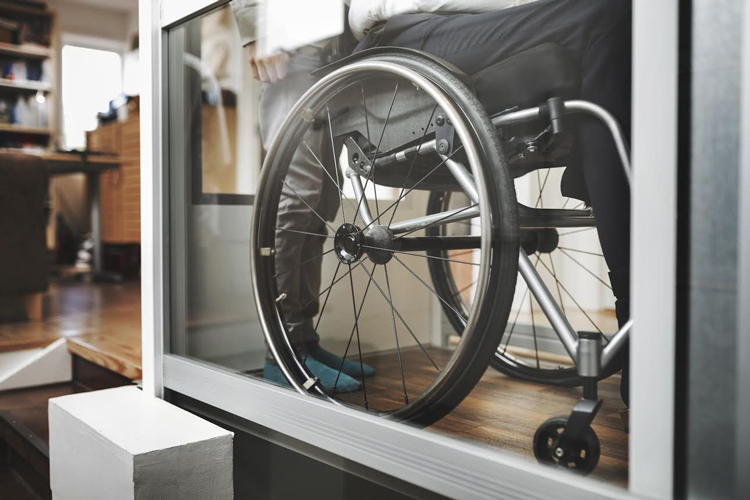
“When it all ends, I ...” For the last couple of weeks, social networks are actively making plans for “after quarantine”. Return to full work, go to your favorite coffee shop again, go out of town, go to the theater and finally send children to school or at least to my grandmother-these desire lists are similar as twins-brothers.
But for a significant part of society, quarantine has not become something special. People with disabilities in Russia spend the most part of their lives at home. We definitely have something to learn from each other now.
That is why the Moscow Polytechnic Museum has launched the flash mob #amygdodom-under this hashtag since mid-March people with disabilities and parents of children with disabilities publish their stories. Polytech raised this topic not by chance - two years ago the first and so far the only advice on accessibility in the country was created here. About why such advice is needed as creating a cultural space in which it would be comfortable for everyone, and how to pull out a person from the “system”, Daria Maksimovich talked with Vera Shengelia, deputy general director of the Polytechnic Museum with visitors.
- Since 2017, you have been led by an inclusive program at the Polytechnic Museum. What changes have occurred in relation to people with disabilities during this time from the museum employees, ordinary visitors?
- First of all, it is important to note that the Polytechnic Museum is now on the reconstruction, it will open at the end of this year, unless, of course, the virus will seriously affect this. But, to be honest, we do not pose a question. We want a variety of people in the museum - not only people with disabilities, but also for children, the elderly, people with migrant or other social experience - was comfortable. So that they have the feeling that "this is my place."
I often recall the story of a girl not from Moscow, who graduated from Moscow State University and has already studied in graduate school, but has never been to the Lenin library. It just seemed to her that the Leninist library is for some other people. Not for her. This is what we would like to avoid.
And with people with disabilities, this, unfortunately, is a common story. More recently, we conducted a survey among two hundred adults with disabilities and parents of children with disabilities. We were interested in how they attend cultural institutions, with what emotions. And the most common word was “anxiety”. That is, our respondents know for sure that it will be a traumatic experience: either they will not pass at all, or something will be inaccessible to them, they will show them with a finger or, conversely, surround them with such a care that it will be unpleasant.
The story of a girl with cerebral palsy, who walks without crutches and without a stick, was heartbreaking. But her problems with movement are noticeable to others. She wrote that each time he was doused later, standing in line, especially if she is on a date with a guy. She is afraid and waits for whether the controller will scream now: “Oh, disabled person, disabled, skip out of line!” For her, this is always a traumatic experience.
-But how did the normotypical employees of the museum react to their new colleagues with disabilities?
-In the Polytechnic there was already some experience with people with disabilities. Once, back in the old building, Ilya Kolmanovsky conducted classes for children with different features, including blind ones. In one of the laboratories, Anton worked as a volunteer - a young man with Down syndrome. Now he is our employee.
So in general, employees, especially those who are engaged in educational or children's programs, were ready for this. Moreover, I did not have the feeling that someone was against it, no one said: "And let's not accept the disabled." There is another story.
There are things with which we are unfamiliar and react to them with anxiety. In Russia, it is very bad with an accessible environment, we still have boarding schools and so on. That is, on the one hand, people with disabilities are isolated, we do not see them, so we are not ready for them. And to prepare, you need to find out about them better. And to know better, we need to communicate with them. It turns out a vicious circle. So, this circle must be opened, and then the movement will begin to meet each other. In this I see my task.
Therefore, in order for the attitude of specific employees to change, we must make sure that there are people with disabilities in the team. It is one thing when you think abstractly: there is a person with cerebral palsy, it is probably hard for him to walk up the stairs. And another - when this is your specific colleague with whom you chat at work, you want to have lunch, drink tea with him, and for this you need to go up to the second floor, because there is a kettle and cookies. And you cannot do it. Then your attitude is changing.
- How many employees with disabilities now work in the museum? After all, there are also wards of PNI, as far as I know?
-In general, eight people with disabilities are currently working in the Polytechnic: two in the wardrobe, two-the coordinators of our visitors' Directorate, two people are employed in production workshops, one girl-the coordinator of inclusive programs, another works in the collection center . There is also a young man who works as part of the bet as an assistant in the biohaking laboratory. The first whom we took to the museum was Evelina Matveeva. She responds to visitors' calls, once a week comes to Polytech (Evelina in a wheelchair), the rest of the time works from the house.
There are several people with different psychiatric diagnoses in the stage of remission, just all the girls from PNI. They have a situation like a carbon copy. The fact is that in women, after thirty, a schizophrenic crisis sometimes happens, after which they find themselves in a psychiatric hospital. In Russia, outpatient assistance, home assistance, such a Community Based practices in psychiatry, such as, for example, in England, are practically no, and parents or spouse are very scared. And the girl herself does not know what to do. This is how they find themselves in a psychiatric hospital - for a long time, without support. Some lose their legal capacity and find themselves in PNI. Here we have in the Polytechnic precisely such cases.
- How did you manage to employ girls from PNI? It seems incredible.
- In addition to my work in the Polytechnic, I am still a volunteer in PNI and the trustee of the Life Path Foundation, which is engaged in adults with mental characteristics, including boarding board. For me, this topic has always been very important, painful.
Initially, it turned out like this: we were looking for an operator in a number center , and I wrote on Facebook-they say, guys, there is such a bet, it seems that it is suitable for a person with disabilities. My colleague, also a volunteer, Maria Sisneva, the organizer of the Stop PNI movement: they say, I have a suitable candidate, but from the boarding school, I don’t know how you will react to this. We took Evelyn the operator of the number of a number of number then, but the thought of Pini still sunk.
And when we had a wardrobe vacancy, I said: "Let's try." We took the girl without legal capacity, she was just in the boarding school, where I go like a volunteer. It helped that I was already familiar with the director of the boarding school and first of all turned to him. And he went to meet. Although I must say that no boarding school is usually interested in this.
When it turned out that it was a girl without legal capacity, in our personnel department everyone fainted, because no one knew how to make an agreement, who would sign it, how to be with the guardian of this girl and so on. But then it turned out that this is just a tripartite agreement, which is signed by both the incompetent person and his guardian. This is how our first hire happened.
Later it turned out that the work was replaced, that is, we needed another dressing room - so we had a second girl from a boarding school. When they worked with us for several months, it ceased to be terrible, and we began to act bolder. By the way, we already have a training manual on how to employ a person from PNI, and if someone is interested, we will share this experience with pleasure.
It seems to me that this is really a very good solution for cultural institutions, especially in the regions. Look: in a small town there is a local history museum, and somewhere on the settlements there is a boarding school, and there is nothing more in this town. For cultural institutions that are agents of social changes, involvement and destruction of Stigma for me, this would be an excellent solution: for one bet, for the smallest money you can take two or four people from a boarding school. This will be a vast experience for the boarding school, and for the museum, and for citizens including.
It should be clarified that what we do cannot be called accompanied employment. The accompanied employment is a specific term that implies that the state supports an institution that hits a person with disabilities. As a rule, this is a triple union, which implies that the employer provides a place, the state pays for this service to him, and NPOs, which can work with people, for example, with disabilities, supports both the employer and the employee in the process of adaptation, training and integration. In this sense, we ran forward with our wild enthusiasm. All work on escort and integration of people with disabilities fell on the shoulders of my employees. They themselves invented tasks, methods of training - as, for example, to teach a person to use Google Docs , Excel , a printer and so on.
- Let's talk about the advice on accessibility under the Polytechnic - why is he needed, who is entering it now?
- The accessibility council appeared at the end of last year. This is an advisory organ, it consists of twelve people. These are people with different forms of disability, with different experience of professional or public work. We had a two -stage reception system: at first we called six people, with whom we already cooperated and consulted. Six more came to us on Open Call - we just posted a post on social networks. I had to run after someone. We did not immediately establish this work. But now, it seems, we are with advice on a good connection.
I am very glad that we announced Open Call , because completely amazing people came to us - for example, Antonina Steinberg, a girl with high -functional autism, with Asperger syndrome. Tonya is a man with amazing experience: she lived in America and knows very well a variety of approaches to socialization. She was the first here, in Russia, organized support groups with Asperger syndrome. This is a unique experience that she generously shares.
What is the advice for? All our work with people with disabilities is built around the program “Different people - a new museum”. We even received a presidential grant for her, which allowed us to feel much freer. The meaning is like that. We have one activist slogan, in which we really believe: "Nothing for us without us." Actually, what we do within the framework of the program - we show that the cultural process can be organized not only for people with disabilities, but also with their direct participation. How do we interact with them? Now, for example, we must take care of an accessible environment, about design solutions in the building, about exhibition solutions - whether it will be available for everyone to be available ... if a person, for example, is blind or deaf, he will be able to interact with this exhibit or not. We discuss all these issues together.
The council has very active participants who immediately turned on and began to advise us, intervene, say: "No, do not do it." Recently, the Moscow Museum has opened our joint exhibition "History that was not." There were many tactile objects on it, interesting blind people, and I must say that there we made many mistakes that we managed to fix thanks to advice. It turned out that some models are not read, that the signs with the font of Braille are too rough or prickly and so on. Unfortunately, few saw the exhibition, because all museums are now closed. But we, firstly , made an online excursion on it, and secondly , we completely laid it on the network. Well, I hope that we will still show her when the quarantine ends.
Now we have switched to the next stage: we are working to involve the Council in the museum's programmatic activity. We want the agenda to be formed thanks to him.
- Recently, in social networks, under the auspices of the museum, a flash mob #amygdodom was launched - why is it important right now? How can all be helped by tags all of us - people with disabilities and without it - in the days of quarantine?
- Flashmob #amyputoma is just one example of how the museum and accessibility advice can interact. In our team, Katrin Nenasheva, an artist-activist, works in our team, her responsibilities include involving visitors in the work of the museum. Together with Ivan Bakaidov - a member of our council, a young man with cerebral palsy, a programmer using the voice module - they invented and launched this flash mob. Why does he seem important to us?
A variety of people remained on quarantine, including people with disabilities, and besides, look: they were in very similar conditions before. In this sense, we are very interested in what solutions that we will come up with for quarantine, then it can be used for people who, when the quarantine ends, will still remain in PNI, prisons and other isolated communities. We have a desire to continue this project further. In the near future, we will have a whole series of online events dedicated to our inclusion experience, creating accessible exhibition spaces, and we would really like the votes of people with disabilities-not only from the advice on accessibility, but also of other, people-in this online program sounded.
Selected posts from a flash mob #amyputoma
(spelling and punctuation preserved)
Ivan Bakaidov on his Facebook page
I did not go to training today, the school introduced quarantine. I brewed myself a seagull, sat down for my usual deeds, read, read, write. I did not feel any stress, nothing surprised me in this. And then I thought how familiar to people with disabilities and their families live in a “quarantine” state.
Most of my friends with disabilities (limited health opportunities.- Ed .) Also always sits at home due to an inaccessible environment. The parents of these people also have children at home (although children can be twenty and forty years old). In general, the world can feel itself in conditions of disability.
And I would like to call people now to sympathize with those people who, because of their physical restrictions, cannot leave home. I would like you to record the services that are now becoming the most popular (like delivery of food or free web cinema ) for people with disabilities. After all, #amyputoma.
Natalia Zotkina, Facebook
My daughter, Lisa, is still very small, she is 9 years old, she does not fully know and understands how difficult it will be to be next. But even in her 9, she never:
I was not in the post office with me. And of course, in 10 years, he will not be able to get there on his own. There is no ramp in our mail.
Lisa does not go to a grocery store with me, firstly, I need to find a grocery with a ramp, secondly, I can’t purely physically cope with wheelchair and products. Yes, it really was not in the grocery, at least in Russia.
Lisa has never been to the game children's room. A couple of times in the park “poking a finger” of strangers were enough for us.
Bogrigal, Instagram
... Someone is crazy sitting at home, even whole videos are recorded-"how to spend time in quarantine." And in people with disabilities, quarantine goes all their lives. I have cerebral palsy, although I can walk, I spend most of my time at home then, as others experience isolation from birth. For society, people with disabilities, sometimes simply do not exist, they simply are not perceived as a person, as a person with their desires and requirements. They don’t take it to work, they don’t take seriously, communication through third parties (this is when you come to the clinic and the dentist for some reason asks the accompanying person what teeth to treat you). In Russia, there is completely no ethics against people like us. “If a person moves differently, this does not mean that he has no brains.”
Now they will sit on quarantine and feel a little. And no, I'm not talking to an evil intent. All good and health in this difficult time!
PS Now, due to quarantine, they give everyone to the subscriptions to online cinemas-woke up)) It would be nice if the subscriptions were given to disabled people-for free (better for life) when they provide them with a disability certificate. But, alas, this is rather utopia in our harsh reality.
katy_yoorochkina, Instagram
Quarantine! I'm sitting at home!
I could say. But! Life, having put me in a wheelchair, has long created a quarantine for me :)
Because it is difficult for people with disabilities even from their own entrance.
Because, planning to go somewhere, I carefully monitor the route for the presence of stairs / high thresholds.
Because I, planning to go out somewhere, carefully discuss everything with loved ones in advance. To make it convenient for them to be able to take me, etc.
Я так свыклась с привычкой планирования, что сейчас, когда у меня есть Саша, который, в общем-то , может спонтанно меня куда-то отвезти, все равно начинаю день со фразы: «так, какой у нас сегодня план?»
Так вот, собственно говоря, у меня большой опыт по нахождению на карантине :) что я делаю?
Working.
Работа у меня всегда есть. Я рисую заказы, рассылаю номера для отслеживания посылок заказчиков, общаюсь с заказчиками (иногда это занимает пол дня), веду свои соцсети и ещё один художественный аккаунт.
Помимо этого у меня есть личная жизнь, любимый человек, с которым тоже хочется проводить время.
Я слушаю аудио книги, лекции на ютубе, смотрю фильмы, сериалы, заказываю иногда доставку продуктов из супермаркета, покупаю художественные товары, делаю маникюр, шугаринг, уход за волосами — и это все не выходя из дома.
A! Вот только косметолога на дом найти не могу. ⠀
Так что чаще моем руки и не унываем! И дома есть жизнь :)