
Translated material
Where is the money?
Why the authorities do not want to save the economy from the FNB
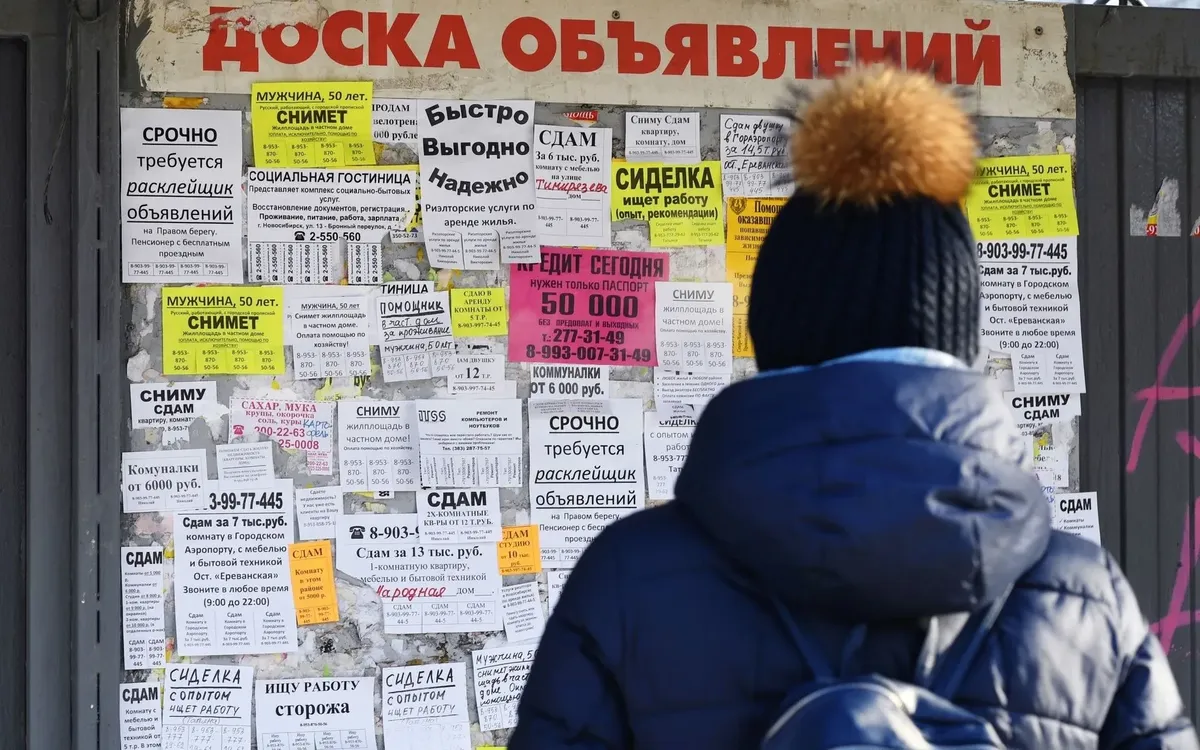
For two weeks of quarantine, they once added to people the awareness of what was happening, and questions about the ways of leaving the crisis merged into one long rumble-give me money! But there will be no money. And that's why.
Everyone was waiting for help
The question of why the Russian authorities are in no hurry to “print a cube”, which stores one hundred and fifty billion dollars, stored for a rainy day, even the faithful Slavicers of the authorities set.
Economists explain that the current crisis is not at all like the problems that the Russian economy faced in 1998 and in 2008, and they call to give people money. Analysts recalculate money in the pockets of American and European “self -isolated”, compare it with Russian “support measures” and urge people money. Entrepreneurs talk about the upcoming collapse of the business and the consumer market collapse that has already happened and call on to give people money. Bankers warn that a delay in a loan is not canceling its cancellation, remind of the possibility of a banking crisis, if bankrupt entrepreneurs can not pay on accounts, and urge people to people. The head of the Accounts Chamber estimates the potential number of unemployed at 8 million and calls to give people money so that citizens released from quarantine support a dying business with a live ruble. Citizens also agree that cash would not hurt them-almost half declares “about the fall of income due to the pandemic”; a quarter does not “see a way out of the situation and said that she did not know what to do”; Three quarters are sure that it will be difficult to find any new work in the current conditions.
The money will be, says the bosses. But not right away. And not everyone. And, most importantly, there will be no much money.
The amount of funds allocated for minimizing the consequences of the pandemic in Russia can reach 2.8% of GDP, the Minister of Finance says. Maybe more, if different fiscal delay and concessions are added to live money. But against the background of 10–20% of GDP, which are ready to sacrifice the governments of other countries, the size of Russian assistance to people does not look convincing. Moreover, the National Welfare Fund (FNB) was collected precisely for such a situation. And in this fund there is even more than 10 % of GDP. Why not spend them?
But the authorities do not want to spend money from the FNB. Categorically does not want to. And has grounds for this. At least convincing for himself.
Iron logic
It is incorrect to think that, making decisions on the expenditure of funds in a crisis situation, the authorities are guided by the opinion of experts, objective data or, God forbid, economic theories. Heads (especially not limited by laws and examinations) are also people who are primarily guided by their own experience and knowledge, as well as their own vision of the past and future. And building a model of bossy logic in this situation is not very difficult.
Firstly, the authorities consider the FNB not a “cube”, which can help compensate for the consequences of the crisis, but a tool for managing loyalty.
The fact of the existence of $ 150 billion with “living money” forces the owners of large states that control the Russian economy, to observe strict discipline.
If one of them wants to turn these billions in their favor-be kind, behave as they order. You won’t want to - blame yourself, but we have enough money. No threat of a “system -forming business” about the fall of production or mass layouts in this situation is not afraid of the authorities, while he has “live money”. If you want - fire, if you want - close, and we have enough funds to start your business again, but without you. And if you spent the means of the FNB - who are you scared now?
The authorities are not afraid of losses and threats of “non -playing business”. All talk about lost workplaces in small business for bossal ears is nothing more than forest noise. It must be remembered that decisions on spending state funds in the country are made by people who literally bathing in money, and they simply cannot imagine a situation where someone has this money. In addition, the official is convinced that a small business, even ruined to the ground, will appear on the streets again as soon as people appear on the streets - he will be simpler, worse, with other owners, but will appear. And a business serving the power itself will not suffer at all.
In addition, the unwillingness to spend a fund accumulated due to oil revenues is reinforced by the collapse of these same income. From May 1, the export fee for oil decreases by 7.6 times, from $ 52 dollars per ton Urals to $ 6.8. The ruble devaluation by 25% does not compensate the budget for all dropping raw materials, the Ministry of Finance estimates the loss of 3-4 trillion rubles in the interval, if the price of oil expressed in national currency is about 2000 rubles per barrel.
You can, of course, devalize the ruble, and this will surely do this as soon as some currency goes to the country. Now, in fact, even bringing funds to the FNB to the market to turn them into rubles is not so simple-there is not enough rubles now, and here you can burn out the national currency and increase citizens' incomes, instead of weakening the ruble and lowering salaries in dollar terms, as planned.
The fall in the incomes of the population and the collapse of the consumer market is exactly what, according to the chief, is necessary in this situation, - -
Otherwise, citizens would have already carried out shops and currency exchange points, if not for quarantine. The consumer market in our country is primarily imports, and import is the demand for currency, which is not enough today, and when it appears, it is incomprehensible. To give money to people now is to give them the opportunity to spend them on objects, from the point of view of the authorities, unnecessary, and even harmful for the state of reserves of the Central Bank.
Yes, even though everyone sits on unemployment benefits - the main thing is that citizens do not have time to transfer the remains of rubles into dollars and empty the shelves until the authorities come up with a mechanism for patching holes in the budget due to “new oil” - that is, at the expense of people.
Evil, ordinary, bad.
We actually have few scenarios. The “evil”, the most obvious and the most cannibal-eater is a confiscational monetary reform under some kind of plausible pretext of combating the virus on banknotes. In principle, technical means that allow providing exclusively non -cash calculations are already there, only an evil will is not enough to the final solution of a cash issue. It retains from such a solution, probably only an understanding of the need to preserve the gray economy that replenishes the hole of the official economy. And corruption to translate into non -cash uniforms even easier than you think, the commission for laundering revenues will simply increase.
In addition, the decision on a total non-cashier will finally allow the authorities to engage in full-fledged regulation of consumption, to which hands did not reach. After all, it will be possible to establish a limit not only on funds for a bank card, but also for expenses for specific product categories, so that no one can acquire anything in excess of what the official domestic manufacturer will produce.
It turns out something like a state plan,
Only regulation will not be carried out through the restriction of the offer of goods, as was the case in the USSR, but through the restriction of consumer demand. And the goods will be on the shelves, and the money will be on their purchase, only to buy anything really will not work.
Another option, “ordinary”, more positive and much more likely, is the release of state debt obligations for selling them to banks. If the economy is “worth”, and no one takes and does not repay loans, banks still need to somehow earn interest for deposits holders-they will gladly buy government bonds with an increased percentage, and then pay off with depositors. Perhaps if things go badly, they will pay off the same bonds, which the depositors will have to sell with a discount. Something like this eventually happened in the USSR with bonds of Stalin's loans.
Somewhere in the middle between these two solutions is
The possibility of converting a part of bank deposits to some “Stopvirus bonds” with repayment of five years later.
Moreover, it can be about small amounts, the return of which is guaranteed - under the pretext of reliable provision of deposits. This is a bad option that can reset the trust of citizens to the banking system and the national currency, but the best than the confiscation of accumulations.
Sorrowful silence
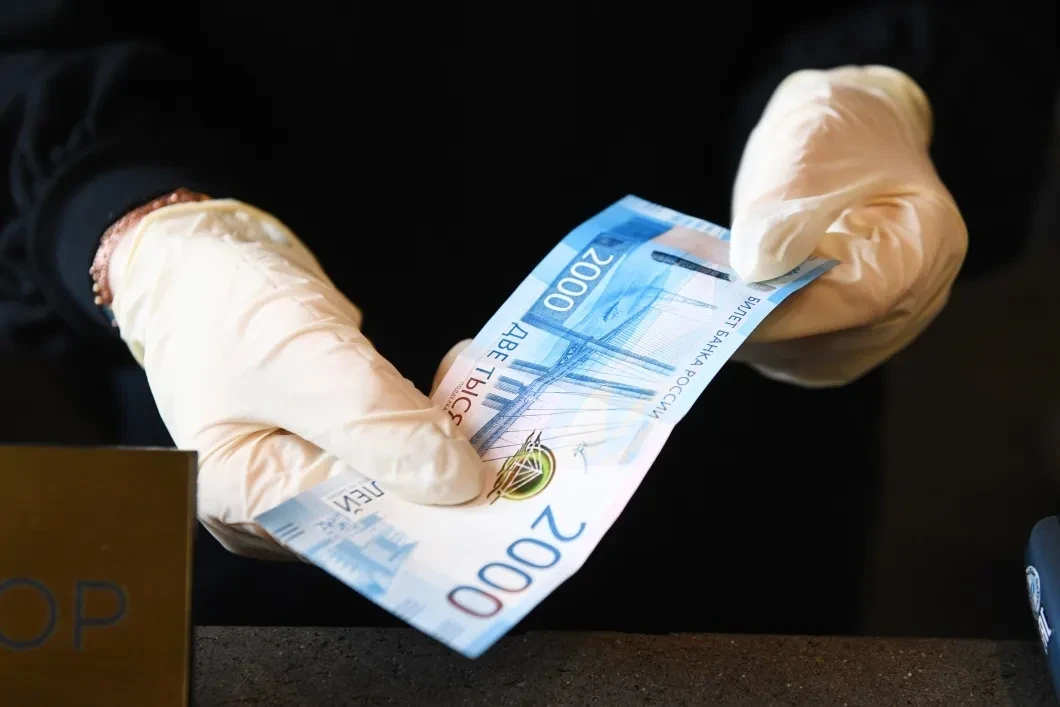
However, all these options are only assumptions. The most likely decision is the betting of the authorities on the resumption of world economic growth after the completion of the quarantines (and the forecasts of experts are firmly promised) and the restoration of demand for raw materials of Russian exports. It is only necessary to wait for this bright day, without consuming the FNB, not allowing either the decay of the banking system, nor the destruction of the social support system, especially since no one will dare to insist on increasing social obligations. As soon as this happens, you can take a breath and celebrate the victory. Maybe at this moment it will be possible to share a little money - so that people feel bossy care, and a small business picked up this money.
Oil prices may not return to the level of zero zero, but by that time the mechanisms of total taxation of people's income will be established and measures were invented to restrict the outflow of currency. The eternal struggle with pandemia will allow you to justify everything in the world - for example, order everyone who wants to go abroad, then stay at their own expense for two weeks in quarantine or buy a special insurance from the consequences of the virus - and there are no visiting visas.
Enter some “disinfection” on movement and include it in the price of each ticket.
Well, to establish payment of each exit to the city on a special pass ... You pay for the parking of a car on the central streets, you will pay for walking along these streets. There are actually many opportunities, and the fantasy of the bosses is great.
Are the authorities afraid of the social consequences of their decisions, because in such a scenario people will suffer the main losses from the crisis? Why should they be afraid of them? Will people's income fall again? So they fall for the sixth year in a row, and nothing! Until now, the bosses have seen exclusively the approval of all their initiatives, even the most risky and costly. It doesn’t matter how sincere this approval was, it is important that the authorities are sure that people will endure everything. And they will even thank when they are allowed to go to work for the minimum salary.