
Translated material
Program programs
German -speaking countries begin to change quarantine for tracking applications
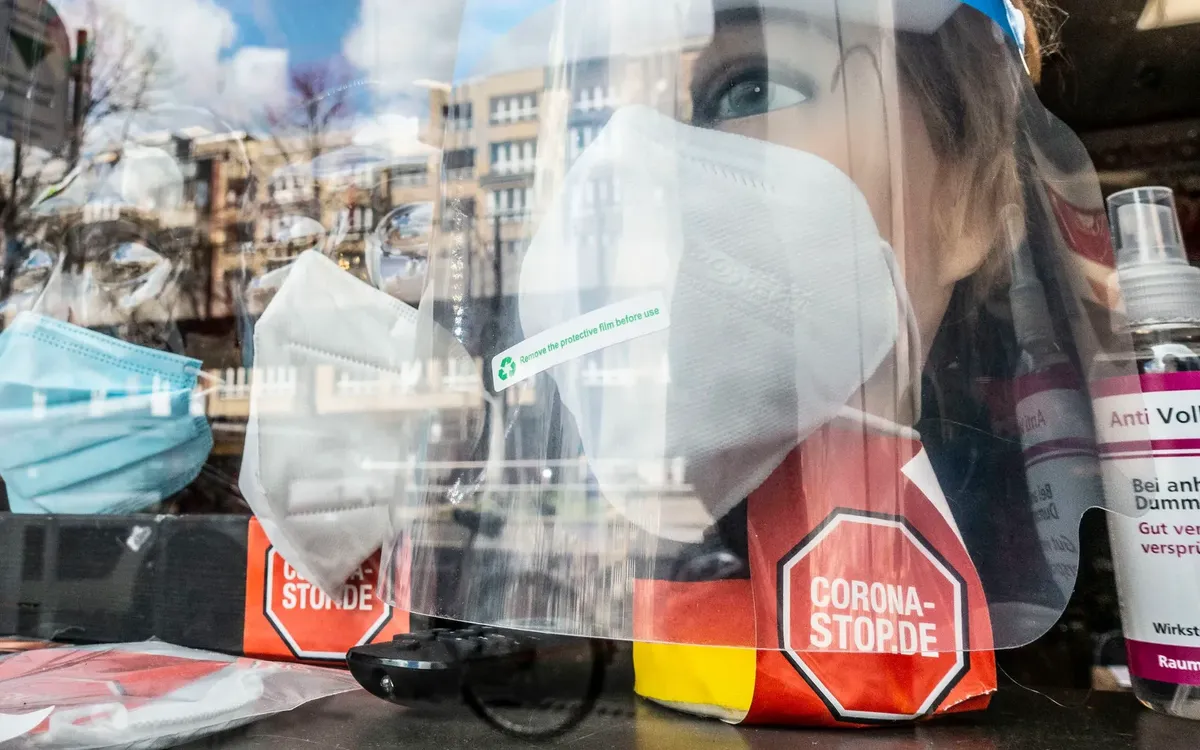
On April 15, the German authorities announced the first stage of removal of restrictions caused by pandemia. And the very next day, the neighboring Switzerland announced the scene of quarantine - there all the steps are already painted until June. Even earlier, Austria began to abandon restrictive measures, trading platforms are already opening in the country.
Like all over the world, in the German -speaking regions they are afraid of the second wave of the virus and cautiously look at the smoothing distribution curve. Local authorities plan to take an epidemic for digital control using the monitoring of contacts of applications. An important question is whether it is possible to return the freedom of movement to citizens by avoiding cyberdictation.
German Chancellor Angela Merkel touched on the topic of removing restrictions before Easter, many times reservating that so far it gives any guarantees, because no one knows how the virus will behave. Another reason for its careful formulations is the need to coordinate the strategy with 16 federal lands.
On Wednesday, the head of the government was finally able to reach a press conference and talk about the first steps to remove quarantine-after four hours of approval of the 11-page text of the strategy with the corps of experts and the heads of regions, called the “Crown-Kabinet”.
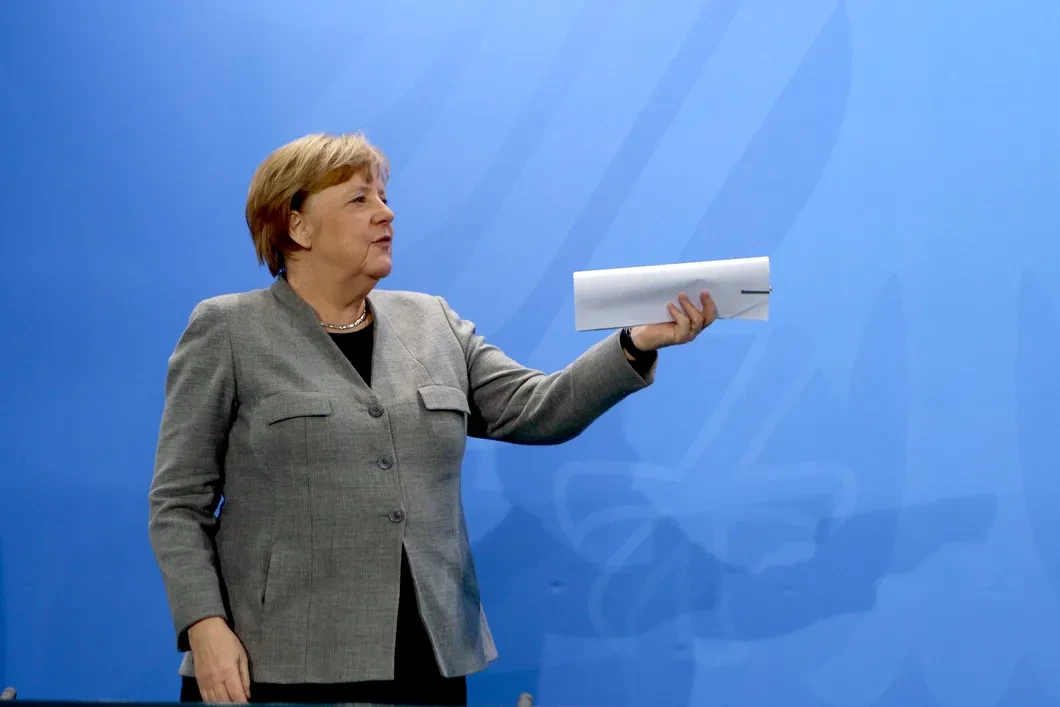
The plan accepted by the center and the lands is to not only cancel the accepted restrictions, but also in a balance to restrain the pandemic with other measures.
According to the Institute of Robert Coha (RKI), now the virus spread index in Germany is 0.7 (i.e., one infected transmits the disease of the “seven -tenth” statistical person). The same indicator made it possible to remove some restrictions in Norway and Denmark.
From May 4, senior schools will open the doors of schools, but only if new rules are observed (they will be developed by the end of April). In universities, it will be possible to take exams, libraries and archives with a paid entrance will open (again - subject to sanitary rules and the absence of queues). The obligation to keep a distance of 1.5 meters and gather only in the circle of loved ones remains in force until May 3.
Mass events are prohibited throughout the country until the end of summer. In Bavaria - the most struck by the epidemic of the region (more than 35 thousand sick) - this ban can last longer. The legendary Oktoberfest festival, planned for September 19, most likely will not take place. The remaining restrictions in Bavaria will also begin to shoot later than the agreed deadline - May 11.
On April 3, Merkel herself only left the isolation (the Covid-19 was found at her doctor, which forced Merkel to temporarily become a “chancellor on the remote”).
Returning to the office, she made a message in which she paid especially a lot of attention to the topic of religion and asked citizens to understand the abolition of Easter services, as well as worship in synagogues and mosques. In the new strategy, a ban on visiting temples of all faiths remains in force - until a special order.
Although Merkel noted the unanimous parties during a conferences, the federal lands reluctantly went to preserve these measures. According to the Spiegel magazine with reference to the meeting participants, the discussion of the opening of the churches was “very stressful”, some considered the ban on freedom of religion, the head of Thuringia and the Northern Rhine - Westphalia insisted at the opening of parishes.
The city of Ien (Thuringia) is the only place in Germany where the rule was legally assigned to wear masks in public places. The federal center is in no hurry to spread practice throughout the country - so far the measure is advisory in nature.
Retailing points of up to 800 m2 will open in the country next week. In May, hairdressers will also earn. The media report that so far not all regions agree to proceed from the area of the premises in the issue of opening enterprises. Merkel preferred not to comment on culouur conflicts.
“If we were all the same, you would no longer be so happy for us,” she said at a press conference.
Representatives of the subjects will gather at the end of April again to think through the further stages of the strategy, but for now one of the foundations of quarantine in Germany remains the development of a vaccine and healthcare support. The authorities pledged to distribute the medical staff in the proportion of five employees for 20 thousand inhabitants, finance German and international vaccines manufacturers and conduct up to 650 thousand tests on Covid-19 per week.
Data collection for the benefit of science
The second pillar of strategy adopted in Germany was a mobile application for tracking infected. The authorities are ready to present it in the coming days - first for Android, then for iOS. In Berlin, they promise that the installation of the service will be voluntary.
RKI - the central body of the country in the fight against pandemia - since March has the opportunity to track the movement of citizens. The T-Mobile operator provides virus-items with depersonal data of 46 million subscribers, data collection is limited to the level of federal lands and communities. The information obtained allows you to predict the development of the epidemic and evaluate the effectiveness of restrictive measures, says the head of the Lotar Wiler institute.
The transfer of data to scientists was legalized in Germany back in 2015 and does not violate the EU legislation on personal data, since it contains neither names nor information about subscribers. In addition, experts evaluate the data of 30 subscribers in one “package” and cannot track the specific path of each of them.
But this is not the only digital project of the institute. On April 7, RKI launched the Datenspende application (literally - “Data Sacrification”), which requests the smartphone information about the time of sleep, pulse and physical activity of the user during the day. In RKI, they assured that the user would remain anonymous by voluntarily providing data.
Internet activists from the Netzpolitik project have questioned the safety of RKI development. They indicate the absence of an open source code of the application, which prevents checking the service for reliability.
Activists also pay attention to the financing of development - Datenspende was sponsored by entrepreneur Karsten Mashmeier, whom the German press previously accused of freedom of speech and shadow participation in election campaigns.
Pan -European tracking
Otherwise, the application that the government is talking about will work. The authorities offer citizens to track contacts with potentially infected people and suppress them in a timely manner. The new service uses Bluetooth Low Energy technology, that is, the exchange of data at a short distance.
The smartphone transfers its identification number to all devices with the installed application in the reach zone and in return receives their ID.
If someone’s coronavirus has been found from this chain, it becomes much easier to find all those who are contacting with the sick and immediately take them under surveillance. Users who are in the risk zone will be able to send a fur notification-for this they do not even need a phone number. Researchers of Oxford University previously spoke about the effectiveness of the approach.
To form a list of ID-Nomers, the service does not need information about the location of the user and its movements, which removes a number of fears. The concept of the application contains an obligation to delete all data within 21 days, but legally this issue has not yet been issued.
The project begun in Switzerland was called PEPP-PT ( Pan European Privacy Protecting proximity tracing or “Pan-European tracking applications, subject to the safety of personal data” ). In addition to 130 scientists, the development of the RKI and the information security department of Germany participate in the development.
Now the application is “running -in” in the Bundeswehr units, but the military does not publicly report on the results of tests. The developers of the service do not give specifics either. The German Internet activist Jurgen Goiter published on Twitter the documentation sent to him by PEPP-PT participants, calling it a “gross sketch”-the image really is only the simplest scheme from the presentation.
Already known shortcomings
Baden-Württan Brink, Commissioner for the Protection of Personal Data of the Earth, notes that the Bluetooth radius of action depends on the environment-from 1 to 100 meters, which is unacceptable in a situation where the infection is transmitted at a distance of 2 meters.
Brink assures that the technology will not allow us to establish the contacts of the user surrounded by thick walls, for example, in an apartment building. The PEPP-PT project manager Christian Boos considers this point of view unreasonable and cites an example of testing in the laboratory and army units.
The process of informing in the application is still tied to the human factor. The user who was confirmed by the Covid-19 must inform about this on his own, then the corresponding warning will come to contact him. Netzpolitik activists consider the mechanism absurd in terms of psychology.
“The infected is not interested in others to learn about his status, he will have to evaluate additional risks that may come from the application, state bodies or even the people who contacted him. These people may try to establish his personality, despite the principle of anonymity.
How many users will share such a sensitive information from solidarity? ”, Cyberattivists asks a question.
On individual devices, the vulnerability of the data transmitted through Bluetooth is also found, warns NGO Privacy International. Defenders of digital rights believe that only a few technical changes are enough to destroy the principle of anonymity in such applications.
Sending a notification of notification makes it possible to establish the user IP addresses, since Push-Tkens and ID PEPP-PT users are connected, “reporters without borders” indicate. Activists urge to abandon centralized servers and long -term data storage in order to avoid turning the antivirus service into a surveillance system.
Such a strict Austria
The Austrian Tyrol border with Italy became the epicenter of the outbreak, from it the Covid-19 spread and more than 4 thousand Germans infected the Austrian ski resorts. As early as March 16, Austria went to quarantine, and now earlier she made the first links for citizens - adjusted for a balance.
From April 14, shops with an area of up to 400 m2 are opened here. The production of the Mercedes G-class has already resumed in Graz, and on April 20, Austrian plants will begin to produce cars for BMW Group and Jaguar Land Rover.

From May 1, hairdressers and other points of trade will open, by the end of April restrictions on moving (go shopping, help relatives and simply walk the Austrians).
New protective measures were added to the religions. Now all citizens are required to wear masks in public transport and stores, while the store of the store should have an area of 20 m2 for each visitor.
The idea to control the spread of infection through applications is also popular in Austria. The Stopp Corona service developed by the Red Cross is used here. The principle of its operation is similar to PEPP-PT, however, users can only activate data exchange (developers promise to add automatic exchange in the near future).
At the same time, an infected person must provide the service with his phone number in order to be able to send notifications to people nearby. At the moment, 200 thousand people use software, but in the republic they are configured for more coverage.
Two million Austrians, in principle, have no smartphones, so now the authorities are attracting developers to create software for other devices.
German IT specialists believe that for the effective operation of tracking applications it is necessary to use 60–70 % of the population. How to ensure such involvement on a voluntary basis, in Germany has not yet decided. Vice-Chancellor Federal Republic of Germany Olaf Sholts only shared his expectations that the service would use “almost everyone”.
Politicians in Austria are discussed about digital control in another vein - the chairman of the lower house of the parlfgun, the Sobotka proposed to make the application of the application mandatory, which caused the discontent of the opposition.
In parliament, his idea was compared with an “electronic bracelet for every Austrian”, and Chancellor Kurtz seems to have decided to stay away. “It is important that many people participate in this, and we can save lives together,” he commented on the proposal of the co -sabotage.
For months in advance
On the evening of April 16, Switzerland announced her strategy for lifting restrictions. Here the virus spread index also sank below the unit, and the Federal Council has already painted a phased plan until June.
Since April 27, construction, flower, garden stores and beauty salons will again work in the Confederation.
The ban on contacts outside the close circle of communication is also removed, and trade in grocery stores is resumed without restrictions. Switzerland healthcare is now returning to the usual pace of work, hospitals will begin to provide not only urgent assistance.
If by April 29 the country does not record a jump in the number of diseases, the authorities can open schools on May 11, and at the third stage - from June 8 - colleges and universities. On May 27, the government will gather to discuss the issue of permission to hold mass events.
The use of digital means of monitoring pandemia in Switzerland, as in neighboring countries, is based on an integrated approach.
The voluntary installation of application of the PEPP-PT system does not exempt citizens from the obligation to comply with the social distance and other precautions.
Moreover, so far, Switzerland has the most chances to effectively apply the tracking system and achieve an involvement of 60 % - according to the SRG television and radio broadcasting corporation, 2/3 of the country's residents agree to establish a tracking application for pandemia control.