
Translated material
The wall of the heroes
For which they awarded the golden star and for which they shot the awarded. From the practice of the Soviet past
“No,” said Baurjan Momysh-Ulya sharply, “I will not tell you anything.” I can’t stand those who write about the war from other people's stories. ”
Thus begins one of the best books about that war, “Volokolamsk highway” by Alexander Bek. Her hero is Momysh-Uly, the commander of the battalion, and then-the regiment of the Panfilov division, nevertheless, to our happiness, succumbed to persuasion. The book, first published (in 1943!) In the journal "Banner" called Panfilovtsy at the first line, has since published dozens of times, in various languages, in various countries, studied in the military academies of Finland and Israel ...
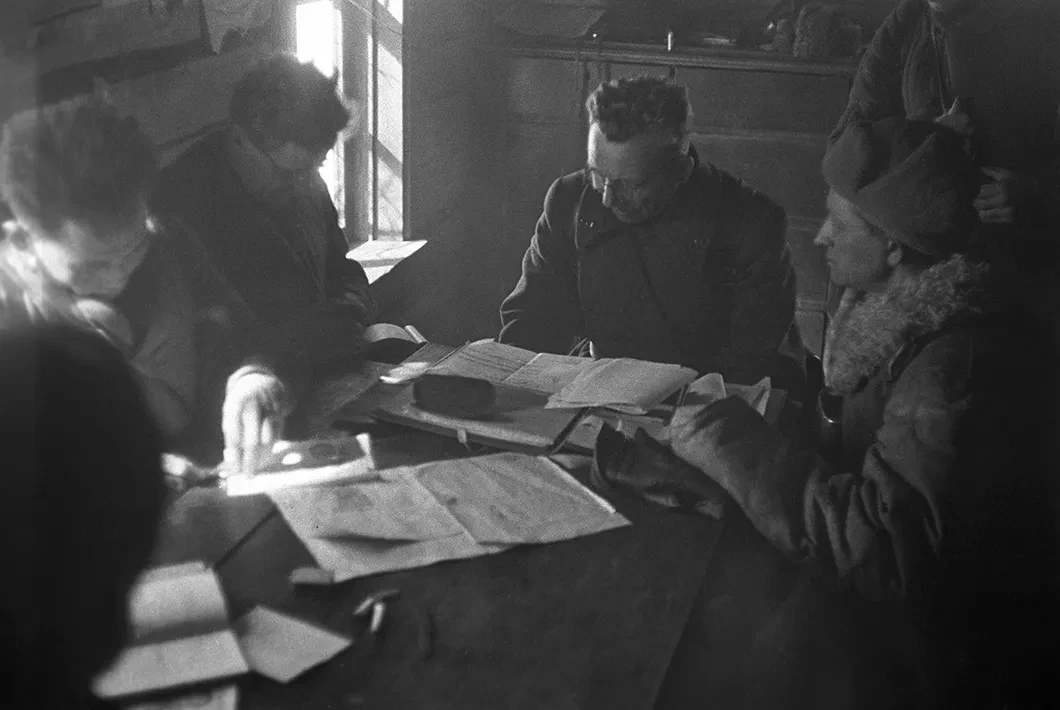
And about this battle was the first to write “Red Star” on November 27, 1941.
In the essay of the front-line correspondent Koroteev, it was reported about the feat of the guards under the command of Politrik Dyev, who fought with 54 German tanks, and 18 enemy tanks were destroyed. It was said about the participants in the battle that "they died all to one, but they did not miss the enemy." It is interesting that in German documents (which differed, as you know, regarding their losses of fair scrupulousness), even traces of this tank pogrom could not be found.
The next day, an advanced article was printed in the “Red Star” under the heading “Testament of 28 False Heroes”. The advanced one was written by the literary secretary of the newspaper Krivitsky. The surnames of the fighting and dead guards both in the first and second article were not indicated.
Two months later, Krivitsky placed another essay under the heading “About 28 Facial Heroes”. Krivitsky confidently, as an eyewitness, writes about personal experiences and behavior of the guards, for the first time calling them by name.
The Military Council of the Western Front introduced all 28 people - posthumously - to the title of heroes of the Soviet Union. The title was awarded.
And then, after the war, one of the dead heroes unexpectedly found. Sergeant Dobrobabin, it turns out, was easily wounded, captured, released (like a Ukrainian), returned to his native village near Kharkov, became a policeman there, left upon the attack of Soviet troops with the Germans, continued to serve in the police, and increased by the invaders, which means he served well ... Then the Red Army came again, and Dobrobabin got up to the system left, and he reached the left ...
And only after the victory did he go on trial, was sentenced, serving his sentence ...
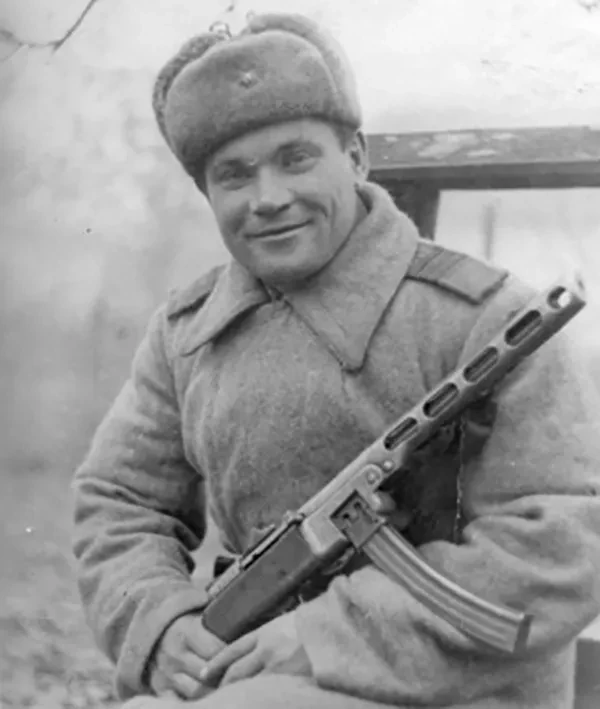
“The guilt of Dobrobabin was completely established, and he himself admitted to the commission of crimes, ” the prosecutor writes in his secret note. -During the arrest of Dobrobabin, a book was found about “28 heroes-Panfilovites”, and it turned out that he was listed as one of the main participants in this heroic battle, for which he was awarded the title Hero of the Soviet Union.
The interrogation of Dobrobabin established that in the Dubosekovo area he was really easily wounded and captured by the Germans, but did not accomplish any feats, and everything that was written about him in the book of Panfilov heroes is not true.
It was further established that in addition to Dobrobabin, Vasiliev Illarion Romanovich, Shemyakin Grigory Melentievich, Shadrin Ivan Demidovich and Kuzhebergenov Daniil Aleksandrovich, who are also listed in the list of 28 Panfilovites who died in a battle with German tanks. Therefore, there was a need to investigate the circumstances of the battle, which took place on November 16, 1941 at the Dubosekovo Travel ... "
The prosecutor’s office in 1947 conducted a check of all the circumstances of the legendary battle, as a result of which the chief military prosecutor Afanasyev prepared a secret certificate, two years ago declassified and published by the Golovarhiv.
“The former commander of the 1075th Infantry Regiment Ilya Vasilievich, interrogated about the circumstances of the battle with the 28th Guards from the Panfilov division at the Dubosekovo Travel and the circumstances of their presentation to the award, showed:
“There was no battle with German tanks at Dubosekovo’s travel on November 16, 1941-this is a continuous fiction.
On this day, at Dubosekovo's travel, the 4th company fought with German tanks, and really fought heroically. Over 100 people died from the company, not 28, as the newspapers wrote about it. None of the correspondents contacted me during this period; He never told anyone about the battle of 28 Panfilov, and he could not say, because There was no such battle. I did not write any political donation about this. I do not know on the basis of which materials they wrote in the newspapers, in particular in the Red Star, about the battle of the 28th Guards from the division named after Panfilova.
At the end of December 1941, when the division was reserved for formation, Krivitsky correspondent Krivitsky came to my regiment along with representatives of the political department of the Division Glushko and Egorov. Here I first heard about the 28th guards-pantilians. In a conversation with me, Krivitsky said that it was necessary that there were 28 guards-pantils who fought with German tanks. I told him that the whole regiment fought with German tanks and especially the 4th company of the 2nd battalion, but I did not know anything about the battle of the 28th guards. The surname Krivitsky was given by Captain Gundilovich, who was talking with him on this topic, there were no documents about the battle of the 28 Panfilovs in the regiment. Nobody asked me about the last name.
Subsequently, after prolonged clarifications of the names, only in April 1942, ready-made award sheets and a general list of 28 guardsmen to my regiment for the signature were sent from the division headquarters. I signed these sheets to assign the title of Hero of the Soviet Union to the 28 guards. I don’t know who the initiator of the list of a list and award sheets for 28 guards. ”
Afanasyev’s note lay in the bowels of the archive of a classified 70 years. Over the years, hundreds of streets were named after the heroes of imperfect feat, the battalions of stone and bronze statues stood, “28 of your most brave sons” fell into the “anthem of Moscow” ... The first poems, by the way, published at the beginning of the 42nd Mikhail Svetlov and Nikolai Tikhonov, but, apparently, were in a hurry, so that the traces of skill are visible poorly:
You will never compare
With the Soviet heroic guy -
And our guard star
All your guards are radiant.
Well, where are you having such a trench?
And where are such twenty -eight?
Here is a tank buried in a snowdrift,
He asks for mercy for the dead!
The father of the peoples there, in the Kremlin,
He sees everything with an eagle eye;
And there is no place on the ground,
So that it was far for him.
He knows everything, he remembers everyone
Our division remembers too, too,
And with us, the guards, he will ask strictly,
That will be more joyful success!
- Natarov! - I say to myself
Here you are in the trench with Daniel,
Ready for a decisive struggle,
You prepared strength for her.
But everything seems to me one thing:
As if the great Stalin himself
I put me on this post
Before the Soviet country ...
Try, sort it out - where is Svetlov where Tikhonov is ...
“Then everyone wrote like that! So then it was necessary! " - Now they say the radiators of domestic history, very worried, no matter how the truth does not discredit the ries of mythical heroes. Those who have already accepted the publication of the 1947 prosecutor’s note, who fired the head of Golovarkhiv Sergey Mironenko because of her,
Who plans to open a bas -relief with an image of an imperfect feat “twenty -eight” on the walls of the Patriot Patriot Party Patriot Park.
And Beck brilliantly proved that “and then” not everyone wrote so . Krivitsky wrote so , Beck did not write like that .
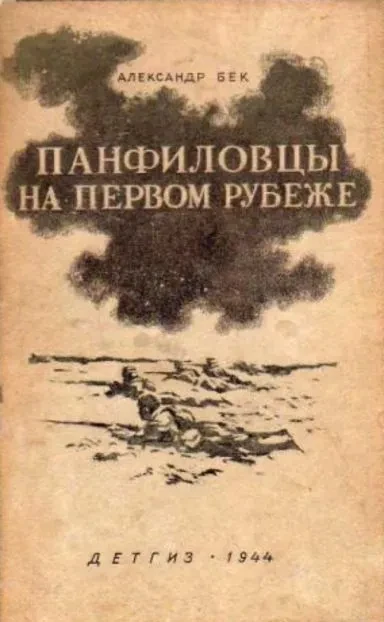
I write out from the Volokolamsk Highway (1943 of the publication, I remind you):
“ We agree,” says his hero Baurjan Momysh-Ulya to the author. - You will bring a finished book to me. I will read the first chapter, I will say: “Bad, lied! Put the left hand on the table. " Once! Left hand down! I will read the second chapter: “Bad, lied! Put your right hand on the table. " Once! The right hand is down! Agree? - Clearly outlined, also as if cut out, his lips moved apart in a smile.
“ I agree,” I answered. ”
In the case of Bek, there were no self -mutilation - the talent and conscience of the writer did not allow. But it’s scary to even imagine if the Momysh-Uly method triumphed in Soviet literature and journalism, what “mountains of severed hands” were piled only around the works about his (indeed, heroic) division!
I think that it was not by chance that Bek began his documentary story about Panfilovtsy exactly as he began. And of course, it was no coincidence that in the story of him, there was not a word about the “most famous battle” of the guards.
A little statistics.
By the beginning of the Great Patriotic War, there were 626 heroes of the Soviet Union in the country. Five were awarded this title twice.
The title of Hero of the Soviet Union was awarded the largest number of times during the Great Patriotic War - 11,739 (of which 3051 posthumously).
73 people at different times and for various reasons were deprived of the honorary title - most of them, what a sin to hide, for committed general crimes. At the same time, say, Bronislav Antilevsky and Semyon Bychkov voluntarily entered and acted as part of the Russian Liberation Army of Vlasov, after the war they were convicted and executed for treason. In 1949, Georgy Antonov, together with his wife, fled to the American sector of Vienna ... For failures in the first months of World War II, two Heroes of the Soviet Union were arrested and shot-the Army General Pavlov and Major General of Cherny Aviation ... Shortly before the war, the next large group of senior officers was arrested-mostly aviators. Most of them were shot without trial and investigation on October 16, 1941 and February 23, 1942. Among them were seven heroes of the Soviet Union at once.
Repressions continued after the war, up to the death of Stalin. At this time, three Heroes of the Soviet Union-the Guard, Colonel General General, pilot, Major Cossack and Major General (former Marshal of the Soviet Union), Kulik, were shot.
Of the interrogations under the torture of the Stalinist journalist No. 1, Mikhail Koltsov, it becomes clear that the Soviet “volunteers” pilots in Spain did not fought, but mainly drank, leveled off and molested the indistinguishable expensive technique for them. It is even strange that for all these arts they were all so generously awarded. For example, about thirty -year -old Ivan Proskurov, People's Commissar of Voroshilov, in the view of the title of the hero, wrote: “He uses a well -deserved reputation of an exceptionally bold, cold -blooded and courageous fighter and commander,” and Stalin, having familiarized himself, crossed out the words “Art. Lieutenant ”and entered:“ Major ”.
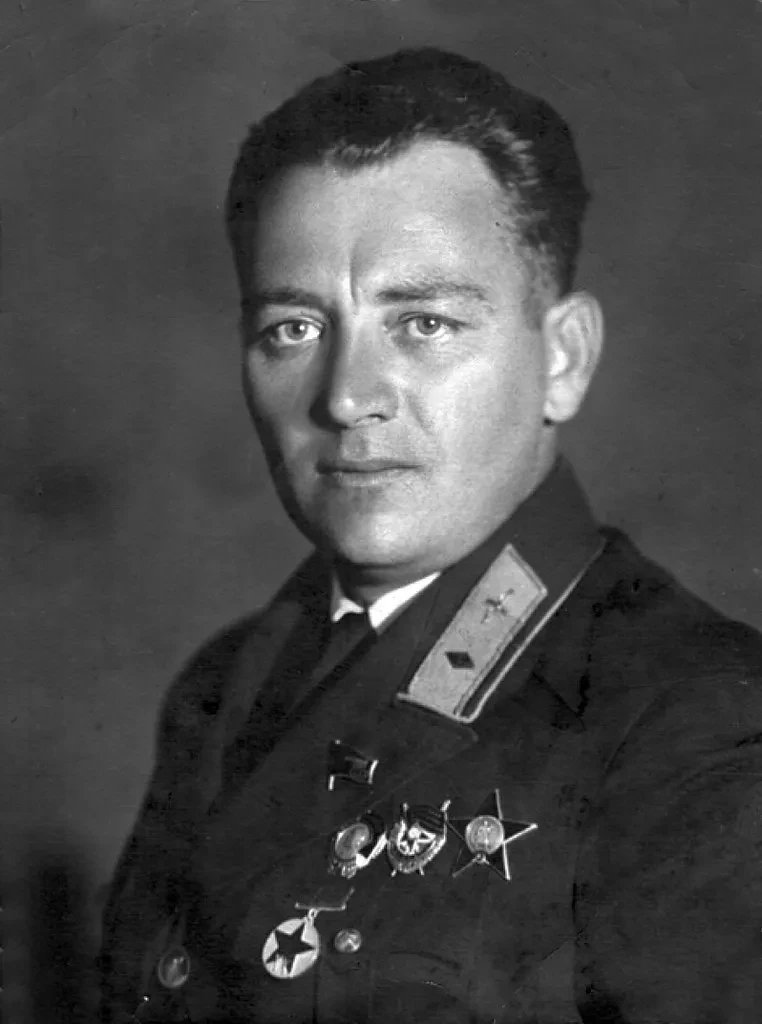
In May 1938 (already!), The brigade commander Proskurov became the commander of the 2nd Aviation Army of Special Purpose, six months later he was awarded the military rank of commander. As a result, over the incomplete two years, he went from senior lieutenant to the general. Further - more. On April 14, 1939, the commander Proskurov was appointed the head of the 5th (intelligence) department of the Red Army and the deputy people's commissar of defense of the USSR. The admiral of the Fleet, Hero of the Soviet Union N. Kuznetsov, recalls how the new “main intelligence officer of the country” complained to him: “I convincingly asked the authorities not to entrust me with a business that I do not know and do not like, but did not help.”
As if the authorities do not know who and how to use, to whom and what to entrust! Some even coped ...
For two years, Proskurov already became the fifth head of the Red Army reconnaissance department: one after another, Military Intelligence chiefs Comcor Uritsky, Army Commissioner of the 2nd rank Berzin, commander Orlov and senior major of state security Gendin were shot.
The heads of many departments and divisions of the reconnaissance were repressed. A large number of scouts, military attache and their assistants were withdrawn and shot from abroad.
In the spring of 1940, at a meeting held according to the results of the catastrophic Finnish campaign, Proskurov made almost the main culprit of the pan-European disgrace. A painful feeling causes reading a transcript.
Proskurov, of course, looked helpless when he tried to talk about the practice of intelligence work, when, say, a brochure with data about the Finnish army from a distance after the end of the war. And before that, she lay for another five years ...
Stalin. Why couldn't you go out for a year?
Proskurov. Because she lay in the archive.
Voice. Everything is classified.
At this meeting, of course, Stalin gave his head of the reconnaissance to priceless advice (“You have a soul not a scout, but the soul of a very naive person in a good sense of the word. The scout should be impregnated with poison, bile, should not believe anyone. If you were a intelligence officer, you would see that these gentlemen in the West criticize each other with weapons, you would have seen how they have a bad place. They expose a friend, they reveal secrets from each other, you would have to grab for this side, make samples and bring to the attention of command, but your soul is too honest ”). But Proskurov did not have time to use the advice.
A month later, he was removed from his post and returned to aviation. On June 19, 1941, Lieutenant Proskurov General was appointed commander of the 7th Army Air Force deployed in Karelia. But already on July 7, 1941 he was arrested. “The materials of the work of Proskurov are accused of being a member of the military conspiratorial organization, on the tasks of which he carried out an enemy work aimed at defeating republican Spain, a decrease in combat training of the Red Army Air Force and an increase in the air forces.”
On October 28, 1941, in the village of Barbesh near Kuibyshev, without trial, according to the order of the People’s Commissioner of the Interior of the USSR L.P. Beria dated October 18, 1941 for No. 2756/B, he was shot.
Among the heroes of the Soviet Union, who were subjected to repression and deprived of the title,, of course, were very different people. But one case is no doubt, completely unique, absolutely implausible.
Literally on the eve of the war, Valentin Purgin came to the post of deputy head of the military department at Komsomolskaya Pravda, who was at the age of 18, distinguished himself in battles with the Japanese in the Far East, who later graduated from the Faculty of Journalism of the Communist University. He was taken to the Komsomolskaya Pravda by call-they called from the military transport academy, which Purgin, it turns out, also finished. In the newspaper, a smiling guy performed some special tasks, constantly went on some secret business trips, from which he sometimes returned pale, emaciated, sometimes with traces of wounds. And he did not tell comrades about them. What was their amazement when they accidentally learned that Purgin was awarded three (!) Orders of Lenin and the Order of the Red Star. And after the Finnish war, by decree of April 21, 1940, Purgin was awarded the title of Hero.
Colleague I. Agranovsky, on the instructions of the editorial office, published an enthusiastic outline about his feat. “His modesty,” he wrote, “the quality of a high sample, without fake, it goes pure and its whole nature. He is a real Komsomol member, a young Bolshevik from the number of which should be written more often and better ... In ordinary life, he dared and truthful, never bite the most offensive truth in the eyes. He is demanding on himself, writes better than many, and is rarely printed. He does not want to write badly, he writes unevenly, but original words, his feeling, his own thought. ”
On May 23, 1940, Purgin was arrested at the Kremlin Bureau, where he came to receive a golden star.
Purgin was not Purgin, but Golubenko, a man with a criminal past, and invented his heroic biography from the first to the last letter himself.
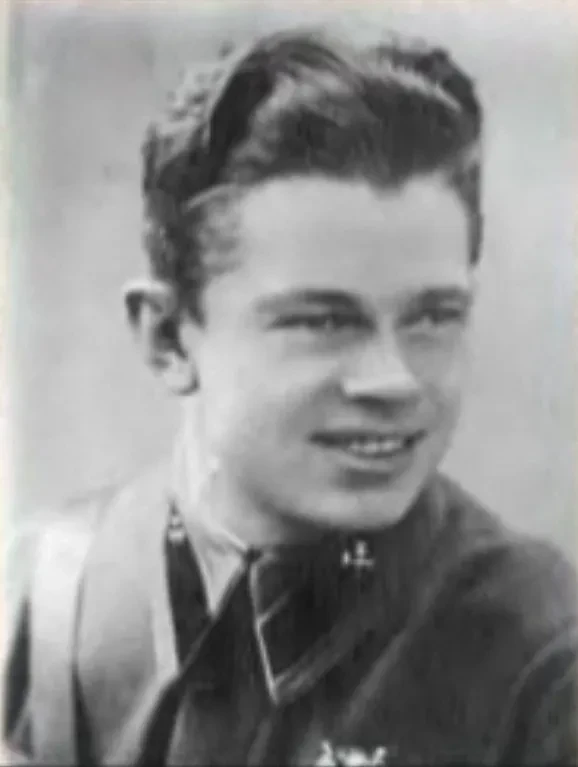
In the incredulous, manic suspicious country, for some reason, they believed him-that's it! He wrote to Order -bearing people about the upcoming exchange of orders and documents to them on stolen forms, and they sent orders and order books to the address of the subscriber box! He wrote (on the also stolen form) an idea of himself to the hero, sent him to the People's Commissariat of the Navy, and in addition he called the deputy -brimmate Ignatiev on behalf of “Colonel Gurov from the NKVD personnel department” and said that Lavrenty Pavlovich Beria was personally interested in documents.
My comrade Leonid Repin wrote a huge material about this story and published it in the anniversary issue of Komsomolskaya Pravda on May 24, 1990. I called him and Repin said that the “business” of Purgin, to whom he, after many ordeals, was admitted to the KGB, read as an amazing detective and for a long time could not believe what it is.
“ He simply really corresponded to his business and moral qualities of that time,” Leonid told me.
Purgina was shot. The author of the essay of I. Agravsky, glorifying him, was sent to the camps for several years.
In the protocol of one of the interrogations, Repin read the phrase that hit him: “I don’t understand what I harm the Soviet regime?!”