
Translated material
The sea is worried ...
The quarantine caused by the Covid-19 threatened the health of sailors-even those who are not infected with a new virus
In the area of special risk were primarily cargo and merchant ships with Russian crews, which are now far from their native shores. There have been no doctors on merchant ships for a long time - shipowners do not spend money on paying for their work. As a result, even a slight trauma, and even moreer, a heart attack, stroke or disorder of the psyche, turn out to be severe consequences for both the victims themselves and for the entire crew.
- Only now, in the afternoon on Monday, it was possible to agree that the sick sailor was accepted by the hospital on the shore, - even by telephone it is heard that Igor Kovalchuk, the first deputy chairman of the Russian trade union, sighs with relief. - We did not leave the phones for three days!
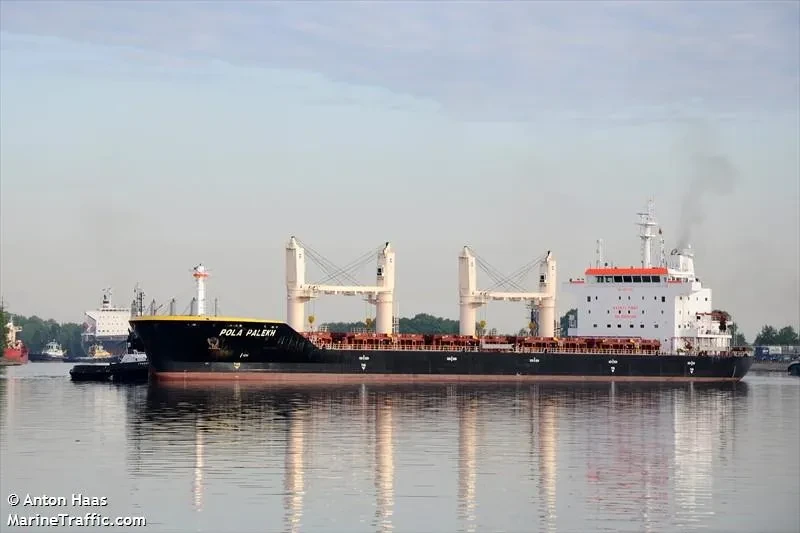
From Saturday until Monday, the operation to save the sailor of the Russian cargo ship WL-PALEKH (IMO 9674397, the Flag of Malta, the port of Valletta), which took place off the coast of Sumatra, continued. On Saturday morning, one of the crew members had a strange attack, similar to poisoning. The sailor was getting worse, and the captain turned to the International Television Assistance Service - foreign experts confidently said that the patient had a stroke, and urgent hospitalization was required.
The leadership of the vessel turned to one of the international coordination and rescue centers in the same place, in Indonesia.
But they were refused help - quarantine! And they advised to go to Sri Lanka, and these are thousands of kilometers.
Then the Russian trade union of sailors (RPSM) turned to a round-the-clock situational and critic center of the Ministry of Foreign Affairs of the Russian Federation and Rosmorrechflot. And in parallel - to their colleagues from the trade union of the sailors of Indonesia. Solidarity worked, and it was possible to agree that the sailor would be accepted into the hospital of the port of Belaw. But upon arrival in the port, Russian sailors again refused help. Then the Russian Foreign Ministry directly connected to the problem, and on Monday the Russian sailor finally got to the hospital.
- From our point of view, it is just monstrous when they refuse medical care to patients! - Kovalchuk is indignant. - Even in the conditions of an epidemic - how can you leave people to die?!
Cases when sailors could not immediately receive qualified medical care on the shore due to quarantine is already known. But, according to Kovalchuk, the situation with WL-PALEKH is the first that became the famous RPSM. In total, according to the trade union, now about 80 thousand Russians walk on ships under the ships under different flags. Cases of COVID-19 on cargo and merchant ships have not yet been registered. According to Igor Kovalchuk, conscientious shipowners are very careful about changing the crew - they ask sailors before leaving to withstand two -week quarantine, before being sent to the ship - they make mandatory blood tests.
The frequency of doctors
“Unfortunately, the owners of trade ships are not spent on ship doors,” says Konstantin Logunov, doctor of medical sciences, professor, head of the standardization department of the medical clinic of St. Petersburg State University. -Usually one of the officers is taught the basics of medicine in two-week courses-so that he can competently make a bandage and talk with a radio doctor.

By education, Konstantin Logunov is a surgeon, by occupation - a general practitioner. And also-the head of the only “Radio-medical consultations” services in Russia (Medicon LLC) in Russian. Several organizations of television and radio-medical assistance to sailors operate in the world, but all of them are English-speaking. Almost 20 years ago, Petersburg doctors proposed to create the same Russian -speaking service. The funds for its maintenance are received from shipowners with whom Medicon signs the contract. It contains four permanent doctors, as necessary, they attract the right specialists. In their care, there are now almost 250 ships.
Closed boundaries and ports created a huge tension in the field of international transport in all respects. Technical problems are obvious to everyone, but there are also purely sea. For example, the sailors ended the watch and should return to the shore. Previously, the crew in the nearest port got on the plane and flew home. Now he is not released in the port from the ship, and the interchangeable crews from Russia are not accepted by airports.
And if earlier, when the ship enters the port, sailors could ventilate on the shore, and for them it was a very important outlet - now they are deprived of freedom.
People were locked in iron banks - on their ships.
Moreover, if before the sick sailor could be sent to the hospital on the shore, now he doesn’t accept him, and the doctor will not come from the shore - everyone is afraid of infection. Yes, and the captain will think a hundred times whether to ask for help - if the infection gets to the ship, it will turn into a floating “plague barak”.
Save our souls
According to Konstantin Logunov, when the coronavirus epidemic was just beginning, according to the recommendations of doctors, the ship's first -aid kits were replenished with antiviral drugs, masks and sets of special clothing, which allows to take care of an infected person. But the real story turned out to be not one, but two big problems: not only the possibility of infection with the virus, but also a real epidemic of anxiety.
“We have not had to face an anxiety epidemic,” says Logunov. - The population on solid ground is now on the verge of a nervous breakdown, and on the ship, when you are locked in four walls and ahead of the unknown - anxiety can cause serious diseases and panic.
According to Logunov, in mid -March, a Russian trade ship under the library flag (the name of the doctors do not have the right to disclose in accordance with the signed agreement) approached the shores of Brazil. Donkeerman ( assistant to the Starpom with cargo operations from the deck - N. Sh. ) Finger inflammation occurred. There was no quarantine in Brazil, he was taken to the hospital, and successfully rendered assistance. From there, the ship went to Europe, where the borders were closed. It seems that these gloomy news led to the fact that a person who had recently undergone a completely difficult operation began to show signs of a serious nervous disorder: severe shortness of breath, insomnia, and talk about death. He even contacted relatives to make a will. Further - worse: neurotic manifestations of one caused a response in the rest. The radio specialists had to reassure everyone - the nervous sailor, the crew, the team.
Spain and France refused to accept the patient, for more than two weeks the ship traveled along the European shores with a seriously ill person aboard. Belgium helped: she sent a boat to the ship, on the beach of the patient met an ambulance that transferred the patient to the airport - there he was waiting for a sanitary aircraft of one of the international organizations.
“Against the background of the epidemic, the needs of sailors and shipowners to doctors change,” says Konstantin Logunov.
“In the last month, almost half of the appeals are the consequences of anxiety.”
Quarantine, closed boundaries, uncertainty - all this creates a great psychological burden on people and gives a surge of such diseases.
Now the specialists of the Radomedicine service have prepared special instructions for shipowners and commanders of ships "Prevention of anxiety and fear on ships." There, they explain in detail how important it is to observe the regime, diet, play sports in conditions of closed space - so that the retail ship does not turn into a “floating madhouse”.