
Translated material
Portrait on the background of the virus
Moscow medical photo gallery
From the editorial office
Cute Moscow Clinical Hospital "Russian Railways" named after N.A. Semashko today looks like a fortress. A couple of weeks ago, they engaged in peacetime medicine - they took patients, did planned operations, treated people with their teeth, improved their hands, legs, and carried out diagnostic procedures. Now in a hospital for 240 beds on Shosseinaya Street in Lublin you just won’t get there, only by ambulance, through the gates closed tightly.The hospital is one of three on the network in Moscow, completely re -profiled for a meeting with coronavirus. As with a full -fledged biological attack, the building is divided into clean and red zones, beds for staff are placed in medical rooms. Gynecologists, surgeons, traumatologists, medical sisters - all today have become infectious disease specialists dressed as space aliens in protective overalls, respirators, glasses, shoe covers and three pairs of gloves.
The round day, without leaving the hospital to the city, the staff tries to control the new, unknown virus. We managed to get acquainted with some of these people, make their portraits and ask about the first impressions of meeting with a new misfortune, which is not yet going to retreat.
Alla Klochkova
Senior nurse of the hospital
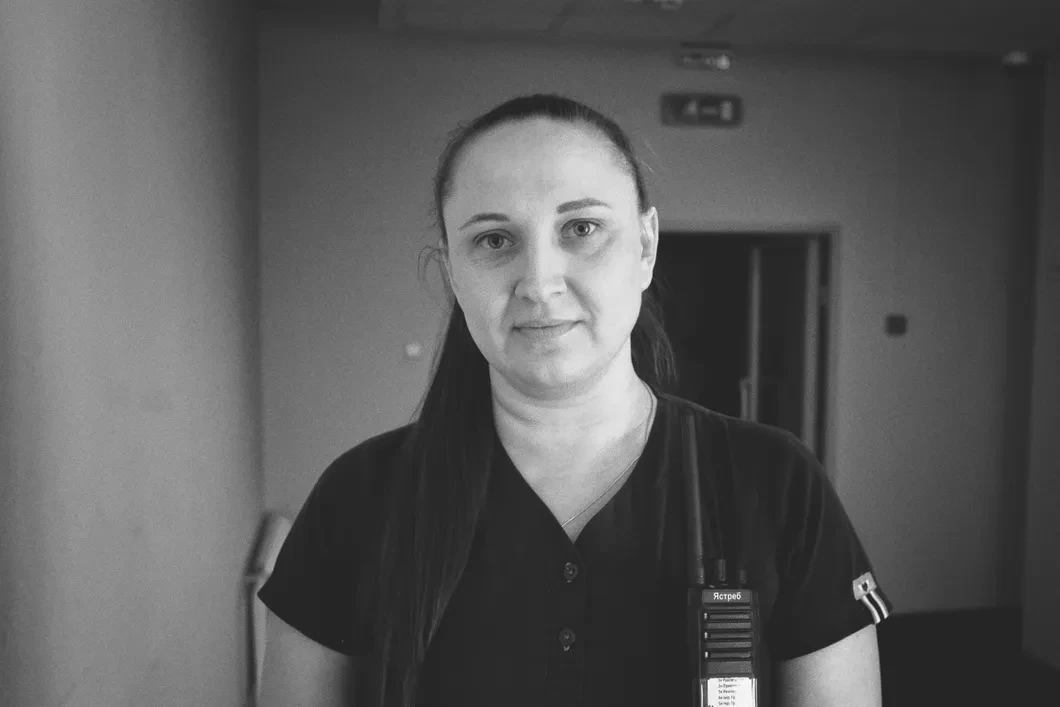
- There was no special choice - since childhood I knew that I would be a physician. I have a mother of a nurse, she works with newborn children. I also love people, I like to care for them. So after the eleventh grade she went to the medical school, received the education of a paramedic. I never regretted it, I was always ready for any work, just to help people.
I remember my first patient. It was still in practice at the school, I worked in purulent surgery, and there was the dying grandmother of Filippova Nadezhda Anatolyevna. I stood over her bed all the time - and fed, and stood, and washed her. She was hopeless, and when she died, I had such a shock, as if I had lost my own person.
It so happened that for a long time I did not work in my specialty - I gave birth to a child and went with him to kindergarten, I was a teacher there. But I pulled me back. Here I came here to the usual procedural nurse, but I am so active that it quickly became the eldest. Now I have 270 nurses.
About coronavirus I will say so: scary. Not in the sense that it’s scary to get sick, but in the fact that people have misunderstanding.
This is a really serious illness and it is difficult for doctors with her. Both physically and morally. Dentists, gynecologists, traumatologists, everyone is now engaged in this day, and this is a lot of work. My sisters go in a dirty area in three gloves, not to mention all these costumes and glasses. The staff changes every four to six hours, rests a little and returns again, once we leave work, we live right in the hospital, all the offices are forced by beds, we sleep on them. Three to four hours a day. Unless, of course, it turns out.
We are not used to such a job - we have an ordinary planned hospital, and then suddenly an ambulance is an ambulance. Such a running around. Otherwise, I'm not afraid. I am a strong person, and for some reason this virus sticks to the weak. I don’t know - I don't love them. Enough immediately. And people are scared. They behave differently, even aggressively. Fell the hysteria. Therefore, most often I say simple things: everything is fine, it turns out to you, there is enough medicines. So it is - no one is abandoned. How else? We are now all here - one family. And if so, then we will cure all, we will save everyone.
Olga Babaeva
Surgeon
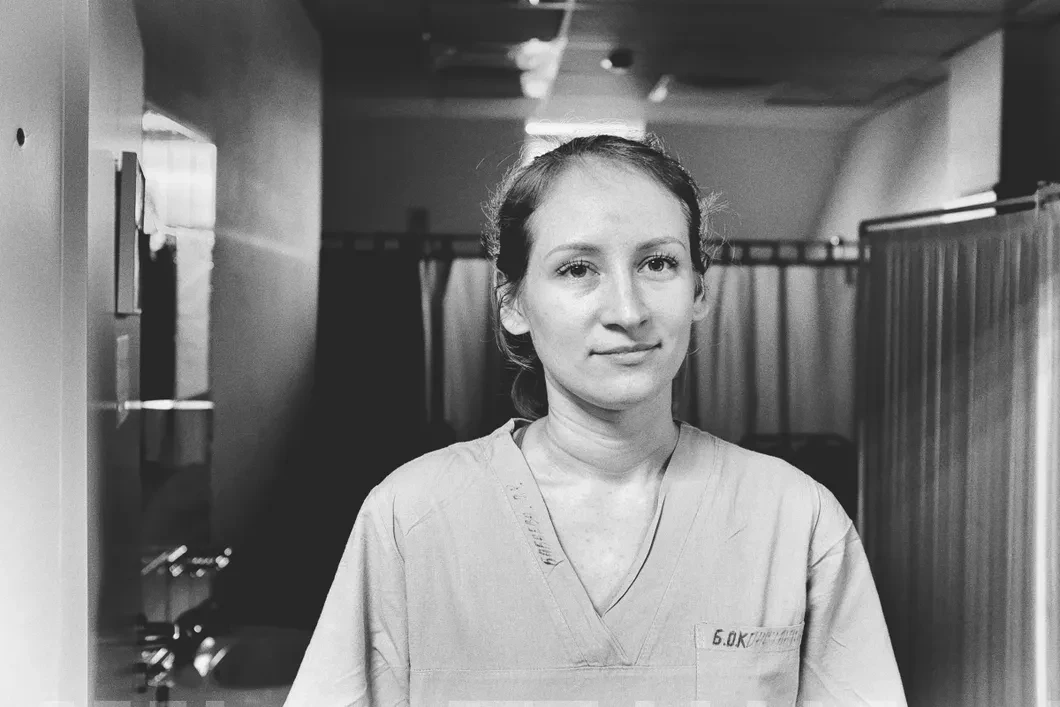
- The work of the surgeon is dynamic, interesting and informative. And it benefits. Therefore, I chose surgery. Honestly, at first I thought to become an obstetrician-gynecologist. I wanted to dissuade pregnant women to have abortion. I wanted to take birth. But when I got there, I realized that this is not mine. So I became a surgeon. It seems to me that in this profession the main thing is the ability to diversely evaluate the situation and quickly try to solve it.
Coronavirus knocked me out of the usual rhythm of work. This is a new direction for me, the patients that I see are completely different, they must be treated differently. But the most difficult point is that I do not understand: what really happens, how it affects our life.
Now they say about us that we are on the front edge, we are well done, and then all this can also turn in a completely different direction,
In the worst. And doctors can very easily become people who are to blame for everything.
It is not easy to deal with this disease. With bacterial pneumonia, everything is clear - the antibiotic prescribed and follow whether it is suitable for the patient or not. And here everything is much more complicated. We must try different methods, change, observe. People are also frightened, they are hard for them, they are locked in the ward, they are forbidden to go out, they are deprived of living communication with their relatives, they see a doctor only through a mask.
I have a grandfather, a relative, he is a veteran of war, he is 95 years old. He watches the news and says: I haven’t experienced in my lifetime, but this thing is worse than war. At least everything is clear with the war. The war came - go to fight. And here what is going on? For what? I try to reassure both his husband and my husband. I'm not saying endlessly: Covid, Covid. I say: this is viral pneumonia, which just needs to be treated.
Lyudmila Korzhueva
Flobologist, surgeon
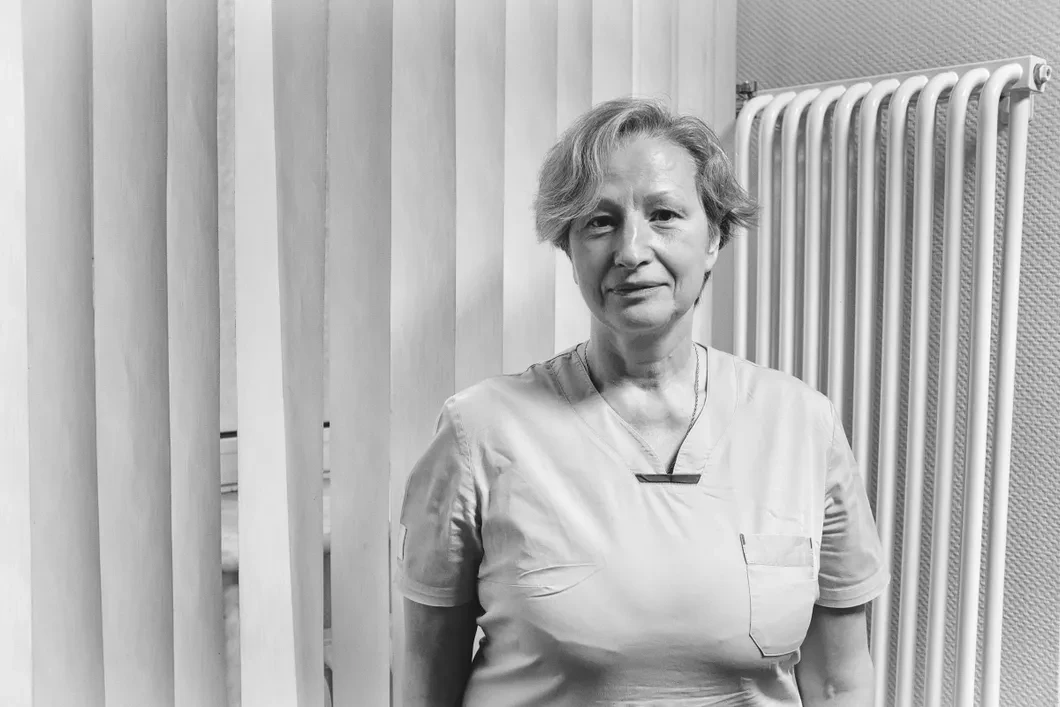
- She always dreamed of becoming a doctor, from childhood she treated cats and dogs. Found, dragged home and treated. Maybe this is hereditary - my grandfather was a military surgeon. Or maybe I just watched the films.
You know, such a Soviet childhood is a Komsomol, conscience, duty, such things.
At first I graduated from a medical school, worked as a operating sister, then I realized that I was not enough for me, I went to the institute. She began to work as a surgeon - in a clinic, then in a hospital. Then it was retrained in a phlebologist, I operate people with varicose veins. In this work, patience and sympathy are very important. Nevertheless, we make people painful, but then, when they come - healthy, with neat slender legs - I see that I did my job well.
I never thought I would do coronavirus. When it became known that our hospital was reproduced, it was, of course, scary, but there was also an excitement: would I be able to? Will it work out?
But I immediately agreed. How else? I am a doctor.
When it all started, I got the time from 12 in the morning to four in the morning. We were escorted in a dirty zone, like astronauts. We dressed us. Respirators, glasses, overalls, shoe covers, gloves. Literally all gathered, the whole hospital. And here we go in the elevator to the emergency room. I and two more surgeons. The excitement was extraordinary. But as soon as I saw a patient on a gurney, all this passed. I learned that her name is Valentina Petrovna, and then everything is as written - what, as a condition, accompanying diseases and so on. The hospital is a hospital.
Doctors, of course, calm down quickly. But people are frightened. They ask - what's wrong with me? I always say: do not worry, we are with you, we won’t leave you, be patient. Patience will not hurt us all. I don’t know how much this will last, but one way or another our life will change in a fundamental way. Previously, we somehow did not value this world, we did not understand how easily it was possible to part with it. And now we are learning to cherish this. I would honestly write poetry about this, only there is not enough time. So for creativity I found the culinary book of Uzbek cuisine so far.
I come home from work - I live nearby - I make my husband a shurp, salad or pilaf, so that he is not sad about anything while I am engaged in coronavirus.
Alexey Yatsko
Anesthesiologist-resuscitator
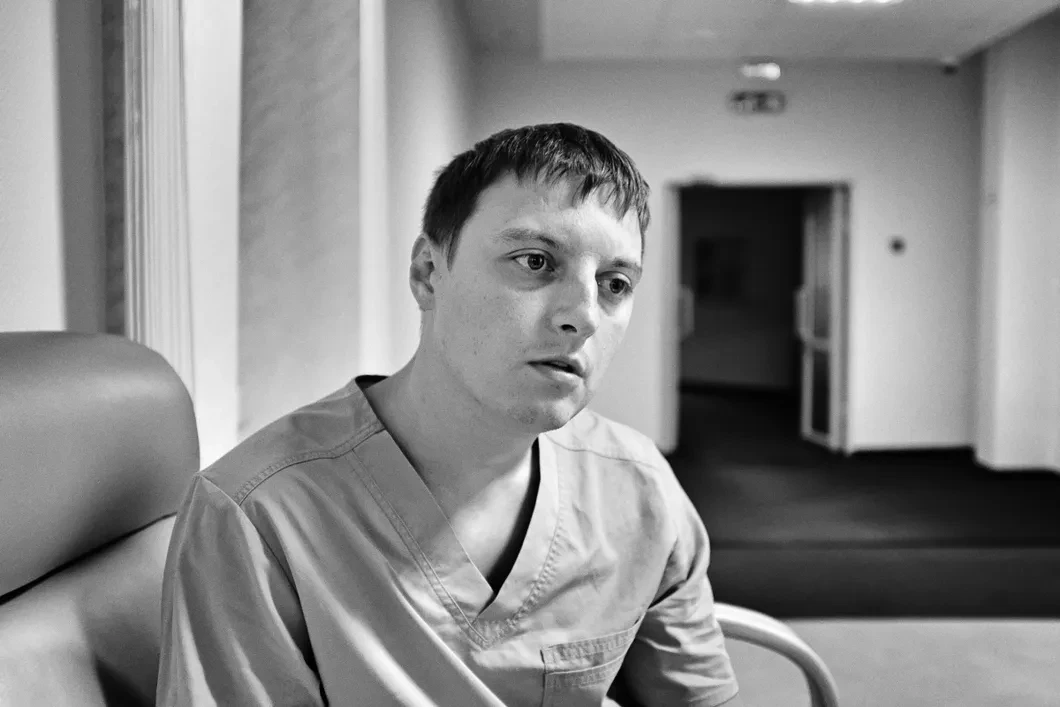
- I went to the profession since my school years. I decided for myself that I would benefit in medicine. I thought: I'll start small, and then I will be ready to help people.
I grew up in Chita. Siberians are famous for responsiveness. Therefore, when Muscovites have a problem with coronavirus, we - four resuscitators - the decision was made very quickly.
We gathered and went to Moscow, since this is possible, since we work on the Russian Railways Medicine network, and this hospital is also included in it. They took with them a phonedoscopes that were not useful to us here, well, a little things, that’s all. We live now here, in the medical office.
The specialty of an anesthetist-resuscitator is a very interesting profession. In it you work with your head and work with modern equipment. I compare it in terms of liability with the duties of the aircraft commander. Both take -off and landing are important. At the same time, you are responsible for the lives of people. You meet with them when they are on the verge of life and death, and then you see that they are alive and say thanks to you. This is very pleasant.
Of course, we have to go through a lot. It is important not to burn out. On the one hand, the patient should be treated as a relative, on the other hand, not to go into him too deep so as not to lose ourselves if we lose this person.
When in Russia for the first time they started talking about coronavirus, it seemed to me that it was a kind of political game. I am now convinced that much here depends on the imagination of a person, on the course of his thoughts. If you think that you will get sick, you will get sick. And I myself am not afraid, I know that you will not get away from fate. A brick that falls on the head is no less terrible than coronavirus.
But, of course, coronavirus has its own differences from brick. Patients are very severe, and each disease flows along some kind of trajectory, and full treatment has not yet been developed. Therefore, we try to look for exits, including in a sense of humor. We talk with patients, try to cheer them up.
It seems to me that we are now experiencing a very important point when everything falls into place.
Until recently, doctors were dragged around the courts, there was a fashion to complain about doctors. Now everything has changed. We see the relevance of the doctor and are proud of our profession. We feel no less important than the military or security forces. We are young, strong and rallied. I hope that after normalizing the situation, we will all become more united and kinder to each other.
Anastasia Barinova
Senior nurse of the neurological department
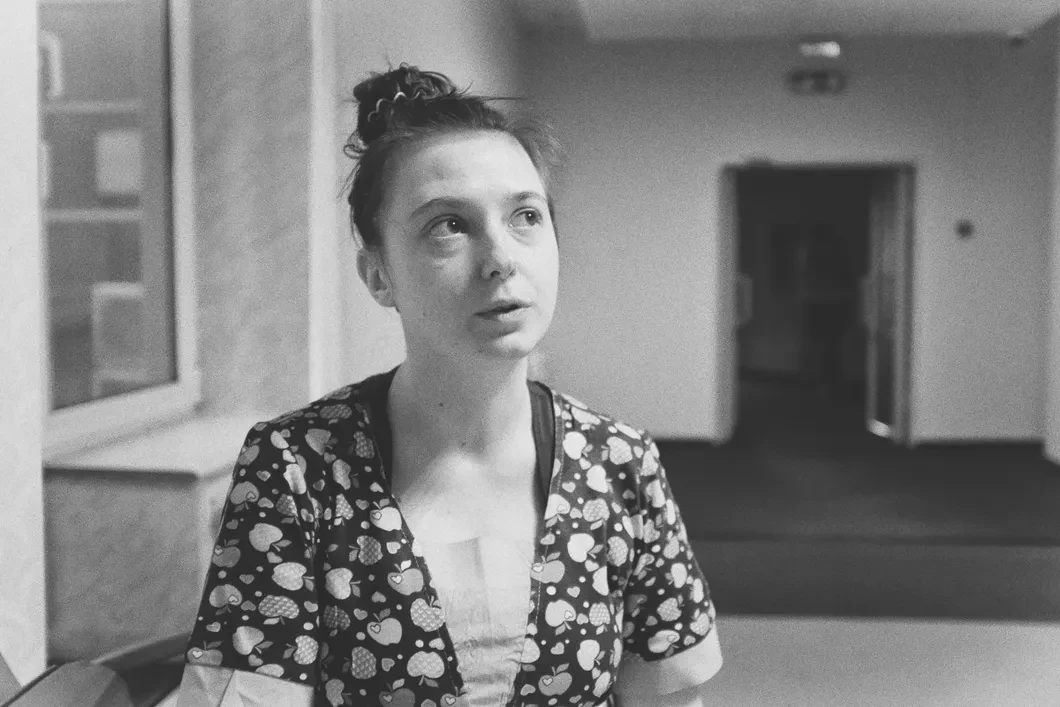
- As a child, I really loved to play the doctor. Then she began to be interested, read medical literature. My mother is a confectioner, but she always helped me in my hobby. After school, I went to a medical college, and then got to work as a procedural nurse in an infectious diseases hospital. I really liked it. I remembered the patient there. He was a young man, somewhere, probably 27 years old, and he was a drug addict. A very interesting, cultural, pleasant patient. He helped us, explained that in life it was necessary to correct himself, strive for the better, and not sit on the heroine from the age of fifteen, like him, not to bring himself to a state when everyone was tormented with you. I remembered this well.
It now seems to me that the most cool in my work is that it is a good, good deed. We help people with our own hands or just in a word. This is very important. Because all people are different. Someone expressive, someone shy, someone is hysterical. But it is this diversity that makes you the most extraordinary person who knows how to behave correctly in many situations. Therefore, I am almost never lost.
When this whole flash began, I immediately thought: all this is for a reason. This is my personal opinion, but I believe that someone needs it. My friends and I discussed, tried to imagine how it flew, it means a flying mouse, someone ate it and it all started. And we adhere to such an opinion that no. This is somehow unnatural.
But I'm not afraid of it myself. I have been in this hospital for more than two years, and when they said that they would reprofile us, I did not worry at all. I am neat, responsible, I will protect myself and everyone around too. And my mother, confectioner, supported me. She said: the main thing - do not lose vigilance.
The hardest now is the body. It gets tired.
The legs hurt, it bothers me. But I will rest and everything will pass. And the world will become different. People will be more responsible and stop hacking. We will learn how to be clean and anxious. And I will ask myself a vacation.
Oksana Shantseva
The senior nurse of the physiotherapy department
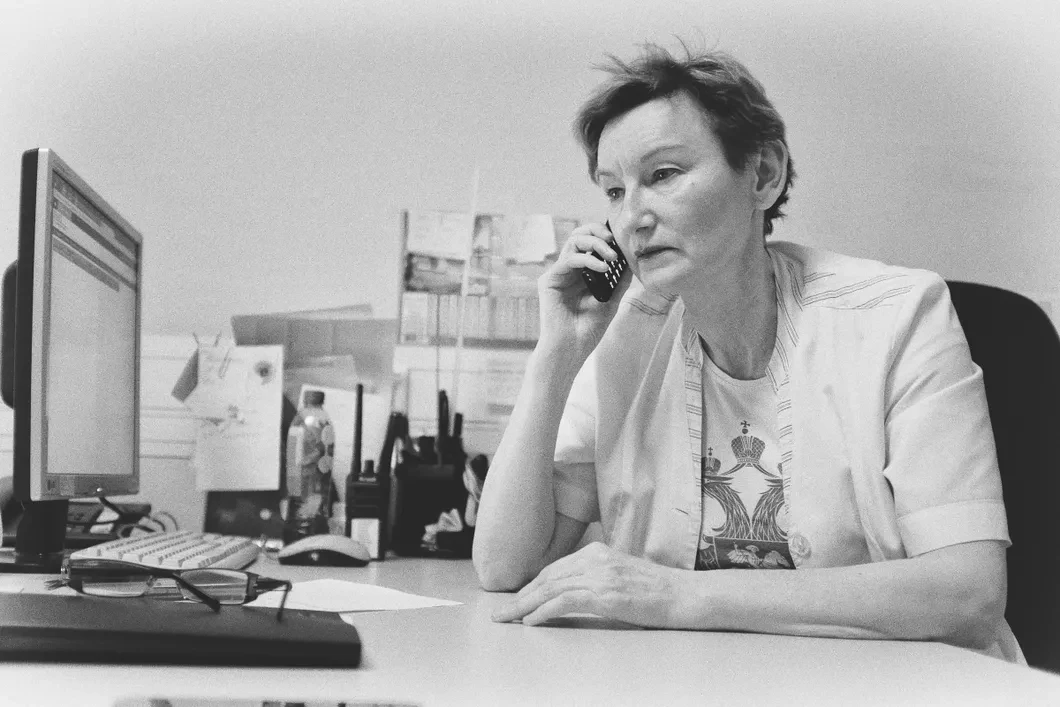
-My surname is Shantsev, there was such a vice-mayor in Moscow at one time. The husband sometimes used it. A little, said: I have an uncle vice-mayor. But in fact, I have nothing to do with the city hall. I have a relationship to physiotherapy. I came to medicine quite late. I just live here nearby. There was a small child, I drove him to the kindergarten, and such a little work was needed. I was tired of sitting at home, I came to this hospital as a nurse. I really liked it. I am a curious person and always dreamed of treating people. And now the dream came true. I quickly got used to it, I began to help nurses, and they say to me: Oksana, go learn. And I went. Quite late. Forty -two years, probably, it was.
It was not easy. She worked, took the child to dance, went to study in the evening. And so four years. But I did not spare. The main thing here is mercy. Whatever person, no matter what happens to him, he still requires attention, compassion. And for me to be a nurse is the ability to be merciful, to compass.
When you help someone and see the result of this work, even in the little things, you get a whole abyss from this. All I need, I found in this work.
I had the first impression of coronavirus - bewilderment. I didn't think it was serious. And when they already plunged into him, it became clear that this was not just like that. It is necessary to guard yourself, your employees, patients. Patients are most difficult. They always have a lack of information, attention. Therefore, any living good word in these conditions is no less important than medicines.
I don’t know if something will change from this disease, but for each person, something will change for sure. But I think for a short while - the memory is unreliable. However, we all remember this patriotism: if I do not go, then how? Here I have Lazarev Vadim or Lena Myasko, they say: how will we sit? We will be ashamed. And after that, of course, you are already looking at people from the other side.
After all, the disease cannot have a plus, but the people who treat this disease are a plus.
Svetlana Peshina
Senior nurse of the intensive care unit
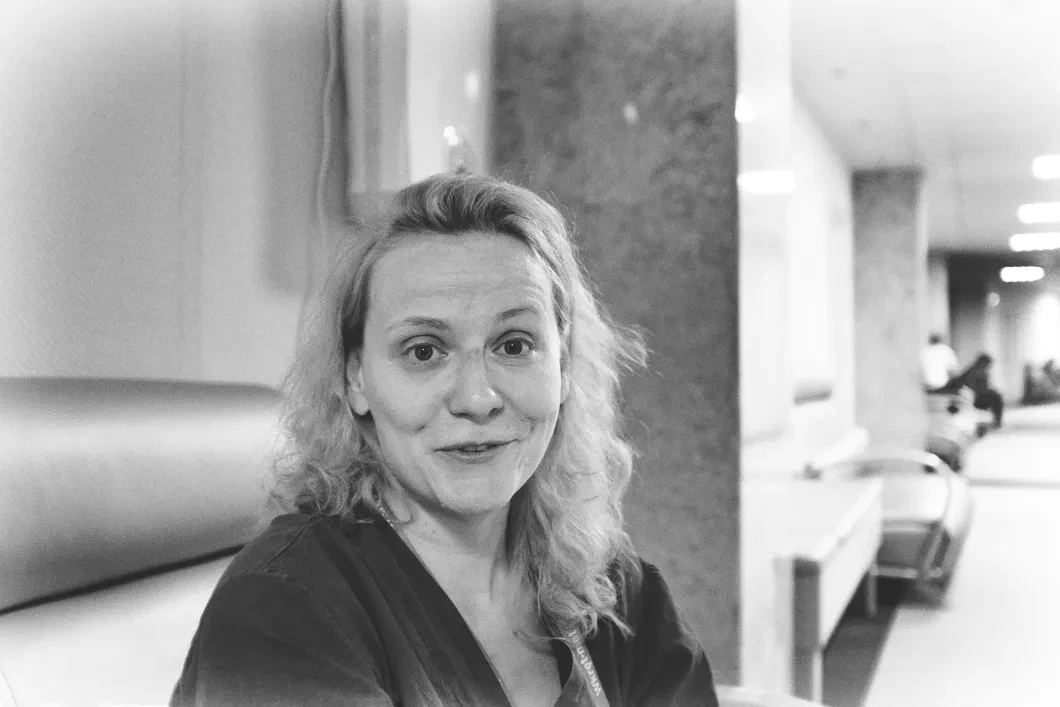
- Eighteen years ago, I entered a medical school. At first I wanted to be a lawyer, a stewardess, and then I realized that I want to be a doctor. I studied anesthesiology and resuscitation in my specialty. I remember very well my first professional stress. It was after three months after graduation. There was such a wonderful sunny day. To the operating room, we were given a grandmother not quite alive. And I am a young girl, I was eighteen years old. At first I was very scared. And then, when all this spun, the doctor and I worked as a whole. And when we saved this grandmother and took it to intensive care, I sat down, my arms and legs shook and let me go home, because I could no longer work. But on this day I realized that I was in my place. This is mine. Since then, I always want to come to work. I love her.
In Koronavirus, I, like everyone else, did not believe at first. Then, when she began to read all these articles, it became scary. Not for themselves, but more for relatives - they will get sick, but I can’t help them. Here is my grandmother, she is a blockade, she is 80 years old, I ask her: granny, do you go out into the street? She says: no, baby, I'm just sitting on a bench. She, like many, simply does not understand what is happening.
I myself was very scared. It’s scary that I can't handle it. But now it seems to me that we can handle it. It's like a smile under the mask. I smile to all patients.
They can’t see it, but I'm sure it works anyway. Goodwill is transmitted. Especially during the tests.
As for the world after the epidemic, I know for sure what exactly will happen in it in the first place. We will meet with my friends from another Moscow infectious diseases hospital and go to the bathhouse. We have already agreed on this.
Konstantin Agaponov
Higer-Coloproctologist
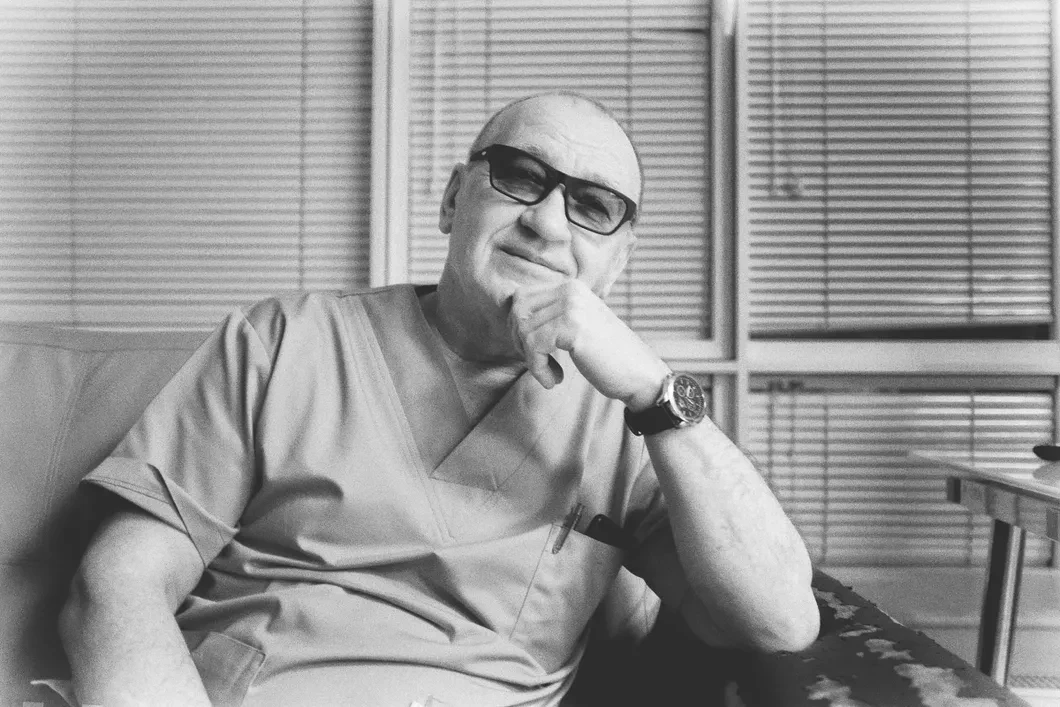
- I started my career at a time when the doctors went to medicine not for money. He began with general surgery, he was in charge of the surgical department in the 68th hospital for more than ten years, then he took up coloproctology and then came here. It seems to me that surgery is the most interesting branch of medicine. This is a very creative specialty that is involved in the craft. You can achieve the highest surgical intelligence here and perfectly master the craft, this is a great combination, sorry only you get tired very quickly. Well, experience does not come over the years, but with decades. But medicine generally delays a person like the sky of pilots. And I believe that you can stay in this sky through professionalism and kindness.
It’s hard for me to say something significant about coronavirus now. I have shoveled many sources and I can’t judge yet - where is the truth and where not. Here we take statistics. There is such a thing: epidemios. These are periods when epidemics arise in Russia and other countries. These are mainly respiratory and viral diseases. Now, if you take 2018-2019 epidemics, in Moscow 2,600,000 were ill with respiratory diseases. This is official statistics. How much is hospitalized? 63 thousand. So, if we are now under the flag of coronavirus, we will collect all respiratory diseases, we are not like hospitals, theaters, stadiums and streets will not be enough for hospitals. We will have beds on the avenues.
With this virus, of course, the problem is such that it gives more deaths. In Germany, they look good with mortality.
Well, in general, there is little fun, I want all this to end sooner. Четкой схемы лечения пока нет, предлагаемые препараты под вопросом, лечить, по сути, пока нечем. Печально то, что вся эта история отрицательно скажется на экономике.
Я уже молодым коллегам говорил — раньше было так: до революции и после, до войны и после. А сейчас будет — до 20-го года и после 20-го года. Прошла черта.
Впрочем, всегда надо надеяться на лучшее! Ну а мы, врачи, делаем все от нас зависящее для нормализации ситуации. This is my personal opinion.
Вячеслав Супрун
Ortopoped traumatologist
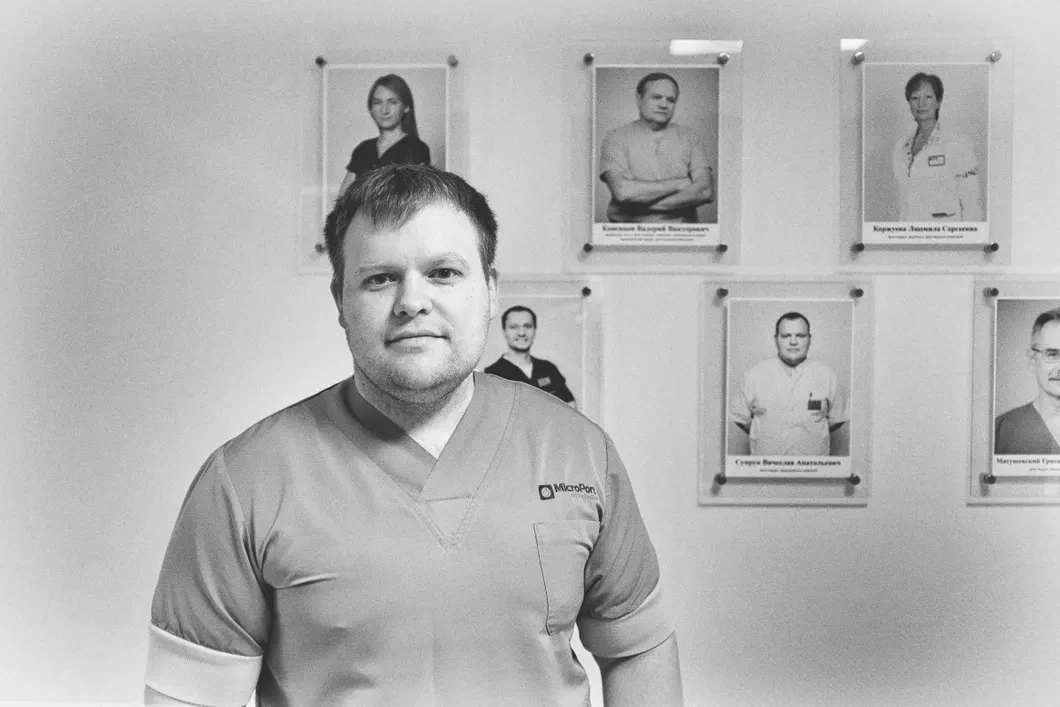
— Я пробовал в свое время хирургию, но потом как-то склонился к травматологии, не знаю, почему. Опыт у меня такой: почти девять лет я проработал в военном госпитале гражданским специалистом в травматологическом отделении, а в этой больнице я последние три года. У вояк, конечно, свой подход к лечению: приказ, который не обсуждается. И знаете, наверное, вот в тех жестких условиях, в которых мы сейчас оказались, это даже хорошо. Врачам ставят задачи, они выполняют то, что от них требуют.
История с коронавирусом началась не так давно, и все мы, конечно, думали, что авось нас это обойдет какой-то стороной. Но не обошло, пришлось столкнуться с проблемой. Был брошен клич, и все мы на него откликнулись. У меня не было по этому поводу никаких размышлений, я сразу сказал, что согласен на все. Коль уж мы выбрали эту профессию, мы должны всегда идти на помощь. Единственное опасение — за близких. У меня двое маленьких детей, так что я сейчас живу в больнице, домой не езжу.
Самое сложное тут — система безопасности, защита от инфекции. Опыта работы в таких условиях мало.
Но я думаю, еще пара недель, и все тут будут заядлыми инфекционистами. Плюс у меня много друзей в разных клиниках Москвы и каждый присылает свои схемы и подходы. Все пытаются экспериментировать. Думаю, золотая середина будет найдена. Мы поймем, что это за болезнь. Пока ясности нет.
Этот вирус ведет себя непонятно. С одним человеком он поступает так, с другим так. Кого-то щадит, вне зависимости от возраста, а кого-то убивает. Прогнозы строить невозможно. Вот утром ты смотришь пациента, он вполне прилично себя ощущает. А проходит часа четыре, и он уже ощущает себя совсем не прилично, он оказывается в реанимации. Надо постоянно быть начеку. В травматологии с этим попроще. Больше стабильности.
Я думаю, вирус этот довольно много поменяет. И нас, и экономику. Нам придется больше ценить жизнь, относиться к ней не так халатно. This is an important experience. Знаете, как говорят: мало ли что. А мы уже к этому готовы.
Alexandra Novikova
поликлинический терапевт
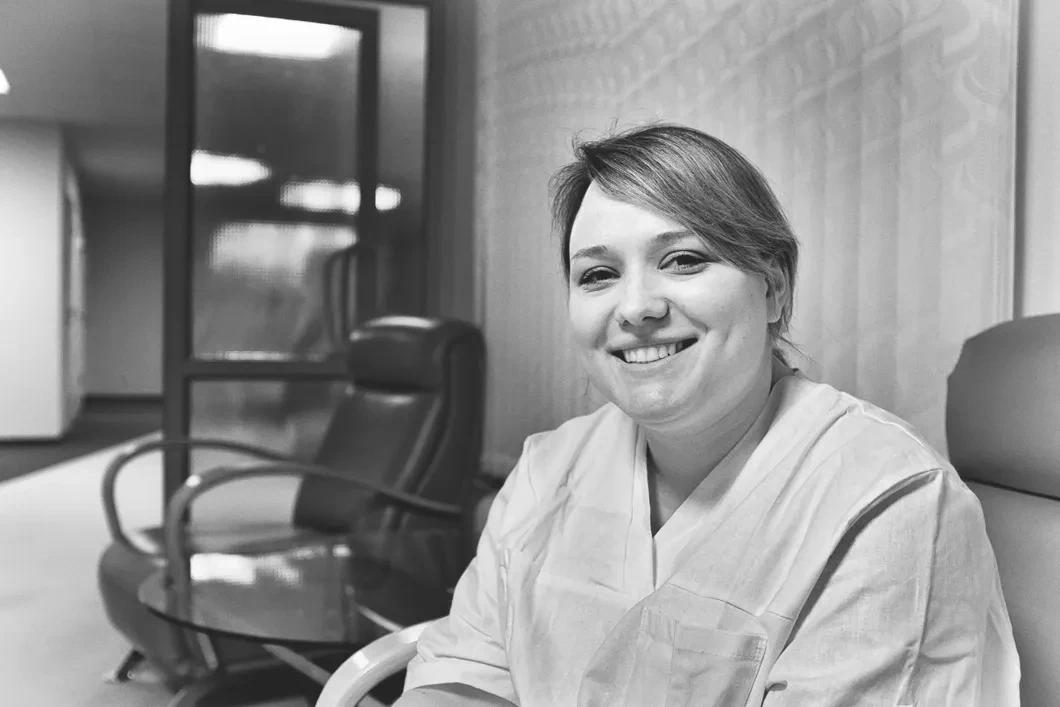
— Мне всегда нравилось знать чуть-чуть больше, чем остальные. Думала сделать это в стоматологии, даже получила образование зубного техника. Но в итоге пошла на лечебное дело. Терапевт — работа выматывающая, но она, во-первых, учит помогать, а во-вторых, немного видеть будущее. Я всегда понимаю: я должна предсказать, какие проблемы ждут пациента, который ко мне обратился. Если я это умею, я всегда постараюсь направить растерявшегося человека в нужную сторону. Что может быть важнее?
С коронавирусом ситуация, как мне кажется такая: мы должны работать очень быстро, не должны терять время. Мы должны видеть больше и дальше, чем вирус, предвидеть итог его поведения. Стараемся, конечно. Но охватить весь объем пациентов очень непросто. There are too many of them. Мы рискуем не понять, кто из них хрупкий, шаткий, незащищенный. Ты занимаешься одним человеком, а в это время все меняется у другого. It is very difficult. А так работа как работа.
Я живу здесь, в больнице.
Утром обход. Потом лечение. Сегодня мы целый день, например, пытались спасти тяжелейшую пациентку. У нее онкология, началась декомпенсация сахарного диабета, двое суток мы не могли снизить ей сахар, начала нарастать дыхательная недостаточность. Пытались ее стабилизировать, но в итоге перевели в реанимацию. И таких случаев много, к сожалению. Нам надо объять необъятное. Объем работы огромный.
Самое тяжелое в этой ситуации то, что я, например, не вижу семью. И если коронавирус что-то действительно изменит в этом мире и этот мир действительно останется, я буду гораздо больше любить своих близких. Мне кажется, это неплохой результат.