
Translated material
"We have no shells": Gref explained why the authorities do not give out money to the population
Sberbank President German Gref explained that Russia does not have such an opportunity, like the United States and Europe, to pay money to the population directly. Gref predicts the peak of the epidemic in Russia on May holidays, does not expect a quick rebound from the economy and advises the business to learn to “live under water” if the crisis is delayed for a long time. The experience of 30 years of crises and revolutions should help in this business.
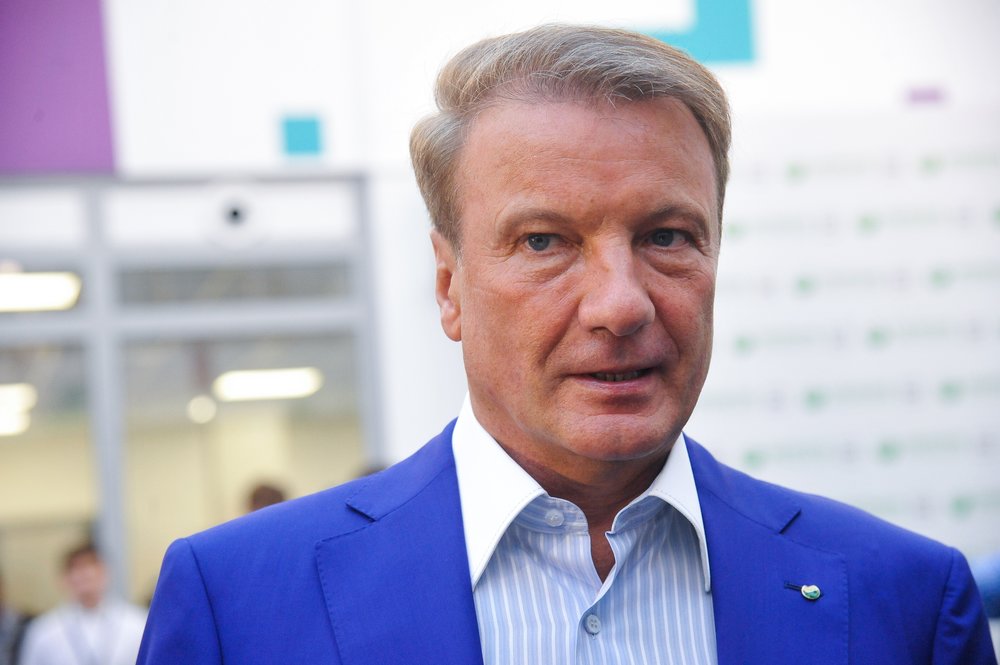
Herman Gref explained why the government and the Central Bank opposed the distribution of money to the population in a crisis. In an interview, the chairman of the Committee on Budget and State Duma and Gosduma Taxes, Andrei Makarov for the resources of the Rambler Group resources, he said :
“Here is like in that joke: name three reasons, why should you retreat? The first reason is: we have no shells. That's the same here: we do not have so many shells. If the United States of America can afford to emit quite calmly in a very short period of time $ 3 trillion of the debt, placing them in the market among investors around the world, and put them into our own economy, then we have restrictions. We do not have such a market source of money that the United States or European countries has. We do not have so many tools through which we can attract so much money. ”
Russia will not distribute “helicopter money”, but will help the most vulnerable and poorest sections of the population, retain people and jobs, Gref said. Despite the disagreements with the Central Bank on other issues, here Gref almost completely repeated the position of Elvira Nabiullina. She said last week that there was no need for helicopter money yet. Direct support measures have already been introduced in many countries: the Japanese government will give citizens 100 thousand yen ($ 926), continuous payments have already begun in the United States.
Read also Alfa Bank appreciated the direct support of the state at only 0.3% of GDP
Russian economists also offer to sharply increase the volume of assistance and stimulation of demand. In order to prevent the economy into depression due to the coronavirus epidemic, Russia must allocate 4-10 trillion rubles to its support, spend half the FNB and launch a quantitative softening program-that is, in fact a printed machine, they write in the Koronakrisis-2020 report, Sergei Guriev, Oleg Vyugin and other famous economists.
Read also economists invited the government to give citizens and business up to 10 trillion rubles
Gref in an interview with Makarov recalled that Sberbank also calculated possible scenarios for the development of the situation in the current conditions. The worst-a drop in oil prices up to $ 10 per barrel and in some periods of time even to zero and recovery up to $ 20–25 by the end of the year. “In this case, the fall of GDP would be 15%. Even in this case, Sberbank retained its profitability. And, of course, we do not need help from the state in this version. Thank God we went through all the crises, relying only on our own strength, ”he emphasized.
Sberbank considers the MVF forecast for the basic script: under it, Russia's GDP will decrease by 5.5%. “We see this today as a basic scenario. Therefore, in this scenario, I do not think that you can generally discuss some dramatic consequences, ”Gref concluded.
In an interview, he separately praised the government for the timely closure of borders with China and Moscow Mayor Sergei Sobyanin for organizing the fight against the spread of coronavirus.