
Translated material
Antimalarial drugs against coronavirus do not seem to work. There is still little data, but the first results are disappointing
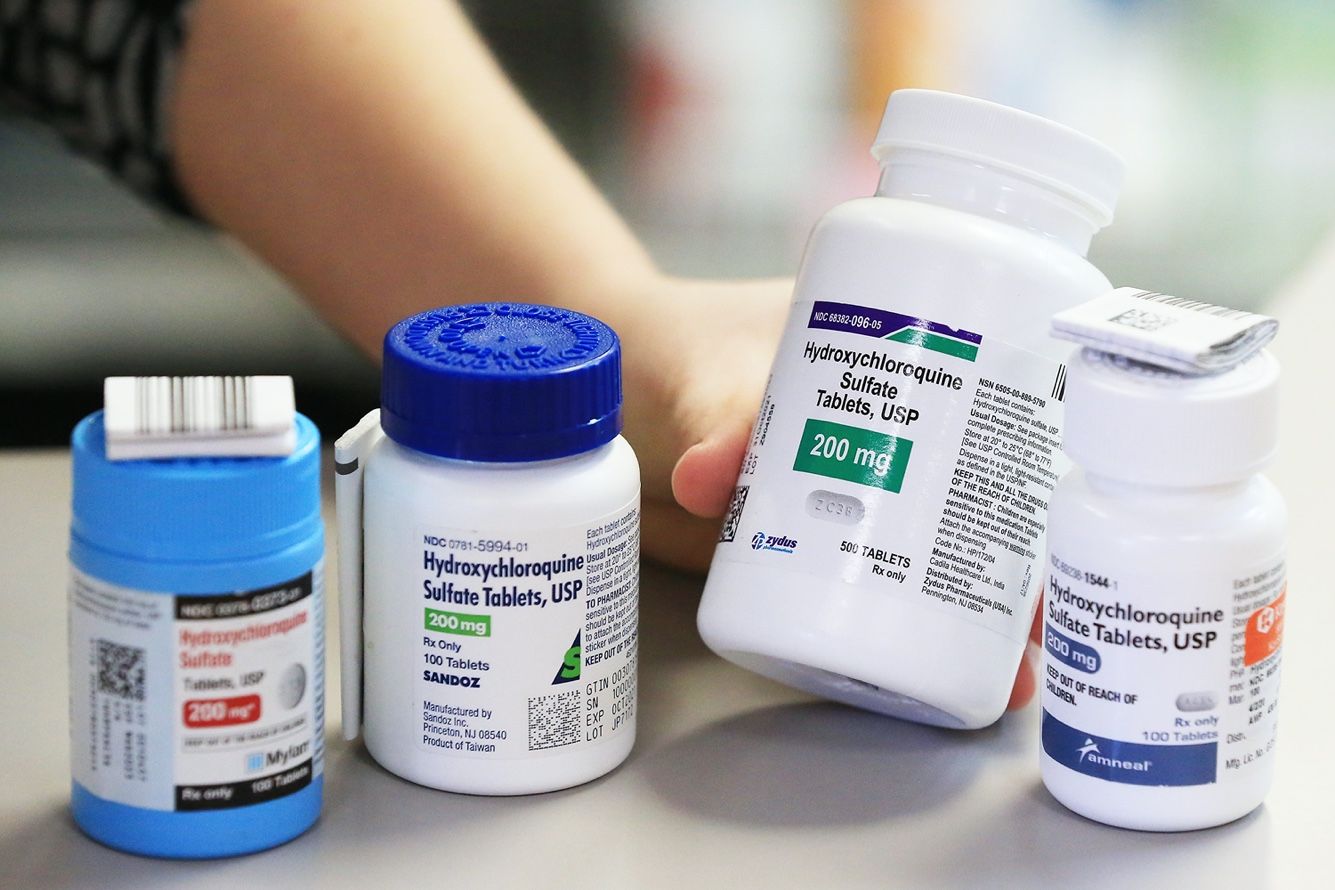
On April 16, the Russian government issued a document in which, in fact, it contains an indication of treating patients with Covid-19 hydroxychlorochin-a drug approved for the treatment of malaria. Even earlier, Donald Trump had special hopes for this medicine. Unfortunately, in reality there are no particular grounds for optimism - the studies do not prove that hydroxychlorokhin is actually effective.
All Medusa materials about coronavirus are open to distribute Creative Commons CC BY for distribution. You can reprint them! The license does not apply to the photo.
Gidoxichlorokhin and a similar connection of Chlorokhin were chosen as the most promising options for therapy along with the abdosesevir and two combinations of Lopinavir and Ritonavir as part of the solidarity program. So far, the WHO has just proposed to report the results in the case of the use of these drugs, but has not issued recommendations for treatment, since there are no reliable data on their effectiveness.
Even before the WHO clinical research program was announced, US President Donald Trump for an incomprehensible reason laid special hopes precisely on hydroxychlorokhin. On his Twitter, he described it as a medicine that will radically affect the spread of coronavirus. Apparently, it was his statements that inflated excessive interest in this drug.
What was still known about the drug?
Hope for the effectiveness of a remedy for malaria was fed by French researcher Didier Raul. In March, his group published an article where it showed the effectiveness of a combination of hydroxychlorokhin in combination with Azithromycin antibiotic against the SARS-COV-2 virus.
The article was criticized, since the general scheme of the study and how the “raw” data in the article were analyzed, doubts about the reliability of the results. For example, in an experimental group receiving hydroxychlorokhin, there were initially 26 participants, but even from this small number of six were subsequently excluded, since they did not finish the treatment due to a deterioration in the condition. Their data was not taken into account. The effectiveness of treatment was evaluated not by the health reasons for the participants, but by the amount of the virus in the body of the participants on the sixth day of treatment. At the same time, 14 days of therapy were stated initially in the test protocol, but what happened to the study participants after this period, the article is not indicated.
It is even more suspicious that the result could not be reproduced. Another research group from France decided to check the results of Raul and repeated the test on 11 patients who received a combination of drugs in the same dosage. On the sixth day, 80% of the subjects still showed a high viral load.
But then a study from China arrived at the aid of Raul, where on a sample in 62 patients they showed that hydroxychlorokhin accelerates the recovery of patients Covid-19. However, in another Chinese study, including 30 patients, scientists came to the conclusion that Gidroxichlorokhin rather did not show effectiveness. A French study , which already includes 181 patients, with confirmed pneumonia caused by coronavirus, also did not confirm the effectiveness of hydroxychlorochin: while 22% of patients died in the control group, 20% died in the group receiving the drug. The difference between the groups themselves recognized the statistically insignificant.
In any case, all of the listed works are distinguished by a small sample and rather vague end points , relative to which the effectiveness of the results is evaluated. In addition to the last test, they evaluated quite indirect signs of effectiveness: the presence of the genetic material of the virus in the body, the severity of pneumonia or the recovery time.
What showed the latest study?
The new study conducted in the United States has become the largest of now published-it already includes 368 patients Covid-19. In addition, in it the effectiveness of the drug was measured according to reliable final results - a decrease in mortality or preventing a deterioration in a state.
This study refers to the type of retrospective - that is, it was not planned in advance, it did not have a random division into experimental and control groups, it simply summarizes the results of different types of therapy, which was carried out in the same organization - in the centers of Veteran Health Administration, where medical care to veterans. The study included hospitalized patients with confirmed Covid-19, who were in centers from March 9 to April 11. Some of them were treated with hydroxychlorochin, part - hydroxichlorochin with azithromycin, part did not receive either drug. The purpose of the study was to “retroactively” to evaluate the results of the use of hydroxychlorokhin or its combination with azithromycin.
Researchers included 368 hospitalized patients whose average age was 70 years old, all of them were male. Some of them (97 people) received hydroxychlorokhin in addition to standard therapeutic measures, another part (113 people) received hydroxykhlorokhin in combination with azitromycin. Another 158 people entered the control group.
As the final points of the study, which scientists paid special attention to, they took either the purpose of the artificial ventilation of the lungs as a result of the deterioration of the patient's condition, or death. In the first case, the results between the groups did not differ significantly: Ivl was on 13.3% of patients receiving hydroxychlorokhin, 6.9% of those who received it in combination with an antibiotic, and 14.1% of control patients.
However, the analysis of deaths showed that, it seems, hydroxychlorokhin not only does not help, but even worsens the situation. While 11.4% of patients died in the control group, 27.8% of patients died in a group on hydroxychlorokhin, and 22% of a combination with azithromycin. The authors of the article made such a conclusion - the use of hydroxychlorokhin as therapy significantly (p = 0.03) increases the risk of patients of patients from all causes.
Why are these conclusions not final?
It would seem that these conclusions should score the last nail into the lid of the coffin of hydroxychlorokhin as a medicine for the Covid-19. Nevertheless, it is also not deprived of the shortcomings, which have already indicated critics in the comments on preprint. One of them is a uneven distribution of patients in groups. If studies with a positive result were guilty of the prescription of hydroxychlorokhin to “too healthy” patients, then in this case “too sick” came under the prescription of the drug.
For example, in the first group (only hydroxykhlorokhin) there were more people with high blood pressure and complicated diabetes, that is, factors that increase the risk of adverse outcome at Covid-19. This shift is explained by the recommendation to use the drug in emergency cases, that is, by default the most severe patients fell into the first group. This can be explained by increased mortality. However, all the same, such a high percentage of deaths probably indicates that the drug at least does not alleviate the condition of severe patients.
Based on the alleged mechanisms of action (you can read about them here ), hydroxychlorokhin enthusiasts believe that it must be used in the first manifestation of symptoms, and not after the onset of complications. In addition, the study does not mention the dosages of hydroxychlorokhin, which in itself has serious side effects, such as cardiotoxicity. So, perhaps the observed results can be partially explained by the non -optimal dosage.
So how to treat Kovid?
It turns out that published studies on the topic of hydroxychlorokhin at the Covid-19 are still in doubt. You need to wait for a high -quality double randomized blind study with a fairly large sample of patients. After the publication of a large American study, the first systematic reviews of other tests of anti -male drugs appeared. In them, the authors come to the same disappointing conclusions - reliable evidence that hydroxychlorokhin or chlorochine can work not only in individual human cells in the test tube, but also on living people, while there are no people.
Unfortunately, neither WHO nor the American panel of experts of national health institutions can recommend nothing specific to treat coronavirus infection.
Daria Spasskaya