
Translated material
Sergey Prokofiev
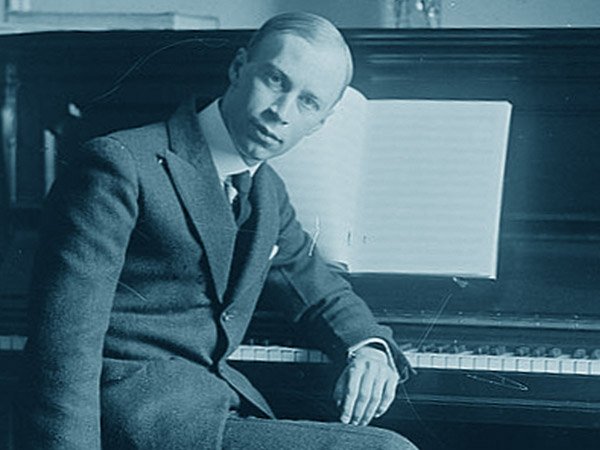
On April 23, 1891, Sergey Prokofiev, composer, pianist and conductor was born.
Personal business
Sergey Sergeyevich Prokofiev (1891-1953) was born on the estate of Sontsovka of the Yekaterinoslav province (now the village of Krasnoye, Donetsk region of Ukraine). His father was an agronomist scientist, ruled the estate. The mother was a good pianist and began to study with her son music, when he was not yet five years old. Sergei showed an interest in writing early, writing the cycles of small piano plays, and in nine to ten years he had already composed the operas “Giant” and “On the Desert Islands”. In 1902 and 1903, in the summer months he studied the theory and composition with Reinhold Glier, who only graduated from the Moscow Conservatory. Thanks to these classes, he created the opera “Feast during the plague”, a symphony and several plays.
In 1904, thirteen -year -old Sergei Prokofiev entered the St. Petersburg Conservatory. His mentors were Nikolai Rimsky-Korsakov (instrumentation), Anatoly Lyadov (composition), Anna Esipova (piano) and Nikolai Cherepinnin (conducting).
He graduated from the conservatory in the composition class in 1909, and in 1914 - in the piano class. Already while studying at the conservatory, he gave concerts - since 1908 he performed his own works as a pianist. In 1914, he played his first piano concert with the orchestra and received the Honorary Prize named after Anton Rubinstein - Royal. He continued classes in the conservatory in the class of the organ.
At the end of 1917, he thought about leaving Russia, wrote in his diary: “Go to America! Certainly! Here is sourness, there is life with a key, here is a massacre and game, there is a cultural life, here is miserable concerts in Kislovodsk, there is New York, Chicago. There is no hesitation. ”
In May 1918, Sergei Prokofiev left Moscow to Tokyo. After receiving an American visa, in August sailed to the United States. After a tour in America, in 1922, he moved to Germany, and since 1923 - to Paris, where he spent ten years. As a pianist and conductor, he performed a lot with concerts in Europe and the USA.
In 1921, the premiere of Prokofiev’s opera “Love for Three Oranges” took place in Chicago. In Paris, the production of ballets “Steel Skok” (1927) and “Prodigal Son” (1928) were held. In 1925-1931 he composed the second, third and fourth symphonies, the fourth and fifth piano concerts.
In 1927 and 1929 he came with concerts in the USSR. In 1930, he wrote the opera Semyon Kotko according to the story of Valentin Kataev and the ballet “On the Dnieper” for the Grand Opera Theater.
In 1933 he finally returned to his homeland. Then he wrote the music for the production of Pushkin’s story “Egyptian Nights” in the Moscow Chamber Theater.
He conducted classes in the composition at the School of Higher Mastery at the Moscow Conservatory, received the title of Honorary Professor of the Conservatory.
During the Great Patriotic War, in evacuation, he created a grand opera based on Lev Tolstoy’s novel “War and Peace”. At that time, he also worked a lot on the Cinderella ballet, the fifth symphony, sonatas for piano.
In 1947 he was awarded the title of People's Artist of the RSFSR, and in 1948 he was attacked for the "formalistic" style of music and sympathy for the "degenerating art of the West." At the same time, his first wife, Spanish Karolina Kudin-Luber (1897-1989), was arrested and sentenced to twenty years of the camps for espionage.
Sergei Prokofiev died of hemorrhage in the brain on March 5, 1953. He was buried in Moscow at the Novodevichy cemetery. In memory of the composer on the house in Kamermegersky Lane, where he lived, a memorial plaque was installed.
What is famous
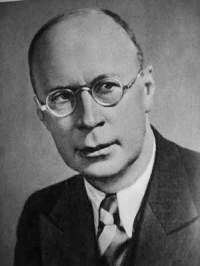 Sergey Prokofiev
Sergey Prokofiev is a musical child prodigy, one of the most significant Russian composers of the 20th century, who composed eleven operas, seven ballets, the same number of symphonies, eight concerts and movie music (Alexander Nevsky (1938) and Ivan the Terrible (1944-1945).
Prokofiev was also a famous pianist, conductor and music teacher. Laureate of six Stalinist prizes (1943, 1946 - three times, 1947, 1952) and the Lenin Prize (1957). People's Artist of the RSFSR (1947).
Sergei Prokofiev is considered the innovator of the musical language, enriching it in the field of harmony. In his works, the so -called “ Prokofievsky dominant ” is distinguished. Typical sounds for the composer are achieved on the basis of the dissonance of copper wind instruments and complex polyphonic patterns of the string group.
What you need to know about
The innovation of the composer did not always find understanding among listeners and officials. So, at the premiere of the Scythian suite, the hall was empty. Among those who left the premiere was the director of the St. Petersburg Conservatory Alexander Glazunov.
In 1948, Prokofiev was scolded in the Soviet press for formalism. His sixth symphony (1946) and the opera “Tale of a real man” were called not corresponding to the concept of socialist realism. However, over time, the sixth symphony was recognized as a masterpiece.
For the first time, Prokofiev married in 1923, two sons were born in marriage - Svyatoslav (1924) and Oleg (1928). The marriage broke up in 1941, when Prokofiev went to the world of Mendelsson. In 1948, his first wife Karolina Kodin-Luber was arrested on charges of espionage and Soslan-first in Abz (Komi Autonomous Soviet Socialist Republic), then to the Mordovian camps. In 1956, she was rehabilitated, later left the USSR. Abroad was founded by the Prokofiev Foundation, which later grew to the archive and the Association of Prokofiev.
Direct speech:
About the musical gift: “My first memory dates back to three years. I somersault on my father's bed. Around are relatives. In the front call, guests arrived. Everyone runs to meet. I continue to somersault and, having flown out of bed, hit my forehead against an iron chest. Inhuman roar, everyone runs back.
The blow was hefty - the bump on the forehead remained on all childhood and youth and was equal to only thirty years. When, already a young man, I conducted in Paris, the artist Larionov touched her with a finger and said: “Or maybe there is all the talent in it!” ”
About meeting the opera: “In Moscow, they took me to the opera, on Faust. When we found ourselves in the bed of the Solodovnikov Theater (after the revolution - a branch of the Bolshoi Theater), my mother gave me several preliminary explanations.
“You understand, there was a Faust, a scientist.” He is already an old man, and he reads books. And now the devil comes to him and says: "Sell my soul, then I will make you young again." Well, Faust sold, the devil made it young, and now they begin to have fun ...
I was wary. We came to the theater long before the start, I missed me in anticipation, not quite understanding where and why they brought, and then suddenly such an interesting prospect: the devil comes, and then they begin to have fun! ”
On admission to the conservatory: “The entrance exam went quite spectacularly. In front of me was an examined a man with a beard, who brought a romance without an accompaniment as all his luggage. I entered, bending under the weight of two folders, in which there were four operas, two sonatas, symphony and quite a few piano plays. "I like it!" -said Rimsky-Korsakov, who led the exam. "
About the abroad: “The air of alien does not arouse inspiration in me, because I am Russian and there is nothing more harmful to a person than to live in the exile, to be in a spiritual climate that does not correspond to his race. I must again plunge into the atmosphere of my homeland, I have to see the real winter and spring again, I have to hear Russian speech, talk with people close to me. And this will give me something that is so lacking here, for their songs are my songs. ”
About the purpose: “The composer, like the poet, sculptor, painter, is designed to serve man and people. He must decorate human life and protect it. First of all, he must be a citizen in his art, to sing human life and lead a person to a bright future. ”
7 facts about Sergey Prokofiev:
- The composer's passion was chess. He proposed “nine” chess, for which a board with a 24x24 field is used, and the game is carried out at once by nine sets of figures. Once, Prokofiev played a party with the ex-champion of the world in chess Emanuel Lasker and was able to reduce it to a draw.
- In 1936 he wrote for the Central Children's Theater the symphonic fairy tale "Petya and the Wolf", which gained wide fame. He also compiled a collection of piano plays “Children's Music” (1935).
- Prokofiev himself wrote most of the libretto to his operas. He also wrote stories that were published in 2003. In the USSR and Russia, the “ autobiography ” of Prokofiev, written by him after returning to his homeland, has been reprinted more than once.
- The “ Diaries ” of Sergei Prokofiev formed the documentary “Prokofiev: the unfinished diary”, shot by the director from Canada by Joseph Feiginberg.
- The composer died in Moscow in a communal apartment in Camerger Lane. Since he died on the same day with Stalin, the death remained almost unnoticed, and relatives were faced with great difficulties in organizing a funeral.
- In 2009 at the State Museum. A. S. Pushkin was shown “The Wooden Book of Sergey Prokofiev - Symphony of Conventional Souls”. The book is a collection of statements by famous people. Prokofiev asked them the same question: “What do you think of the sun?” In the album, 48 people left their thoughts.
- According to the testament of Prokofiev, in the year of the century from the date of his death, in 2053, all his archives will be opened.
Materials about Sergey Prokofiev:
Article about Sergey Prokofiev on Wikipedia
Biographical certificate RIA Novosti
Biography on the site to-name.ru