
Translated material
Kvota for flight
Having fulfilled the requirements of OPEC+, Russian oil industry workers risk never restoring prey
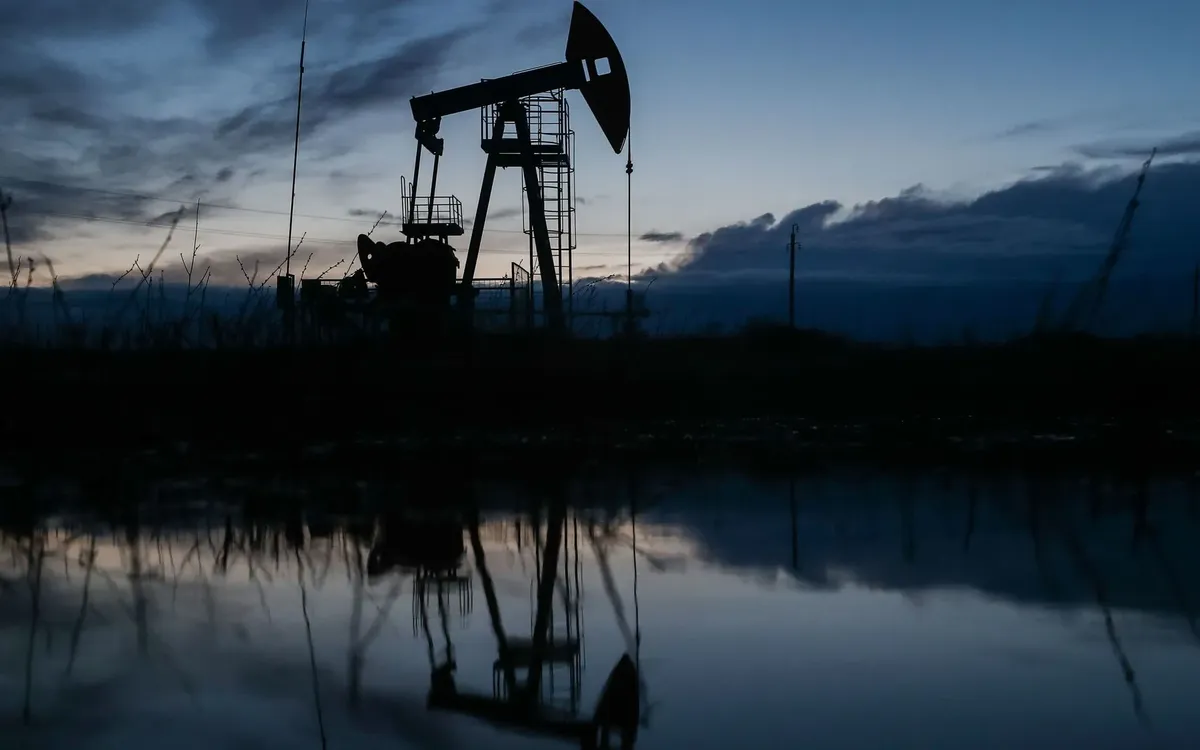
The signing on April 9 of the “historical” OPEC+ transaction+ to reduce oil production by almost 10 million barrels per day did not impress the markets - oil prices fell. First of all, the problem is that such a volume is insufficient to eliminate excess oil in the market-the demand due to coronavirus pandemia has now declined by a size, about three times large, that is, 10 million barrels per day-this is in this situation, as they say, “nothing”.
And this tells us that the nature of the current crisis in the oil market is not at all that someone “said something wrong” or not so bowed to OPEC+negotiations, but in the global crisis of oil overproduction, which has been matured for several years. OPEC and partners tried to restrain his offensive, but against the backdrop of coronavirus and the economic shock caused by him, this turned out to be impossible.
But this is only the most obvious part of the problem. The second, underwater, part is that some of the obligations to reduce production within the framework of the new OPEC+ transaction are simply unrealized in principle, and some oil -producing countries simply hastened to sign some “obligations” to reassure the market, but they absolutely have no idea how to reduce the prey.
First of all, we are talking, of course, about Russia. The Financial Times has already reported the deepest disagreements between Russian oil companies regarding the reduction of prey - roughly speaking, they do not want to do this.
And they can be understood, since a large -scale reduction in oil production in our conditions is an extremely difficult and unknown business that no one had tried before and which is unknown to turn out. Let's try to explain to people far from the oil industry, what is the problem.
Drilling at random
The difference between Russia and Saudi Arabia consists of this. After an unsuccessful attempt to regulate the oil market by quotas in the 1980s, Saudi Arabia has gained extensive experience in maintaining the Fund for the Blacksheads (so-called “Free Power Capacy), which are diverted by the market, but then can be quickly put into effect.
For example, in the early 2000s, such free mining power was about 6 million barrels per day-in the equivalent of annual production it was 300 million tons per year or the entire annual production of Russia in the 1990s.
Russia has a completely different situation. Here is an example of one of the relatively recent research works on the topic of the operation of Russian oil fields, which tells us - “there are not so many examples of temporary conservation of deposits in oil industry.”
That is, if the Saudis has a large and developed practice of input-output of wells as necessary, we do not have such a practice
- And its implementation today is fraught with unpredictable consequences. Why?
The fact is that the vast majority of Russian deposits is characterized by high watering - the share of water in the resulting fluid is 80–95 %.
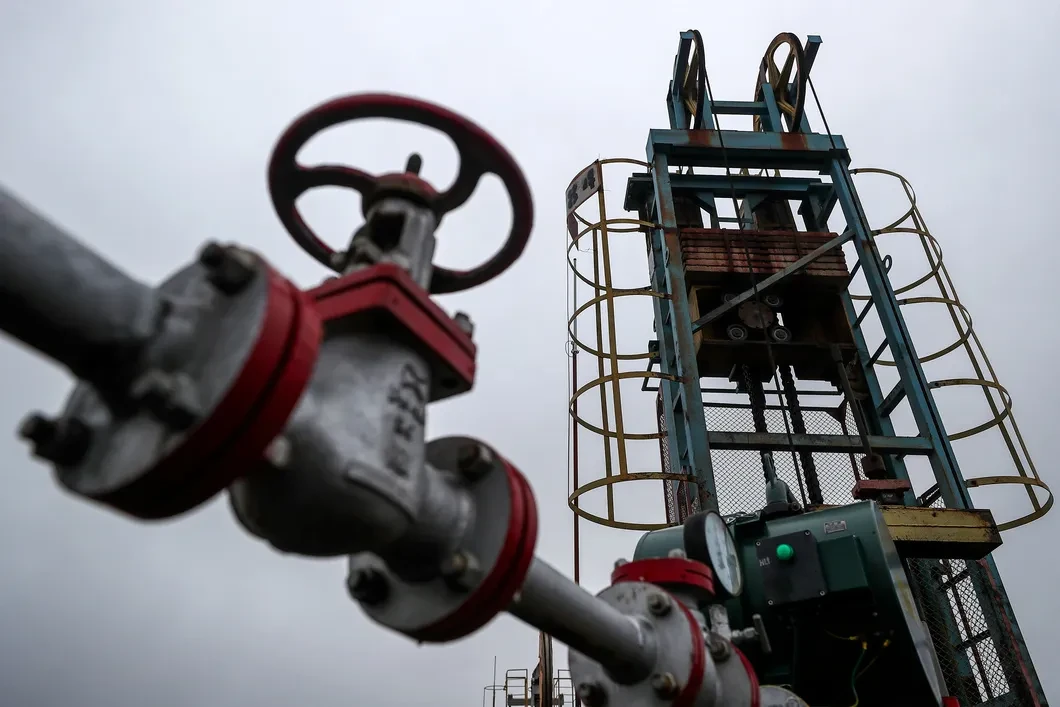
In many ways, this is a legacy of the negative Soviet period of the predatory operation of deposits for the sake of satisfying the currency needs of the CPSU - then Soviet oil workers at the early stage of the operation of deposits abused the so -called “factory” or primitive watering in a layer to maintain reservoir pressure.
So they ruined, for example, the notorious dump. If you want to know more about this, you can read, for example, an interview with the ex-head of the leading Soviet industry Institute of VNINEFT in 1971-1986, Gadel Vakhitov with the speaking name “Do not repeat the mistakes of the past”.
If you deliberately simplify for uninitiated readers, then oil production in flooded fields is a separate type of art, artists and composers far from this.
The abstraction sharply dropped the flow of oil wells in the late USSR and Russia of the 90s-according to Rosstat, the average daily moron collapsed from almost 12 tons per day to 7.5 tons in the middle and late 90s. In the early 2000s, private oil companies due to the import of advanced international technologies for the intensification of extraction managed to increase the average flow rate to more than 10 tons per day, but in recent years it fell again (amounting to 9.3–9.5 tons per day in 2016-2018).
In principle, now maintaining sufficient performance of wells in flooded mature deposits is the main way to retain Russian oil production as a whole at current levels.
To do this, our oil workers use the widest set of very advanced methods of working with wells, where, in the end, you, simply put, never know exactly what will work and what is not.
Well - not an oil crane
And then, suddenly, respected political leaders come - Vladimir Putin, Donald Trump and Saudi royal comrades - and they say: dear Russian oil industry workers, you will have to jam tens of thousands of wells, since Russia did not take the obligations to reduce the production of 2.8 million barrels per day.
What does it mean? Well, for example, this is almost 70 % more than Lukoil oil production in Russia (1.7 million barrels per day), the second oil company of the country. Or more than the three largest oil fields in the country (Fedorov, Samotlorsk, Privkskoye), combined together are given. Or exactly twice as much as Yuganskneftegaz, the largest mining “daughter” of Rosneft, which was once selected from Yukos.
In annual terms, the obligations to reduce production under the OPEC+ agreement are equivalent to reduce production from 560 million to 420 million tons per year. We mined so much in 2003.
Although it is argued that this is a reduction in the production of “only two months”, and then it will be possible to return part of the wells to the work, but this is only a simplified philistine representation that the wells can supposedly be closed and opened like a crane. In fact, it is impossible. What indicators will give overwhelming deposits after an attempt to return the well to work - no one knows.
Work on the study of the operation of wells in flooded deposits, which I referred above, says that limited single experiments in the Caucasus and the Volga region did not bring big problems, but what will happen on a large scale and large Western Siberian deposits is unknown, there is simply no such experience.
Moreover, for the sake of fulfilling the quotas agreed with OPEC, the most effective wells will have to be closed, which can later further aggravate the difficulties of restoring production to the previous levels (the more you lose production now, the more difficult it will be to return to previous levels).
In fact, the Russian oil industry risks like that beautiful princess in a fairy tale, to fall asleep so that, perhaps, no longer wake up as we know her.
The risk of long -term production loss of about 100 million tons in annual terms and more - this is extremely seriously. It will be possible to restore this prey, but for this, most likely, significant investments in the drilling of new wells will be required in return for those that will no longer give old morons.
Once again, for comparison, to the notorious Rosneft project, Vostok-Oil, which involves access to a production level of 100 million tons per year by 2030 (according to Rosneft's assumptions), it is planned to spend 10 trillion rubles and provide a project of 2.6 trillion rubles of tax benefits. But its peak volume is 2 million barrels per day, much less than we promised to reduce OPEC+as part of the transaction.
Yes, Vostok-Oil is a new project in a remote territory with a lack of infrastructure, but considerable investments may also be required to return prey to current levels at the current deposits of the Volga region or Western Siberia. Now, when oil prices have fallen, to increase investment budgets the most inopportune time.
Better low prices than high quotas
All these risks are completely incomparable with the temporary losses that our oil workers will suffer from a fall in prices. Yes, and the loss will suffer mainly the budget: at such low oil prices, as today, taxes are mainly reduced and export duties are reset.
And the own costs of the companies are very low: Rosneft in the IV quarter of 2019. The average cost of oil production at the well was $ 2.5 per barrel, transportation for export through the pipeline (thus 97 % of oil is exported) - $ 4 per barrel. Lukoil in the IV quarter of 2019. The average cost of oil production in the well is $ 3.1 per barrel.
Thus, the cost of exports at the border is less than $ 10 (these figures can be believed, they are taken from reports for international investors, where there is nowhere more than nowhere is responsible for embellishing numbers).
That is, you can tolerate current low prices - it mainly loses the budget, but not to the company. But the losses from the conservation of tens of thousands of wells in flooded deposits are an unpredictable case, which can turn into great damage, in fact, the need for new investments in a volume equivalent to increasing production by 100 tons per year.
Let me remind you that we have achieved such an increase in production for more than 15 years since the mid-2000s. This will be an unprecedented voltage for the industry in conditions when the previous high prices for oil cannot already be dreamed.
It is clear that Trump, Putin and other world leaders were nervous when they saw oil prices at $ 10–20 per barrel. Many readers are also nervous because of a fall in prices. But panic is not the best adviser at the time of the crisis. Moreover, our oil industry has the experience of passing the 1998 crisis, when oil was even cheaper - and nothing, no one died, no oil had to be “poured from unclaimed”, which many nerve commentators are worried about today.
It is necessary to let the market make his work on the conclusion of the most expensive and non -economical production - believe me, this will happen quite quickly and due to really non -economic projects that investors will voluntarily close.
As Mike Somers, the head of the influential American Oil Institute, in a letter to the head of the Texas regulatory commission, who is now trying to flirt from the OPEC regarding the directive reduction of oil production, is most effective for the withdrawal of non -competitive production, to use market mechanisms, and the quotas artificially established by the authorities only hit the most effective projects.
That is why our oil workers are now resisting the art reduction in prey - they understand that this will not affect the market, but the consequences for the industry can be difficult.
It is clear that the topic of low oil prices today is bothering many today, but this is an unprofessional view of the situation is to try to distribute directive quotas to reduce production in the regime of surplosals today, without taking into account the real situation on Earth.
Such a primitive-Zhosplanov approach can deliver a long-term blow to the oil industry as it at one time inflicted at one time the CPSU for overly intense factories of deposits. Let's not repeat the mistakes - Sechin will leave sooner or later, but the oil industry will come in handy.