
Translated material
Nowhere to run
Military checkpoints, thousands of militants, destroyed life, millions of refugees. Syrian Idlib is the most defenseless place in front of the coronavirus place on the planet
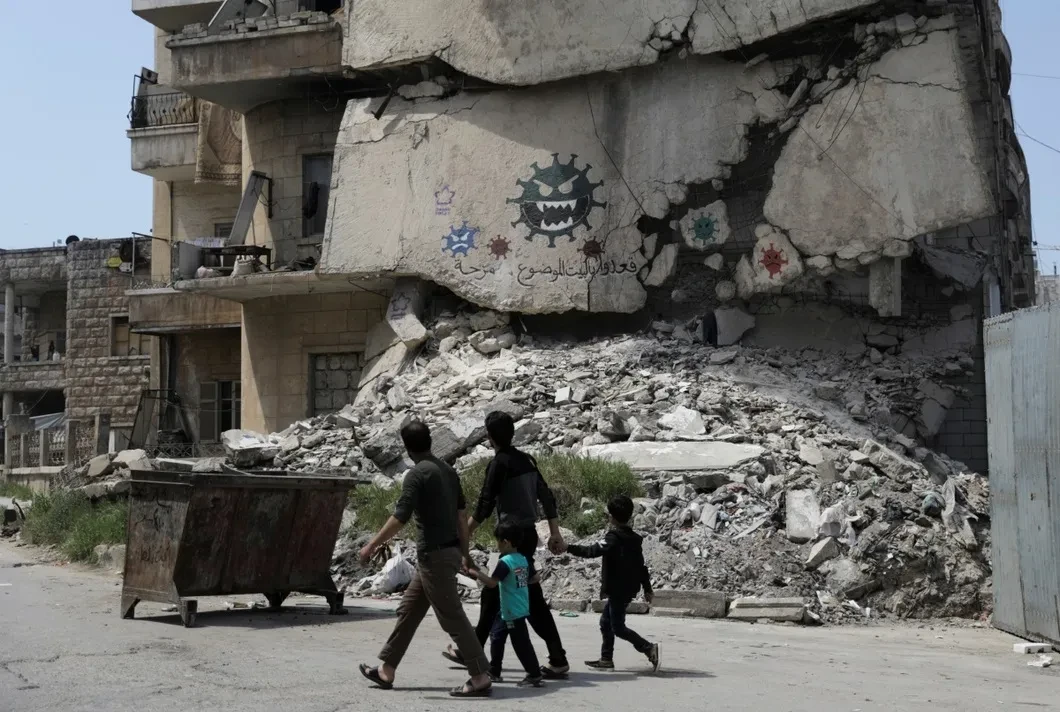
The Covid-19 has already carried away the lives of almost 180 thousand people and caused suffering to millions around the world. Even the most prosperous societies and healthcare systems can hardly hold a blow. The Syrian province of Idlib is perhaps one of the most unprotected and vulnerable places on the planet. Destroyed by a nine -year war, stuffed with checkpoints, military contingents of different countries and local armed groups, refuge of almost two million refugees from different parts of Syria, Idlib froze in anticipation of a terrible epidemic.
Territory
So far, the isolation of the province, where civil aviation does not fly and it is not so easy to get on the ground, is beneficial to Idlib. On April 23, cases of infection with a new infection are not registered. Moreover, for more than a month now the virus has been helping to ensure a fragile truce. The ceasefire was reached between Turkey and Russia on March 5, after two months of the large -scale military operation of the Syrian government forces against the armed opposition in Idlib, carried out with the support of Russia.
Then, few people believed in a truce, fighting too fierce, and the previous ceasefire regime lasted only a few days. But now all the external players are busy fighting the epidemic, and although the truce has been violated several times, the inhabitants of Idlib for the first time since December 2019 go to bed and see a clear sky over their heads without bombers.
According to humanitarian organizations, in the last few days, thousands of Syrians who lived in refugee camps near the Turkish border began to return home or to the ruins of their houses in Idlib. Some of them believed that the truce would last for some time, and before the start of the Muslim post he wanted to be closer to the house. Others decided to return, realizing that when the virus overtakes the camps overwhelmed by people, there will be no protection from the epidemic in conditions of crowding and the lack of minimum living conditions.
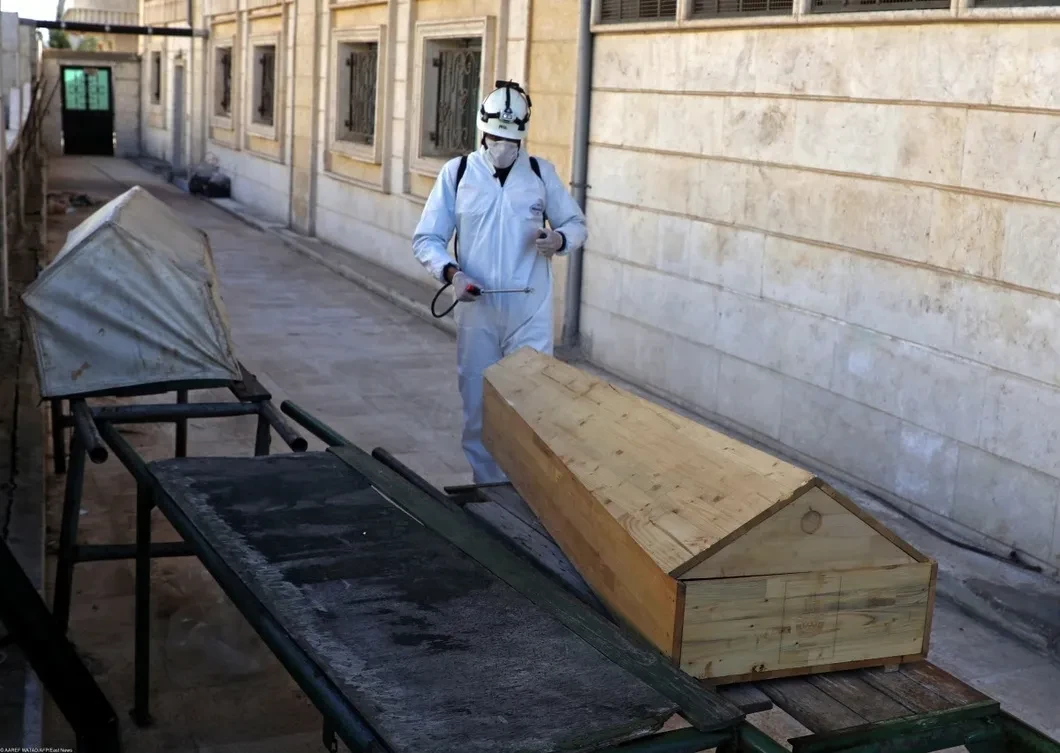
If when the Covid-19 comes to Idlib, it will be very difficult to help people. In the provinces, hospitals and even medical offices are bombed, in the conditions of the camps the elementary requirements of self -isolation and frequent wash of the hands are simply impossible.
The epidemic will begin to mow people in thousands: according to local doctors, up to 100 thousand people can die in Idlib.
Between all the lights
The civilian population of Idlib is squeezed between the fiercely fighting parties to the conflict.
On the one hand, the government forces of Bashar al -Assad, seeking to regain control of the province. Assad is supported by the Russian military, which actively participate in operations from the air and on Earth, as well as the Rights of Armed Forces.
On the other hand, there are motionless groups of armed opposition, for the most part jihadist, which currently exercise control over the territory. Among them are many groups recognized by terrorist different countries, as well as the UN.
On the third party, Türkiye in the Union with the Promotyansk armed groups of the Syrian opposition, which is trying to maintain the influence of the territories of Idlib, which remain outside the jurisdiction of Damascus, and stop the next massive flow of refugees on its territory.
Türkiye has already accepted more than 3.6 million refugees from Syria and, in connection with a worsening economic situation in the country and changes in public opinion, are simply not able to allow a new wave. Apparently, in the future, the Erdogan government hopes to relocate at least part of the Syrians living in Turkey to the Idlib territories under their protectorate.
On February 27, the Syrian military struck the Turkish positions, as a result of which dozens of Turkish soldiers died. In response, Türkiye began the operation of retaliation “Spring Shield” and, according to Ankara, destroyed several thousand Syrian military and hundreds of units of equipment and weapons.
In the middle of this theater, the civilian population tries to survive. According to the UN, at present, more than 3 million people live in the province of Idlib. They just have nowhere to run: the border with Turkey is closed, money to leave somewhere else, no, to move to the territory controlled by the regime of Bashar al-Assad, they are afraid.
The Syrian regime has a terrible reputation - tens of thousands of those killed and dusted in prisons, massive bombing of the civilian population,
The use of hunger as a method of warfare, not to mention other gross violations. In Idlib, these practices are known firsthand (in each family there was more than one person), which, of course, does not help strengthen trust in existing power.
REFERENCE
The situation in Idlib
The Idlib Province is the last bastion of the Syrian armed opposition. When the Syrian government troops, with the support of Russia, established control over other opposition regions of Syria, the humanitarian corridors in Idlib were provided to everyone. Among these people were militants of the armed opposition, members of their families, as well as oppositional citizens who did not want to remain in the territories crossing the regime.
Numerous armed groups in Idlib have different ideological orientation and often conflict with each other. Since mid-2017, the union of Islamist groups of Hayat Tahrir al-Sham ( prohibited in the territory of the Russian Federation ), recognized by several states by terrorist and considered affiliated with al-Qaeda ( prohibited in the territory of the Russian Federation), has become the dominant force in Idlib. KHTSh dominates the government of national salvation ( prohibited in the territory of the Russian Federation ), which actually controls the region.
In the framework of the “Astana process”, Türkiye took over the task of disarmament of terrorist groups in the Idlib de -escalation zone.
In Russia, there is a common opinion that the inhabitants of Idlib support international terrorists. However, this is not so. All the Idlibtsev, with whom I managed to talk, are configured against the regime of Bashar al -Assad, but at the same time, like the majority of the population do not support extremists. They say that terrorist groups bring to civilians suffering.
So, the KhTSh and other jihadist groups have repeatedly subjected peaceful quarters to indignant shelling. They attacked the territories controlled by the government, which leads to the death of civilians, and also provokes response, indifferent attacks of the governments from which the civilian population in Idlib suffers.
According to the independent International Investigation Commission in the Syrian Arab Republic, the activities of the KHTSh are greatly affected by the life of the civilian population. The KhTS regulates access to healthcare and education, its presence has led to the departure of international humanitarian organizations from the region. Given that the economy in the province is almost completely destroyed, this assistance is very important for people. In addition, for example, in the town of Kafr-Tahamim, HTS attempts to consolidate power led to increasing bread and gasoline prices, and when the KhTSh introduced a tax on olive oil, protests began in the city. As a result, KHTSh militants attacked the protesters. Three died, 10 were injured, including a teenager.
KhTSh harshly pursues, intimidates, tortures and kills critics, activists and journalists.
I managed to meet with one such journalist in Istanbul. “I can't return to Idlib. I criticized Al-Qaeda in the media, they blew up my house, and so far I can’t even go there, ”he said.
In 2018, a well-known journalist, activist, defender of women's rights, Red al-Faris was killed in the province of Idlib. Rede harshly criticized both the dictatorship of Bashar al -Assad and the terrorist organizations settled in Syria. For criticism of the “al-Nusra” (a branch of al-Qaeda in Syria, prohibited in the territory of the Russian Federation) he was captured and tortured, but continued his work until the militants shot him and his friend on November 23.
In Idlib, protests against the HTS have repeatedly flashed, but today jihadist groups are much stronger than local residents exhausted by the war.
Winter operation of winter 2019/2020
The second phase of a military attack on the Idlib of the Syrian Arab Army, with the support of the Russian Air Force, began on December 19, 2019. The first phase of the Operation "Idlib Dawn" was carried out in April-August 2019. According to the Supreme Commissioner of the UN Human Rights at that time, from April 29 to August 29, at least 1089 civilians were killed, including 304 children. 1031 of them died as a result of bombing and shelling of government troops and their allies, and 58 - at the hands of militants. The New Gazeta wrote about this operation in its previous reports.
The new offensive began with the assault on the positions of the rebels-jihadists in Umm al-Jalile in the southeast of the province. Armed groups of rebels and Syrian military fought fierce battles for settlements south of the city of Maarat-en-Numan. The Syrian army sought to take control of a significant part of the Hama-Idlib strategic motorist and part of the Jeel-Az-Zavia area.
The very next day, thousands of people fled to the Turkish border, escaping from bombing. After a week, the bombing of Maarat al-Numan turned into a ghost city with skeletons of houses and empty streets. On the exit from the city, a multi -kilometer queue from cars formed.
Strictly 18+
Caution, on the video - the consequences of hostilities
By December 22, a full -scale military campaign was deployed, bombing of settlements and rural areas in the Idlib province reached incredible intensity.
Certificates
Yazan, a resident of the city of Idlib , left Syria two months ago and is now in Turkey. He claims: “The troops do not go right away. At first they devastate the area, bombs fall literally every minute. People are running. And after all the inhabitants run away, they enter the settlements. ”
Lubna Alkanavati , an activist of the organization that protects the rights of women, said: “When bombing began, shells fell on his head like rain, these were hellish bombing, and we had the teams of local employees, all women, we had to somehow evacuate them. It was horror. "
In January, information about the death of civilians came almost every day. According to Human Raits Watch, on January 1, government troops released a ballistic missile filled with cassette bombs. She hit the school, killing 12 civilians, including five children from 6 to 13 years old. Another 12 children and their teacher were injured during an attack on a school in the city of Sarmin. On January 11, according to human rights organizations and the media, during the bombing of Syrian aircraft, 17 people were killed and 40 were injured.
On January 23, militants attacked government troops in the southeast of the Idlib de-escalation zone and killed about 40 Syrian soldiers. In response on January 26, the Syrian army began surgery to establish control over the western part of the Aleppo province, which led to a new wave of refugees: under the ongoing bombing, thousands of civilians strove for the Turkish border.
Certificates
Mostafa from Kafr Nabal came to Turkey with his family after the start of the last operation in Idlib. He said: "Airplanes are bombing hospitals, markets, schools, before they establish control, they want to really intimidate people."
Yazan from the city of Idlib recalls: “We lived in the house on the basement. People have long ceased to live on higher floors, try on zero or first. In our homes, there have been no glasses on the windows for a long time, we make windows from the material that does not beat like glass when hit. Recently, I changed these “glasses” 50 times, no less, after each air raid I have to replace them. From the first day of life, my three -month -old son is familiar with bombing. As soon as he was born, shelling began, he had to urgently evacuate from the hospital.
On January 31, “Doctors Without Borders” stated that the largest hospital in the south of Idlib, as a result of the bombing, stopped work. A little earlier, on January 29, the militants captured the central hospital in Idlib and used it for their own purposes. According to “doctors”, in January 2020, as a result of bombing, 53 medical institutions were forced to stop working.
Obviously, after such a blow, the Idlib medical infrastructure is not able to cope with pandemia.
Yazan claims that in recent years the Syrians have studied when they bomb Syrian, and when - Russian planes. According to him, Russian bombs have much more powerful power, they destroy the entire building, while Syrian planes usually destroy buildings only partially. In addition, the Syrians have a folk warning system. When the plane flies out of the Russian military base, living nearby is reported to a special WhatsApp group, when it flew out and in which direction, while others, during the course of the flight, report about its route. This allows people to monitor the bombing and their performers, and most importantly, try to hide before the plane arrives.
On March 3, the Russian military police began to patrol the strategically important but completely empty city of Serakib, who was repelled by the Syrian military.
On March 5, when Russia and Türkiye reached a truce, according to the UN, almost a million people were near the border, 80% of which were women and children. This is the largest crisis of forced relocation since the beginning of the nine -year war in Syria. A million people - including children, sick and old people - threw their homes, economy, work and fled to a closed Turkish border in the February cold. There are no exact data on the dead and wounded civilians yet.
Only from February 1 to 16, the UN Human Rights Office recorded at least 100 civilians in Idlib, including 18 women and 35 children, as well as many wounded as a result of bombing and shelling by Russian-Syrian forces. In addition, seven more civilians were killed as a result of ground strikes by Syrian armed groups. In total, from April 2019 to the end of February 2020, according to the Supreme Commissioner for Human Rights, at least 1750 civilians were killed mainly by the forces of the regime and its allies.
"About this disaster will be written in history textbooks"
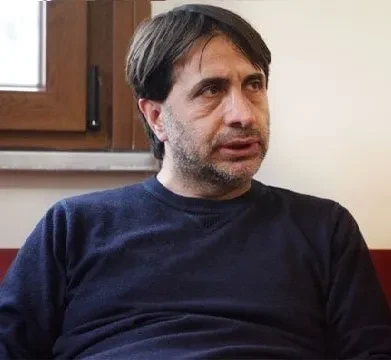
Osman Atalaii is a member of the board of one of the largest Turkish charitable organizations IHH, ideologically close to the “party of justice and development” ruling in Turkey. IHH provides humanitarian assistance in Syria from the first days of the conflict. Before quarantine, 500 of her employees worked in Idlib.
Osman confirms that, according to them, in the last three months before the armistice, a million people fled to the border with Turkey. At the same time, there were already refugee camps at the border. There were not enough places for placement, there were not enough not only tents, but also the places where to put them. “There are agricultural lands, on which the camp is impossible to break, there is liquid dirt. The area of the safe territory near the border is very small, because of this, there are great crowding in the camps, ”he explained. When people fled, they were located in schools, mosques, stadiums, old buses; Many slept in cars, and the last arrivals simply pulled blankets under olive trees. Winter was very cold, people froze, the children died from hypothermia. “We immediately began to import materials for heating, fuel oil, butter, gas,” says Osman.
“The situation in the camps is simply terrifying, especially for women and children,” confirms Lubna Alkanavati. - People lost everything: work, house, their environment, and in very cold weather were literally on the street. Children again interrupted training in schools, in the conditions of movement there is no way to teach so many children. People live in spontaneous camps, where there are no toilets, nor a place to collect garbage, no services at all. Around the man, the level of violence against women has increased very much, it has reached the highest indicators in these places. ”
The main problem of assistance is the lack of security:
Before the ceasefire, the bombing did not allow humanitarian organizations to move safely. “In addition, the problem is that after nine years of the war, 95 percent of the Syrian population need help. Only Damascus and, possibly, Latakia can provide themselves, ”says Osman Atalai. The rest of Syria and especially Idlib need significant support.
IHH provides temporary houses, food, hygiene items, prostheses for those who have lost limbs, heating systems, contains schools in camps for children. In Turkey, the organization opened an orphanage for thousands of Syrian orphans. For children and women in refugee camps, the help of psychologists in injury is provided, as well as daily distribute hot food for 50 thousand people. The organization has two bakeries that produce 150 thousand loaf of bread per day, which are also distributed in Idlib.
Osman says that, despite the economic difficulties within the country, in Turkey ordinary people and businessmen are still responding to trouble in Syria.
“For refugees, the most important thing is bread. We announced the collection, and many Turkish campaigns as a donation purchased flour to provide small local bakers in Syria. Последний поток беженцев случился зимой, и мы объявили благотворительный сбор на временные домики в 24 квадратных метра: стены кирпичные, а крыша брезентовая для снижения себестоимости. В Сирии холодные зимы, а летом очень жарко, в палатках часто случаются пожары, поэтому мы выбрали такие дома. Мы объявили благотворительный сбор на 10 тысяч домов, собрали средства на 15 тысяч построек».
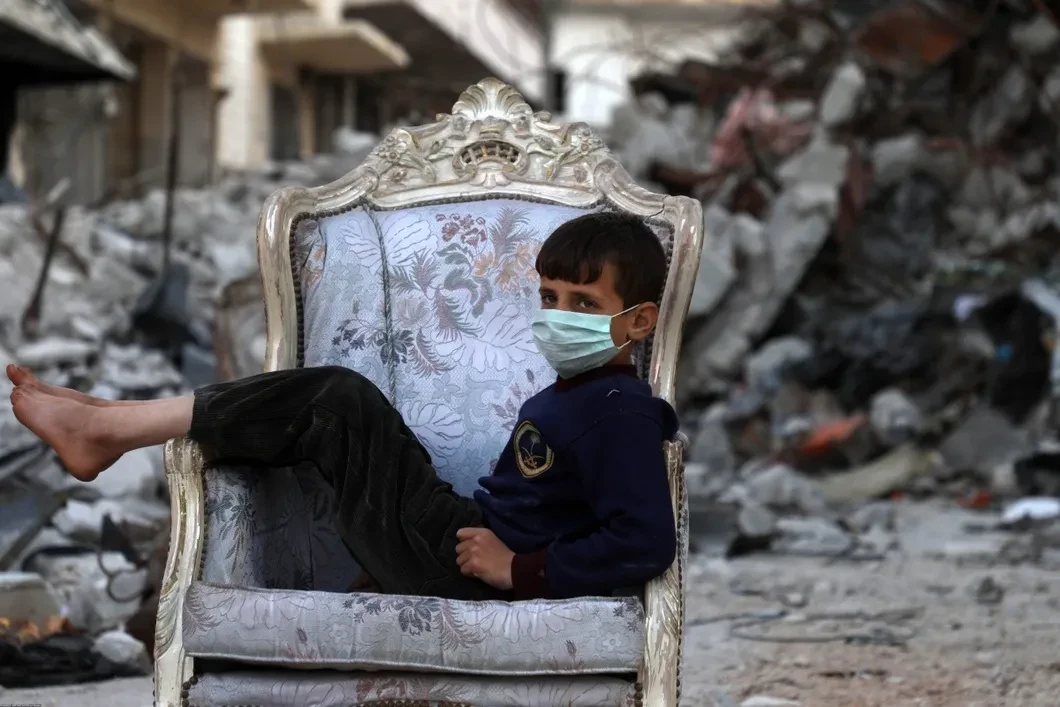
«После Второй мировой войны это одна из самых страшных гуманитарных катастроф на планете. Мы видели трагедию в Боснии, в Руанде, но то, что переживает Сирия, еще страшнее. Об этой катастрофе будет написано в учебниках истории», — считает господин Аталайии.
Российская сторона отрицает наличие гуманитарной катастрофы, созданной совместной операцией сирийско-российских вооруженных сил в Идлибе. Российские военные утверждают, что цифры, представленные Турцией и странами Запада, сильно преувеличены, в провинции вынужденно перемещены не больше 200 тысяч человек, из них 85 тысяч — в лагерях беженцев.
Expert commentary
& Nbsp
За разъяснениями по ситуации «Новая газета» обратилась в Управление ООН по координации гуманитарных вопросов. На наши вопросы ответил Йенс Лэрке, заместитель пресс-секретаря Управления ООН по координации гуманитарных вопросов.Сколько внутренне перемещенных лиц (ВПЛ) бежало к сирийско-турецкой границе в Идлибе?
С 1 декабря прошлого года боевые действия вынудили покинуть свои дома в Идлибе и его окрестностях 960 тысяч человек (примерно 81% из них — женщины и дети). Большинство из них оказывается в постоянно сужающихся зонах на севере провинции Идлиб у границы с Турцией и в прилегающих северо-западных районах провинции Алеппо.
Как ООН подсчитывает ВПЛ?
ООН еженедельно проводит оценку последних перемещений на северо-западе Сирии и на ее основе определяет объем экстренной гуманитарной помощи, требующейся на местах. При необходимости также проводятся специальные оценки.
В основе оценки положены первичные данные, собираемые сетью более чем из 100 учетчиков по всему северо-западу Сирии. Учетчики работают в НКО, финансируемой ООН. Новые данные с мест сопоставляются с предыдущими данными, сообщениями о передвижениях и прочими информационными источниками, чтобы оценить численность людей, покинувших свои дома на прошедшей неделе.
Ситуация на северо-западе Сирии остается нестабильной, и оценка делается исходя из имеющейся информации. Оценка перемещений помогает организовывать доставку гуманитарной помощи в нужном количестве и туда, где в ней нуждаются наиболее уязвимые люди.
Сколько примерно людей не охвачено гуманитарной помощью?
ООН наращивает свои объемы, и только в марте на северо-запад Сирии были отправлены 444 грузовика... Они предназначались более чем 1,8 миллионов нуждающихся женщин, детей и мужчин. В феврале мы выслали 927 грузовиков с помощью, в январе — 1227.
Разные агентства обслуживают разное количество людей. Например, ВОЗ и ее партнеры ежемесячно организуют поставки для 800 тысяч человек на северо-западе, но потребности превышают их возможности. Всемирная продовольственная программа (ВПП) обслуживает более 1 миллиона человек в месяц, включая почти 500 тысяч гражданских лиц, которые были перемещены совсем недавно.
On the verge of survival
Омар, медиа-активист из Идлиба, уверен, что хотя часть беженцев возвращается, многие не вернутся домой. «В лагерях много людей из населенных пунктов, недавно перешедших под контроль режима. Они не верят режиму, их дома разрушены в результате бомбардировок, им некуда возвращаться, не на что жить. Люди живут в большой бедности, экономики нет», — рассказывает он.
Денег нет, работы нет. «Я говорил на днях с другом-стоматологом в городе. Люди приходят лечиться, но у них нет денег, чтобы заплатить за лечение. Для детей огромная проблема в образовании, многие школы разрушены, классы переполнены. «Раньше в классах было по 60 детей, теперь будет по 100. У детей страшные психологические травмы».
Идлиб — сельскохозяйственный регион. «Раньше здесь выращивали оливки, делали масло и продавали его за рубеж. Сейчас масло продавать некуда. Поэтому люди если могут, просто поддерживают свои деревья, чтобы сохранить их живыми». После последней военной операции немногие остававшиеся бизнесмены свернули дела и уехали. Сейчас регион выживает за счет гуманитарной помощи и благодаря деньгам, которые его жителям отправляют родственники из-за границы.
«Людям нужна защита, они должны иметь возможность добровольно вернуться домой, когда там будет безопасно, а для этого требуется политическое решение конфликта в Сирии, чтобы было гарантировано право на жизнь, безопасность и возможность трудиться», — считает Лубна Алканавати.
Россия пересмотрит позицию по Сирии после
Последнее время звучат экспертные мнения о том, что экономические последствия пандемии и снижения цен на нефть могут подтолкнуть правительство России пересмотреть позицию по Сирии и сократить столь дорогостоящую военную и прочую поддержку Башару Асаду. Уже год назад опросы Левада-центра показывали, что 55% россиян желают завершения военной операции в Сирии. Сегодня, когда российский бизнес чахнет, а многим семьям скоро нечем будет кормить детей, боевые «успехи» на международной арене уже не кажутся столь значимыми.
Чем тратить деньги на участие в военных операциях, разрушающих чужие дома и больницы, не лучше ли вложить их в благоустройство своих?
«Передайте, пожалуйста, своим читателям, что мы не террористы, это было выступление людей против диктатора, — попросил один из моих собеседников-идлибцев. — «И мы пострадали от “ан-Нусры”, может быть, больше, чем от Асада и от России. Поэтому мы призываем россиян быть солидарными с нами и остановить машину уничтожения».
Другой собеседник спросил: «Почему российское правительство решило, что такое вмешательство в эту войну — в его интересах? Ведь народ Сирии не воевал с Россией, почему же они воюют с нами? Ни у кого здесь не было причин быть врагом России, а теперь они есть! России лучше перестать удерживать Асада силой и дать возможность народу Сирии самому определить свое будущее».
Россия, Турция, страны Запада и Ближнего Востока сейчас заняты своими внутренними проблемами. Экономические последствия пандемии заставят всех умерить амбиции на международной арене, что дает прекрасный шанс основным игрокам по-новому взглянуть на проблему решения сирийского кризиса, вернуться к политическому процессу и дипломатии.
А нам, гражданам России, дает возможность всерьез задуматься: зачем нам эта война?