
Translated material
EU FIREE EURGENTS
The threat of falling the Economy of Europe by 15% makes us look for a joint way out of the crisis
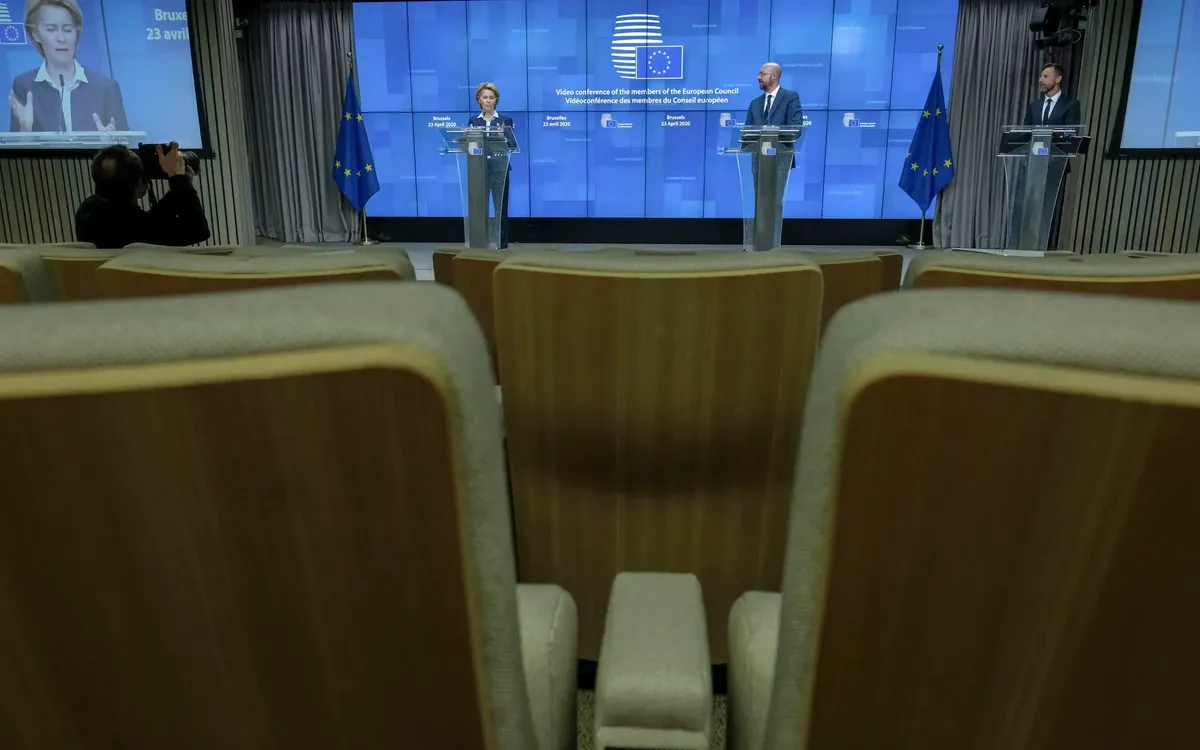
The heads of state and governments of the EU countries at the online saammy on Thursday approved the “road map” and a package of urgent measures to withdraw from the crisis of coronavirus. For the first time, they set the goal of creating the European Restoration Fund, but still did not agree on how it will be, how to finance it, and especially by what rules to spend.
The European Union has no money as such. The union budget is about one percent of the total gross national income of the EU. In any case, we are talking about the redistribution of funds between countries, regions and sectors of the economy. How many sovereign member states will give for redistribution, Brussels receives so much at his disposal.
Today the problem is that Europe was covered by an unprecedented crisis in scale, all members of the Union suffered from it, and a deep, difficult recession has to be ahead. There are not enough existing tools.
The fact that the summit is approved for execution is a package of "fire" measures. It was prepared in two weeks on behalf of the heads of state and governments by the Ministers of Finance of the Eurogroup. Not only 19 eurozone countries participate in crisis discussions, but also those EU members in which national currencies remained.
The package includes three safety programs totaling 540 billion euros:
for states - for the costs of combating directly against the epidemic;
for private enterprises - in the form of loans of the European Investment Bank (EIB) for restoration;
To maintain employment - through a program of subsidizing salaries with a incomplete working day (Sure).
The head of the European Commission Ursula von der Lyan promised the leaders of the Union members that this mechanism would begin to work on June 1.
The idea to create a European recovery fund aimed at the future was the fourth point of the proposals of the Eurogroup, but came across deep disagreements between the conditional “Severor” and the conditional “south” of the European Union.
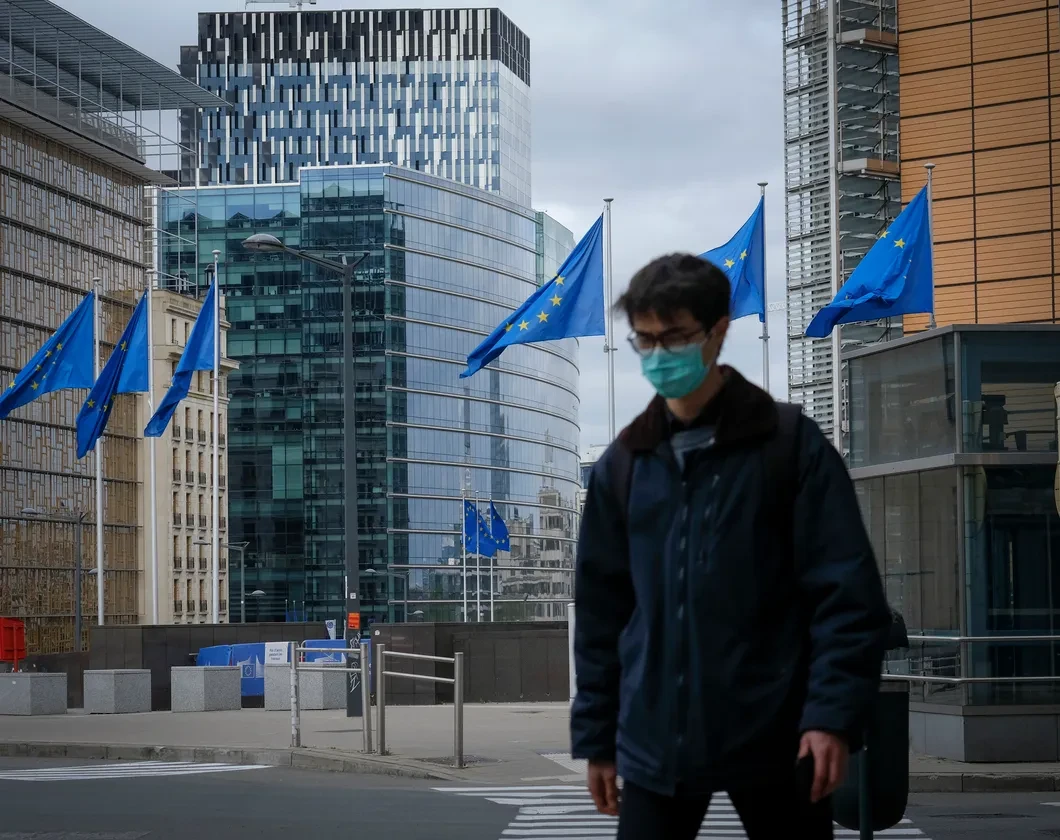
France, together with Italy and Spain, lobbied for the “socialization of the public debt” through the issue of Eurobonds, debt obligations guaranteed by the European Union as a whole. Germany, the Netherlands, Austria and others opposed.
The decision to create a recovery fund may be a compromise. Disagreements remained, but analysts in Brussels are inclined to the fact that at this summit Europe approached the coordination of a package of economic measures that would soften the blow of the coolest recession, which its history remembers.
Ursula von der Lyain noted that even in the Second World War there was no such deep reduction in production as expected this year.
Only at the time of great depression did they see something similar.
The diplomats who followed the wilderness of European leaders say that Christine Central Bank, Christine Lagard, made a fracture in the mood. She warned that the eurozone economy risks risking 15%this year, and reinforced it with gloomy data.
The longer, gentlemen, you will come to each of his own, the more the risk of one day to state that you did "too little, too late." As, however, exactly ten years ago in the case of Greek duty.
Against the backdrop of terrible warnings, Lagard, all leaders seemed to begin to discuss the plan of creating a fund in the amount of one to one and a half trillion euros, probably including both the credit shoulder and real money.
They also agreed that the situation does not tolerate delay. Therefore, some “red lines” seemed to be blurred. But important details are unclear, such as the balance between loans and direct transfers, grants to the injured regions and industries. For complete coordination, maybe a personal meeting is required, as usual, at one oval table.
Obviously, Angel Merkel played its role in this change in the mood of the European Council members. She still does not accept the socialization of debt. Nevertheless, she confirmed that “in the spirit of solidarity” Germany would have to pay “much more” to the EU budget during the “limited period”. Because significant investments will be needed.
The European Commission should clearly determine how this recovery fund will look taking into account the average financing needs and which areas of the economy can most from the crisis, the Chancellor of the Federal Republic of Germany added.
Even one of the most active tenors of the Southern Camp, Portugal Prime Minister Antoniu Kosta this time appreciated the position of Merkel as “open and constructive”. According to him, four countries were categorically against the inclusion of any grants in the recovery plan, but Germany was not among them.
The famous opponent of financial generosity-Prime Minister of the Netherlands Mark Rutte is quite conciliatory commented by the results of the summit.
In Europe, there are jokes about the stingy of the Dutch, but they pay the largest contributions to the EU budget per capita.
“The influence of coronavirus on the EU is huge, including economic,” he admitted on Twitter. “Based on the proposals of the European Commission, we will constructively work on a joint strategy for the recovery stage tied to a long -term budget.”
Emmanuel Macron confirmed the disagreements between colleagues, in particular, regarding the funding of the fund and the payment of grants or loans from it, giving an unconditional preference to grants. At a long press conference, he spoke about the importance of a pan-European response to a crisis, strengthening the “strategic autonomy” of European countries, and the restoration of industrial production in Europe.
Italian Prime Minister Giuseppe Conte was surprisingly very pleased with the “great progress” at the summit. At a very short press conference, he said that the efforts of Italy, along with eight other countries of the South, were not in vain.
The decision to create such a fund was unthinkable a few weeks ago, and this tool will make a European response to the crisis more effective.
Prime Minister Pedro Sanchez with the mouth of the head of the Foreign Ministry said that he liked the “change of tone” in the European Council, and noted progress on the way to create a recovery fund.
Leaders instructed the European Commission to determine the needs of regions and sectors, to quickly submit an offer about stimulating funds that may be associated with the EU budget for 2021–2027.
“Of course, there will be a reasonable balance between grants and loans, and this is a matter of negotiations within the group,” von der der Layen said at a press conference. According to her estimates, the contributions of countries to the union budget within two to three years will need to be raised to the level of about 2% of GDP instead of 1.2%.
According to her, all EU countries, together with the EU institutions during the pandemic, have already mobilized almost 3.4 trillion euros to support the economy. In fact, in this amount, there are 2.45 trillion euros in this amount, only 940 billion institutions for the EU institutions.
In the allied institutions with resentment, they perceive the widespread opinion that the EU disappeared behind the states that constitute its states, as soon as the pandemic broke out.
“Given how the EU is arranged, it is not surprising that at the very beginning of the crisis national decisions prevailed. Healthcare belongs to national competence, and the ability to quickly act much higher at the national level than in the European. Nevertheless, many are disappointed, ”wrote the head of allied diplomacy, Josep Borrel, in his blog.
And at the first stage, millions of masks were sent from France, Austria, the Czech Republic to Italy and Spain (much more than from Russia or China), the hospitals of some EU countries accepted patients from others, and Italian had arrived in Italy.
The second stage began quite soon: joint purchases of medical materials and equipment, establishing supplies across the internal borders, joint work on the vaccine and medicines, redirecting hundreds of billions of euros of budget money and connecting the European Investment Bank. The EU and its members organized the return of their citizens who were stuck abroad to the homeland of half a million.