
Translated material
After the crown
How the world in which we live will change. Inventory of expert scenarios
Any global cataclysm and even its expectation is a fertile time for masters of forecast. Coronacrisis is no exception.
The range of grades of the world “after the crown” by respected political scientists, economists, culturalists, sociologists and other experts, prone to applied futurology, is wide and often contradictory. As, however, with doctors with biochemists. What is understandable - after all, in the modern world we are faced with a similar infection for the first time. And it is not only clear not only how to deal with her and save people today, but also to expect from her tomorrow - including how it will affect the life of mankind in all its diverse manifestations. Moreover, not all experts are free in these assessments from political and ideological addictions - some of them are ready to see in the image of the future what they want to see and try to establish their own road signs on the alleged historical forks.
Nevertheless, we decided to make an inventory of expert assessments and find out what prevails in them. For this, we, firstly, selecting opinions, got rid of obvious freaks, conspiracy thes, political speculators and just fools with degrees. Secondly, they made a pool of more than two dozen experts from various countries adhering to various political beliefs and belonging to different scientific schools, but equally respected and reliable. And, thirdly, all this was thoroughly mixed, summarized.
In the search for the right people and thoughts, high -quality domestic and foreign media helped us, which were concerned about the publication of expert opinions. As well as serious magazines such as Foreign Affairs or Russia in Global Policy and serious sites such as Carnegie.ru or ECFR.EU. Our task is not to present versions of specific visionaries separately (they have already done this, publishing their articles and opinions in various sources), and what remains after familiarizing themselves with them. Briefly and by points.
Will there be cool changes at all?
There are discrepancies in this key issue. The vast majority speaks of the "New World" after coronavirus as something, almost indisputable. Like, everything will change - and geopolitical layouts, and security priorities, and attitude to globalism/anti -globalism, and the structure of employment, and the habits of people, and all, everything, everything. Here they often resort to the historical experience of former cataclysms (epidemics and wars - both medieval and twentieth centuries), which radically changed the world order, cultural codes and people themselves.
There are opinions (there are fewer of them), which in principle will not change anything . Here they will find the secret of the magic vaccine, and after a few months everything will settle down, calm down and return to their circles. After all, human nature will not change, and the system of existing economic and political interests will not go anywhere - it will prevail.
The “mid -” point of view is much more impressed by me that the current crisis will be not so much a turning point as, according to Richard Haas ( the head of the Council on International Relations, the USA ), the “intermediate station to which the world has been moving over the past few decades.” The pandemic only brutally revealed and exacerbated those trends in the transformation of the world and human behavior, which were already related and began to manifest itself in a specific socio-political life even before the current crisis. However, the speed of these changes will be powerfully spurred by the crisis.
That, in the end, the current world will undoubtedly seriously change, and, much faster than with a calm evolutionary process.
The fate of globalization
Most of the researchers believe: although coronavirus and inflicted a serious blow to the fruits of globalization (curtailing contacts, the closure of borders, the decay of international production chains, etc.), although this is in fact “anti -globalization virus” (Ivan Krastev, chairman of the Center for Liberal Strategies, Bulgaria ), but by and the globalization will not go anywhere ” (Peter Ratland, Professor, Professor Ueslian University, USA ). She is in the nature of capitalism, which strives for expansion, expanding markets and minimizing costs. The pandemic, which is rapidly developing on all continents, demonstrates the reality of the existence of a globalized world. But he is still one thing: global challenges do not find adequate global answers . This is a consequence of the unsatisfactory level of global management, the inability of the current international and supranational institutions to effectively respond to global challenges. In the words of the same Mr. Haas,
“Although the concept of“ international community ”is used as if the phenomenon implied by it already exists, in reality it is largely ambitious-declaring.”
Attempts to make it real and effective is one of the main tasks for the future. Although, based on the current geopolitical realities, preserved national egoisms and the rather mediocre quality of the ruling elites, this will be an extremely difficult task.
Another task - for corporations and governments - the search for a safer ratio of the benefits of the global division of labor and maintaining the reliability of some supply chains. According to the famous Serbian-American economist Branko Milanovich, if the crisis and related problems with the movement of people, goods and capital will drag out longer than a year, globalization may begin to collapse. To the crisis and the lack of an adequate supranational reaction to it will be “used to it”, and influential politically and economically interested groups will appear, calling for a higher level of national self -sufficiency. On the principle of "albeit more expensive, but more reliable."
What about the world order?
Here is the same initial assessment, separated by most experts: the crisis does not so much change the world as it enhances what has already been outlined in international life before it. And these changes are led to a change of world order . The main features: the gradual departure of the United States from world leadership (and for internal reasons, and because others have risen); the transition of the increased China to active global policy; The weakening of the European Union as a center of force with the increase in contradictions between member countries. Not only the growth of China’s influence in the international arena is expected, but in general, a certain displacement of centers of influence from west to east. And all this against the background of the already begun and growing American-Chinese confrontation. Such a composition allows, for example, Dmitry Train ( director of the Moscow Center of Carnegie, RF ) talk about the “new bipolarity”-this time the Chinese-American. It is these two countries that will become the world “Higher League”, which in the dynamics of their relations of rivalry will determine the main parameters of world policy. In their economic, technological, as well as political confrontation, other countries will inevitably be involved, in particular members of the EU and the countries of the Asia-Pacific region.
The real role of Russia in the world arena will continue to decline, and the task will be more acute in front of it not to be in the train of Chinese interests in the role of the younger “strategic partner”.
Western experts also see the growth of problems within the transatlantic alliance. The obvious lack of “coronavirus” cooperation between Europe and the United States will aggravate the distrust that has already arisen under the presidency of Trump. As Jeremy Shapiro noted ( director of the European Council for International Affairs ),
“Europeans and Americans will remember that when the alarm was sounded, we were not together. We were “others” for each other.
Among the other consequences of the crisis, experts note a high probability of increasing the number of so-called Failed States -failed, weak states that cannot be able to overcome the fall of the economy due to the coronaviral crisis.
According to the Russian academician Viktor Poltirovich, coronacrisis demonstrated the meaninglessness of "traditional geopolitics." National security cannot depend only on military potential, because the pandemic cannot be overcome by the power of weapons. The current attack is, along with other already known global challenges, an additional argument in favor of international cooperation to eliminate the current colossal gap in the welfare of peoples and their access to modern medicine. This is in the vital interests and countries of the Golden Billion - after all, the pandemias do not spare either the poor or the rich.
According to the former Minister of Foreign Affairs of the Russian Federation Igor Ivanov, humanity will have an acute struggle regarding the model of the new world order. “And the front line in this battle will take place not only and not so much between individual states and their unions, but within the states, since in each country there are both the defenders of the old and supporters of the new. In each society in the east and in the West there are politicians who are converted into a comfortable past, and politicians peering into an alarming future. ”
European Union and National States of Europe
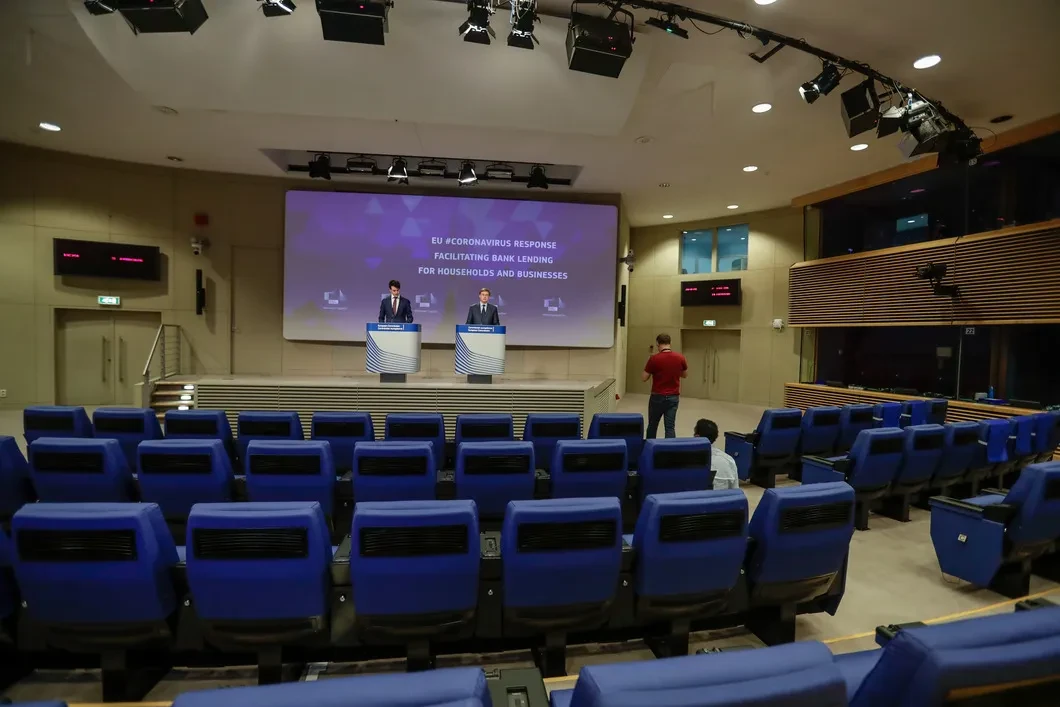
The assessments of the role and capabilities of the European Union in its current form are very skeptical - both during the pandemic and in the process of exit from the crisis . The opinion prevails that the EU in the face of the coronavirus as an organization failed .
“The European Commission looks like a frightened rabbit”;
“Each country decides and acts for itself”; “Coronavirus once again demonstrated the illusory nature of the boundaries, which will strengthen the role of national states in the European Union”; “Coronavirus will aggravate nationalism, but not ethnic, but territorial”; The inability of the European Union "to surpass sovereign national states has become obvious to everyone" - these are some of the assessments of European experts. The rest are in the same spirit.
However, this does not mean that the European Union is sentenced to death. On the contrary, we are talking about what it is critical - however, in a much more effective hypostasis. But this will require a change in priorities and the endowment of the EU legitimacy and resources to combat global challenges, which it does not possess today and that only member states have today. To change this, a review of a number of the basic principles on which the EU is being built will be required. The struggle within Europe around the world who has naked and aggravated by the crisis of the European Union reform , the search for the optimal ratio between the conventional “Brussels” and the member states, which will be accompanied by the clash of national egoisms with the need to strengthen general allied safety and efficiency-we will see all this in the “post-shaped” reality. The outcome of this struggle is incomprehensible today. The critics of the “Brussels bureaucracy” from the standpoint of “protection of sovereignty”, and supporters of the EU turning into a real center of force with adequate global challenges and powers, have plenty of arguments. And the way out of the deepest crisis does not leave time, and, in a situation where, as we have already noted, resources for this exclusively in the hands of national states and governments, they are unlikely to want to neglect these resources and wait for the EU reform, plunging deeper into the crisis.
Domestic political shifts
The main thing is that almost all experts note is an increase in the role of states and governments , inevitable when they are the main burden of the fight against coronavirus and leaving the socio-economic crisis. The inevitable, but also dangerous, because it is fraught with a potential threat of perception by citizens of restrictions of freedoms as a payment for personal security and economic restoration. This is aggravated by the erosion of the middle class - the main carrier of democratic values - under the blows of the economic crisis (the most powerful since the great depression), ruining small and medium -sized businesses and destroying social fabric.
A crisis that enhances the role of governments struck the liberal concept of a “minimum state”, which is fraught with a dangerous movement of democratic political systems towards authoritarian practices, and the economy to hospitalism.
Moreover, in the global public opinion, the idea that authoritarian China and the post-autocratic states of East Asia are more successful than the West than the West.
At the same time, many note that the pandemic and the economic crisis have returned confidence in the West to professionals, scientists, and the expert community that were one of the main political targets of populists after the 2008 crisis and the refugee crisis. Moreover, the mistakes of the populist leaders made by them during the fight against pandemia showed their failure as guarantors of security, and the centrist politicians, according to the Russian economist Sergei Guriev, “learned the lessons of the previous crisis and decided not to save money to help citizens who were affected by the crisis ... So it is quite possible that this crisis will lead to a significant reducing the influence of populists . "
Digital threats
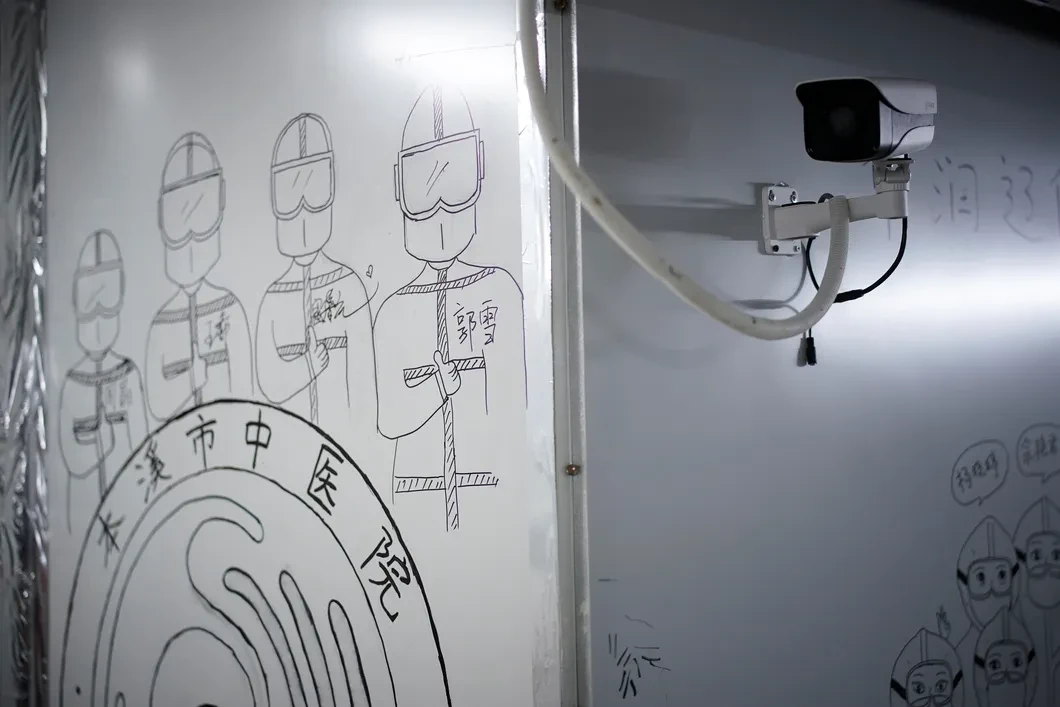
One of the central topics that are discussed in the context of totalitarian threats is “big data authoritarianism”*. * Naturally, as the main horror story - the experience of electronic control over the behavior of citizens during an epidemic in China, which can spread not only deeper (establishing control over all human activities and all its possible personal data), but also in breadth around the world. In general, according to the famous American microbiologist Nicholas Wright, "the intersection of these two shifts - epidemiological and technological - will determine the next few years of world history." And “if democracies cannot turn the future of global supervision in their favor, authoritarian competitors in the field of digital technologies will offer the world their model as an alternative.”
The main thing is to try to create such a model of digital control technologies that would not harm the rights and freedoms of a person and citizen.
This, in the context of a serious advanced promotion of the Chinese in this area, should become the main task of scientists and politicians of democratic countries.
The main direction of such efforts is in the situation of the epidemic to integrate the means of monitoring patients (real and the alleged) into the healthcare authorities, depriving the power bodies and the armed forces and thus avoiding their expansion control over the behavior of citizens to spheres that are not related to health and epidemiological risks, and interference in their private life.
New sociality
The most interesting and already promoted topic for today is the new forms of human life, which, having received forced development in the course of restrictions and quarantines, are likely to be seriously consolidated in the post -resistance future. Remote work, online education, reformatting trade and public catering systems in favor of delivery systems, taleticine growth and other digital joys are migrated with high speed from utopian novels to our reality, instilling new skills and a new lifestyle.
Passion for this topic often overshadows its serious social consequences - first of all, the upcoming tectonic changes in the labor market*. *
The world awaits a deep recession - according to various estimates, up to 20% of GDP falls - which will affect everyone.
It will be accompanied by bankruptcies of enterprises, an increase in unemployment, impoverishing a significant part of the population, increasing debt obligations of states and other troubles.
But there is only this - the “transition to the figure”, with all its promising progressiveness, will bring additional unemployment and reduction in demand for office and retail space, for transport, and public catering at first. For example, according to the rector of the tower of Yaroslav Kuzminov, this means that the number of office employees in the refusal of fanned backing can be reduced by a third. That the office real estate market will get cleared by about a quarter, and trading real estate is approximately half. All this will lead to a loss of work by a mass of people - they will become unclaimed and lose their usual lifestyle. Caring for them will inevitably fall on the shoulders of the state - otherwise, society faces social disintegration and violent social protests. As states, especially poorly, spent on the fight against coronavirus and the salvation of a falling economy, will cope with this challenge - a big question and the main task for the near future.