
Translated material
Parade, just what?
What happens to the pandemia in the army, the Russian Guard and the Ministry of Internal Affairs. Questions from the editorial office of "New"
On April 16, the postponement of the Victory Parade was announced. And on the same day, the sending from Alabino to the places of permanent deployment of more than one and a half tens of thousands of soldiers and officers, cadets and teachers of military schools, Sutovites and Nakhimovites, seconded in the Moscow Region to participate in training the military parade.
Returning to their military districts were isolated in the barracks and began to massively test and identify those infected with coronavirus. And on April 26, the military department distributed an official press release from which it followed that 2050 infected were recorded in the army.
Only numbers.
By April 26, 874 military personnel infected with coronavirus were identified in the military units and units of the Russian Armed Forces.
In military schools, 779 cadets and teachers found coronavirus.
In the Suvorov and Nakhimov schools, 192 infected were identified.
Another 245 infected were identified among civilian personnel.
According to the Department of Information and Mass Communications of the Ministry of Defense, at the end of March the so -called “continuous testing” began in the army, which made it possible to identify the infected ones. However, as far as the “new” is known, the tests are not “continuous”, but from military personnel those units in which coronavirus has already been discovered.
Of the more than two thousand coronavirus, 395 people were hospitalized (347 - in military hospitals, 48 in civilian hospitals). In serious condition - four, one is connected to the Ivl apparatus.
All the rest are on quarantine in barracks or military sanatoriums, since most, including the Suvorovites and Nakhimovites, have no symptoms of the disease.
The parents of the Suvorovites and Nakhimovites in early April addressed the Minister of Defense with a petition, in which they demanded to dissolve their children home at the time of the threat of coronavirus spread. But the military department considered that young men isolated in the barracks have less chance of infecting. Although experts thought differently.
For example, Doctor of Medical Sciences, Professor of the Higher School of Economics, Colonel of the reserve of the medical services Vasily Vlasov shared with his new vision of the situation:
- Today, the Suvorov and Nakhimov schools are not the ones that were 70 years ago. Children who have families, have parents, have a house, have a house. With the consistent pursuing policy of social disconnection/distance, of course, the fewer a group of people, the less the risk of the spread of infection. Finding in the barracks, that is, in a large team located in the Great Hall, as it was previously and as it is in some places or in the rooms of the hostel, is the maximum danger of infection. People in such conditions, and even more so, will certainly communicate. They will use common toilets, eat in large groups in the dining room.
The retired colonel of the Vlasov medical service and the historical example of the First World War recalled:
- The most catastrophic paintings of mass infection with the Spanish, diseases and deaths were precisely in the field camps, where conscripts were concentrated.
After a little over a hundred years, after training the Victory Parade in Alabino, the army steps on the same rake.
But the training of the Victory Parade took place not only in the suburbs. In addition to Moscow, the parades were prepared in cities in which the headquarters of military districts are located. Now participants in these training are also isolated from other military personnel.
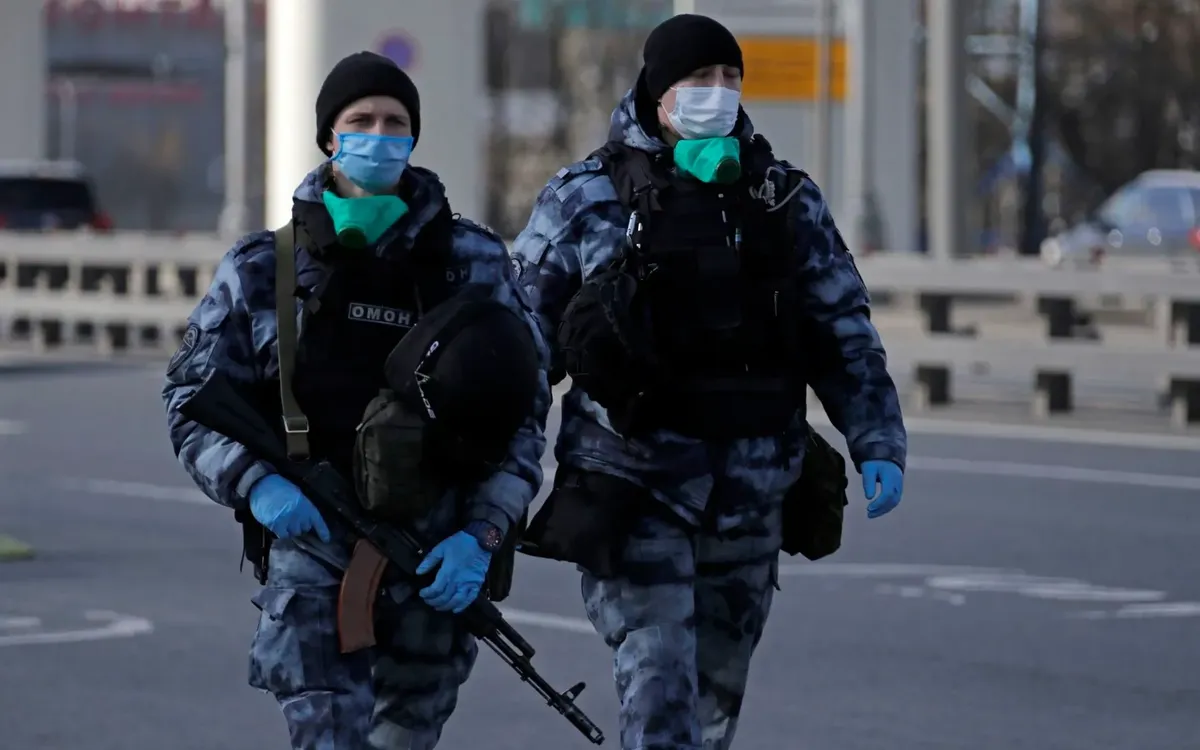
Speaking of the coronavirus in the army, one cannot help but recall the Russian Guard, where today there is not a single coronavirus In any case, there is no official information about any infected Rosgvardez. And this despite the fact that on April 17, by order of the head of the Russian government, Mikhail Mishustin of the Russian Guard, 1.3 billion rubles were allocated for the purchase of medicines and equipment (including IVL devices) for the treatment of infected and conducting preventive sanitary and epidemiological measures to prevent the spread of coronavirus.
Why there are no infected Rosgvardi, despite the fact that the Russian Guard patrols participate in measures to ensure the regime of self -isolation of the population, contact a huge number of people, one can only guess.
Either the personnel are more virus -resistant than the personnel of the armed forces, or the command of the Russian Guard hides information about the infected ones.
At the time of the release of this publication, “Novy” failed to receive official information about the coronavirius atmosphere in the Russian Guard, although we contacted responsible persons.
There is no general departmental official statistics and the number of coronavirus infected with coronavirus in the structures of the Ministry of Internal Affairs. Although information about the infected policemen began to seep. In the Sverdlovsk region, for example, 47 police officers are under medical supervision with suspicion of coronavirus. According to the deputy head of the regional department of the Ministry of Internal Affairs Alexander Postovalov, three police officers diagnosed the “coronavirus infection” already confirmed.
Koronavirus did not bypass the Department of Internal Affairs in the Western District of Moscow. As early as April 20, TASS distributed information about the death of the head of the Patrol and Posts Service of the Office. The disease caused by coronavirus infection was difficult, it was connected to the apparatus of artificial ventilation of the lungs. But the body of a sick officer could not overcome complications. The entire leadership of the police department in the CJSC was isolated to quarantine.
But single information breakthroughs about infected police officers are not idea of the situation with coronavirus in general in the system of the Ministry of Internal Affairs. We were not able to get official information about the total number of police officers who were infected by coronavirus for this material for the publication.
From the editorial office
Questions to the leadership of the Ministry of Internal Affairs and the Russian Guard
We officially pose questions to law enforcement agencies, the answers to which I would like to get not only to journalists, but to the whole society.
1. Question to the leadership of the Ministry of Defense. How appropriate was it to conduct training of the parade in military districts, when it was already clear - the danger of infection is too high, especially in a situation of increased crowding? Who made a similar decision?
2. Question to the leadership of the Ministry of Defense. What does the term "continuous testing" indicated in the official messages of the department mean?
3. The question of the leadership of the Ministry of Defense. Who and on what basis decided to not dissolve the students of the Suvorov and Nakhimov schools, according to what parameters were determined that such a decision is most effective in the prevention of coronavirus?
4. Question to the leadership of the Russian Guard. Why are there no reports about the number of infected and infected employees? What is the situation with testing people who directly face the civilian population and even carry out explanatory work on the streets?
5. Question to the leadership of the Ministry of Internal Affairs. Why is the general statistics on the number of infected and infected police officers not forgotten? What is the situation with testing people who directly encounter the civilian population, check documents and detention, carry out apartment detours, interview witnesses?