
Translated material
Professor Potekhin: "So far, Coronavirus likes a moderate climate"
How sustainable is the immunity of the emirable when it becomes collective? Do the virus have different "doses"? How does it affect different ethnic groups? The professor of the Department of Microbiology of St. Petersburg State University Alexei Potekhin answered questions from NT questions
Although a lot is already known about coronavirus, there are still many important questions, the answers to which can protect the health and lives of people. In particular, do the circumstances and place of infection affect the course of the disease - that is, what kind of “dose” of the virus the sick received? Are relapses possible, can coronavirus be ill with coronavirus again - and how serious? How much the severity of the disease depends on the human genotype, can it flow in different countries and in different ethnic groups in different ways-and does the current coronavirus are serious?
The NT correspondent was discussed with the professor of St. Petersburg State University, the author of the virology textbook Alexei Potekhin with these and other relevant topics.
"We must talk not about the dose, but about the number of viral particles"
NT: *Alexey Anatolyevich, does the viruses have a different dosage? Like a dose of radiation, for example? And if it happens, what is its influence? *
In fact, it is not correct to talk about the dosage, and not even about the dose of the virus, which can be obtained "at a time." It is correct to talk about the number of particles of the virus, which you can get in certain circumstances. It is clear that when the doctor is in the ward, where the sick are lying, the number of viral particles in the air is large (and they appear there, for example, with coughing, sneezing, conversation). Therefore, when he breathes, he with each inhalation receives a large amount of the virus inward. (About what threats the virus is fraught with for the doctors themselves - read here - approx. NT). If you communicate closely with a person who are ill (or go to the elevator with him, for example, or take care of him), then, of course, you also get a fairly large number of viral particles. That is, we are now talking about close contact.
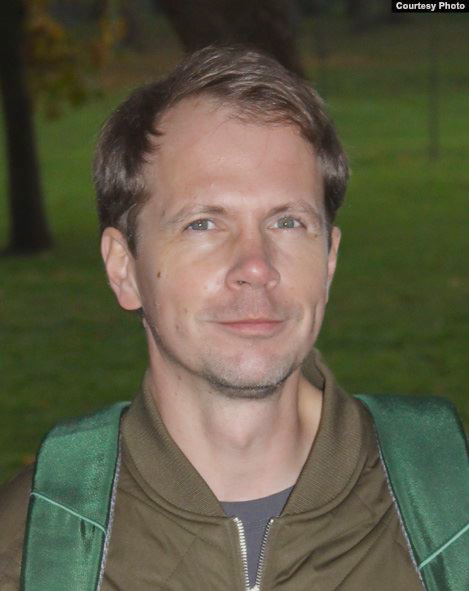
Professor, employee of the Department of Microbiology of St. Petersburg State University.
Co -author of the textbook on virology.
Professor Potekhin teaches at St. Petersburg State University
virology, parasitology and genetics
Microorganisms.
By the way, the same applies to the situation of your contacts in transport. A similar situation is fair, for example, for influenza. And if you keep the distance that everyone is talking about now, if you do not contact close with the sick, then if some particles of the virus can reach you, then there will be few of them.
And the more the virus falls at the same time, the more difficult it is to deal with it immediately. That is, for the success of the infection, it is critical so that the infection occurs through as many infectious particles as possible.
Could there be a consistent "receipt" of the virus? If a person is already sick, but in a mild form, without the manifestation of symptoms, can he work for the virus?
This will no longer be of importance, because as soon as the virus got into the body and began to breed in it, a much larger number of particles (right in the next few hours) are produced in the body than it can get from some external sources. Viruses multiply very quickly. Only one particle can get into each cage, and several hundred come out of it ...
Does the severity of the course of the disease affect the infection from?
All viral particles in their gene (nucleotide RNA sequence) may differ slightly from each other. And some will be slightly stronger, virulent*, and some slightly less virulent. But it depends not only on the properties of the virus, but also on your body too.
The more the virus falls at the same time, the more difficult it is to deal with it immediately. That is, for the success of the infection, it is critical so that the infection occurs through as many infectious particles as possible
For the outcome of such a combination - a severe or mild course of the disease - the genotype of the virus (i.e. signs of a particular virus encoded in genetic material) can be of great importance, as far as they are compatible with your genotype. Someone will be more stable, someone will be harder to get sick. So in fact with all diseases. We know that any infectious disease can affect part of the population so that some people die, and at the same time someone remains immune.
"We see that the virus does not mutter very quickly"
Is it possible to say that infection with the virus or the course of the disease will depend on the genotype or even nationality? Or are these topics too poorly studied?
Well, this will take time, of course ... Any studies associated with ethnogenetics, with the genetics of people belonging to different nations, require a very great time and very great statistics. Since for this you need to explore a large number of people. Theoretically, it may turn out that different nationalities have a slightly different gene variants whose products are involved in the interaction with the virus ...
Perhaps some peoples, because of their genotype, will be on average difficult to tolerate the disease. And others, on the contrary, will pass easier. But so far it’s too early to talk about all this. From the very beginning, there were those who said that the virus was striking, for example, only the Mongoloid race, but we quickly received evidence that it was wrong ...
Now the topic of different strains of the current virus is actively discussing. Can these strains have different effects on a person?
The strain in this case is a slightly vague term. In principle, each virus changes a little all the time. There are a lot of circulating options, of course, some mutations arise. They gradually accumulate. Even if we have an “ideal” case of a person infected with one particle, then at the exit, such a person will produce many particles that will differ slightly from each other. Most of these changes will not be significant, that is, they will not lead to a change in the properties of the virus. And only when we see that some mutations were fixed, and they lead to a noticeable change, we can say that a new strain appeared.
Perhaps some peoples, because of their genotype, will be on average difficult to tolerate the disease. And others, on the contrary, will pass easier. But while it’s too early to talk about all this
I follow the results of the research of bio -formatics that constantly check the new virus genomes. The data is supplemented every day, and we see that the virus does not mutate very quickly. That is, mutates at the expected speed for coronavirus. So far, it is impossible to talk about the fact that there have already been many strains, real varieties. Just a few days ago, the publication of Australian scientists on this topic appeared. According to this work, a mutation appeared that weakened the virulence of the virus. So, there are new stable strains that will circulate. Moreover, in reverse state, the virus cannot be returned after the mutation. But this does not mean that the source option as a result of such a mutation has disappeared, it is also preserved so far.
"There are no dramatic numbers anywhere in the hot regions"
So, it turns out that at different points of the Earth could the virus mutate in its own way?
The type of virus does not depend on the country. It’s just that mutations of viruses occur constantly, viruses are constantly changing.
That is, it does not matter where the person brought the virus from? For example, did he come with a severe uniform from Italy? Or with a lightweight form of "German"?
Not quite so. Since all the virus genotypes from each other are slightly different, we can assume confidently that they sometimes will differ from each other in manifestation. That is, it can be assumed that in Italy there were heavier options, and Germany is lighter.
But this does not mean that the picture is stable, carved on a stone. This is all constantly changing. And again, we will not be able to draw a demarcation between them. So far, there are many options from which already “stable” strains with stably “heavy” or “light” properties will rarely fall out.
On the question of the influence of different factors on the virus. Does the climate play the role in the spread of the virus, in its strength? Do we have enough data for conclusions?
According to the climate, of course, of course, there is not enough. Only a few months ago this virus appeared. But, of course, like everyone else, I watch how the situation in the world develops, and cannot but rejoice that in all countries of the tropical belt (third world countries) we do not see powerful outbreaks of the epidemic. Although it is clear that in India, for example, the situation would be very difficult, in Pakistan, in the countries of Central and Latin America. I'm not talking about Africa ...
In the countries of the tropical belt, we do not see powerful flashes. It is clear that in India, for example, the situation would be very difficult, in Pakistan, in the countries of Central and Latin America. I'm not talking about Africa
But we see that there are no dramatic numbers anywhere in the hot regions. That is, they are all close to the fact that we are still observing in Europe, and in Russia. Honestly, I do not think that these countries of the tropical belt hide the statistics of diseases. Although, obviously, they are not enough testing for the virus. But, it seems to me, in general terms, current indicators reflect the fact that in hot countries, where there is now really warm - the infection is not so cool. This does not mean that the situation there will not change. At the moment, it feels like the virus likes a moderate climate more.
"Immunity with pathogens works in the same way as the key with the castle"
I would like to discuss the topic of recovery and immunity. How much does the immunity have an immunity in a person who has become ill with a similar virus? As I understand it, it’s hard to talk about the current virus.
Indeed, unfortunately, we can still say little about this virus. Even an absolutely reliable test for the identification of antibodies in the body of the emirable has not yet been developed. That is, so far we cannot say - a lot of antibodies or a little. Are they always obtained. How effective these antibodies are ... all this information will accumulate for at least another six months.
But will any immunity be produced in any case?
From the field of general knowledge, any infectious disease, of course, causes an immune response. And there is a immune memory that this pathogen has visited the body. If the causative agent is not very variable, then it, this memory, can be preserved for life. Actually, vaccination is also based on this. Even when there was no pathogen in the body, but there were its antigens, these molecules cause an immune response. If our immune system met them, then when she meets a living pathogen, she will already know how to react.
Therefore, many vaccines give lifelong protection. Suppose, from hepatitis B and other viruses. The same scheme works with bacterial infections. But some bacteria and very many viruses are quite variable, which allows them to evade the immune response. Since the viruses are constantly changing, it is sometimes difficult for antibodies to respond to such forms. Immunity with pathogens of diseases works the same way as the key works with the lock: if the lock has changed a bit - the key is no longer perfect. However, the virus in any case will no longer be completely unrecognizable for protection.
No one will undertake to say that if a year old after a year meets this coronavirus again, he will not have symptoms of SARS. But a repeated infection should be easier
Therefore, at the next meeting with such variable pathogens, we can hurt, and symptoms can be observed. The same coronavirus infection sometimes takes place in severe form, but, for the most part, in the usual form of SARS. No one will undertake to say that if a year old after a year meets this coronavirus again, he will not have symptoms of SARS. But a repeated infection should be easier. The immunity that arose at the first meeting should be sufficient to prevent the virus from directly flourishing ... that is, we will be more likely, but, most likely, in a slight form ... If humanity is lucky, then immunity to coronavirus can be lifelong.
There are different opinions about how many people should get sick in order to form a conditionally “collective immunity”? In general, it matters, what number will be ill?
These numbers are known from epidemiology. For viruses that are not characterized by extremely high infection (and ours is just from this category, unlike measles or smallpox, for example), it is important that collective immunity is formed. For this, it is important that people "meet" with him or be ill. It is necessary that in the population it formed in about 60% of the total population. For comparison, in the case of measles or smallpox viruses, this number should be in the region of 90%.
If the virus has multiplied in a person’s population on such a scale, then at some point he does not have a high probability for new victims for new and new infections. That is, there will be few people who have not met this virus. And then it will never take the character of an epidemic or even outbreak again.
"We cannot predict in advance which virus will come to us"
Today, the circumstances of the appearance of the current coronovirus are already known. This is due to the peculiarities of the use of exotic animals, the traditions of selling living goods ... Is it possible to deal with the root cause of the appearance of this and other viruses?
It is impossible for a person to intervene in a population of wild animals, it will not work. After all, you can’t shift all the bats, you won’t prick for vaccination, especially since the development of a vaccine is very expensive ... And the viruses will still find a way to preserve. Yes, and no one will monitor animals ... That is, you can’t be saved by nature, you will not get away from it.
What can humanity do? Here the Chinese, I think, already understood, because this is the second case for them - after the outbreak of atypical pneumonia of 2003. Fortunately, she was localized quickly, but both epidemics arose in animal markets, where a variety of animals can meet. This in real nature can almost never happen ...
Because in order for the virus to jump from one owner to another species, special circumstances are needed for this. I need direct contact, the conditions for which are just in such markets. When people are aware of the danger, maybe they will begin to regulate this activity.
Of course, we are the same animals for nature. We have achieved great progress, but we have not set ourselves over nature ... And all animals have viral infections, and all animals are exchanged in viruses in one way or another
In general, trade in wild animals is also a potential source in order to catch their diseases. They will proceed harder with us than that of the original owners. This concerns, including exotic national cuisine in restaurants - both Asian and African, Chinese cuisine, for example. I think now all these problems will become more understandable to humanity.
Correctly, I realized that humanity as a species will always be subject to virus attacks?
Yes, of course, we are the same animals for nature. We have achieved great progress, but we have not set ourselves over nature ... And all animals have viral infections, and all animals are exchanged in one way or another ... With all the technologies, we can fight the viruses only in fact, we cannot predict in advance which virus will come to us, and prepare vaccines and optimal medicines before its appearance ....
Naturally, we accumulate knowledge about nature, research on viruses is underway. Some fall into a range of interests of scientists and doctors, some remain in the background, but this does not mean that they are non-hazardous or uninteresting ... Nature is much richer than a person, with all the desire, can explore.
"Nature taught us a good lesson"
What conclusions can we draw from this pandemic?
What seems to me one of the main lessons for humanity is that it is necessary to maintain fundamental scientific research. Now the virus of bats has come. Who can initially be interested in the virus of bats, the heart on the heart? A person is primarily engaged in viruses of pets, plants important in agriculture. Who is interested in diseases of exotic animals?
Or, even more so, viruses that do not cause even in wild animals pathologies? But if no one will engage in them “in advance”, every time we will face them as for the first time, if they suddenly cross the species barrier and get into the human population .... Just to find out who granted us this time, at least months will be lost, and during this time we will lose people!
Officials and departments that are engaged in financing science always imply the principle: we gave you money today, and tomorrow we want your discovery to be in practice. And so it does not work, applied directions are one -day, of which, in addition to solving a specific problem, nothing will grow in the future. First of all, it is necessary to accumulate general information, knowledge of mankind about nature in general, and on the basis of this knowledge, we will be able to make applied development if necessary.
Мои друзья-генетики говорят, что уже повысился интерес к фундаментальной науке. Вы тоже ожидаете подъема?
Я надеюсь, что отношение государства и отношение общества изменится, и интерес к науке в целом вновь появится. Природа преподала нам хороший урок. В вирусологии есть хороший пример, на котором я показываю студентам роль фундаментальной науки. Когда в Европе и Америке была эпидемия СПИД (1980-е годы), очень много людей погибло. И ушло примерно 15 лет, чтобы подобрать препараты, позволяющие остановить развитие этой болезни, а сейчас ВИЧ-позитивные люди живут нормальной жизнью, так же, как если бы вируса в их организме не было.
Интенсивно исследуя вирусы, многие из которых не представляли опасности для человека, исследователи сделали колоссальный прорыв, который впоследствии позволил целенаправленно разрабатывать препараты против СПИД
Но, хотя это и заняло около 15 лет, тем не менее справились достаточно быстро, если учесть, насколько коварный и сложный этот вирус. Why? Потому, что примерно за 10 лет до начала эпидемии СПИД у других вирусов, в том числе вирусов, поражающих водоплавающих птиц, открыли и изучили обратную транскрипцию. Благодаря этому исследованию ученые нашли слабое место таких вирусов — если заблокировать обратную транскрипцию, то вирус не может размножаться. А в клетках человека обратной транскрипции нет, то есть терапия не влияет на организм человека.
Вот так вот, интенсивно исследуя вирусы, многие из которых не представляли опасности для человека, исследователи сделали колоссальный прорыв, который впоследствии позволил целенаправленно разрабатывать препараты против СПИД. За открытие процесса обратной транскрипции была присуждена Нобелевская премия. Если бы это открытие не состоялось до эпидемии СПИД, человечество потеряло бы еще годы…
О хрониках борьбы с эпидемии в России и во всем мире читайте здесь
Фото: depositphotos, rferl.org
* степень способности данного инфекционного агента вызывать заболевание или гибель организма.