
Translated material
Sakhalin model
The regions with a low population density relied on mass testing. It is they who have a chance to take the epidemic under control in Russia
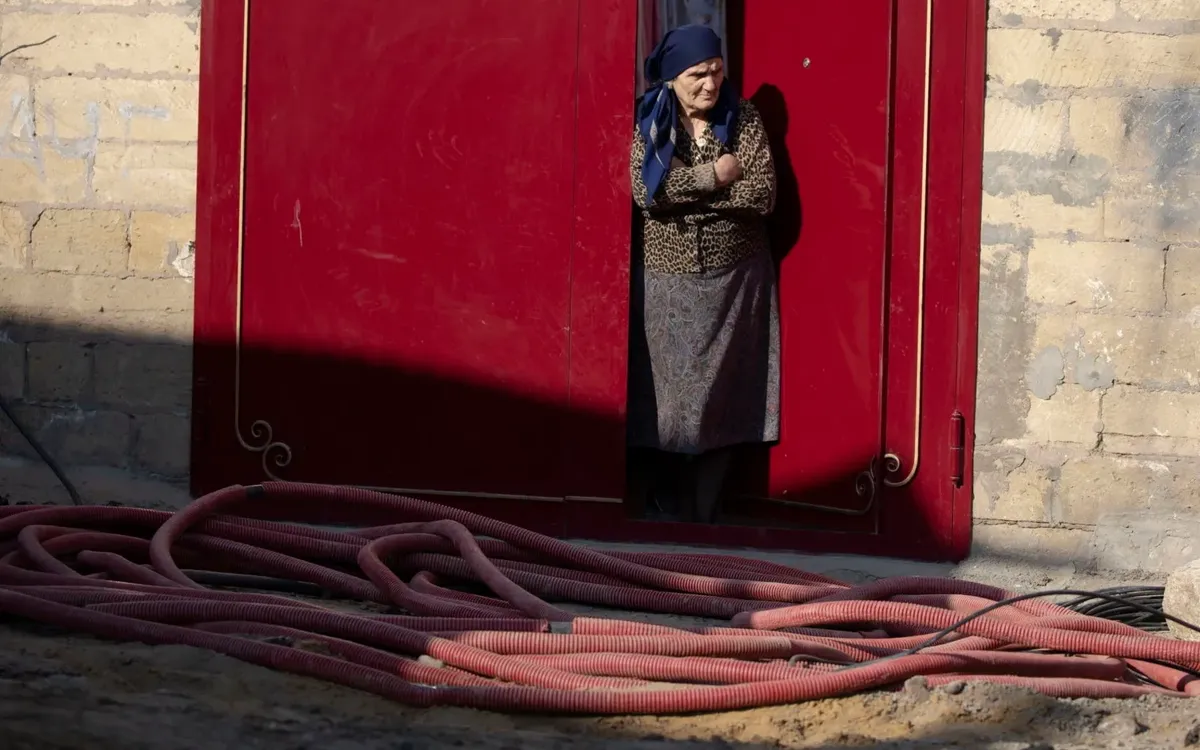
On April 28, the head of the administration of the rural settlement of Tebekmakhi (Akushinsky district of Dagestan) Majid Majidov posted a video message to the government and the head of the Republic Vladimir Vasiliev on social networks. “Of the 2150 people living in the village, including 770 pensioners, more than 1000 people are sick of a cold-viral disease. 23 residents of the village were hospitalized in the Central District Hospital, another 65 people are on outpatient treatment. From March to April, 12 people were buried in the village, while ordinary mortality - 15-17 people a year. From April 20 to 27, 8 people were buried, sometimes two funerals per day. ”
“It is impossible to look at it. It is impossible to come to terms with our powerlessness, ”said Majidov.
The head of the village was supported by residents, including three deputies of the district assembly (one of them made a video message lying in bed - he himself is sick). According to them, an emergency has developed in the village, for 2000 residents - one district doctor and three nurses, there are no medicines in the village or in the district center, as well as in neighboring areas. “We have to travel to Makhachkala for medicines and get them in roundabout ways there.”

At the same time, the drugs have to go directly to the patients themselves.
The villagers have no way to take tests, pass fluorography, the line for which must be trimmed in the Central District Hospital for 5-6 hours.
We contacted Majdidov morning on April 29. He said that in the village no one has still taken tests for coronavirus.
At the same time, the head of the village repeatedly turned to the leadership of the district, to the republican departments. On April 26, an official delegation, headed by the First Deputy Minister of Health Salman Akhmedov, arrived in the village. It was decided that the rural kindergarten would be converted for a hospital for patients, where they would be tried to isolate from healthy villagers.

However, the head of the village said in a video message that these measures would hardly save the situation, and it is best to still hospitalize the patients to the district hospital or other hospitals of the republic, where they will be provided with at least some qualified assistance.
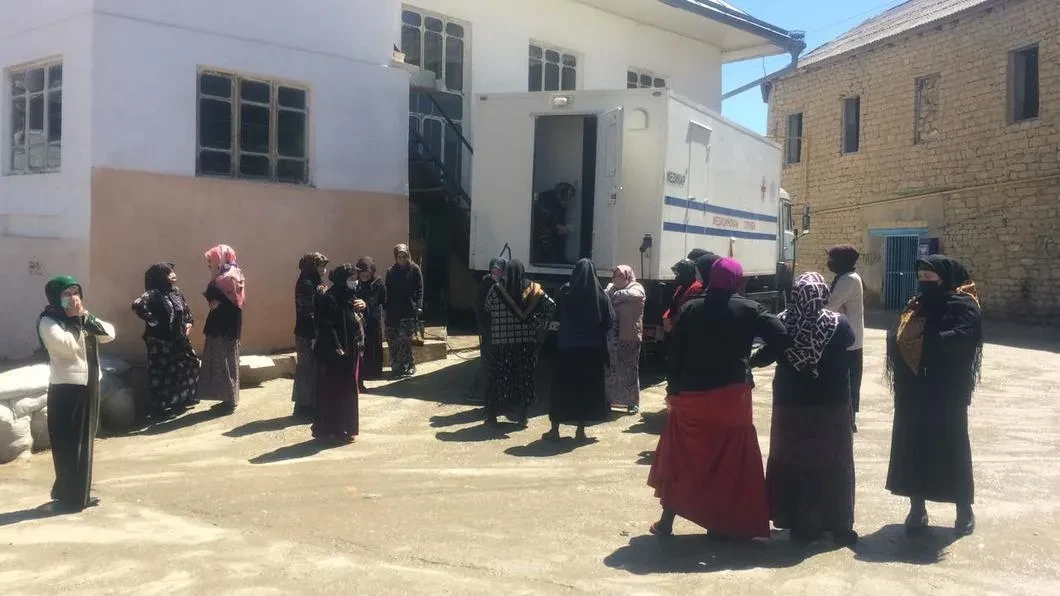
On the afternoon of April 29, it became known that the republican authorities finally reacted to the video message of Majidov, including due to the noise raised by Dagestan bloggers. A mobile medical center went to the village, from residents they finally began to take tests for coronavirus infection and examine the presence of pneumonia, for which a fluorograph was brought to the village). In the district hospital for 85 sick residents of Tebekmakhi, beds were allocated.
The operator of the hotline of the operational headquarters to combat the coronavirus infection in Dagestan explained to the “new”, why in the village of Tebekmakhs with such delay began to be tested for coronavirus.
QUOTE
Commentary of the hotel headquarters operator to combat Covid-19 in Dagestan
“Coronavirus tests the district doctor at the place of residence. Testing is carried out if there are any symptoms of the disease or a person had contact <with infected>.
So it was, while the doctors themselves did not get sick, the doctors themselves do not have any protection, they are sick, and there is no one to take smears. We don’t even have time to come to the calls to come to the calls, because their <calls> are too many, and all those who called the ambulance> situation.
We have no resources, no protective costumes, nothing. As far as I know, even laboratory assistants in the anti -chum center ( the Dagestan anti -chum station of Rospotrebnadzor. - E. M. ), where tests are made, are sick. ”
The number of tests for coronavirus infection in Dagestan over the past week increased on average from 800 to 1000 per day, but such testing rates clearly do not keep up with the detection of patients with acute respiratory viral infections or pneumonia. A sharp increase in community -acquired pneumonia is fixed in many areas, cities and villages of the republic.
STATISTICS
Data of the municipal operational headquarters of Dagestan for April 23
In the Kizilyurt district, five local residents died with a diagnosis of “communal pneumonia of the lungs”, with a diagnosis of Covid-19, one person died. In total, nine coronavirus patients and 10 people with signs of community -acquired pneumonia are registered in the area. In the region of 14 sick SARS, including four children.
In the Kizlyarsky district in the city hospital Kizlyar (district center) with a diagnosis of “pneumonia” there are 152 people.
In the Khunzakh district, 69 people were hospitalized with the same diagnosis on April 23. In total, 117 pneumonia are revealed. Koronavirus was confirmed by 17 local residents.
In the Levashinsky district, on April 23, the chief physician of the district hospital Patimat Abdurashidova announced the hospitalization of three by the coronavirus of the inhabitants of the Akushinsky district. According to her, patients with pneumonia go to the medical institution daily.
In the Suleiman-Stalsky district , according to the local operational headquarters on April 23, patients with coronavirus were not detected. But four people are hospitalized with pneumonia.
On April 21, 19 patients with a positive test on Covid-19 were in the city hospital in Buinaksk . Two of them were in intensive care. Two patients who were diagnosed with coronavirus died. With suspicion of Covid-19, 63 patients were in the hospital on April 23, 74 patients with a diagnosis of pneumonia.
The number of patients with pneumonia exceeds coronavirus patients. People simply do not live to test.
On April 29, Rospotrebnadzor published the third consolidated report “On testing for a new coronavirus infection in the regions of the Russian Federation”. Over the past week alone, the number of studies on the COVID-19 in Russia increased by 1 million 100 thousand tests (a total of 3.3 million per reporting day). In this regard, we, at first glance, strictly adhere to the recommendations that were announced on March 25 by the General Director of the World Health Organization Tedros Gebreisus.
Based on WHO recommendations (and not only), mass testing is one of the main ways to control the spread of the virus. And in this indicator, Russia has been taking second place in the world for two weeks after the United States.
However, all three reports published by the RPN with a step in one week demonstrate a skew in testing in a country that indicates a dysfunctional situation with tests in regions where there is a stable increase in new cases of infection.
The leader in the number of tests for 100 thousand people in Russia is still the Sakhalin region. Also in the ranking of the TOP-15 regions-the Yamalo-Nenets AO, Kamchatka Territory, Chukotka, Yakutia, Buryatia and other regions, where the population density is the lowest in Russia.
From the second RPN rating of the TOP-15 regions that already lead the absolute number of tests (the Sakhalin region also appears in this rating in 13th place), it follows that they accounted for 645,155 tests, that is, more than half of all the studies of Coronavirus in Russia in a week. And even of the 15 regions of the second rating, only Moscow, Moscow Region, St. Petersburg* and the Krasnodar Territory are included in the top 15 of Russian regions with the highest population density.
- In this case, we do not take into account the indicators of Moscow, the Moscow Region and St. Petersburg because of their specificity and differences from all other regions of Russia, due to which they are not only leaders in testing, but also antiliders in the growth of coronaviral patients and, accordingly, deaths.
In other regions with a high population density, such as Dagestan, Kabardino-Balkaria, Chechnya, Ingushetia, North Ossetia, Crimea, Sevastopol, etc., the number of tests on April increased slightly or even completely remained at the same level.
The leadership of the regions of the Far Eastern Federal District, on the one hand, is explained by the fact that
They became the first recipients in Russia of test systems for coronavirus. They received them back in February, and this was done for obvious reasons: the border with China and Japan.
However, today this reason is clearly not enough to justify the fact that, for example, Sakhalin for the third week is the leader of testing in Russia (for 100 thousand people).
REFERENCE
Sakhalin model
In terms of population (488,257 people on January 1), Sakhalin is comparable to Ingushetia, however, the population density on the island of 5.61 people per square kilometer against 161.24 in the Ingush Republic.
Organizational and logistics to establish the process of testing the population, scattered at a large distance is quite difficult (certainly not easier than in the same Ingushetia). Nevertheless, the Sakhalin region today shows at times the best result in the situation with coronavirus infection than Ingushetia (24 coronavirus patients on Sakhalin against 769 in Ingushetia, the growth of new patients - 1 against 47 per day, death against 22 - data for May 1). At the same time, the Sakhalin region increases testing by almost 4 thousand studies per week (unlike Ingushetia, in which they do from 60 to 165 tests per day).
Since the beginning of April, all the Sakhalin residents with suspicion of pneumonia have been made not only by the COVID-19 test, but also for the compulsory computed tomography of the lungs. For diagnostics, 13 computer tomographs are involved, up to 450 CT research is carried out daily, from 6 to 20 cases of “national-acquired pneumonia” are detected per day. All residents of the region and visitors are subject to compulsory examination on CT and testing for coronavirus. Today, newly identified cases of coronavirus infection are recorded for the most part in visitors.
But the leadership of the Sakhalin Region and regional power structures do not make drama out of this, do not declare a complete transport blockade, do not click their inhabitants for returning to such difficult time at the place of registration, and do not force them to survive the epidemic away from the house.
By and large, the example of Sakhalin (and other regions of the FER) tells us all about the fact that in Russia, in addition to the popular “Chinese model”, counteracting coronaviral infection, the algorithm, which was held in Korea, Japan, Vietnam, and Taiwan, has been successfully introduced.
A model in which restrictive measures are used simultaneously with massive testing of the population, and the rate is not made on punitive measures.
The power component alone is completely not enough to take control of the spread of infection. In the same Chechnya, for example, not all residents who are on quarantine (and this is several thousand people) are tested. The number of studies on coronavirus does not fundamentally grow (on average about 300 studies per day are carried out). The mass CT is not organized and inaccessible, there is no official information about “community -acquired pneumonia” in public access. At the same time, according to the management of the operational headquarters, at least 20–25 people enter the Chechnya hospitals per day.
In April 28 alone, five republican hospitals specially re -profiled for coronavirus infection (plus two hospitals are urgently completed), residents from seven cities and regions of the republic came. Such a geographical scatter for the boiler and small Chechnya anxiously signals both the prevalence of the disease and the fact that
The virus is ahead of the authorities and depreciates all their efforts.
In the village of Goyta (Urus-Martan district, about 19,000 people), according to the speaker of the Chechen parliament Magomed Daudov, "in every second house <Deeped> infection." The hearth was found in early April and could not cope with it for three weeks. In the battle with the coronavirus “Pal” even the prefect of the Urus-Martan district, hospitalized with bilateral pneumonia. This indicates that without a massive testing, the authorities act blindly, and it is very problematic to fight coronavirus with only prohibitive measures.
Until the testing in the most problematic regions of the country that are at risk is increased precisely because of the density of the population living there, no control of the epidemic and access to the plateau. And therefore, there is no grounds for optimism about the speedy quarantine measures, alas, alas.