
Translated material
Martyr Tamara Satsi
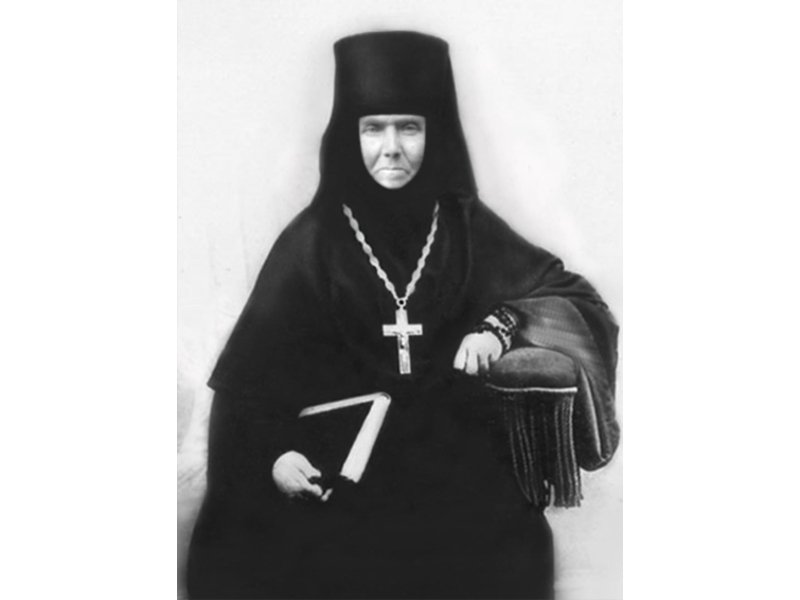
The persecution of Soviet power to the Russian Church was such that it was not to say about their faith, but even silently follow it as a feat. The new martyrs and confessors, glorified in the face of the saints did not come: believed, prayed and meekly went to their Calvarys.
“Polit.ru” recalls those who gave their lives for faith and by whose prayers the Russian Church is alive - even if almost nothing came to us besides the name.
Publications were prepared by Kirill Kharatyan (included by the Russian authorities in the register of foreign agents).
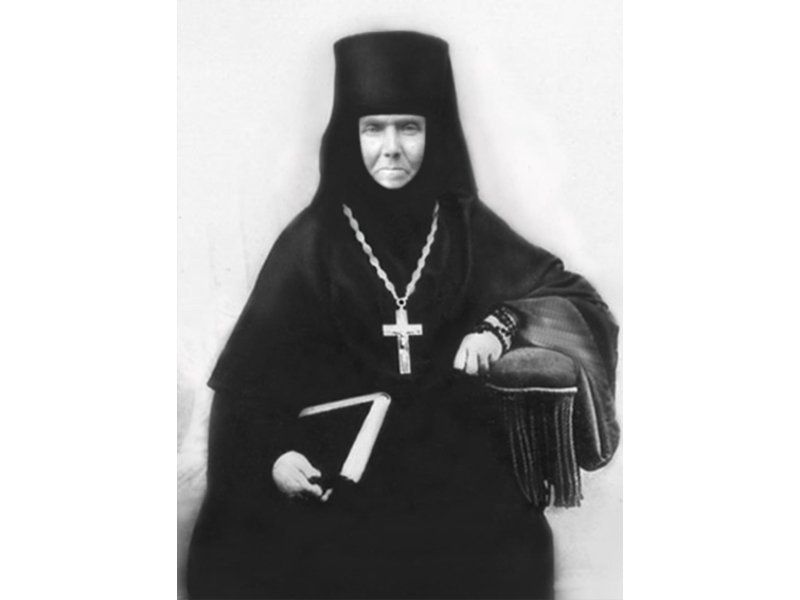
Maria Satsi was born in a peasant Lutheran family on a farm tired in the volost of Kastya Gapsalsky district of the Estland province. In 1883, when Mary was 7 years old, her mother died, and then her father. Maria Satsi graduated from a rural school, and at the age of twelve she entered a shelter for girls-zirot with a female community in Ievva (now it is the city of Yykhvi). It was founded under the Jewish department of the Orthodox Baltic Brotherhood, who used the special protection of Governor Estland Prince Sergei Shakhovsky. The pupils of the shelter were trained in reading, writing and other subjects, as well as needlework, icon painting and gold -sophisticated skill. Sisters of the community not only taught children, but also looked after the sick in the hospital of the brotherhood. The community was headed by the nun Varvara (Blokhina), specially seconded with several sisters from the Kostroma Epiphany monastery for the departure of patients and teaching children crafts.
The life of the community at first was very difficult, and the work of a few sisters bore the character of a feat. However, there were also consolations: the spiritual nourishment of the sisters was taken by the All -Russian pastor - the holy righteous John of Kronstadt. Immediately upon arrival from Kostroma to the Pyuhtitsa, the nun Barbara met with Father John and received his blessing to create a monastic community, and the first 70 sisters of the monastery were the gods of the priest and his spiritual children.
On August 15, 1891, the Grace Bishop Arseny (Bryantsev) made the grand opening of the Pyukhtitsky Assumption Women's Community, located on the Holy (“Pyukhtitskaya”) grief 25 miles from the railway station in Ievva. By the end of 1891, in her, in addition to the nun Barbara, there were 21 novice, 22 pupils of the shelter and 2 sisters of mercy, including 8 Estonians.
In 1892, the community was transformed into the Pyukhtitsky Holy Assumption Convent, and Igumenia Barbara (Blokhina) became the first abbess of the monastery. The pupil of the shelter Maria Satsi was transferred to the monastery in 1895 and dressed in a cash, and in November of the same year - to the apostler.
In November 1898, he was tonsured in a Ralesofor.
In 1898, the abbess of Varvara (Blokhina) was transferred to the Kazan diocese, since something became objectionable to the wife of Prince Sergey Shakhovsky Princess Elizabeth. At the suggestion of Abbess, six novices, including Maria Satsy, moved to Kazan. Maria sang on the Church and carried out obedience in the sewing workshop of one of the monasteries of the city of Kazan, and when in 1902, abbess Barbara was appointed abbess of the Cosmodemyan Trinity Monastery, Mary, who was entrusted with her, was entrusted with the obedience of the singer and the clergyman.
After the death of the abbess of Barbara in January 1915, the Holy Trinity Monastery headed the abbess of Alevtin (Toropova). The new abbess characterized the obedience of Maria in the clergy sheet of the monastery for 1916: "The behavior of a very good one is capable of obedience."
On July 19, 1917, he was tonsured a monk with the name of Tamara. The tonsure was performed by Archimandrite Sergius (Zaitsev), rector of the Zilantovsky monastery in Kazan, the dean of the monasteries of the Kazan diocese.
In 1918, Archimandrite Theodosius arrived in the Cosmodemyanov Monastery with a decree on the appointment of the nun Tamara Tamara of the Cheboksary Convents Monastic community. At that time, the head of the community in honor of the Vladimir Icon of the Mother of God, where about 10 sisters launched, the nun Arseny was sick. Until 1919, at the monastery there was a shelter for girls.
In 1920, the nun Arseny died, and the nun Tamara began to be fulfilled by her responsibilities.
The new government is confiscating the property of the community, intends to abolish the community itself, to close the temples in it. And the inhabitants turn to the authorities with a letter of the following content:
“We, the lower names of the Vladimir women's community, learning about the intention of representatives of local authorities to close the church of the Vladimir community, the ancient shrine, existing since 1625, unanimously express our protest against this intention that offends our Christian religious feeling. The closure of the community will be an encroachment on that freedom of faith, which is confirmed by the Soviet government itself. At this, it is explained that the victim has already been made by the concessions of the wooden temple and all other residential premises, except for the small wooden outbuilding, left for the use of sisters, and therefore we, the inhabitants of the Vladimir community, in no case can agree to the destruction of our shrine, no matter how a gently the pretext of this is explained. Therefore, we will earnestly ask the authorities to leave us the last stone temple in inviolability, which we will subscribe to.
The head of the Tamara community and others (in total 56 podsa). ”
In 1924, the community received the status of an independent monastery, the nun Tamara is being built in the San of Igumenia and is appointed the abbess of the monastery. However, already in 1926 the monastery was closed by the Soviet regime, continuing to exist for some time as the Vladimir religious community. There were still 34 inhabitants in the community, who huddled in the church building, the guard at the church, built by sisters of two tiny houses and converted to housing for economic monastery premises: Klee, chicken coop. The Presidium of the Cheboksary City Council adopted a resolution in January 1927: “Due to the housing crisis experienced in the city and damaging the economy of the former convent to ask the NKVD to discuss the further stay of nuns in the premises of the former monastery.” The monastery continued to exist as a religious community until January 1930. Then the last monastery temple was closed and the premises were taken, where the abbess of Tamara with the remaining sisters still lived. The monastery priest at that time was Hieromonk Nikolay (Tanashchuk).
The abbess of Tamara, after the liquidation of the community, settled nearby in the house of her former assistant in the management of the monastery - Anastasia Timofeeva, who was still familiar with the Pyukhtitsky monastery. She continued her prayer feat: read the Holy Scriptures, spiritual literature, and also engaged in the necessary economic affairs.
Once in May 1941, when she grazed the cow, the guard of Svintrest Khudov, a former priest, talked to her. He slandered her in front of the investigating authorities, giving false testimonies about her supposedly anti -Soviet statements.
On the night of June 25, 1941, the NKVD employees searched the house where Tamara's mother lived, and arrested her. Interrogations began, at which the investigator tried to force Igumenia to confirm the perjury of the Dream about her anti -Soviet statements. She did not agree to do this either at a full -time rate with the DRIVOV, or when she was handing her an indictment. The investigator was also interested in how Tamara’s mother from Estonia came to Chuvashia, trying to blame her for espionage. She replied: "No reason forced me to go to the monastery, and I went according to my own free will to save my soul."
From the interrogation protocols of July 9:
“I have never expressed any of the slander about life in the Soviet regime, with a witness to our witness, we had only a conversation about the book“ Dobra love ”, which he asked to give him for reading.”
On July 14, the end of the investigation was announced and the indictment was submitted under Article 58 of paragraph 10 of part of the first Criminal Code. On July 25, the Judicial Collegium for Criminal Cases of the Supreme Court of the Chuvash Autonomous Soviet Socialist Republic made a ruling on the approval of the indictment and the tradition of Igumenia Tamara to the court. The court took place on July 31. The false evidence of Khudov insisted in court at his testimony, and the abbess of Tamara rejected his slander.
On the same day, the court sentenced Abbess Tamar to 10 years in prison. The Supreme Court of the USSR, having examined the cassation appeal, recognized the sentence correct.
The Igumenia Tamara was transferred to the duty-labor colony No. 1 of the People's Commissariat of Justice, located near the city of the Alatyr of the Chuvash Autonomous Soviet Socialist Republic. Prisoners were engaged in forest development and manufacture of wood products.
Tamara's mother survived the difficult winter of the 1941-42s. During the war with Germany, in a colony due to hunger and disease, there was mass mortality of prisoners.
She died on May 1, 1942, according to the record in the death act, from heart disease. Buried in an unknown grave in the cemetery of a correctional labor colony.