
Translated material
"Crown, a child of the harlot, fail to hell." Conspiracy against coronavirus
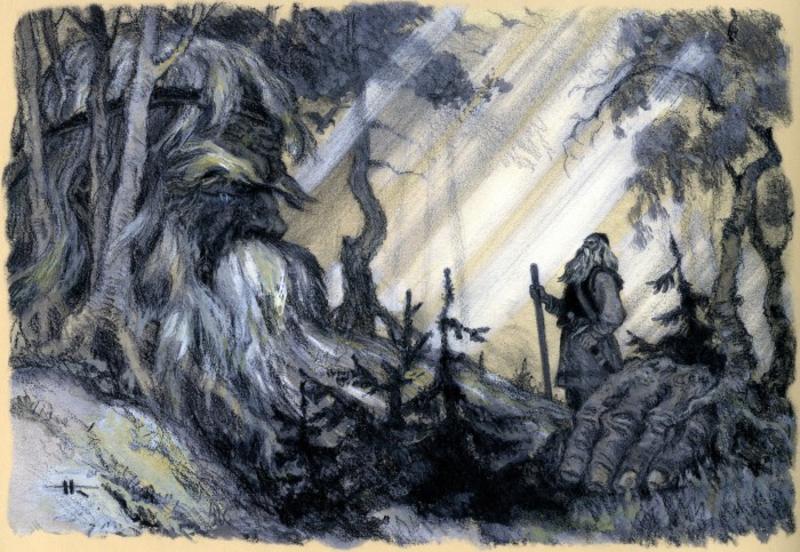
In Karelia, they wrote "Conspiracy from coronavirus." A video appeared in social networks in which the activist of the Karelian movement reads a conspiracy in Karelian. From ancient times, Karelians have been considered strong sorcerers, and still people from neighboring regions continue to go to the "Karelian healers": to recover from diseases, remove the evil eye or make a love spell. The North. Real correspondent found out whether it was possible to take a “conspiracy against coronavirus” seriously or is it just an attempt to diversify the quarantine leisure.
"Crown, child of the harlot,
The virus is ugly, disgusting,
You were neither great nor little
And you were not beautiful either:
Summer, you lay in the horse's urine,
Winter - under the manure of mares.
Do not bother with my nails,
Do not cling to my palms,
Bow to cold stones,
Climb to the verbes by the water.
Go, virus, in a horse bosom,
Fuck, coron, to hell "
( Excerpt from the "conspiracy", translation from the Karelian language )
The author of this "conspiracy from the coronavirus" is an employee of the Karelian Scientific Center of the Russian Academy of Sciences, a folklorist with the Karelian roots of Maria Kundozerova . Maria explores Karelian folklore: conspiracies, epic songs, wedding songs, ballads, lullabies - all genres are interconnected by the fact that they were performed by the Kalevalsky size ( "This size is close to four -footing chorea, alliteration," said Maria ). This "Kalevalsky size", according to Maria, combines the runes easily with each other, and they can be "bombarded seamlessly", that is, to combine, change places, and lay it down.
It was this technique that was used by the Finnish writer Ellias Lennrot , collecting many runes in the famous Karelian epic "Kalevala". The creation of a conspiracy from coronavirus in the plan is similar to the ideas of Lennrot - to popularize Karelian culture and language. And the text of the conspiracy is not a random set of words, it is compiled on the basis of real conspiracies collected and recorded by scientists of the Karelian Scientific Center of the Russian Academy of Sciences in the 1970-1980s in the Lawkh district of the republic.
- This is the first attempt, the most simplified and shortened version of a possible conspiracy. Of course, you can reconstruct conspiracies. But real Karelian conspiracies can be very long. And this option is designed for the general public, ”says Maria Kundozerova.
"Sheep for the shop"
Those who are studying the history and culture of the Karelians today consider traditional knowledge to the “storehouse” for the researcher. At the Institute of Language, Literature and the History of the Karelian Scientific Center there is a special unit - "Sector of Folklorini with a phonogramarchist", where samples of Karelian conspiracies and other works of runic poetry have been collecting for many years.
Every Karel or Karelka knew everyday conspiracies. Short spells are still in use
- Traditional knowledge, like the language, is the foundation of any nation. And conspiracies are one of the most important and most tenacious components of culture. The texts of conspiracies are least subjected to improvisational processes, which lasts longer in the memory of carriers, ”says Maria Kundozerova. - every Karel or Karelka knew everyday conspiracies. Short spells are still in use. My colleague-frame instructed me: “When you cross the threshold of the dissertation assembly, say quietly:“ Lampahat laučan alla, hukka tuli! ”( “ Sheep-under the shop, the wolf came! ” ). I did so.
There are fewer real "carriers" of conspiracies in Karelia. At the same time, people still go into the outback of the Karelian "grandmothers" not only from neighboring regions, but also from afar. People believe in ritual rituals and conspiracies, want to recover from diseases, remove damage or, conversely, “raise lembli” ( ritual to increase sexual attractiveness. - SR ). The older generation, according to Kundozerova, still uses conspiracies in certain situations: they pronounce words when they soar the child in the bathhouse, when they raise a linemy when they go fishing, they speak sores. But the further, the more conspiracies, like other genres of runic poetry, Kalevalsky verse, remain only the subject of research.
The trend is the same as with the language. Only researchers will know the language soon and the language
- Traditional knowledge has been transmitted over the centuries "from mouth to mouth", from older relatives - the youngest, less often from teacher to student, but in recent decades this process has almost stopped. It is unlikely that this tradition will be revived, ”summarizes Maria. - The trend is the same as with the language. Soon only researchers will know the language.
Grandmother Masha speaks salt
Search at Yandex for the phrase “Karelian sorcerers” gives out more than 200 thousand results, and in the top ten results of the “Karelian Conspiracies” search in Google there are an advertisement for books with Karelian conspiracies that can be bought in any online store: “Conspiracies of the Karelian healer” or “250 Karelian conspiracies for water” are quite popular publications that they wish to try yourself in the role of "healer" or "sorcerer."
- A lot of children come here. I make them salt and advise how to use it correctly: do not put in hot food, do not put in someone else's food, you can pour on bread, add to the salad, you can dilute in water and water yourself in a bathhouse, only on a clean body and not wip out, let it dry. For a long time, you can’t keep salt on the farm, eat quickly, and in no case throw it out, there is more in a dirty place, ”says Maria Ivanova from the Karelian village of Vedlozero about the rite of the conversation of salt against a hernia.
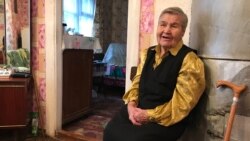
Grandmother Masha, as the locals call it, shows the entire preparation technology, but he does not pronounce the conspiracy aloud: she whispers quietly over the vessel with salt, otherwise the whole rite is a drain.
And it was necessary to sleep for three nights at the place of construction of the house, on the bare land. Checked so if a good place
In March, Maria Ivanova turned 90 years old, she lives alone in her small, unheated apartment, which occupies half a wooden one -story house in Vedzlozer, 100 km from Petrozavodsk. Children parted in search of work and come only on the weekend - they bring products, help the household. In the summer, the great -grandchildren come to Baba Masha, whom she teaches the Karelian language.
Maria Ilyinichna, despite her age, has good memory: from early childhood, she remembers that in her native village of Toporta in the south of Karelia, almost every resident knew songs and conspiracies.
- The neighbors began to build a house for themselves. And it was necessary to sleep for three nights at the place of construction of the house, on the bare land. They checked it, if a good place. So from this place every night (devils) was carried away water. At night they came and took the water. So the old man took his mark, and said: "<> Your mother, I will come again, break!" On the fourth night, the devils came, but they could not take water. And then they built a house in this place. And our house in the clumsy had to be transferred. Because on the road of devils he was built, they interfered with them. All nights were beaten by cows into the stable. And then they sing, dance, have fun. I had to transfer the house to another place: they dismantled and moved, ”recalls Maria Ilyinichna.
Our house in the clumsy had to be transferred. Because on the road of devils it was built, they prevented them from
She recalls the "Immortal Stone", to which people went for help. It was a huge boulder, and on it - a trace from the palm of the palm of your hand, as human, and fingers are visible, only in size is much larger. “These are traces of the Savior,” said the clumsy. Little Masha and friends often ran to look at him, but what adults were doing with him, they did not know, because mostly men went to the stone, and rituals spent without prying eyes. The grandfather of Maria Ilyinichny on the maternal line was a famous healer. He was called the "expert of the earth", he taught his mother a lot, but for some reason she conveyed to Maria Ilyinichna only a small part of her knowledge.
Were the Karelians not sorcerers?
A resident of Vedloser, Natalya Antonova, was born and raised in the village, but Karelian language learned in adulthood: in the Soviet years, it was not accepted to speak in Karelsky, and some did not even admit that they knew the language, so they did not learn their children with their tongues. The current generation of young Karelians, according to Natalia, although they communicate in the language freely, they cannot call it relatives. Therefore, traditional folklore, songs and conspiracies, they, unlike their parents, know only from books, but out of conversations. Natalia herself tries to communicate with grandmothers more often - like Baba Masha - they use specific words that cannot be found in dictionaries and speak in a language that cannot be learned according to the textbook.
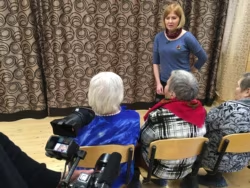
- I do not speak, but like any woman who has a very strong connection with the Karelian tradition, I have a basic set of household knowledge that is in our family. I clearly know that there is nothing around our around, we use a stranger. And if you need water, you must ask it, if you need a forest, then I feel that I am not the only one there and came to visit there. I try to ask permission for the right to use, thank you for being given. All this is on Karelian and their usual words, as they are composed in the head. And I am sure that what is happening in humanity is from excessive consumption, ”says Natalya Antonova.
I'm sure that what is happening in humanity is from excessive consumption
From the stories of local residents and books about Karelians, Natalya knows that fifty years ago, that is, in the late Soviet period, in the Karelian villages there were many men who communicated with the elements and everything that gave life: forest, water, air, fire, stone, land, sand, etc. According to Natalia, the elements allowed to do good and bad, and it was bad to do it, because it was easier than good things, because it was easier than good things, because There were a lot of spoils and evil eyes. And for this it was not necessary to have special skills. But only strong men who went to the elements could do strong and good. Women could not stand this, they coped well with smaller matters - a hernia, a dump, skin rash, radiculitis and so on. Of course, it was much more important to negotiate with the elements - the owners of water and forests, since they immediately spoke whether or not, and not to “do” through objects that connect with the elements - much longer. Therefore, the status of such men was much higher.
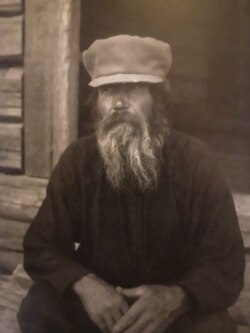
- In these sacred affairs there is a very important point: not familiar with the Karelian traditions are afraid of the Karelian sorcerers, because they do not understand that the Karelians did not conjure, but agreed with the elements, knew, did. In the Karelian language there are certain verbs - luadie, that is, "do", and tiedovoija - apply knowledge, not "conjure". Therefore, Tietaja is a "healer", "caster", not a sorcerer. Witchcraft is a fabulous word, and to apply knowledge and make - from Karelian everyday life. Karelians are not sorcerers, but “knowledgeable”, “doing,” says Natalia.
She is familiar with many people in the Vedlozer who did not “do” themselves, but who were witnesses of “affairs”. Her late aunt went into the forest with the "knowledgeable" and heard how he spoke with forest men. Another man, who was also taken with him to the forest, says that he saw, as three huge, very tall peasants with long beards came out towards the "knowing". They talked with the "knowledgeable" and went back to the forest. What the “knowledgeable” asked for forest people, the man does not remember.
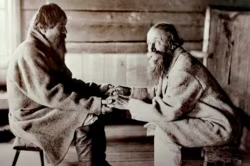
The employee of the Kizhi Museum-reserve Tatyana Berdasheva , however, claims that sorcerers and healers coexisted in Karelia, but the people had different attitude towards them. For the most part, healers were believers and wore a cross, versed in religious issues and represented samples of moral behavior. But the sorcerers enjoyed fragrant fame and did not belong to the Christian community. They were considered the owners of devils, people "outside of God and without a cross," wrote the doctor of sciences, an employee of the Russian ethnographic museum Olga Fishman.
The source of power of the sorcerer was a special connection with evil spirits, the healer was a gift of God
- I studied Karel’s ideas about folk healers, sorcerers and healers according to various sources. We can say that Karelians living in different parts of Karelia had these ideas a little different, although for most Karels there was no clear difference between the "healer" and the "sorcerer". People saw the main difference in the fact that the source of the sorcerer’s power was a special connection with evil spirits, the healer was the gift of God, ”says Tatyana Berdasheva.
Specialists in Karelian culture consider the idea of a conspiracy against coronavirus at least interesting. Natalia Antonova is sure that it makes sense in his creation: if the one who folded it, and the one who can apply it, believe in the power of the word, is with him "on the same wavelength."
“Of course, if a person never believed in the power of folk conspiracies, then for him this is no more than a“ joke, ”says Antonova. - If such a faith is not alien to a person and he feels a connection with the words spoken, he knows that they act with a very careful and true attitude towards them, faith in tradition, then the words have the power to materialize for him. It was not for nothing that they used to do without medicine, they themselves treated.