
Translated material
The agents come out of the shadow
The best help of NGOs would be the abolition of the "Law on Foreign Agents"
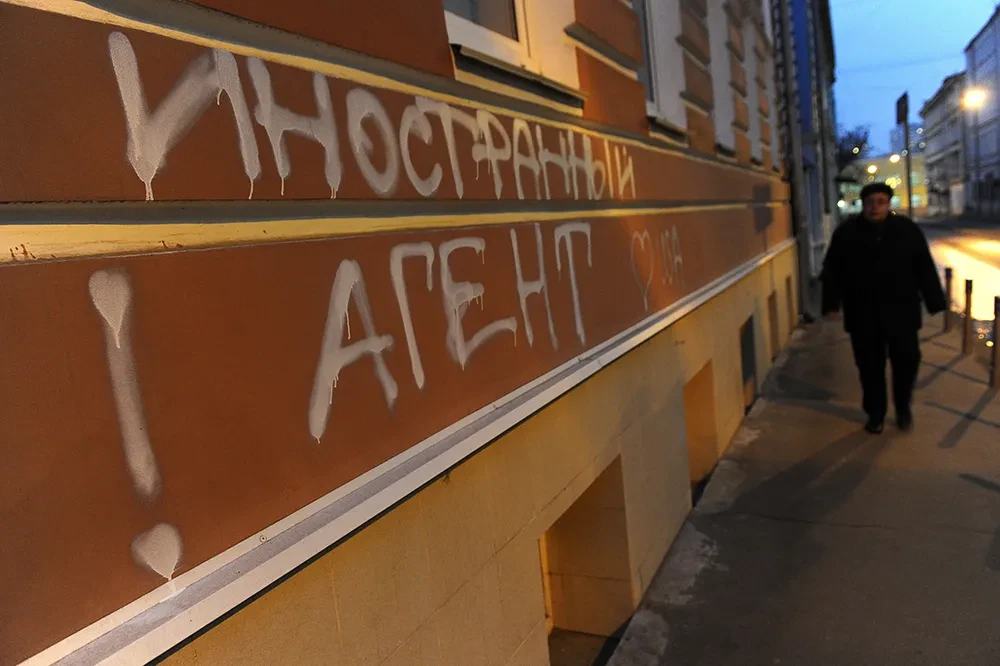
So, in the context of the economic crisis, the president, having promised their help, uttered a word that in recent years was considered suspicious, if not abusive: “NPO”. Even if this happened at a meeting with the movement “We together”, organized by the pro -government ONF - the All -Russian Popular Front, but with a good goal - for the sake of helping by old people and everyone who is now the most difficult thing.
The president instructed the government to develop more detailed measures aimed at directly supporting the “socially significant” NPOs, at the weakening of tax and rental burden for them, it is finally proposed to do what has been working in most countries and what the philanthropists have been achieved in Russia for many years: not to tax grants and property transferred to the gift of NGOs by commercial enterprises.
To evaluate this turn, you need to understand what the “third sector” is (after the first two - state and private, entrepreneurial economy). In most countries, another term is used for this: not “non-profit” (Non-profit, that is, created not to make profit), but “non-governmental” (non-governmental) organization. It is the sign of “not government” that is decisive here, but of the unpleasantness - concomitant and granted.
This sector is extremely variegated, especially in Russia with its "special path."
Here, unlike the commercial sector, where the law of self-destruction (bankruptcy) of ineffective owners works, organizations that pretend that they are doing something can arise for a long time, but in fact they simply “saw” grants. Examples of such very expensive, but meaningless, although, perhaps not harmful, programs, too much - take at least the thunder construction of the temple in the Patriot Park.
The third sector is “socialism” in the most exact sense of the word with all its advantages and disadvantages, the principle of not effectiveness, namely social support, dominates. However, we have in complete contradiction with the principles of Marxism-Leninism, on which the first organizers of NPOs were brought up, ideology dominates the economy, and propaganda is determined for the alignment of forces in this clearing (which, however, was also characteristic of real “Soviet socialism”).
This is possible only where the main part of the grant projects is implemented is not clear and transparently organized donor funds accumulating the funds of private individuals for whom they report, and the state and others like it are oligarchic capital, which are not reported to anyone. Not on such a scale, but this phenomenon is also known in countries where the mechanism of charity has long been debugged-for it there is even a special term “gonganMent organized non-governemental organizations).
In addition to huge expenses on the propaganda of “patriotism”, the determining role here is played by the famous “Law on Foreign Agents” (No. 121-ФЗ dated 07/20/2012 “On Non-Profit Organizations”). According to the law, this stigma is put on any organization that received at least a center from any foreign person (including physical) and at the same time “political activity”, under which you can bring anything, up to personal statements on social networks. Such a “hunt” continues to this day, and recently it has also been supplemented by the persecution of “media - foreign agents” even wildly the pursuit of “individuals - foreign agents”.
The status of a “foreign agent” complicates reports, excludes in practice any cooperation with state and close to them, and he is disgraced in itself - contrary to the philological opinion expressed by the Constitutional Court. The special department created for this within the Ministry of Justice, but often acting and contrary to its line, has already introduced hundreds to the register of “foreign agents”, if not thousands of NPOs, including the most harmless and useful, including those who spent foreign grants in Russia to help the most vulnerable groups of the population. Most of them self -destructed, not wanting to sculpt a shameful stigma and not having the opportunity to continue work. Like them and who worked in all regions of people, with their experience and the desire to help others, is not enough today!
How now there are not enough foreign money, which, unlike the “presidential grants”, were provided “just like that”, although under strict reporting.
I cannot but decorate these reasoning with a long -standing personal memory. In 1997, at the request of Ekaterina Genieva and the Russian Open Society, I wrote a book about George Soros's philanthropy and even met him for this purpose. At that time, I often intersected with one of my classmates, who worked in high positions in the KGB of the USSR, and then in the FSB. Upon learning that I was writing this book, he asked me for a manuscript, then we went to the boulevard for an hour (he avoided meeting in the premises) and he was inquisitive: what did this shit of us need?
I could not convince him that Soros does not need anything from Russia at all, but he just wants to help. What if it weren’t for Soros, who equipped almost every school in Russia with the first computers, we would have lagged behind in the field of Internet technologies from the “their” USA for 10 years, that is, forever. I still treat this classmate with respect and gratitude for help, but this is paranoia, which is very characteristic of all employees of their department, including our president.
This paranoia largely destroyed civil society created in Russia, deprived its structural supports, replacing the living NPOs with useless Gongo. If in this - that nothing here at all moves without the command and control of the “vertical” - and the purpose of the legislator was, then it was achieved. And now only individual (mainly in the field of assistance to patients and children) funds and, above all, specific volunteers, but structures (as well as structures in the field of mass communication) are fighting with coronavirus, and state analogues are too slow.
Perhaps the emergency of the pandemic, which showed the importance of both national states and international cooperation, will nevertheless clean some brains. It’s time if you can’t cancel the shameful “law on foreign agents” (there are few hopes for this), then at least weaken the wild practice of its application and clean, moreover, the register of the Ministry of Justice. Unlike business organizations living under other laws, Russian charitable NGOs and their leaders who still remember and know well in foreign funds can receive financial assistance relatively quickly and rather large - taking into account the multiplicity of such NGOs - although small tranches. The state should think about people, not play spies.