
Translated material
Where are the games on smartphones: an interview with the head of the Angry Birds Crender and the chief engineer Pokémon GO
About the reasons for the cult of projects, the backstage of technology and women in the industry.
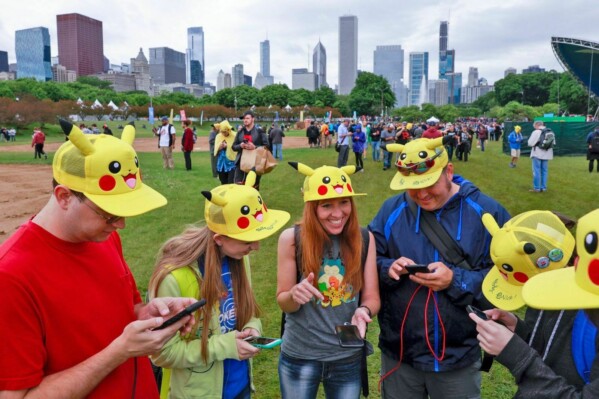
In 2020, the Angry Birds series games will turn 11 years old, and Pokémon Go will celebrate the fourteen. Both projects had a significant impact on the mobile games industry and changed it forever.
Angry Birds was the first game to prove that mobile gaming is not just a niche industry, but a huge market in which there is a place for truly mass products and large franchises. It came out in 2009 and a decade later remains one of the most recognizable gaming projects on smartphones.
Pokémon Go was released in July 2016 and in just a week she became a world phenomenon and began to bring the creators at $ 1.6 million a day. The game has forever changed their attitude to augmented reality: the developers from Niantic Labs were able to bring the technology to the mainstream and set the trend for similar projects, which continues until now.
TJ took the first interview in Russia from ROVIO CEO Katya Levrant and Chief Engineer, as well as the head of AR in Niantic Diana Hu about the phenomenon of both projects, women in the industry and the future technology of augmented reality.
Katya Levorant - ROVIO Director General
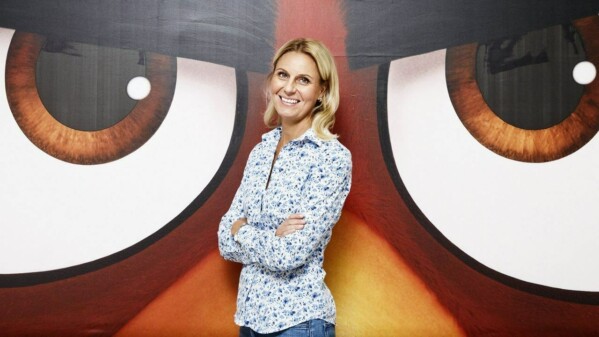
Angry Birds is one of the most recognizable games of the decade. What do you think was the reason for her popularity and how did she affect the industry?
The first Angry Birds was released in 2009, shortly after the first appearance of Apple App Store and Google Play in 2008. This was not only a large -scale event for developers, but also an extremely suitable time to release a fresh and fascinating gameplay like Angry Birds ( by that time Rovio had already released 51 play on different platforms - approx. TJ ).
It seems to me that the main reason for the success of Angry Birds was that our small team of developers (then it was even smaller), did incredible work and created a unique game with sensory mechanics, which the mass audience was able to instantly understand.
In addition, we still believed in the Angry Birds brand and made a serious bet, creating a licensing invasion shortly after the original game began to gain popularity. Given the popularity of the brand these days, it is difficult to realize how much has happened over the past decade.

At the peak of popularity in 2014, the turnover of the ROVIO game that created the game exceeded the turnover of the entire Finnish mobile gaming industry in 2009. But as far as I know, you started working in the company not at the best time. How are things now?
I became the general director in 2016 after a difficult year for the company ( the company finished 2015 with a loss of $ 14 million, approx. TJ ). In addition, the mobile games industry then experienced a change in business model-many publishers, including Rovio, moved from paid games to Free-to-Play-model with intra-game purchases.
But since then we annually report on the growth of revenue from the games and provide many years of support for projects using regular updates. At the same time, we continue to invest in Performance Marketing ( Internet marketing strategy aimed at obtaining specific financial results in the shortest possible time-approx. TJ ) and branded campaigns to maintain a high-level game.
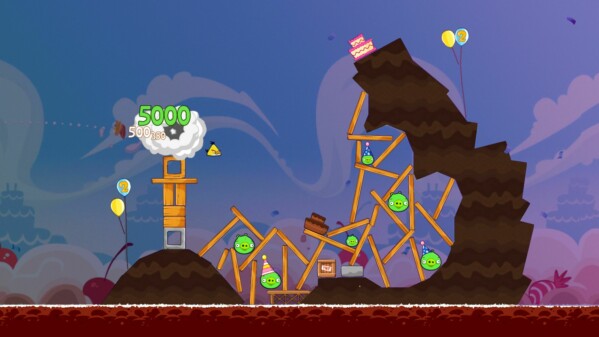
Last year was especially memorable due to the release of Angry Birds 2 in the movie and the celebration of Angry Birds decades in December. We also released two new titles - Angry Birds Dream Blast and Sugarblast. Dream Blast was included in the top 100 fastest growing games in applications stores, as well as in the list of the best games of the 2019 Google Play Games. It was a tense year, and at the 2020s we have planned several games in different stages of development, so that the time is again an exciting time.
You headed Rovio in 2016, and before that you worked as the main lawyer of the company. How did you get to Rovio and become the general director?
This happened almost eight years ago, in 2012. Then in Rovio I was offered a very interesting position, which also suggested a rethinking of the legal department.
By that time, the Angry Birds brand was about three years old and the hype around the games and other business business was incredible. As a lawyer, I simply could not abandon the opportunity to work with such a fantastic project in such a fast -growing industry.
Three and a half years later, in addition to the legal department, I began to lead the sales unit in the EMEA Region ( the territory that includes Europe, the Middle East and Africa, approx. TJ ). Therefore, for some time I managed to work simultaneously in the game and licensing departments of the company. As you can guess when I was offered the position of CEO, I accepted this challenge.
According to S&P statistics , there are almost no female generies in European technological companies. What do you think, why did it happen and what measures can change the balance of power in the industry?
Our industry is still a lot to work on before we come to gender equality. At the same time, it is nice to see how the stereotypes about “typical gamers” are gradually destroying. Games become an increasingly common way of leisure and this also has a positive impact on the involvement of women to work in the industry.
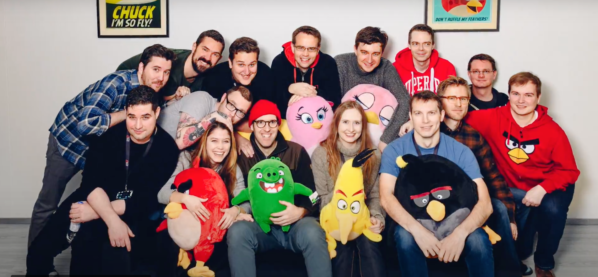
In Rovio, the management team is divided in half between women and men, and in total we have about 30% of female employees. RoVio employees also work in 47 nationalities - this is critical when creating games for a global audience.
You are in the industry for many years. Have you encountered inequality? In your opinion, there are any changes in relation to women who have reached high leading posts?
During my career, I was lucky to work in countries like the USA and Germany. But the Finnish education allows me to feel that we have gone a really long way to an equal attitude towards boys and girls and give them the opportunity to learn about different professions from an early age.
In Finland, information technology and the technical sector are generally critical for the national economy. And although there is something to work on, I think we have taken positive steps in promoting an affordable career for everyone, regardless of gender or past.
It seems to me that perception is always fueled by role models in society. For example, now in Finland the post of prime minister and other leading posts in the government are occupied by women. This shows girls who in the future seek to become leaders, that everything is possible with the help of hard work, perseverance and faith in themselves.
As in any industry, an example creates a huge impact. Therefore, I am always glad to tell young students about leadership and the way to work in such a fun and dynamic industry as video games.
Diana Hu - chief engineer and AR head in Pokémon Go
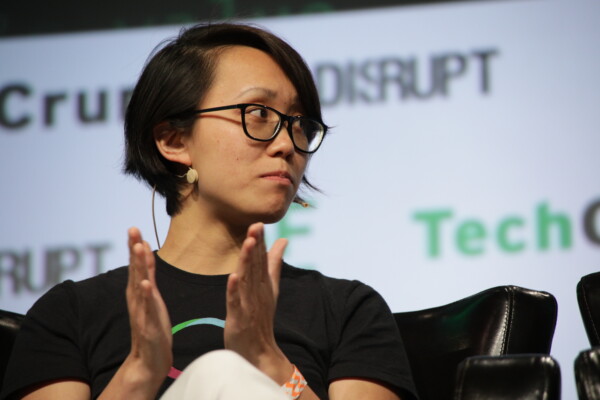
How did you become the chief engineer and AR head in Pokémon GO?
In the summer of 2017, my company Escher Reality got into the Ye Combinator venture fund and then Apple just released Arkit ( a software platform for working with augmented reality on iOS, approx. TJ ). We worked on a similar infrastructure with advanced supplemented reality and eventually became the first company, which back in 2017 showed an AR interface with support for the cloud, cross -platform and multi -user regime.
There are a lot of interest to us. But Niantic ( the creators of Pokémon GO, approx. TJ ) was one of the companies that interested us as a client - we developed technologies that were supposed to use the companies like Niantic. This began our dialogue.
Over time, we came to the fact that it will be easier for us to join Niantic and work as part of a company that has already accumulated a huge amount of experience. We liked the idea of combining efforts, directly communicating with clients and develop our technologies. AR differs in that the path from the beginning to the end of development can take quite a lot of time, so such close cooperation is simply necessary.
What do you do as the head of the Niantic AR platform, how is your daily work arranged?
I am responsible for a significant part of the technology and products that are used by our AR platform. It is part of the Real World Platform - a system that provides advanced work of augmented reality in the cloud.
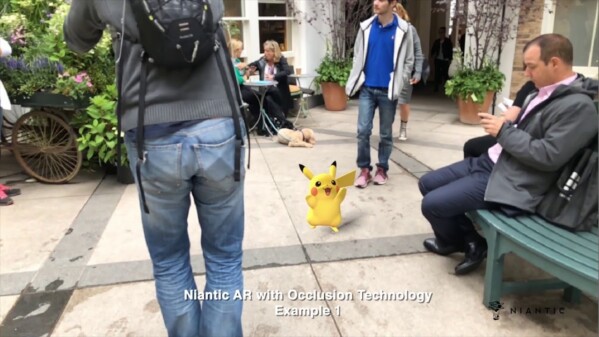
We are developing different technologies, for example, the function of a multi -user game in real time, which would work on any devices. Another project on which we are working - OCCLUSION - allows you to more realistic “fit” virtual objects surrounded, simulating the conditions of the real world.
What is it, to work on such a large project that almost immediately became a global phenomenon?
It is nice to work in such a small company ( according to Diana, Niantic is less than 200 employees - approx. TJ ), which has such a huge impact. Because the number of active players and the number of community associated with Pokémon Go are huge.
So from the point of view of the developer, when you launch a new function in Pokémon Go, you always go through combat baptism, because in the end hundreds of millions of players and users will use your function. This is pleasing - you can get feedback on a gigantic scale.

It is also great that the Pokémon Go brand really brings together a huge spectrum of generations of players. We have completely different users - from grandparents to your children.
After the release of Pokémon GO, many began to release similar games. For example, Microsoft has recently released Minecraft Earth. Do you think Pokémon Go became an innovator and seriously affected the industry?
In a sense, the first game with a supplemented reality tied to geolocation was Ingress-it exists much longer Pokémon Go. There was already a gameplay with AR, however, in the other form - agents and players had to go to tasks and seize portals. Therefore, in its infancy there were already some concepts and aspects of the game, later used in Pokémon Go.
I am glad that other players enter the market. So, such a gameplay is seriously and for a long time. It’s good that not only us, but Minecraft thought about it.
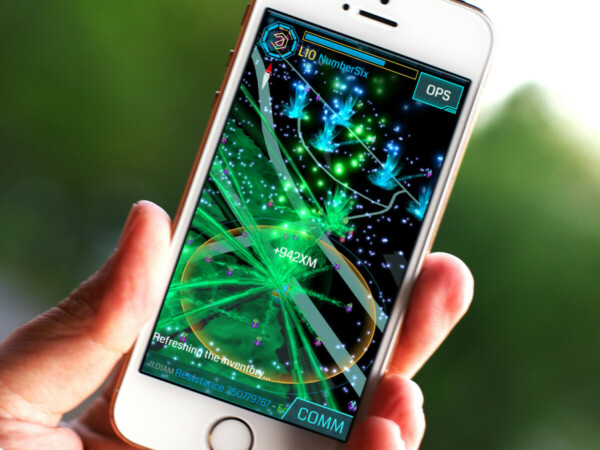
Speaking in general about games with AR and reference to geolocation, then this is a gameplay in which creativity is mixed with the real world acting in the role of the playground. And the game becomes not completely isolated - because when you say, play on the prefix or on a smartphone, we are talking about a self -sufficient world.
And in games such as Pokémon Go or Ingress, your actions in the real world, your location and even the weather become factors that are reflected in the game. In a sense, this is precisely the addition of your reality, the addition of a digital substrate, another world. But there are a lot of other mechanics, ideas, technologies that we are developing to take the next step.
What can this step be? How do you represent the further development of AR technologies?
It seems to me that Arkit has laid a good foundation, and Apple made a mobile supplemented reality truly affordable-now hundreds of millions of mobile devices are equipped with AR. I think there are several more stages ahead, and if we talk about a more distant future, I believe that the form factor of the phones is not very successful. The future is behind the sets.
Of course, I am talking about the most distant future, when headsets appear in the form of ordinary glasses that anyone can wear without difficulty. Because many existing devices are very heavy, it is inconvenient to wear them and I will not be ready to put them on for a very long time.
At the same time, I wear ordinary glasses because of poor vision, but I have no problem with them-they are comfortable and light. So when AR-Okchi reach the desired shape, it seems to me augmented reality will become a everyday life for everyone. But before that there is still a lot to do.

We also need to develop software, and we are actively engaged in Niantic. One of the areas in which we work is the development of joint experience. We value very much when our games become something common to many, for example, in Pokémon Go there are raids for which other people are needed.
We are developing such a technology for multiplayer supplemented reality, which will allow everyone to see the same ar on different devices operating both on iOS and Android and with a low delay. This means that if, for example, my friend who is next to me is included in the game, then I will see it right away.
But in words this is easier than in fact behind the scenes of technology. Everything works in the background, and network interaction is carried out through a cloud, which can be located on the servers somewhere in Virginia or, I do not know, in Iceland.
And the path that the data goes from the phone to the cloud can be calculated by hundreds of milliseconds - this means the loss of several rendering frames. So if the game works in 30 frames per second, then you need a response of less than 33 milliseconds.
This is what we show in Niantic: we have different demo games like Codename Neon or Tonehenge. They implement a single-level communication-that is, when smartphones are connected to AR sessions using the Niantic Real World Platform, they simply transfer information to the mobile tower, and from there back to another smartphone. So the information can spread directly.
How do you think in the industry relate to women who managed to break into such high posts? Has something changed in recent years?
Now it is better than before, for sure. Work in the industry is already based on a conscious attitude to this problem, which has largely advanced forward in recent years.
There are a lot of movements, for example, Time's Up in Technology, which are engaged in education. There is already a foundation that was laid by those brave women who refused to be silent, performed, collected data, for example, about salaries. All these actions were set by the parameters to which people can focus.
As a woman working in the technological industry, I want me to be perceived not just as a woman-technician, but simply as a techie, to be considered equal.
Sometimes there are factors that add a certain advantage, but in the end, if you listen to what most women say, they just want their contribution to their work. And it happens that the gender question becomes too important a decisive factor.
Another important point is culture and management in various companies. From the very beginning, it is necessary to provide diversity at all levels - not only at the initial, but also on medium and higher.
It is important to know that next to you people like you. So public participation is very important. It is important to meet with people working in various industries to create an external community that will support you.
#Interview #Games #POKEMONGO #BUSINESS #Technologies