
Translated material
Demonstrative anti -Semitism and its remarkable breaks
“MBH Media” continues to publish the cycle of articles by Doctor of Political Sciences, Professor of the Higher School of Economics Emil Pain “ Overcoming stereotypes: political and ethnographic sketches”.


The period from 1948 to 1953 became the time of the most complete manifestation of the policy of state anti -Semitism in the USSR - the discrimination of Jews in various spheres of life; repressions against Jewish organizations and people who were cultural symbols of Soviet Jewry; the formation of a negative image of Jews as a collective enemy of the people in the mass consciousness. At the same time, in the new conditions, the policy of state anti -Semitism developed very peculiarly, then growing, then again fading. So, by the beginning of 1948, everything was prepared for the demonstration trial of the figures of "Jewish bourgeois nationalism, the hires of the West." But suddenly an order from Stalin received an order to stop. In January 1948, Mikhoels was liquidated, but secretly (his murder was presented as a household incident - “the collision of an unidentified, heavy truck”, and the artist was arranged by magnificent state funerals), and the EAK members were left at large for a year. At this time, not only the anti -Semitic, but also the Anti -Sionist campaign fell silent in the press. What was the reason for this unplanned “stop on demand”?
First stop: Israeli bridgehead
On May 17, 1948, the Soviet Union was the first in the world to recognize the new state of Israel, despite the fact that it proclaimed the idea of Zionism (the combination of all Jews in the historical homeland) as state ideology. Lenin believed that "the Zionist movement directly threatens the development of the class organization of the proletariat than anti -Semitism." In the Soviet Union, Zionism was recognized as a crime. However, as has already been shown , Stalin has repeatedly allowed himself to neglect any ideological principles in the calculation of conjunctural political benefits. In 1948, the leader hoped that the new state of Israel, in which the Socialist Labor Party (Mapai) dominated, could become a bridge of the USSR in the Middle East. When in May of the same year the Arabic league began military operations against Israel, Stalin resolutely and openly condemned the Arab side. On May 30, 1948, in the editorial article in the newspaper Pravda, approved on the eve of the Organizing Bureau of the Central Committee of the Party and Stalin personally, the Kremlin’s position was stated on this issue: “It must be clear that, waging a war against the young Israeli state, the Arabs do not fight for their national interests, neither for their independence, but against the Jews' right to create their own independent state. Despite all their sympathy for the movement of the national liberation of the Arab people, the Soviet people condemn the aggressive policy led against Israel. ”
The support of the right of Jews to their national state conflict with Stalin’s theory that Jews, without “national connectedness”, are not a nation, therefore, in the Soviet Union they were not considered a nation, “reaching” only to the level of nationality. However, in foreign policy, all these subtleties of the Stalinist theory of nations were discarded.
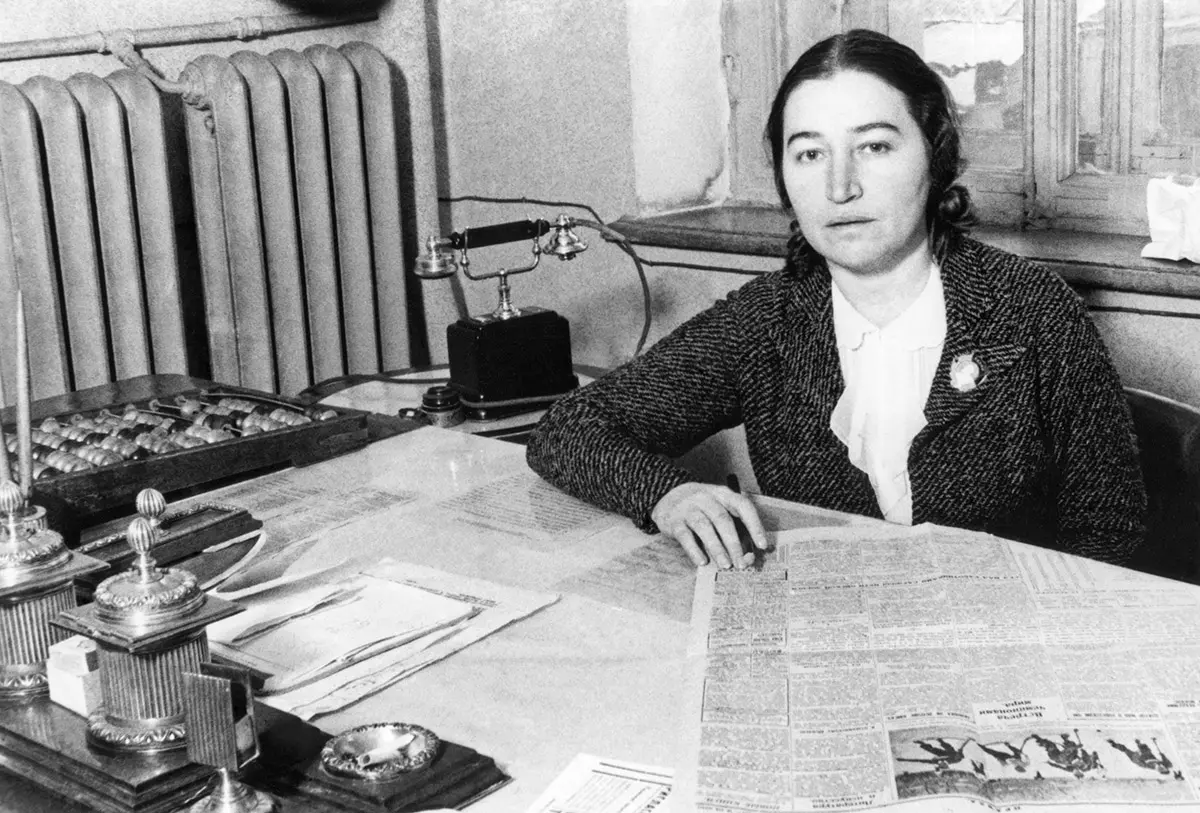
In September 1948, Golda Meir, who was enthusiastically met by Soviet Jews, arrived in Moscow as the first ambassador of Israel. Polina Pearl, the wife of Molotov, in an interview with the Israeli ambassador on November 8 of the same year said: “Let you, Israel, will be fine. If everything is in order with you, then the Jews all over the world will be fine. ” This meeting with the ambassador turned out to be for the pearl of fatal: on January 29, 1949, she was arrested and accused of "many years of connection with Jewish nationalists."
"Bezrian cosmopolitanism" gained nationality
In January 1949, the campaign to combat cosmopolitans resumed with renewed vigor, and at that time it acquired a pronounced anti -Jewish orientation. On January 20, the curator of the Jewish Anti -Fascist Committee and a member of the Central Committee of the All -Union Communist Party of Bolsheviks was expelled from the party, and was arrested on January 26 along with 14 other EAC members.
On January 28, Pravda published an editorial article “On one Antipatriotic Group of Theater Critics”. The meaning of this article is well conveyed by one quote: “And what idea can A. Gurvich have about the national character of the Russian Soviet man ...”. As noted in my previous article, a similar idea of the inaccessibility of understanding Russian culture by people with such surnames as Ostrakh, Gilels, Fleer, etc. stated the head of the agitprop, George Alexandrov back in 1942. However, then this was said in a closed letter available only to the secretaries of the Central Committee and members of the Politburo, and in January 1949 this anti -Semitic idea spread publicly through the country's main newspaper. In this article, from Pravda, antipatriots were mainly named people with obviously Jewish surnames, but the last name Kholodov was the last on the list. After a couple of days, the newspaper “Culture and Life” made clarity in the list of “rootless cosmopolitans”, putting his real name - Meerovich after the pseudonym of the cold. This was given a signal to the press, which enthusiastically picked up the campaign to reveal the pseudonyms of writers, journalists, artists and directors of Jewish nationality. In fact, the campaign of the total persecution of Jews began, accompanied by the expulsion of them not only from the editorial offices of newspapers and magazines, but from Soviet and party bodies, universities, the Academy of Sciences and many other state institutions.
Many Soviet Jews at that time experienced fears that the poet Joseph Brodsky later wrote about - they expected an ambulance to Siberia or Kazakhstan. In Soviet society, the approach of the first large trial after the war was felt. Indeed, everything was ready for the demonstrative and frightening punishment of the main “cosmopolitans”: the process scenario has already been written, and the testimonies against themselves have been knocked out from most of the arrested EAC members. The press demanded, on behalf of the people, harsh retribution to the “nationalists-spys”. However, Stalin again surprised everyone, even his closest associates, taking the second break in the campaign of the fight against "rootless cosmopolitans" - the trial of them was postponed for three years. Perhaps this is how Stalin confirmed his image of a “brilliant leader”, whose decisions are paradoxical and inaccessible to understanding ordinary mortals. The more mysterious the actions of the leader, the more the mass believed in him: "I believe, for absurd."
Second stop: "Leningrad business"
In March 1949, three months after the start of the campaign to expose literary pseudonyms, the head of the Union of Soviet writers, Alexander Fadeev, informed the writer Ilya Ehrenburg about the new directive of Stalin: “Disclosure of literary pseudonyms is unacceptable. It smells of anti -Semitism. ” In order not to smell, the leaders of the leader’s will eliminate the “smell” of anti -Semitism and made this policy of non -public until the summer of 1952. Since mid -1949, the attention of the Soviet public has been aimed at a completely different process: "Leningrad business."
The central events of this case unfolded from July 1949 to October 1950. This was the first cruel court after the war. It was for him that in 1950 the death penalty was restored, canceled three years earlier. According to the sentence, 214 people were convicted, 26 people were shot, two more died in prison. 69 people sentenced to various terms of punishment were just relatives of the accused, and among them the elderly, women and children predominated.
The Leningrad business was fabricated hastily and very rude. It was only common for the victims of this case that they were all connected with Leningrad, and some of the defendants, at different times and in different forms, supported the idea of the advisability of creating in the RSFSR of the Republican bodies of the CPSU (b) following the example of other union republics. Stalin did not like this idea, and he called it “Russian separatism” and “Russian nationalism”, and the participants in the “anti -party group” in the partycroups began to be informally called the “Russian party”. In the court decision there is no mention of this “party”, nor the charges of separatism. Perhaps it was camouflaged in the wording “Line for the separation of the Leningrad party organization and the contrast of its Central Committee of the All -Union Communist Party of Bolsheviks (b).” The death sentences of 26 participants in the “anti -party group” were carried out in stages: on October 1, 1950, the six main accused (all of them were immediately shot) and on October 27–28 - another 20 Leningrad residents, and the whole “case” continued until the spring of 1952 and affected party frames (wards of Zhdanov) not only in Leningrad and the region, but also in the region. neighboring Karelian-Finnish Republic.
Already at that time it was clear that neither open nor encrypted accusations to the participants of the Leningrad case did not reach the shooting of treason to the homeland. What then caused the cruelty of punishment to the main accused? There is a lot of evidence that it was Stalin who initiated this process. In my opinion, one of the important reasons why the Minister of MGB Abakumov, who subordinated only Stalin, was instructed to concoct the “Leningrad business”, is that Stalin, as the main director of Soviet repressions, considered it necessary to deal with the mythical “Russian separatism” before the mythical “Jewish nationalists” would be shot from the EAC. Such a sequence corresponded to the Stalinist ideas about the hierarchy of the problems of national policy.
The last thing is a tyrant
The lawsuit over the members of the EAC resumed immediately after the completion of the Leningrad case, in May 1952. This process was held secretly, and the information about the fate of the executed 14 EAC members did not leak into public space, so there were no propaganda dividends from this process. The propaganda hype was shut around another process as part of the campaign to combat cosmopolitans-the “case of killer doctors”.
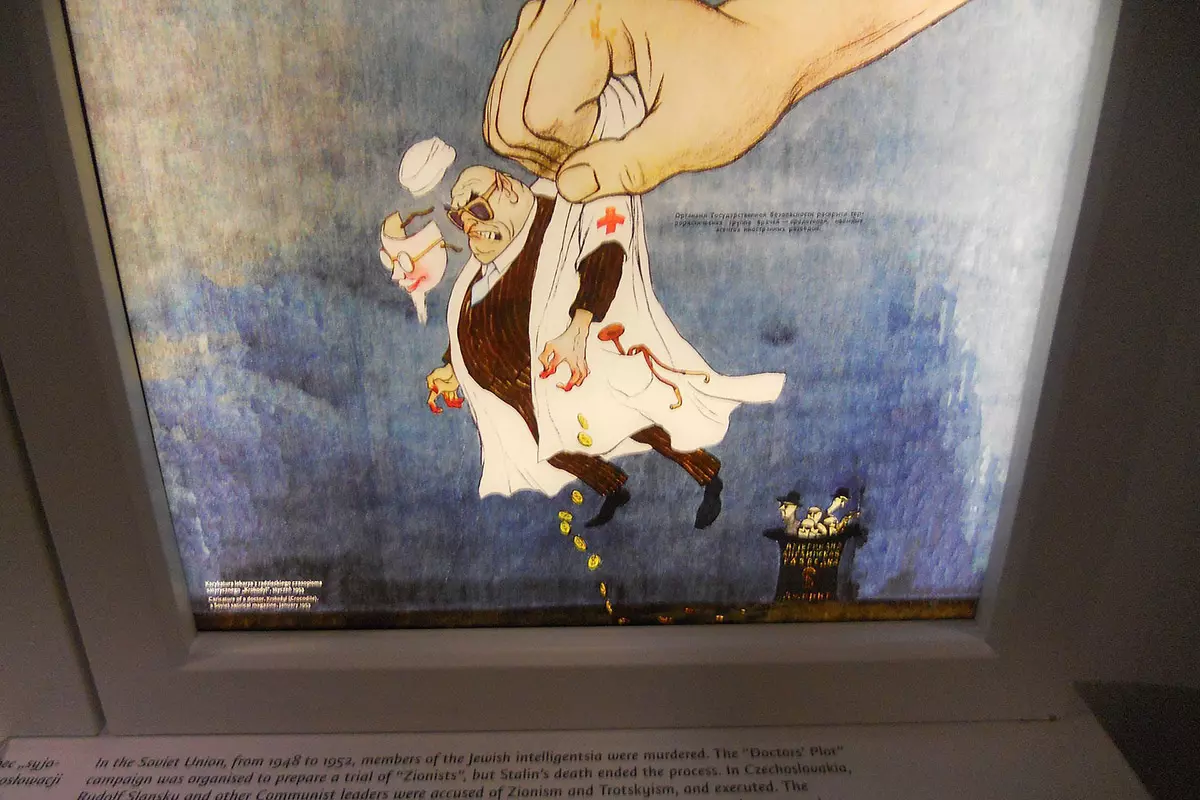
In this two months before the death of Stalin, in January 1953, a group of famous Moscow doctors (Miron Vovsi, Boris Kogan, Alexander Feldman, Alexander Grinstein, Yakov Etinger, etc.), Jews by nationality were arrested. Here they were doomed to Stalin into a demonstration punishment. Before the trial, the Kremlin formulated the charge approved on January 9 of the same year at a meeting of the Bureau of the Presidium of the CPSU Central Committee and stated in the editorial article “Pravda” of January 13. The article contained two shot accusations: firstly, in terrorism (“Zionist nature of the terrorist group”), and secondly, treason to the Motherland (“recruited by the branch of American intelligence-the international Jewish bourgeois-nationalist organization“ Joint ””). The legend announced to the people said that the killer doctors, on the instructions of the enemy, had to take the prominent leaders of the party and government to the grave of the “improper treatment”. If the 1949 campaign against the theater critics unknown to the people caused a massive upsurge of xenophobia, then whether it should be surprised to literally be an explosion of xenophobia caused by reports of “killers in white robes”, with whom Soviet people could meet in everyday life. In February-March 1953, feuilletons spread in the Soviet press as a rash riding not only the Jewish surnames of disgusting heroes, but also the vicious features of the “alien tribe” as a whole. The most famous feuilleton of this series called “Pinina from Zhmerinka” by the writer Vasily Ardamat was published in the journal Crocodile in March of the same year. The demonstrative nature of state anti -Semitism in the USSR reached the climax. However, in the same month, public anti -Jewish rhetoric choked. The director of all repressive campaigns in the country died.
The script of "controlled intolerance"
Many consider anti -Semitism a variety of xenophobia (sodophobia), but I believe that such an assessment is not true in everything. Regardless of whether it was or was not personally inherent in Stalin of Morkophobia, his national policy, including in relation to Jews, in my opinion, cannot be reduced to manifestations of xenophobia, in any case, in the understanding of this phenomenon that developed in social psychology. Here, xenophobia means irrational, uncontrolled fears and prejudices in relation to others. Stalinist anti-Semitism was completely different-meaningful, controlled and pragmatic-cynical. The dictator used this instrument of politics at certain historical moments and, at his discretion, could excite and stop anti -Semitic campaigns, like any others.
I want to emphasize that the Stalinist policy of repression and purposeful excitement of mass impatience was not oriented towards any one ethnic community. It assumed the possibility of repressions against any ethnopolitical group, including Russian nationalists. In the 1940-50s, Balkars, Kalmyks, Chechens, Ingush, Crimean Tatars, Volga Germans and many other peoples were subjected to mass repressions. Their images were purposefully demonized in the minds of the inhabitants of the USSR. However, there is no evidence that Stalin personally experienced a sense of hostility or hatred for these peoples, and indeed any feelings. As the heroes of the films about gangsters say: "Nothing personal, only business." For the dictator, it was a political business for which he could retreat from any ideological, not to mention ethical principles. Another thing is that the political pragmatist of the Soviet leadership inevitably revived the accumulated stereotypes, xenophobia in the mass consciousness. In this case, phobias in relation to the Jews, incited from the time of the Russian Empire, spread faster and wider than others in the USSR. As soon as state anti -Semitism ceased, mass xenophobia began to weaken to Jews. Since the 1990s to this day in post-Soviet Russia, Jews, together with Ukrainians, Belarusians and Tatars, are part of the group of ethnic communities with the smallest cultural distance in relation to the Russian majority of the country's population. However, a long period of state anti -Semitism did not pass without a trace, he deprived Russia of a noticeable share of the educated and urbanized cohort of the population, which made a significant contribution to the cultural capital of the whole society.
It so happened that for the Jews of the USSR, just like the Russian Empire, emigration was the main means of protection from state anti -Semitism. And under the kings and under the Soviet leaders, the majority of the Jewish population chose as a means of their national salvation not a revolution, as mythology says, but an outflow. According to the census of 1897, 5.2 million Jews were concentrated in the Russian Empire, which amounted to two -thirds of the total number of Jewish population in the world. The last Soviet census (1989) recorded only 1.48 million Jews in the USSR, that is, less than 10% of their world. And in modern Russia, according to the 2010 census, there were about 158 thousand people - only about 1% of the Jews of the world.
To be continued. Read the previous cycle materials: