
Translated material
Foundation of the Likha
The support of Russians does not include the government plans: 13 trillion rubles are needed to save themselves
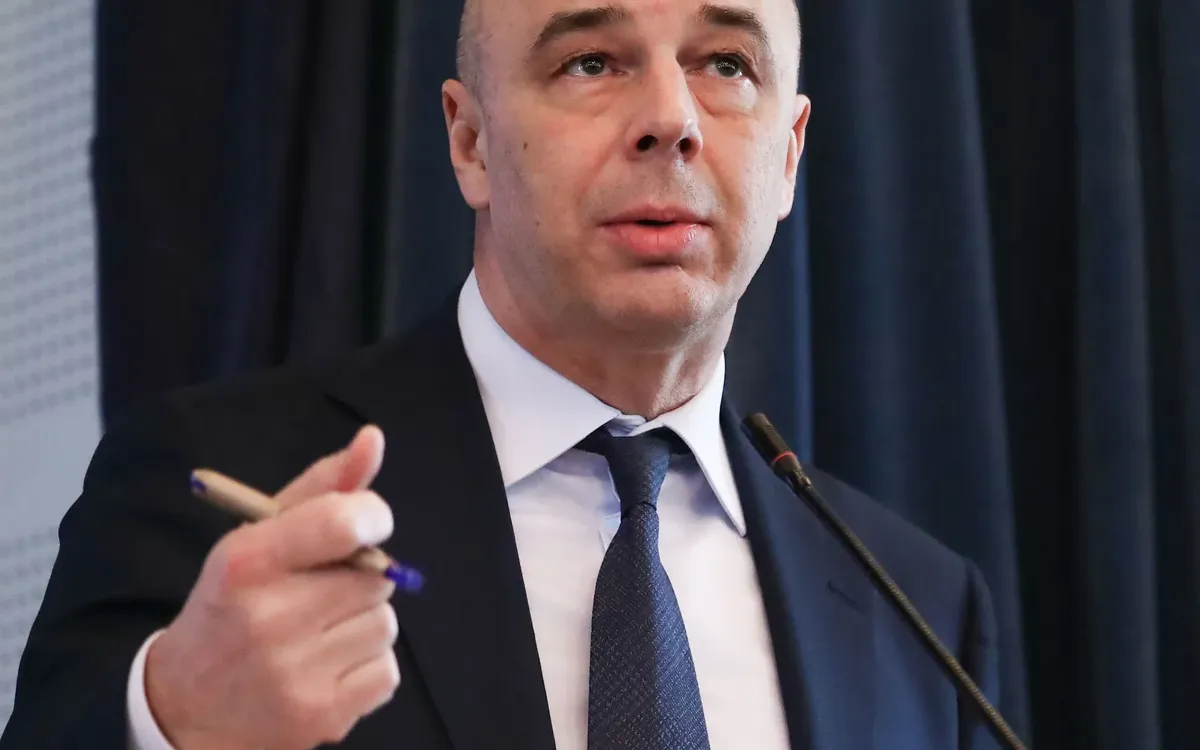
It would be wrong to waste the FNB in two years, we cannot scatter money from a helicopter and we are not going to compete with other countries in the amount of anti -crisis assistance to the population. This is a summary of Anton Silahunov’s program interview to Vedomosti, in which the Minister of Finance explained the leisure of the Government’s steps to save the Russian economy. We will look at the current situation through the eyes of the ordinary population.
Money must be distributed
In order for quarantine to be effective, people should not attend mass accumulation places and, therefore, mass infection.
First of all, we are talking about work, where they often get by public transport. And this is another place for a pottocial mass infection - a closed space with a single air circulation.
As the story with cruise liners has shown, it is an ideal environment for the explosive spread of the virus.
60% of Russians have no savings, 90% of savings have only 3% of Russians. That is, the remaining 37% accounts for only 10% of all savings.
Moreover, a significant, if not large, part of these 37% are pensioners. Working Russians either have no savings, or they are extremely small.
Do not forget that the seventh year is now being reduced by the income of the population, a significant part of its borrow is so that it cannot count on new bank loans, only on predatory, at hundreds of percent per annum, from MFIs.
Employers - minus state - following the results of the depression that began in 2014 and did not cease to this day, also have no reserves in order to pay salaries, even laid down by law in such cases, 2/3 of the salary.
A direct payment from the state can solve two problems at once:
provide the population with means, which allows him not to go to work;
To remove from the employer the need to make money to pay salaries to employees.
Now let's calculate how much money you need.
Pensioners receive pensions, parents provide children. In Russia, 75 million workers, from among whom about 10 million should be deducted, who continue to work quite officially during the quarantine period - police officers, doctors and the like.
In the dry balance of 65 million, which must be provided at least at the level of the subsistence level, which in the 2nd square meter. 2020 is 12,130 rubles for able -bodied adults and 11,004 rubles for a minor.
If we consider the age structure of the population, it turns out that we have about 35 million children for 65 million adults. That is, simply put, we have a family of three: two adults and a child.
Its monthly cost of living is 35,264 rubles. For banal survival in the absence of salaries and savings, such a family needs a payment of 17,632 rubles for each of the two adults.
In this case, the direct monthly payment to the population will be slightly less than 1.15 trillion rubles.
If the quarantine lasts two months, then it will be needed twice as much - already 2.3 trillion rubles. If there are three, then we are already talking about 3.45 trillion rubles.
Huge, overwhelming money for the state? But not.
The price of the issue
Currently, 12.86 trillion rubles have been accumulated in the FNB. Almost four times more than it will be needed for direct payments even in the case of a long three -month quarantine.
True, according to the report of the Ministry of Finance, of which 1.76 trillion were placed in “other permitted assets”, from where, at the first request, they are most likely not to get back.
But in any case, the Federal Tax Service contains 11.1 trillion of free funds, mainly placed in foreign currency, so the cheaper the ruble, the more devaluation, the more government reserves.
But this is not all: the order of trillion rubles lies on the account of Rosneftegaz JSC. In general, there is money.
If they are very sorry, then there are other ways: to occupy or print. However, if you look closely, it turns out that this is one and the same.
The Central Bank of the Russian Federation is already in fact printing money to compensate for falling out due to reducing the cost of oil of the federal budget revenues.
The scheme is simple: the state produces OFZ, the bank buys them and immediately goes and lays in the Central Bank of the Russian Federation. In fact, this is a classic scheme of the issuing budget deficit by the Central Bank, where “intermediaries” in the form of banks receive income for serving in this scheme a “fig leaf” designed to disguise the fact of lending to the government with a central bank.
And note, although we are talking about trillions of rubles, no one in the Central Bank of the Russian Federation declares that this will entail inflation. That is, a trillion emission to cover the federal budget of inflation will not entail, and direct assistance to the population will entail.
In principle, one can imagine a situation in which in 2020, three quarters of “oil” revenues “fall out” from the federal budget-this is about 6 trillion rubles-and part of the “non-wiped”, primarily VAT (stopping the economy for the quarantine period) and import customs duties (reduction of imports due to quarantine and the next devaluation).
Also, it will not be possible to completely abandon the regional budgets to their own devices that received a powerful blow from quarantine on income tax and personal income tax tax, which are aggregated 54% of all budget revenues of the regions. And it will be necessary to help the injured enterprises from the list of “system -forming” - all these are expenses that were originally unaccounted for in the federal budget for this year.
In total - in the worst of the options - you will have to find up to 10 trillion rubles. Increase them by 2.3-3.45 trillion, which will go to the population, neither the Central Bank nor the government want to. In the end, the population is the last in the list of their priorities, and has no opportunity to press on power.
At the same time, it is clear that the population would reconcile with the small inflation that the emission in the amount of a maximum of 3% of the country's GDP would cause - since it would have become a consequence of direct payments to each family of more than 100,000 rubles (for 3 months accumulated output).
Better to save Rosneft
The Minister of Finance Siluanov predicts that by the end of the year 7 trillion rubles will remain in the Federal Tax Service. And public debt, as we understand, will decently grow. And if now the government has a tiny, but positive balance of debt and funds in the FNB, then by the end of the year it will become very negative in any case. Is it to the population here?
Moreover, until a vote on amendments to the Constitution was carried out, it is impossible to arrange a serious devaluation that would solve most of the problems caused by super -delay oil and quarantine. Politically incorrect.
After all, then there will be a strong jump in inflation - since 36% of goods and products in the retail thorce came to us by import, and a considerable part of the rest is produced using imported raw materials or components.
In fact, the point is that to half the goods sold in the country, goods and products sold in the country. And if a sharp jump in prices also impose a sharp jump in prices on the zeroing of savings and salaries, then even the ultra -suffering Russian population can vote completely “wrong”.
We must not forget about the “pure” (that is, the difference between investments and borrowings) of the debt dozens of the largest state -owned companies, which on July 1 last year was no less than 9.2 trillion rubles. After all, if it happened, the state will not abandon fate, to pieces to the creditors, nor Rosneft, nor Gazprom.
But there is a problem: this is the most “what” just happened.
See what problems are facing the government? Well, is it to us with you? Moreover, we ourselves deprived ourselves of any instruments of pressure on power.
The whole hope that at the end of this or the beginning of the next year the price of oil will increase, and Donald Trump - if, of course, it will be reinstated - will bring Saudi Arabia to life. In the end, as Reuters reports, he forced her to go to repeated negotiations with OPEC+, threatening to withdraw American troops from Saudi Arabia and leave her alone with Iran.