
Translated material
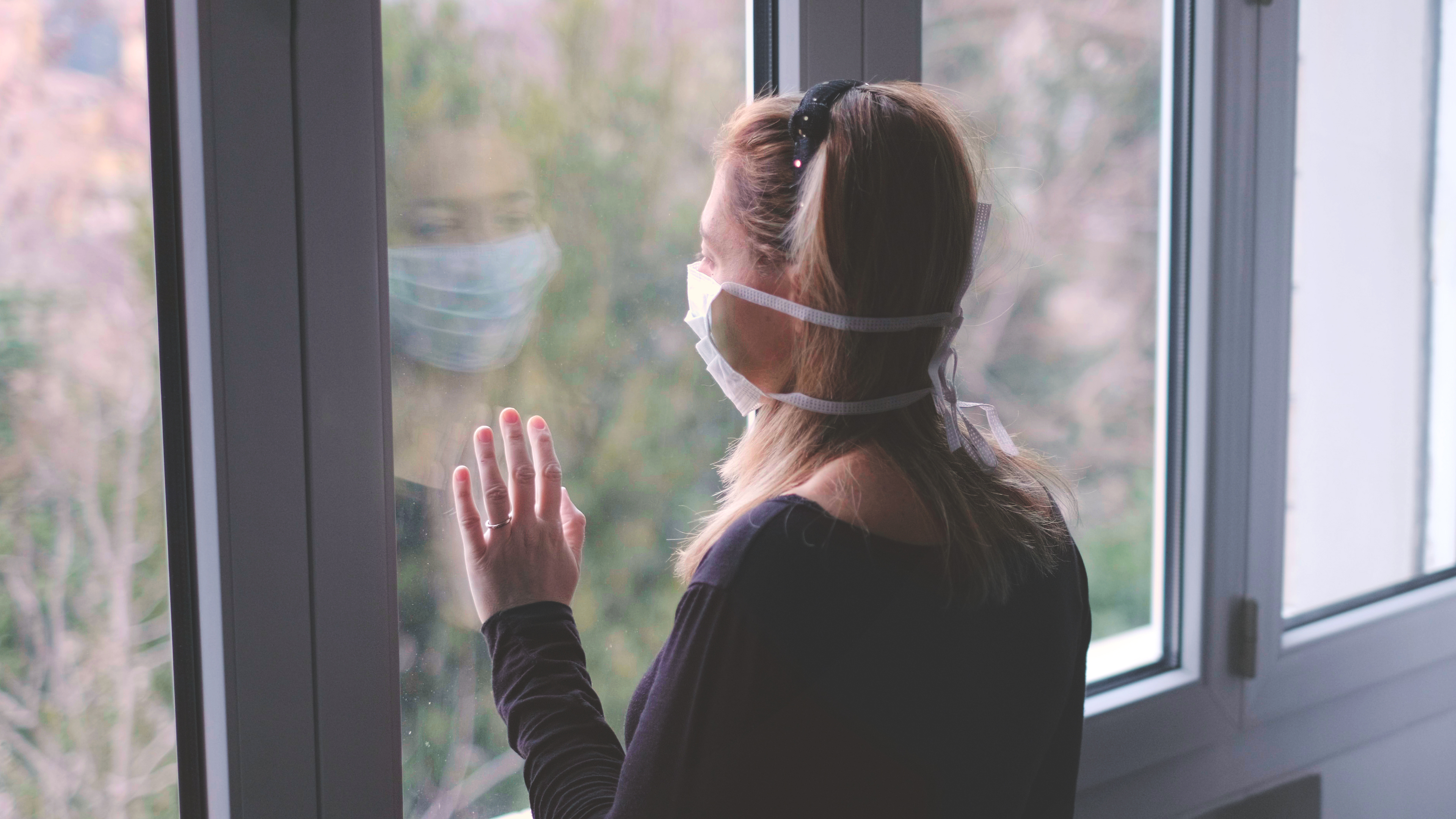
A man on quarantine
Sergey Yenikolopov, Polina Aronon and Alexander Arkhipov about the anthropology of self -isolation
- In the world there is an unprecedented anthropological experiment: due to the pandemic of coronavirus, life is “paused”, the population is placed in quarantine conditions.
- In unusual conditions of isolation, the human psyche is subjected to a serious test.
- People try to help themselves with flash mobs on social networks, "campaigns" in online bars, direct broadcasts, home theatrical productions.
- The conclusion of researchers: people prone to empathy, helping others, easier to tolerate the situation of the epidemic and quarantine.
Sergey Medvedev: For several weeks now, how an unprecedented anthropological experiment has been put on us. In the conditions of pandemic, self -isolation, actual quarantine, life is paused. How does the human psyche react to this? What new practices do we develop in these conditions? How will we get out of self -isolation?
Correspondent: During pandemia, quarantine and self -isolation are the necessary measures to prevent the spread of infection. However, our psyche is subjected to a serious test. Together with the refusal of the usual schedule, people are faced with several difficulties at once: there are many unorganized time, few people have enough will to self -discipline, “living” verbal communication is limited, and the constant stay in a closed space with the same people is tired. For normal work, the human brain must receive signals and incentives from the world and other people. All these factors, all the forced restrictions that we have encountered, do not benefit our psyche. Of course, there are people who, before the epidemic, consciously chose remote work and minimized social contacts to a minimum. But most of the temperament requires, if not constant changes, then at least a variety, even if it is a trip to a restaurant or a park near the house.
Many experts advise not to focus on self -isolation, observe everyday rituals, find any lesson, from analysis of the family budget and learning languages to washing windows and analyzing the wardrobe. On the Internet is now the golden time of content, people are struggling with the insulation of flash mobs on social networks, drawing, "campaigns" in online bars, direct broadcasts, home theatrical productions.
Sergey Medvedev: Today, a psychologist, sociologist and culturologist-anthropologist will take part in the program. The first we have Sergey Yenikolopov , head of the department of medical psychology of the Scientific Center for Mental Health of the RAMS .
Now self -isolation, apparently, will be extended: for six weeks, and there, perhaps, even for two whole months. Are you now faced with the growth of some mental illness?
Sergey Yenikolopov: Not that diseases ... There are several characteristic changes. The first - Paranoa is growing. It manifests itself in two planes: one is a fear of infecting, the second is an attempt to detect some signs of the disease. Anxiety-depressive characteristics also grow. But more, first of all, strong psychological changes.
Sergey Medvedev: Is this a hypochondriacal syndrome - does a person begin to listen to his own body, look for signs of the disease?
Esoteric thinking is growing: people become more dependent on all kinds of superstitions, mystics
Sergey Enikolopov: First of all, they describe what symptoms - coughing, runny nose, temperature: some people began to measure the temperature more often, in general, more seriously to their health, but this is not very productive in terms of adaptation to the situation. We note a sharp decrease in constructive thinking. Esoteric thinking is growing: people become more dependent on all kinds of superstitions, mysticisms, and faith in the conspiracy theories of different orders grow.
Sergey Medvedev: This current conspiracyology is covid-negative, covid-dissidentiality, covid-operation-this is part of the mental reaction that consists on denying and bargaining with the disease, such as “this is just flu, only elderly people and people are at risk” are sick?
Sergey Yenikolopov: This is the first. And the fact that only elderly and risk groups are sick is an opinion, largely imposed media. Old people are simply burdened by other diseases. And children, and young people, and every age is exposed to the virus. But, for example, arson of mobile towers ... A tower with a virus is an interesting combination.
Another very interesting reaction is the willingness to go into religiosity. Here the main churches need to be very careful about this. The fact is that against this background of esoteric and conspiracy thinking, as well as religiosity, all kinds of and most unthinkable sects may arise. The main negative point is that the possibilities of a constructive solution to the problem are reduced. The constructive thinking of many people is reduced in the first three weeks. Naturally, hostility is growing, hence, on the one hand, xenophobia, and on the other, the stigmatization of people associated with the problem of the disease. Although these are multidirectional things: on the one hand, everyone around the world is highly appreciated by doctors, on the other hand, their family and they themselves are subjected to persecution so that they do not appear in houses where strangers live.
Sergey Medvedev: And we can remember how in Ukraine, for example, we attacked buses with people evacuated from China, who were quarantined. Or how the churches and monasteries set fire to the same, because they consider them to be a rod of infection. Indeed, the Russian and Ukrainian Orthodox churches have hardly coped with the need for quarantine and isolation on Easter.
Sergey Enikolopov: Yes, but there is a reverse example - Greece, which fantastically conducted quarantine, primarily due to the influence of the Orthodox Church. There are no ready-made recipes, and it cannot be said that one church is better than the other, they all act approximately equally and will be equally exposed to influences. I do not exclude that the Catholics in a sense will become victims. And the attack in Germany on people with spraying solutions and other things! .. In general, around the world is about the same. In this sense, we are not unique.
Sergey Medvedev: My colleague Veronika Bode wrote about attacks on Europeans in India: they are considered to be different infection.
Sergey Yenikolopov: This is a general trend, and very alarming, because hostility is growing.
What I was talking about is the dynamics of people sitting on quarantine. But how will we get out of this quarantine? Is it so easy for us to recover in goodwill, openness to other people? Here I can’t say anything optimistic yet.
Sergey Medvedev: Does our attitude to the disease and death change? In the last 30-50 years, death was replaced by the side of public life. But now there is a disease around us, we are constantly reading about the deaths of people famous or familiar to us, ambulance carriages go through empty Moscow. Will there be some normalization in modern society that, yes, a person is mortal, yes, there are many diseases around, yes, we all go under God?
Sergey Yenikolopov: No, we build a buffer: one of the buffers is a culture in the broadest sense, and religious too, the second is self -esteem and self -esteem. They are interconnected, but some events break through these buffers: in particular, concrete death and even talk about death. And in this sense, we are now in an inflated state, because death has now become attended in everyday conversations. In America, after September 11, it was the same. And this stress of awareness of death is very much affected by a person.
Sergey Medvedev: Many people are isolated by their family and spend such an amount of time together as they have never spent before. Suddenly, you are faced with the reality of another person, with whom, perhaps, you saw only at dinner and breakfast. How will this affect society?
Sergey Enikolopov: Some have already complained to me that they began to hate their beloved dog: they also did not encounter her before. Married couples with experience suddenly found themselves in a situation of almost a honeymoon, when you need to spend all the time together. There is already evidence that not all this is withstanding, so we need to expect an explosion of family violence. I am completely not going to call for the law on family violence, which they are now trying to pull under the noise, because, unfortunately, children, and not wives and husbands at all, will be victims. People are not ready. The child in the same situation as an adult, he is also not used to sitting at home. There is some kind of attempt to structure his life through online education, but not everyone can withstand it.
The most significant that will affect our future life is a kind of rethinking life in offline and online. Life shows that after all, a person is a social being, and he wants to communicate in real mode. And the emotional reaction is still no more verbal as non-verbal, we pay attention to how a person listens to us, how he reacts to our emotions. People want to talk to someone, they have a lack of communication.
Sergey Medvedev: Our guest is Polina Aronson , sociologist, editor of the Opendemocracy Russia and Dekoder portals from Berlin.
We have repeatedly discussed that the world of introverts is coming, the world without touching. And, it seems, your predictions have come true in such an unexpected way: we have come a contactless civilization, which has been talked about all recently. In fact, the same contactless world suddenly came when a person closes in himself and is afraid to get out of this shell?
Polina Aronson: To a certain extent, this imperative "not to touch" existed before the pandemic. And therefore, we can say that to some extent, probably, those cultures and society that were guided by him, easier, calmly perceived this quarantine than societies with another culture.
To a certain extent, this imperative "not to touch" existed before the pandemic
Back at the beginning of the twentieth century, sociologists wrote that the need for social distance becomes in the mass society. The more mass growing, the more we have the need to build personal boundaries. I think that in a pandemic situation, the dialecticity of this internal contradiction of the structure of modern society simply came to the fore.
And of course, it is wrong to talk about social distance. It is not social, but physical, its most important subject is the body. When we distant from each other by two meters, two kilometers or two thousand kilometers, this does not mean that we create a social distance. Just a social distance, oddly enough, is now reduced by using new technologies. Communicating through the same Skype, we instantly plunge into each other's intimate space. We no longer have public space left, there was no place where we could create some kind of performive communication. As a result, performance is constructed in the framework of our private communication. This is a completely new task for us.
Sergey Medvedev: Apparently, the time comes for new bodily, when a person begins a conversation with his own body, listens to him, unexpectedly begins to hear his own breath. Probably, an anthropologist is very interesting to explore this new bodily, when a person becomes bodily introvert.
Polina Aronson: After all, the topic is still endlessly exaggerated in public discourse, in any case, it is very noticeable in Germany, when there is a conversation, for example, about socially relevant and socially irrelevant professions. Doctors, firefighters, police, supermarket workers are people who cannot work without connecting their body in their work. They work in the body. And for these people, their body is as if sacred. We always tell us that these are the heroes of everyday life, which all the time on the front line. Their bodies are allowed to be present in publicity, go out, engage in their labor.
At the same time, there are a large series of professions where the body is also involved in the labor process, but they don’t say about them anywhere-these are the bodies are useless: artists of theaters, musicians, masseurs, manicure, sex workers.
I really liked the remark of one well-known Berlin Sex Watchman. She leads a blog called "whore on the quarantine" and writes that for her quarantine has become a personal tragedy, a crisis of her identity. She chose this profession because she never wanted to work in the office. And she feels completely excluded not only from her activity, but also from public discourse. Her work is not considered important, systematically relevant.
In addition, the bodies in public discourse are divided into dangerous and non -hazardous. If you have antibodies, then you are no longer dangerous, and if you do not have them, then you are just a walking biological weapon. It seems to me that many people are now experiencing a very strong alienation from their body. I heard from those with whom I spoke: there was a distance to my body, the fear that you will not even so much get sick yourself as you are a bearer of some invisible threat.
Sergey Medvedev: Suppose that we will gradually leave quarantine: to go out into the streets, to resume our previous practices of sociality. And what will happen to sex, with love? In the post -carandic reality, when still the uncertainty remains, are you not a carrier of infection, how will all these acquaintances will occur in cafes, clubs, on the streets, how will we have to rethink our own bodily and test a person ten times before agreeing to physical intimacy? Require certificates for the presence of antibodies?
Polina Aronson: I talked with people who control various rating platforms. They say that now people are less looking for new acquaintances, but there are much more correspondence, they occur much longer than under ordinary conditions, and higher the amount of data that people exchange. This suggests that in conditions when we cannot quickly get sex and quickly change partners, we suddenly have some kind of contact with a person, which is atypical enough for such platforms. As a rule, a long correspondence, some kind of immersion in a person’s life does not occur there or is already beyond the borders of the platform itself. And people who use these applications say that communication has become much more emotional.
Such a new situation on these platforms carries some kind of emancipation: you cease to be a product of quick use. You no longer need to sell your sexuality several times every day, you plunge into the communication of a completely different quality. You can probably even say that women are released, they don’t have any more need to urgently please a man, to urgently blind for himself some story. And since both pauses have come for both of those and for others, the people with whom I talked on this topic feel that now you can not prove anything (including myself), not to look for these new partners endlessly, and not to put some checkmarks.
Sergey Medvedev: When leaving the quarantine, do we wait for more divorces or marriages?
Polina Aronson: It is difficult to say: there are those and other trends.
Sergey Medvedev: In China, a lot of divorces are recorded when leaving the quarantine. At one time, I was impressed by the fact that in Japan the level of divorces of 60–65 years is very growing: both spouses retire and suddenly pay attention to the person living nearby.
Polina Aronson: I think you can expect a high level of divorces. But there is another trend - people who come together. Surprisingly: people who decided to take such a step tell how good they are with each other. They did not expect this: together even better than separately! But these things are much more difficult to calculate than stains. Often these practices are quite informal, people do not necessarily make a marriage and are not even registered at the place of residence.
Sergey Medvedev: Says Ekaterina Brudny-Chelyadinova , the founder of the group "Isaizolation" , with which Russia became famous in the world. In this group, people, being at home on quarantine, begin to portray with their bodies the stories of the world's largest works of painting.
Ekaterina Brudnaya-Chelyadinova: We were just tired of sitting in isolation, and it was an opportunity to have fun. We just decided to copy the picture. In three weeks, we were half a million. The first hundred thousand came in the first week, on the fourth day. These are static performances, cosplay, installations - as you like can be called.
People begin to use what they have at home, the functionality items are not the same as in the picture, but at the same time they organically fall into the work of art of past centuries: packaging from eggs as a lush hairstyle, hoses from a vacuum cleaner, and dresses that turn into some incredible outfits. Или, смотришь: у кого-то потрясающий камзол, – начинаешь вглядываться, и выясняется, что это пуховик, надетый задом наперед и перевязанный какими-то лентами. Это самое интересное, когда люди берут совершенно обычные вещи нашего времени и превращают их в элементы полотна.
Девушка рассказывала, что они разлучены с бабушкой, та на самоизоляции, и чтобы ее развлекать, они делают к нам в "Изоизоляцию" фотографии картин, а потом присылают их бабушке, рассказывают, какой получили фидбэк, сколько было лайков, что им написали люди. И однажды бабушка вдруг говорит: а вот я сделала себя в образе "Незнакомки" (бабушке 88 лет). Девушка разместила это в группе и собрала порядка 16 тысяч лайков и тысячу комментариев. It was amazing! Группа в этом смысле очень духоподъемная.
Когда все это произошло, добрые люди тут же рассказали мне, что вообще-то есть музей Гетти, который в твиттере, есть голландский музей, который в инстаграме... Сейчас параллельно существует несколько таких историй. Мы просто вплелись в эту общемировую историю, но при этом у нас не только русскоязычная аудитория, пришло очень много людей из других стран: Италии, Испании, Америки. Многие впервые узнали об этой истории почему-то именно от нас, а не от музеев, которые есть у них в стране.
Сергей Медведев: К нам присоединяется Александра Архипова , социальный антрополог, старший научный сотрудник ШАГИ РАНХиГС .
Вы следите за работой этой "Изоизоляции"?
Александра Архипова: Конечно, это все очень интересно. Но мне очень важно понять, почему люди так сильно этим увлекаются. Ведь это очень известная старая история: в течение XIX–ХХ веков люди в Западной Европе и в Российской Империи играли в так называемые "живые картинки". Предлагалось поставить некоторую сцену: имитировались известные театральные постановки или картины. Это было популярное развлечение в дворянских семьях.
Сергей Медведев: В данном случае это очень интересно, потому что это происходит из квартир людей, мы видим их интерьеры. Интересно отследить, каким образом стирается граница частного и публичного, как приватное неожиданно становится общим. Ты попадаешь внутрь квартиры человека и очень многое узнаешь о нем по этому бэкграунду.
Александра Архипова: Несомненно, сочетание публичного и интимного поменялось. Но "Изоизоляция" – это лишь одна из многих практик, которые сейчас существуют.
В мире развиваются практики, идущие по двум направлениям. Практики конвергенции, объединяющие людей, их цель и социальная функция – "давайте объединимся перед лицом тяжелой угрозы". Эти практики должны вызывать сильный положительный эмоциональный отклик. А есть практики дивергенции, направленные на то, чтобы разделять общество, искать врага и выдавливать его из нас.
Есть практики, объединяющие людей, их цель – "давайте объединимся перед лицом тяжелой угрозы"
Например, что общего между "Изозоляцией", аплодисментами врачам, разрисовыванием окон радужными красками и постановок игрушечных мишек в окнах Норвегии? Это имеет общую эмоциональную подоплеку – "давайте объединимся". Незнакомые люди начинают вовлекаться в такие эмоциональные истории, демонстрируя поддержку и вызывая друг у друга положительные эмоции. Такие практики усиливают не просто эмоциональную поддержку, но и эмпатию (сочувствие другим людям). И часть общества, которая вовлечена в практики конвергенции, начинает лучше реагировать на вызовы пандемии.
Во времена локальной эпидемии свиного гриппа в Индии группа исследователей изучала людей, и выяснилось, что те, у кого высокая степень эмпатии, лучше прислушивались к медицинским советам, лучше убеждали окружающих, что надо мыть руки и соблюдать социальную дистанцию, создавали разные практики, объединяющие людей. В результате вокруг них создавались микросообщества, и люди в них гораздо меньше заболевали: есть прямая связь между эмпатией, социальными практиками и возможностью не заболеть.
Однако есть и практики дивергенции, направленные на поиск и выдавливание врага. Это может быть внешний, а может быть внутренний враг. Сначала почти все общества пошли по пути ксенофобии, то есть начали выдавливать китайцев. Сейчас мы находимся на стадии практик надзора и контроля, ищем потенциально опасных. Потенциально опасные могут быть двух типов – те, кто нарушает режим изоляции, и те, кто контактировал с зараженными. Люди чувствуют опасность. Для них способ спастись есть не способ объединиться эмоционально в некоторое сообщество, а наоборот, найти врага и спастись за счет этого.
Такие люди пишут сообщения о том, что "Иван Иванович гуляет во дворе". Это такая низовая практика контроля. Я знаю одну женщину, которая еще в начале марта отсматривала в инстаграме фотографии знакомых, искала, кто был в Италии и Испании, и пыталась сообщать об этом кому следует. Она считала, что, выискивая опасных людей, она спасает себя. Это практика дивергенции. Мы все знаем про балконное гестапо. Эти практики получили такое название, когда в Испании и в Италии во время сильного пика эпидемии и карантина люди публично шельмовали других, которые гуляли по улице: свистели, кричали оскорбления, показывая общественное негодование.
Сергей Медведев: В России такого, по-моему, все-таки не было.
Александра Архипова: Это не потому, что мы таки хорошие. Просто у нас по-другому устроена структура соседского сообщества: люди недостаточно знакомы между собой.
Но у нас процветает другого рода практики надзора и контроля, причем в предельной форме. Если мы чувствуем опасность, мы начинаем преследовать человека, сообщать куда следует, что здесь живут зараженные, оставлять ему под дверью оскорбительные записки. То есть полностью нарушается свобода, правила о том, что нельзя сообщать медицинский диагноз. Люди, узнав, что в этом доме живет зараженный коронавирусом человек, начинают очень плохо к нему относиться. Это настоящая травля. И мне неоднократно об этом сообщали.
Сергей Медведев: Но это же было и раньше. Я вспоминаю совершенно ужасные рассказы о том, как из подъезда многоквартирного дома соседи изгнали детей с раковыми заболеваниями.
Александра Архипова: Да, только тогда все кричали: "О, боже мой! Какие специальные люди живут в этом московском доме!" Не, они не специальные! This happens constantly. И вот сейчас мы наблюдаем это в масштабе страны. Когда люди находятся под постоянной угрозой, поведение меняется.
Сергей Медведев: А чего все-таки больше в российском обществе – конвергенции или дивергенции? Часто социологи и антропологи говорят, что в России социальная атомизация, общество разъято на отдельные ячейки. Как российское общество прошло этот тест коронавирусом и изоляцией?
Александра Архипова: Во-первых, нет никакого единого российского общества, а есть много разных сообществ. Во-вторых, тут нет никаких количественных данных. Но, судя по разнообразию случаев, практики дивергенции все ширятся и ширятся, и это несколько пугает.
Сергей Медведев: Итак, эмпатия – это лучший иммунитет. Будьте здоровы, сочувствуйте другим, прислушивайтесь к собственному телу и оставайтесь в изоляции!