
Translated material
Working with an old "watering can"
Memory and truth about the blockade Leningrad
Under the most replicated photographs of blockade Leningrad, you can often read: the author is not installed. In fact, all 50 photojournalists who worked in the besieged city are known by name. No one had left the camera left but professional reporters. Private, amateur, home photos that would show us the blockade as the diaries show do not exist. We can judge that time and that life only by the pictures of proven, controlled and censored. Although the photographers then knew their Aesopov language.
“The photographic equipment of citizens in the blockade Leningrad was seized,” says Irina Karpenko, the scientific secretary of the State Museum of the History of St. Petersburg (GMI). - If a person with a camera was seen in the city, they could accuse of espionage. Only professional photographers could work, but for this it was necessary to obtain permission in the political department of the Leningrad Front.
Most reporters were attributed to military units, had the status of military personnel and worked on the tasks of TASS, Swinformburo, Central and Army newspapers and the only local citizenship-Leningradskaya Pravda.
“Censorship worked, and the photograph was an instrument of propaganda,” continues Irina Karpenko. - It was supposed to publish pictures that speak of the exploits of Leningraders, people had to see that the factories were working, teenagers, women, and elderly workers were coming there experience. If you shoot the front, this should be a portrait of a hero, a famous sniper, pilot, nurses with a story about a feat. Later, pictures showing the atrocities of the Germans began to be published: destroyed houses, architectural monuments.
But the newspaper’s blockade did not publish genuine horrors. Therefore, in military pictures we rarely see what people wrote about in the diaries. This was prohibited by censorship.
But reporters lived in the city. And hunger, shelling, bombing for them was also working, photographers went into the thick of the thick. Therefore, they began to appear completely different pictures that - they understood this - no one would publish.
“During the war, it was impossible to show a lot,” Vsevolod Tarasevich said already in the 90s photocor Lentass. - These were the conditions of censorship. But I shot. And by duty and on duty.
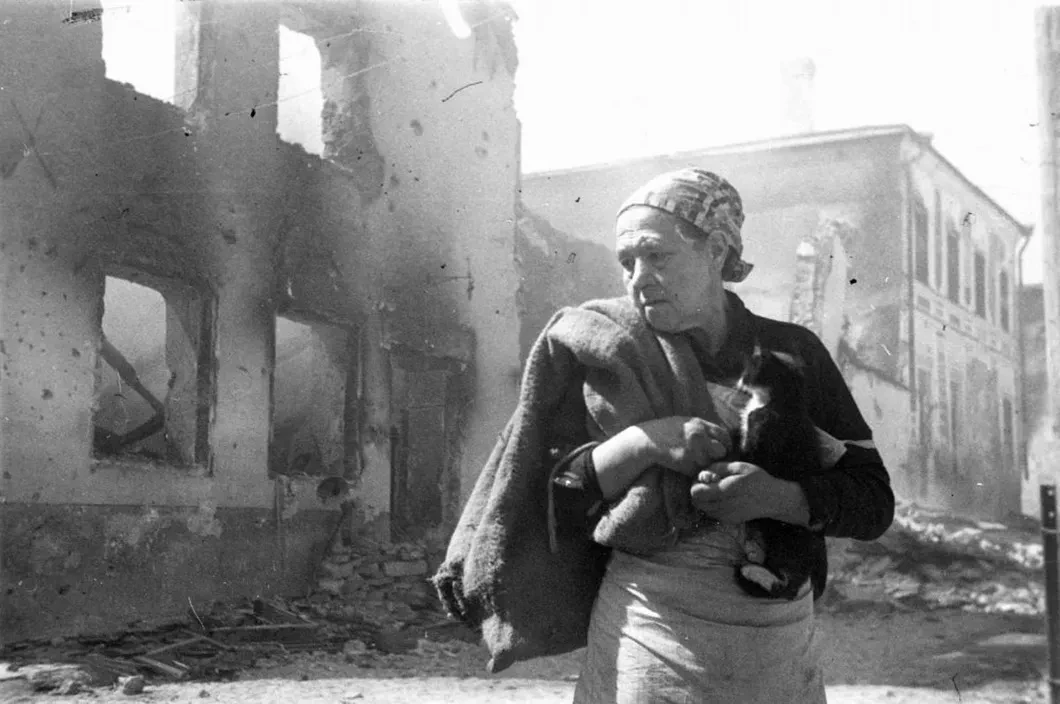
Vsevolod Tarasevich arrived in Leningrad in 1937 after school, entered LETI (Leningrad Electrotechnical Institute), and his amateur photographs almost immediately began to publish “shift” and “Leningradskaya Pravda”. When the war began, he was 21 years old. And he has been working as a Lentass photo correspondent for a year now. Therefore, he shot the war from the first days, and according to his pictures you can see how Leningrad changed.
“Among the photos there are both gray and not very sharp,” he recalled in many years, examining the cards. “Were worked as an old“ watering can ”, which he always wore in his pocket.”
The terrible Leningrad in the winter of 1941-42 the work of reporters could simply stop: there were no opportunities for her elementary.
“The process of the film proves certain temperature conditions, which during the blockade it was very difficult to provide,” says Irina Karpenko. -In January-February 1942, Leningrad newspapers were released at all without photographs.
“January 1942. They began to live without light, ”wrote Vsevolod Tarasevich. The films, the processing of which required minutes, he had to show half an hour. When the water also disappeared, it was necessary to drown the snow. If somewhere he breaks through the pipe, Leningraders carried a bucket and pots to the place of breakthrough. And photographers have whole series of pictures in which people get water. One of them did on Nevsky Prospekt David Trakhtenberg .
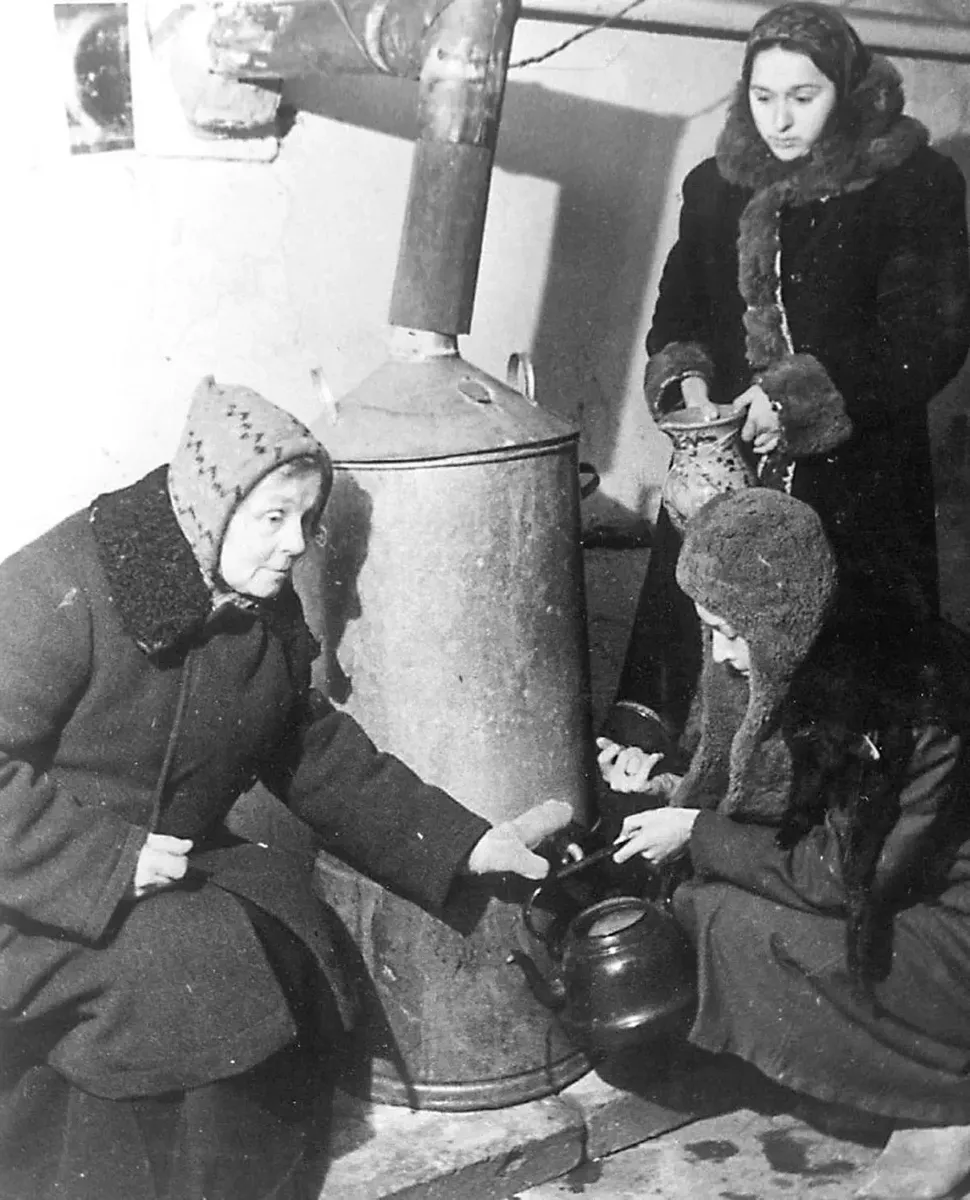
“He was a brilliant photographer, he was not satisfied with gray pictures from which the printing houses could not take a tone cliche,” says the former keeper of the photograph of the GMI Lyudmila Myasnikova. - And he invented a way to make them more contrasting: he scared them, then circled in mascara. When printing in the newspaper, the photograph turned out well.
Photocor of Leningrad Pravda David Trakhtenberg was an artist in education. And he photographed as an artist: he knew how to grab the pose, facial expressions that it turned out more than just a chronicle.
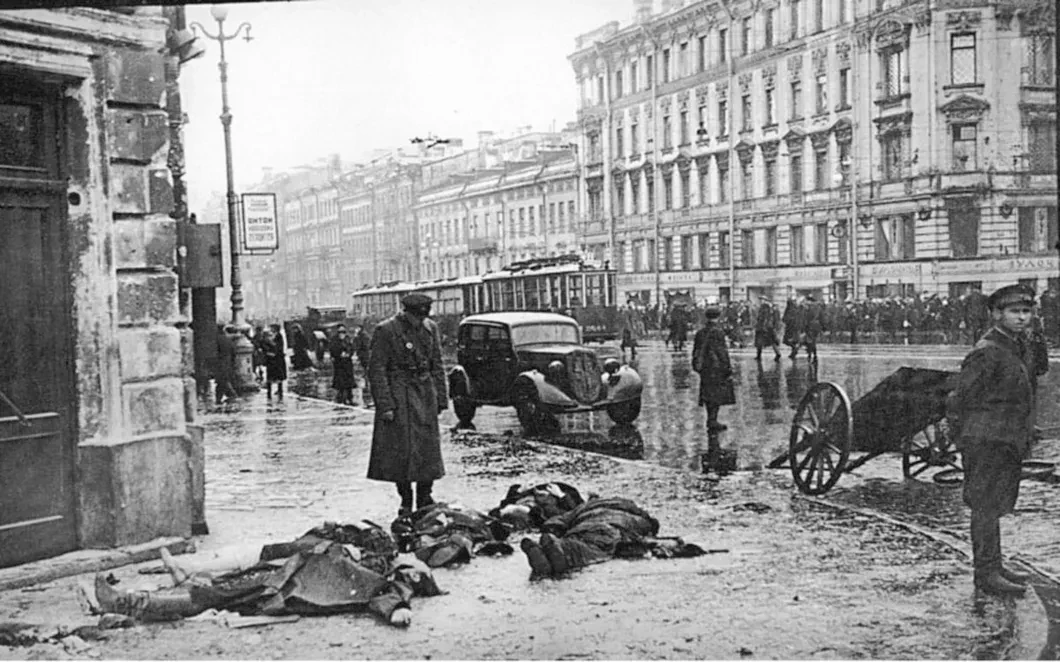
“He has a terrible picture“ The first shelling of Leningrad, ”continues Lyudmila Myasnikova. - The street is an officer, at his feet - mutilated people. The officer’s faces are not visible, but his whole pose conveys such confusion ...
Trakhtenberg shot the war from the first days: how the children were evacuated from Leningrad, how the workers left for the militia, how the shelling began, how people survived in the blockade city, how they went to the pushing things for food, how school lessons took place in bomb shelters.
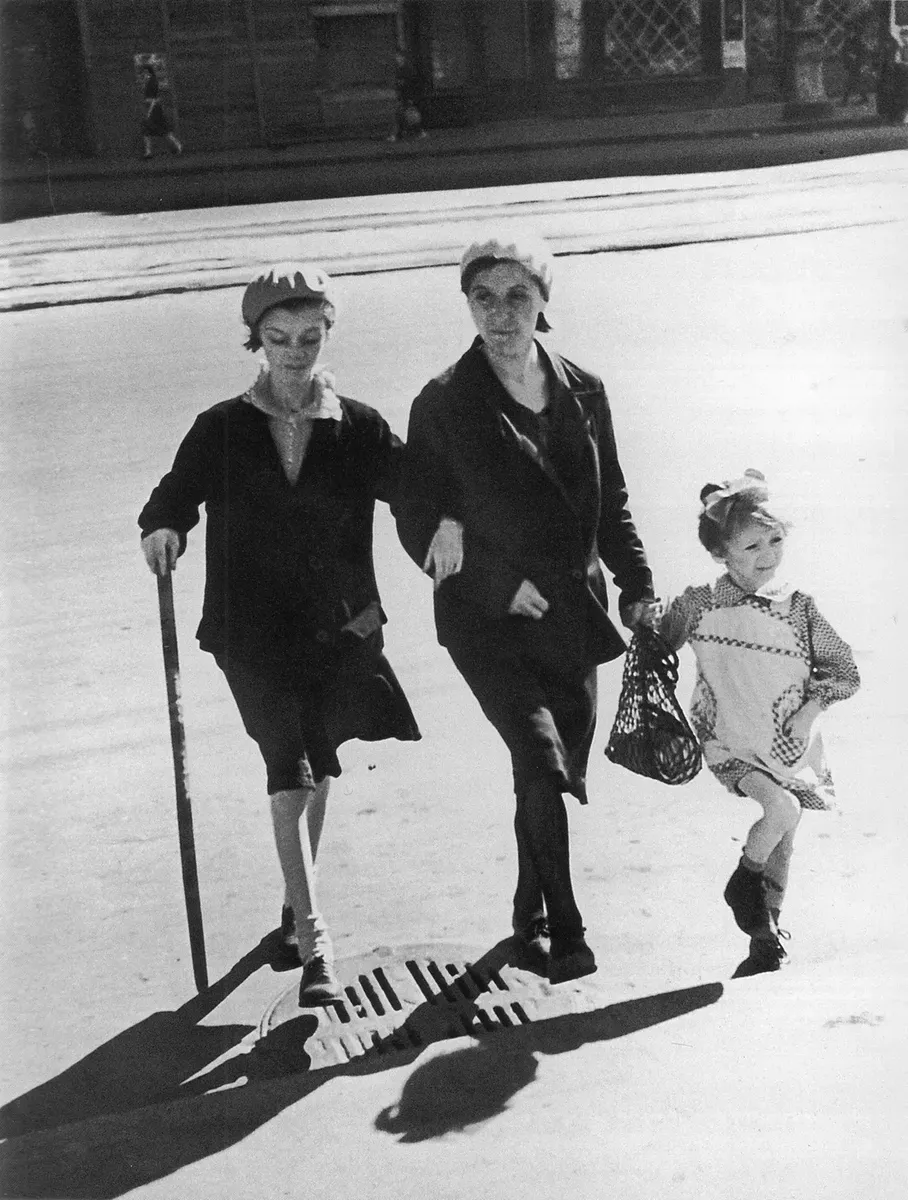
One of the most famous blockade pictures was made by Photocor Lentass Vasily Fedoseev . There are no killed and wounded in the frame, a woman and two exhausted girls are simply crossing the road. The oldest is 13 years old, she relies on a stick, the youngest, 4-year-old, as if skipping runs on thin legs. Both faces are very adults. Their names are known: this is the Famy family - Veronika Aleksandrovna, Laura and Dolores. The picture has its own story, it was told in the Blockade Book Ales Adamovich and Daniil Granin. “These were not legs, but bones covered with skin,” says Veronika Opakhova. -Sometimes I still look at my feet: some brown-green spots appear under my knees. This is under the skin, apparently, the remains of a scurvy illness ... ”Dolores in that picture really tried to jump, but it did not work out very much. “Her knee was like this: it was all swollen, poured with water,” her mother explains. - She is four years old. What do you want? The sun warms, she goes with her mother, her mother promises: here we take a walk, come home, go to the dining room, take lunch on the card, come home and eat. But the word "eating" was, you know, a magical word at that time. "
Fedoseyev generally has the same pictures: without bombing and corpses, but absolutely piercing. Children wrapped in fur coats walk on the steps of the Kazan Cathedral. Because there, to the cathedral, they transferred their nurseries. Fifteen -year -old Vera Tikhonov at the lathe: she fulfilled a half adult norms. Women read ads on the exchange of things for food - and a leaflet immediately hangs: “A strict revolutionary order is the key to our victory ...” and another announcement, one for the whole frame in large letters: coffins are sold. And then May 1942, this terrible winter ended - and the Leningraders are already standing at the poster of the Muscomedia Theater.
Fedoseev was not afraid to photograph “outside” editorial tasks and special permits: he simply took the camera and went to wander around the city, meticulously fixing everything that he would notice. He was regularly caught (spy!) And led to the commandant’s office. Only the certificate saved.
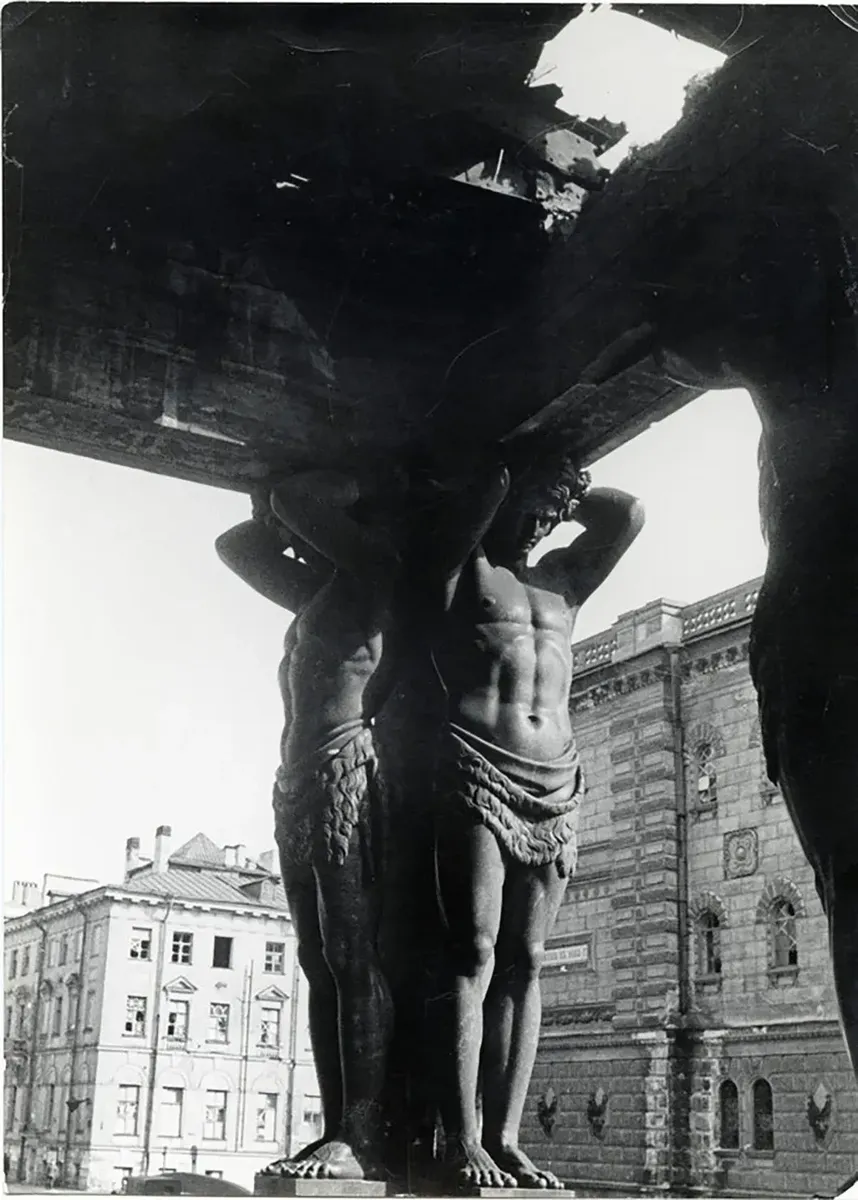
However, usually photographers tried not to go out into the city one at a time. In addition, editorial tasks often coincided. And there are many plots shot by different masters in different ways. One of them, for example, is a portico of a new Hermitage, who suffered from shelling. The “classic” is considered a frame made by Boris Kudoyarov : he managed to catch the perspective so that, looking at the photo, we feel when suddenly it became difficult for the Atlanteans.
Moskvich Boris Kudoyarov before the war was a sports correspondent for Komsomolskaya Pravda. When the front department was formed in the editorial office, he did not get there, he was determined in the rear department. Then he got a business trip to Leningrad - and flew to the city on September 8, 1941.
“On the day when Kudoyarov flew to Leningrad, Badayevsky warehouses were burning, Nevsky Prospekt was under fire,” says Lyudmila Myasnikova. - But people have not yet really understood what was happening. And in his pictures they are not only frightened, but also very confused. He managed to capture this mood. He all the time went into the thick of the events, but during the war he was never even wounded. Only one picture suffered: the negative was punched by a bullet. There was a battle in Shushara. It could be removed from the shelter, but the tanks would have turned out to be the size of a match head. Kudoyarov crawled into the thick of the thick and, when the fighters pulled out the gun to an open position, jumped up and began to remove them point -blank. At this moment, the enemy tank exploded - and it hit the frame.
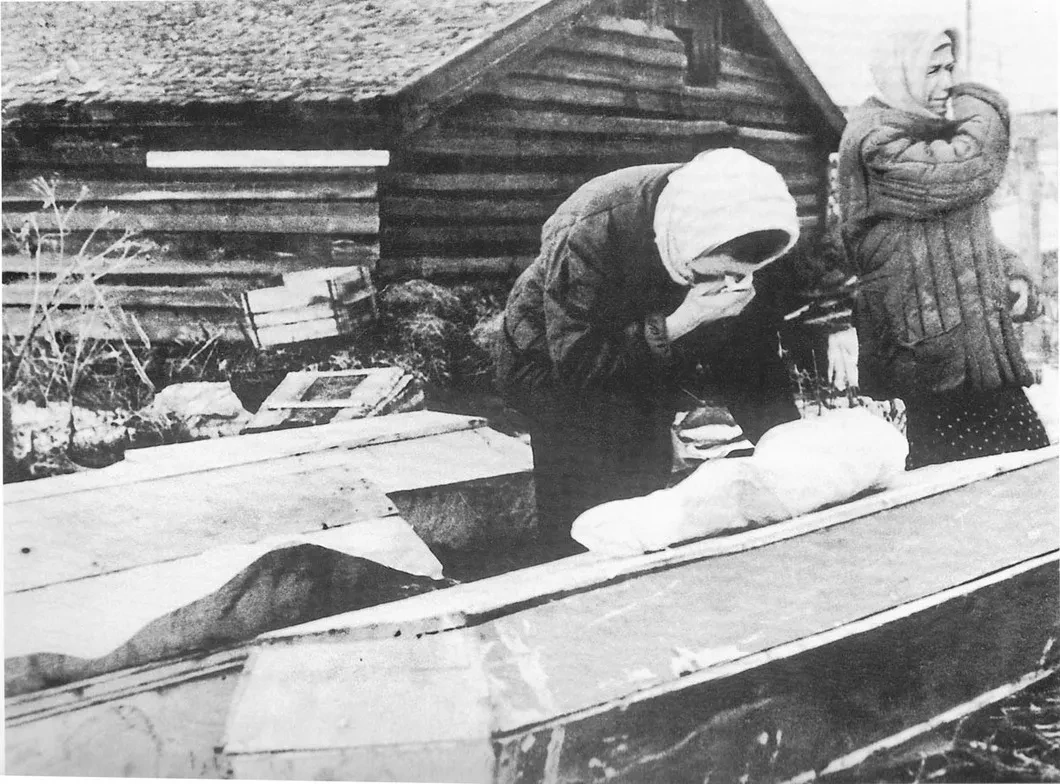
Kudoyarov photographed the first militias of the besieged Leningrad. The first shelling - and loading the car killed in the body. Crippled children in hospital wards. The removal of corpses from the wasteland at Volkov cemetery.
“Through the array of the censorship shots, such single personnel break through,” notes Irina Karpenko. - They are precisely single, but from this they are even stronger. There are separate pictures, there are very few of them, where the Volkovsky cemetery with mass graves was shot, or Nevsky, where corpses are being taken on sled. Kudoyarov has a picture in which two women cry above a coffin with a child. He caught the woman's face. This was not published in the newspapers.
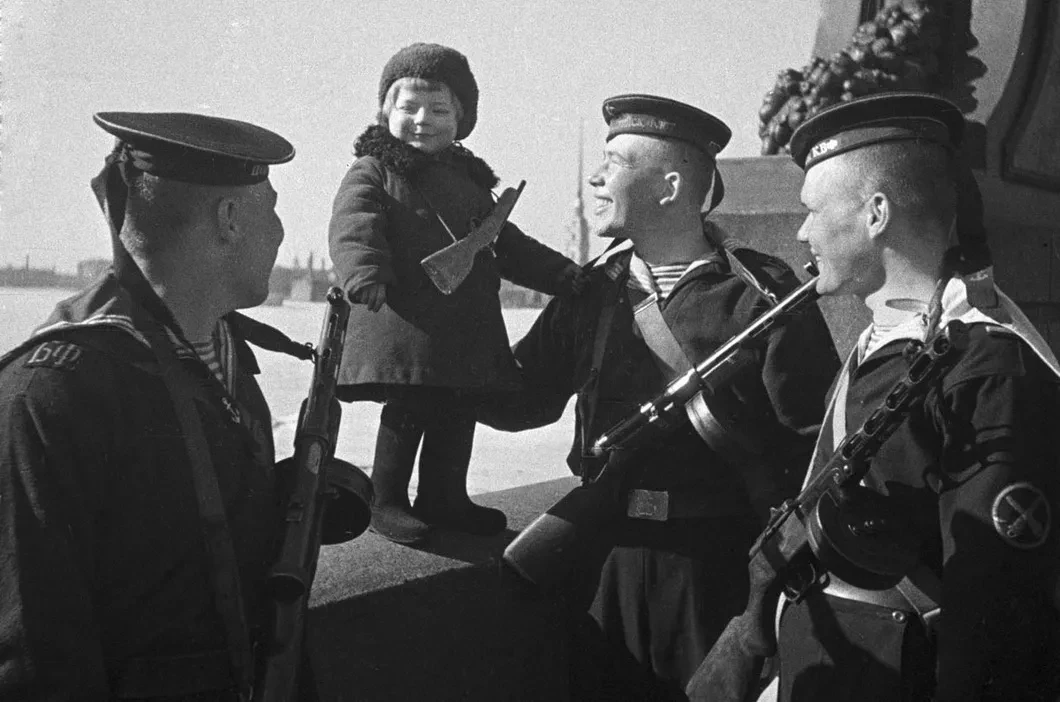
There is another amazing picture of Kudoyarov: war, and on the Neva embankment, sailors smile at a small child, and he laughs in response. For a very long time it was believed that the baby in a black coat and take with a toy automatic on the chest - the son of a shelf. Lyudmila Myasnikova found out the story of photography.
- It turned out that this is a girl. Once the sailors patrolled the city and saw a dead woman along whom the child crawled. They took the girl with them, called Tose, dressed, shoe. When there was free time, they walked around the city with her. And somehow, on one such walk, Kudoyarov caught this moment.
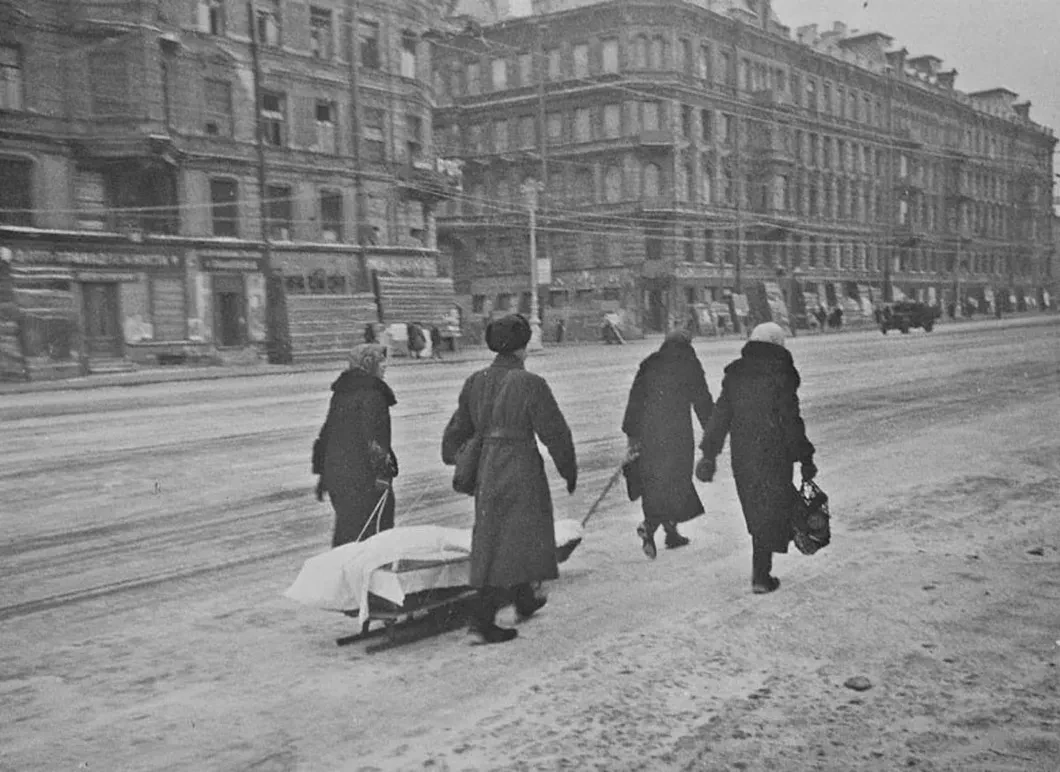
Sergey Strunnikov studied the movie operator, but during service in the army began to shoot for the newspaper "at a combat post." In August 1941, he was invited to work in Pravda, and in October he became a military correspondent. He shot near Moscow, near Bryansk and Voronezh, but sought a business trip to Leningrad. At the end of 1942, he achieved: he was sent to prepare a photo album about a blockade city. The book did not come out, but the terrible and nasty pictures of Strunnikov remained: the family, taking the coffin on the sledges along Nevsky, crippled children in the hospital, the school class in the bomb shelter and hundreds of others, which then did not dare to publish.
You are sitting at home, and the "new" - comes out!
Dear readers! Our editors, printing house and “Russian Post” work during quarantine. And most newspaper kiosks - no. Your support is important to us, but even more important is that you stay at home. Therefore, now is the time to issue a subscription to the "new newspaper." The postman will deliver it to your address! Sign yourself, parents, grandparents!
How to subscribe: instruction