
Translated material
Double anniversary of Sergeant Barar
In February, a resident of Brooklin Nikolai Moiseevich Barrer celebrated his 100th anniversary. And in May he celebrates the victory - and 75 years since he signed in the Reichstag. The Feature Military Fleet family was lucky to visit the NT correspondent, who learned details about his amazing life
Thousands of veterans of the Red Army have long been meeting Victory Day in the new homeland - including in the countries of their military allies. Despite another environment and the environment, the holiday of May 9 is still important and significant for them. One of the veterans who celebrates the holiday in the United States, even before the anniversary of Victory, celebrated his personal anniversary. In March, Nikolai Moiseevich Barr celebrated his century.
Native language - Yiddish
He was born in 1920 in the Ukrainian village of Potolovo, not far from Uman, an important religious center for Jews - who later became a place of pilgrimage for the Hasids. Already at the beginning of the 20th century, the inhabitants of the town began to leave for the most remote corners, including America. Nikolai Moiseevich had to go this route only in the early 90s.
The village of Barar was divided into two parts - Ukrainian and Jewish. In early childhood, he did not know either the Ukrainian or even more Russian - he spoke only in Yiddish.
To study, he had to go to school in a neighboring village. At the age of 14, upon admission to the technical school in Kharkov, Barr still did not speak Russian. But since mathematics was the main exam, the difficulties with the language did not prevent him from successfully passing the test. He subsequently recalled that the examiner wrote the tasks in the left of the upper part of the board, and solved them Barr on the right at the very bottom: he did not reach above. Due to the hunger, which then raged in Ukraine, it was not easy for him to gain not only knowledge, but also growth.
In general, all the inhabitants of the Jewish part of its place were killed - from children to old people. The grandmother of Nikolai Moiseevich was shot, then she was 102nd year
The small Jewish homeland of Barar was erased from the face of the earth in the first two years of the war. All his relatives, who remained in the town, were killed. In general, all the inhabitants of the Jewish part of its place were killed - from children to old people. The grandmother of Nikolai Moiseevich was shot, then she was 102nd year ...
On the line of fire
They called up the barrier in 1939, and he met the beginning of the war in artillery intelligence. Soon after the start of the German offensive, his detachment was surrounded, everyone was captured. In the camp, after a couple of days, it became clear that it would not be possible to survive for a long time. The traitors who were ready to surrender both commissars and Jews to the German authorities were very quickly found among colleagues. The choice was simple: flight or death.
The barrier and units of other soldiers managed to flee the camp. But having made his way to his own, he was again in the threat of execution: the NKVD officer who interrogated him accused the fugitive of betrayal. He was saved only because he was believed by the head of this officer who ordered the barrier to let him go.
Escaping from the next trap, the sergeant continued to serve in artillery intelligence.
The barrier and units of other soldiers managed to flee the camp. But having made his way to his own, he again was threatened by the execution: the NKVD officer who interrogated him accused the fugitive of betrayal
He did not like to tell stories about his military adventures. The family, however, remember one battle of 1941, which was clearly imprinted in the memory of the soldier. The battlefield was between two hills (heights). The Germans went through the valley and took one of the heights, but then, for unknown reasons, they began to retreat. Having decided that this is a convenient moment for a response, the Soviet officer decided to lead people in a counterattack. He screamed "for his homeland, for Stalin" and rushed with part of the soldiers into the valley. Barrin remained - he received an order to hold a position. His running fellow soldiers was met by enemy artillery. Nobody stayed alive from this group ...
The war threw Nikolai into the hottest spots. He participated in the battle on the Kursk arc, in the famous battle of Prokhorovka ...
But he did not like to remember these battles. The veteran’s relatives say that he, like other front -line soldiers, could talk about it in detail only with the brothers in arms - with those who went through this meat grinder.
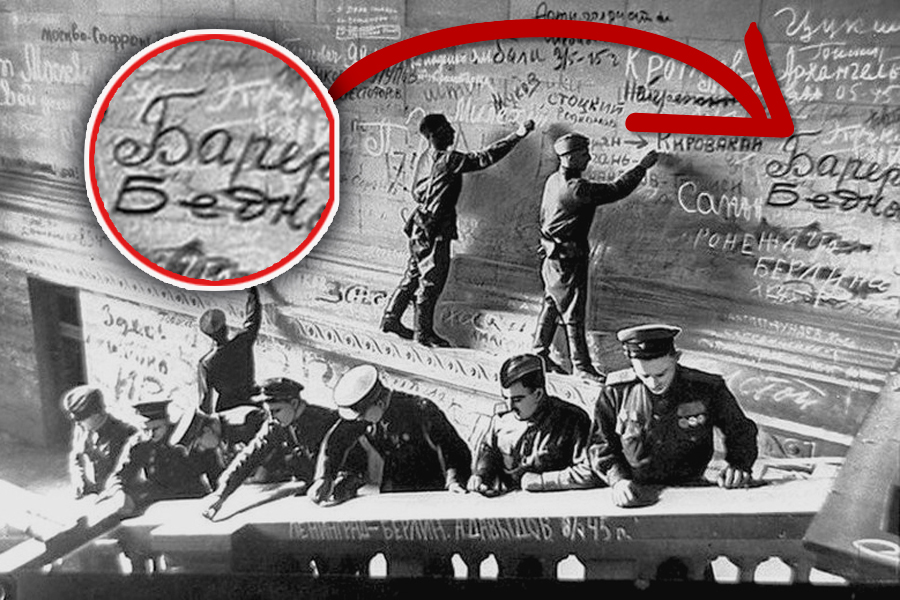
He finished the war in Prague. I also visited Berlin - and even signed on the Reichstag. His name was preserved on the wall and clearly visible in one of the famous photographs.
After the war
Another symbol of the end of the war for the barrier was the curious case that occurred after the victory. In the capital of the defeated Reich, a man came up to him who spoke to Yiddish and asked if he was a Jew. Nikolai Moiseevich, of course, confirmed the guess of the stranger. And then I received an unexpected proposal: to go to Palestine and build a new state - a country for Jews.
However, in response, the Zionist heard a firm “no”. At the front, Barr entered the party and felt like a real communist ...
He demobilized in 1946 in the rank of sergeant, in total in the ranks of the Red Army he served about 7 years. It was very difficult for him to return in the last world - there were almost no relatives, the place in which he was born did not exist at all (more precisely, only the Ukrainian part of the town remained). Yes, and the war itself treated hard with him - he was wounded and shell -shocked many times, but survived ...
In the same 1946, he discovered a new chapter of his life - Moscow. Demobilized, Barr entered the Moscow Art Theater. During his studies, he married, but family life did not prevent him from finishing an institute with honors. He always studied for one five and was awarded the Stalinist scholarship.
But an obstacle to his career was not his not too flexible character - the directness and frankness of the young veteran. He could not get a job in Moscow at once-Barr began his way as a graduate chemist-technologist in Novosibirsk. And only a couple of years later he returned to the capital.
Moscow became his hometown, here he lived for almost five decades - but not the last.
Behind the ocean
In 1993, Nikolai Moiseevich, together with the whole family, went to the United States and settled in Brooklyn. Since then he has been living on benefits from the United States. Until 99 years, he did without significant assistance from the state. True, medicine is free for him, but Barrer did not receive special benefits and money due to American veterans.
Veterans of the US Armed Forces can claim special housing loans and health equipment. Veterans are engaged in a special ministry that has hundreds of hospitals and clinics.
Despite the significant even of American standards, Barra's age from the country had to achieve help from the country in court (in a special instance where social issues are being considered). The fact is that they were ready to provide a nurse for him only for a couple of hours a day. The only option that the state proposed was the resettlement of the elderly. However, he did not want to move there, and he needs help from the end of last year already round -the -clock. The family managed to defend their right to the nurse ...
The memory of the war
Nikolai Moiseevich recalled the war in a club for veterans, where he went for many years. But gradually the audience changed there, he often complained that his generation was already in full force. His wife also left. The Victory Day has remained unchanged since that time - a holiday for all his overgrown family.
Russian tapes and medals did not reach Nikolai Moiseevich even on his birthday-a 100th anniversary. The embassy did not remember him. But personally congratulated the representative of the Brooklyn administration
But the official celebrations that the Russian embassy and consulates are organized by each time bypassing Nikolai Moiseevich (except that sometimes letters of honor come from the embassy). These celebrations are becoming increasingly large -scale from year to year. So, last year, about 2 thousand people took part in New York in the Immortal Regiment campaign. In addition, in different cities, volunteers, with the blessing of official officials from the Russian Federation until the last year (until the Pandemia) traveled around the cities, handing the veterans commemorative medals. Especially proud of officials from the former country of tips with a huge St. George ribbon 33 meters long. She had to fly through the streets of New York, recalling the victory.
The ribbons and medals, however, did not reach Nikolai Moiseevich even on his birthday-the 100th anniversary. But the representative of the Brooklyn administration personally congratulated.
Dreams come true
Nikolai Moiseevich had a long -standing dream, which was born from that memorable conversation in Berlin freed from fascism in 1945. He realized it only 55 years later.
In 2000, Barrier visited Israel. As he told his relatives, in fact he visited the birthplace of his youth, since he saw the “village”, but already “big” ... He heard both his native Yiddish and the forgotten language of the Uman synagogues - who became, in a slightly altered form, the official language of the state of Israel.
A little later, his other dream came true. The New York "Second Front" in the 21st century was opened by his American great-grandson David. He speaks English, as well as a little Russian. And he knows that his centenary great-grandfather won the war back in 1945 ...
About how the current anniversary in Russia is noted, read here
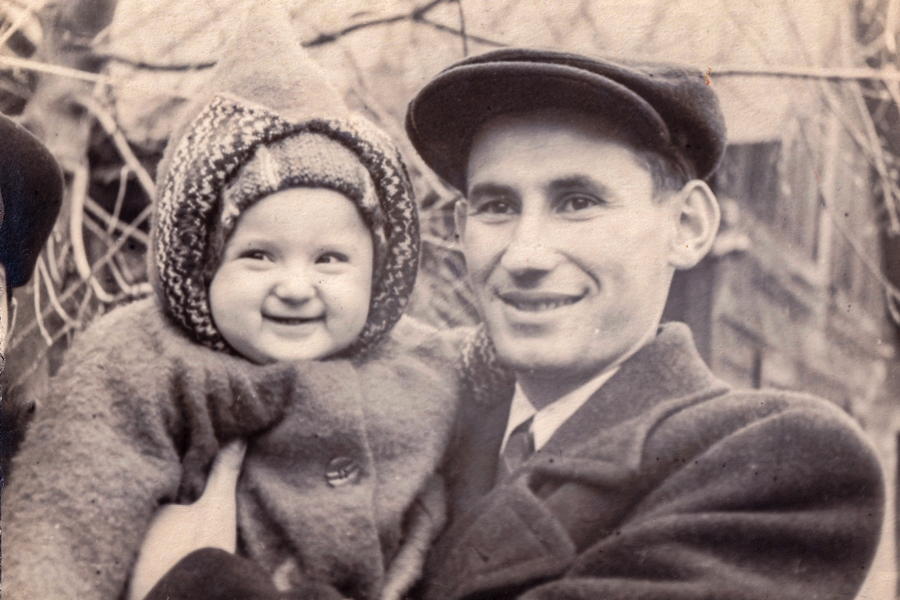
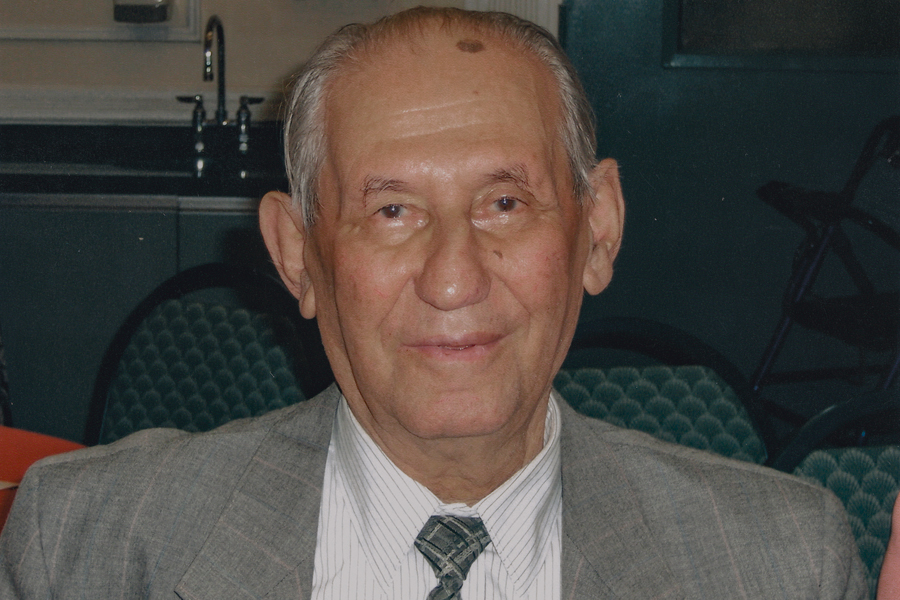
Photo from the family archive of Nikolai Barra