
Translated material
Performances in Zum and Votsap
How the digital theater is born on quarantine - and which is better than the broadcasts of conventional productions
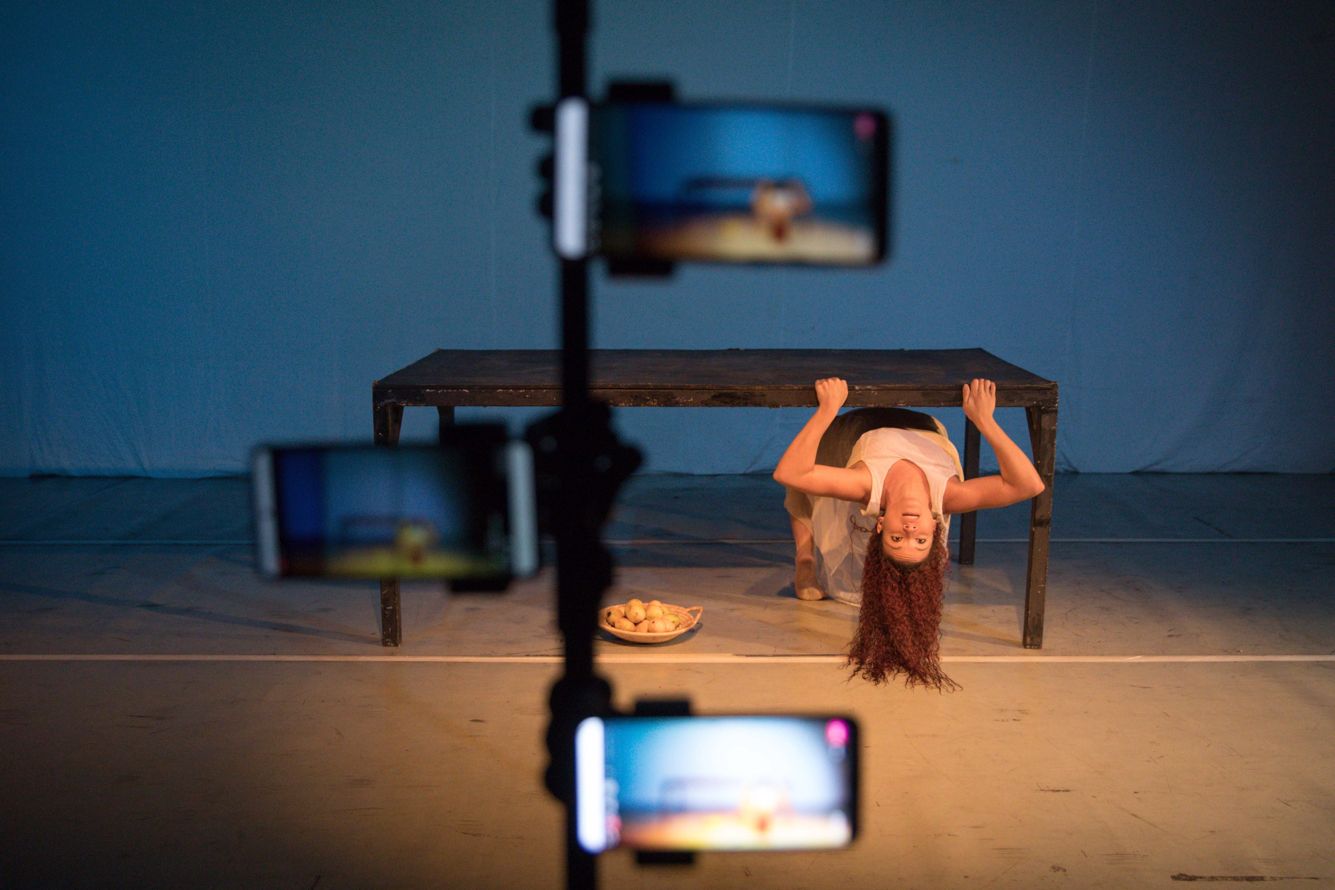
During quarantine, theaters have no way to rehearse and play performances. But the directors and producers almost immediately began to master the new format of the online theater, which is intended purely for home viewing. Theater critic Anton Khitrov tells what digital performances are - and how they help to understand the nature of the theater.
New type of theater - digital
In the mid-2010s, Russia was captured by the fashion for the immersion theater: Broter performances that provide the viewer with relative freedom, became the favorite genre of independent producers and brought a new public to the theater. Since then, no distinct trends have appeared in the theater - until the spring of 2020. In a matter of weeks, since the beginning of the pandemic, a new direction arose almost from nowhere - the digital theater. This is not the same as broadcasting performances on the Internet : we are talking about projects originally conceived for online.
At the end of March, the St. Petersburg Theater Festival “Access Point” announced the start of the “Spontaneous Program” . Anyone could offer an interactive online spectacle for the poster; As a result, the organizers chose more than forty names. A month later, the team of the immersion performance “Returning” held a two -week “Virtual Theater Laboratory” , in which six directors from different countries participated. Following independent theater groups, state repertoire theaters rushed online: Gogol-Center released Yetyub-Prime Minister Feii , and in the "Workshop of Peter Fomenko" they conducted a virtual reading of the play "Choose three."
Online sponsor can be any-including quite conservative. For example, the “Mobile Art Theater” by Mikhail Zygar switched to the production of radio plays. Previously, the company's projects worked on the principle of augmented reality - the sound path was superimposed on the city route, and the performance was obtained. In isolation, you can not walk along the VDNH or Prechistenka-but the retro-format of the “Theater at the microphone” can be an excellent alternative to boring series and cinema.
The most relevant of the latest theater premiere is the “poisoned belt” according to Arthur Conan Doyle: a timely reminder that the planet has always been out of crises. The original story is the sequel of the novel “The Lost World” about the adventures of dinosaurs in the country. Earth is threatened by toxic gas from space; Former travelers are self -isolated in the house on the hill and from there are watching the death of all living things. Now they themselves - like those miraculously surviving dinosaurs from the first book.
Spectator - active participant
Usually in the radio theater, the listener is passive - but there are also projects where the public prescribes an active role. Stefan Kagi from the German-Swiss group Rimini Protokoll recorded the six-minute audio training “9 Movements” ( here you can listen to the English version, but here will be Russian from May 12). In this project, you are your own actor; Everything you need is at your place - a door, a window, a wall, a mirror, a bed.
“9 Movements” is a website of a specific performance , that is, one where the genuine space turns into a decoration. Rimini Protokoll-Masters of the website of the Speesy Theater: you could hear about their famous project “Remote X” (at least about its Moscow editorial office of Remote Moscove), where a group of spectators explores a metropolis in the company of computer voice. In the new work, Cage haunts the same task-to make you look at the usual environment in a new way.
In some online sponsor, the audience is directly loaded with creative work-as in the Hello project for Votsap for the authorship of director Boris Pavlovich and playwright Elina Petrova (tickets and details- here ). This is an hourly telephone conversation with an actress: sometimes you need to read replicas from a sheet, sometimes to improvise. At the appointed time, a girl named Lida calls you. You are not familiar, but she is sure that you are able to help her.
Due to some circumstances - what kind of circumstances are it, it is better to learn from the performance - Lida knows nothing about quarantine and generally has no idea what is happening in the world. You have a non -trivial task: tell about your reality from scratch. In the end, an unexpected twist awaits you - perhaps somewhat melodramatic. What is truly valuable here is an audit of your own picture of the world: believe me, you never had to explain things that Lida will have to explain.
Perhaps the most successful experience of the online theater in Russian is the performance of Israeli artists Lior Zalmanson and Maya Magnat “I Donqu Want to See this”, adapted for Russia by the Production Company “Impresario” (tickets and schedule- here ). Initially, the project was analogue, but because of the pandemic, the head of the impresario Fedor Elyutin suggested transferring it to zoom.
The performance is based on a teaching presentation for future Facebook moderators, which three years ago was leaked by The Guardian newspaper. According to the plot, you are a applicant for the mode of a moderator and for an hour with a little should figure out what content the company considers acceptable and which is not. Mentor actors tell the rules and give tests. You are required to vote mainly from you: the post passes or does not pass. Pictures and texts are ranked from the most harmless to the most terrible: by the final, many will want to squint.
In fact, this is a project on the failure of digital utopia: on the Internet, contrary to expectations, there is no equality. At the end of the performance, it turns out that most moderators work from dysfunctional countries: the inhabitants of the First World are not ready to pay psychological injuries for the comfort of other users.
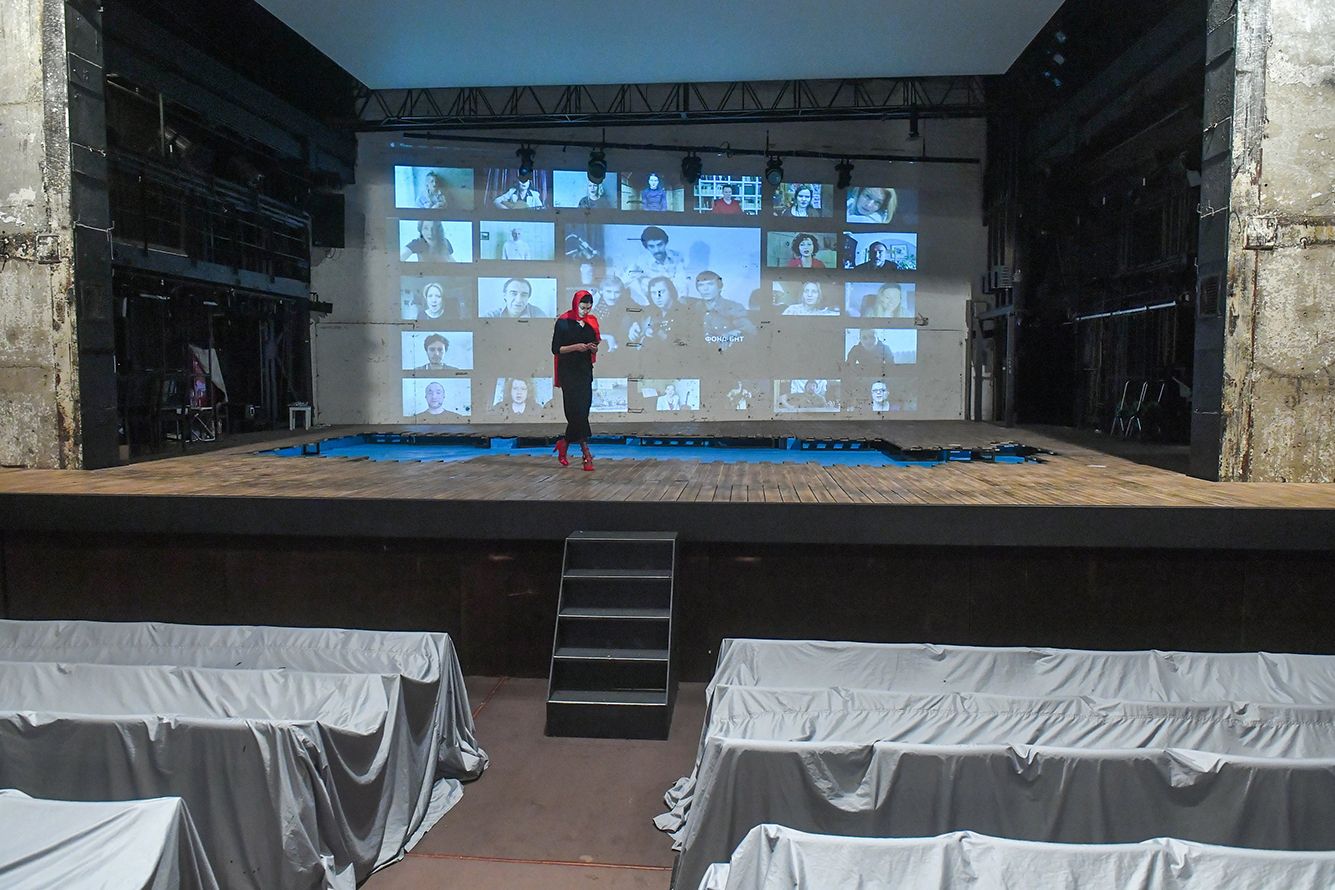
Online game
It is already clear that quarantine is a turning point in the modern history of the theater. A boom of digital performances is not just an attempt by artists to take themselves with something while the visual halls are empty. This is a wide discussion about the nature of the theater. If the actors go on the air, as a stage, at a conditional hour - is this enough for the event to be called the performance? Or maybe the audience must certainly have contact with physical reality - at least with the reality of their own apartment? In short, what makes the theater theater? And most importantly, what are its advantages over the cinema, series, books - and can these advantages can be maintained online?
Let's start with ordinary, analog performances. The theater is always a game situation in which not only actors, but also spectators are involved. “Interactive performance” is a tautology, any theater is interactive, even when you sit silently in a chair for two and a half hours. In essence, what is a performance? A collection of unfamiliar, half -right people, each of whom pledged to follow the rules of the game. The theater is literally Res Publica, a common cause, the result of cooperation between the hall and the scene.
Take, for example, the fourth wall is a familiar attribute of a traditional performance. In the cinema, the wall is real. In the theater, this is just a fruit of a collective agreement. If you talk to the artists, but what is there - just rustling with sweets or respond to calls, you are crossed, because you do not follow your role in the game: you do not pretend that you are not. There are many unwritten laws and traditions in the theater - at first glance often meaningless. It is unlikely that you will go to listen to the opera in a T -shirt and jeans or leave the hall before the worships end - although neither one nor the other, in theory, does not bother anyone. In a word, they do not go to the theater in order to stroke. They go to the theater to play.
How can this be implemented online? If you just look at the monitor, there is no game situation - which means there is no theater. The digital theater is obliged to remain an interactive art, otherwise it is not a theater, but a movie (often mediocre). Radio recordings of the Mobile Art Theater - strictly speaking, are also not performances, although this does not make them worse.
If you alone follow the instructions, as in “9 Movements” - this is already more like a performance, but still not quite. One active participant is not enough, at least two are needed. At the players' analogy theater, they look after each other - this guarantees that the rules will be respected. This principle also works on the Internet. You will not dare to be silent into "Hello" because you are ashamed of the actress. You will not miss the voting in I Donaff to See this, because you know: if everyone, like you, will ignore the game, there will be no performance.
It turns out that a digital theater is nothing more than a game communication at a distance. So, there is no significant difference between the online performance and the online game. It remains only to wait for theatrical directors after the rappers will master Fortnite.
Anton Khitrov