
Translated material
"Your heart will wait, and we have a coronavirus"
How the rural residents cut off from the outside world experience the epidemic
Residents of large cities are now not easy. Monotonous life in four walls. Joy at the sight of a courier that delivered products. Going to the store is an event. They asked not to come to the clinics without great need, and if the need comes, call an ambulance.
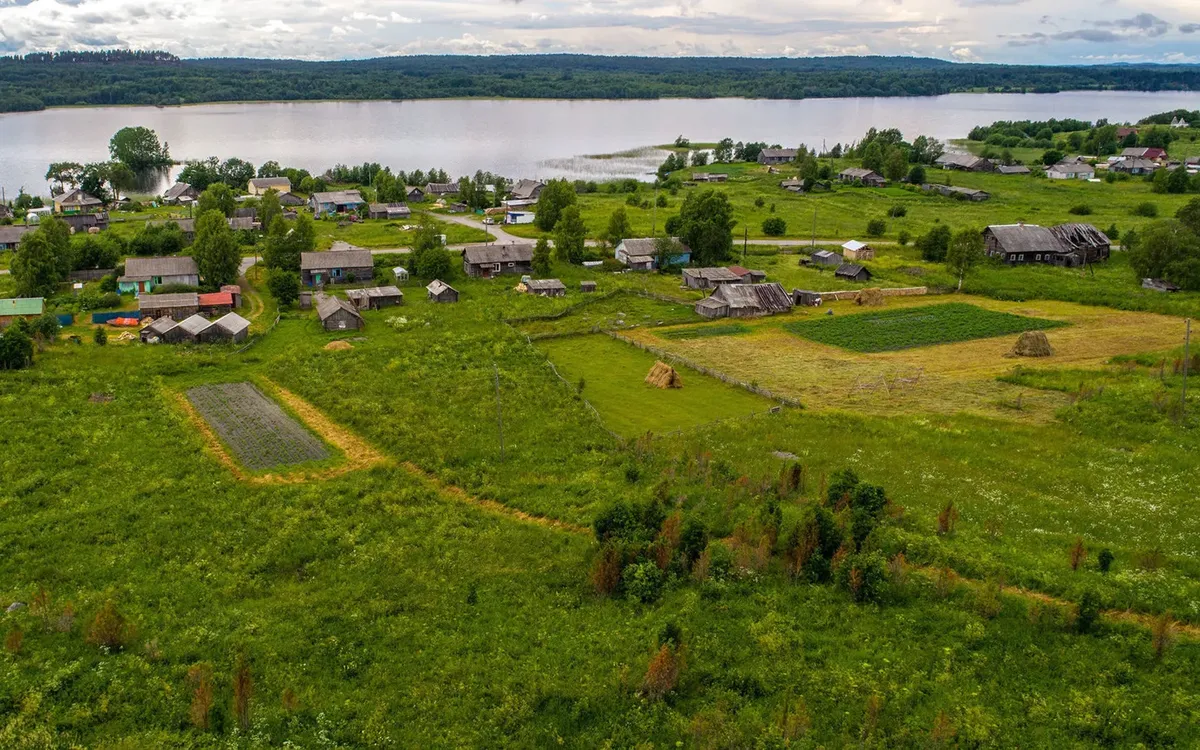
In the Karelian villages, as in the whole country, self -isolation. But as we live now, they lived there before the start of self -isolation. And what now?
For five years now I have been studying the lives of elderly people in rural areas. I am engaged in the sociology of medicine and medical anthropology: I analyze how rural medicine works, how doctors work there. And how to live their patients - as a rule, older people with chronic diseases.
The topic of isolation was the main thing in the stories of Karelian elderly people and before the beginning of the pandemic. Scary for your health, you cannot call an ambulance in time. If something is more serious than a cold - you have to go to the doctor for tens of kilometers, and if you need examinations, then further. All this was before the epidemic, before the virus closed and so almost closed from the outside world of the village.
- The bus rarely walks, in the morning and evening. And so go get to the store. I'm silent about an ambulance.
If, for example, there is snow, rain, and even worse - autumn and roads are completely blurry, you are generally this ambulance only in two hours and you will wait, and lie down and die, - - - -
The 86-year-old woman told.
Infrastructure deficiency, the lack of quality medical care and transport - the usual isolation for the village - contribute to the fears of my informants. They fear that they will not receive the necessary help in time, they will not be able to quickly purchase medicines.
Isolation of the villages - especially in the Rasputica, from late autumn in early spring - is associated with the elderly with a sense of loneliness, isolation from the "other world" - the city. Those who do not want to move, whom rural life as a whole suits, the city seems to be a relatively safe place. There you can get high -quality help - go to the district hospital or Central District Hospital for treatment or examination. You can go for products, and at the same time take a walk. For residents of the village, the city is a place of local tourism. Before the pandemic, rare trips to the city at least temporarily dulled in my informants a sense of isolation and loneliness.
- Now you are sitting here - like in the zone. Previously, too, it was all in a zone, no one to communicate with and talk with, such a voluntary imprisonment in prison. Now even worse - it has become a plague prison, and so you live, ”a man of 82 years old shared with me.
An elderly villager compares the life of his village with a prison for a reason. You can’t buy products: not everything in the local store has everything, but to go to a neighboring village or to the city (no matter, by bus or in your car), it means that you are dangerous. Not only the road, but the store is now understood by villagers as a place that is dangerous to health: there is a great opportunity to become infected.
-I’m sitting, for the third week I went as here, because I’m afraid, frankly, I'm afraid to go somewhere. You do not know what can happen at all. There is every infection, people come to this store different. The village is large - count, 400-500 people live, plus summer residents from the city, it is also not clear what they can bring. Therefore, it’s better to sit here on bread and water than to go there and do something, ”says the 80-year-old woman.
Until March 2020, an elderly person was not easy to get a referral for an appointment with a doctor in a city or in a clinic because of bureaucratic problems. Now, in the epidemic, older people are afraid that the ambulance is the only hope that could bring the necessary medicines and provide “real”, as informants, medical care is expressed, will not come at all.
- And now, most of all, to be honest, I'm afraid that the doctors simply will not come. Because there they have, doctors, and without me there are enough problems, and here I will call such a call, I’ll say: “Oh, something my heart grabbed.” And they will not go, because they will say: “Your heart will wait, and we have a coronavirus,” a woman of 76 years old told me about her experiences.
In recent weeks, she has not encountered a refusal to medical care. Her fear is a consequence of the isolation of the village and the understanding that the resources of medicine in the conditions of the pandemic are not unlimited. Someone is not enough. These people are sure that they will not be enough. Such thoughts negatively affect the well -being of elderly residents of rural areas.
The severity of the situation adds a change and violation of previous plans. And the inability to see your relatives associated with the epidemic. The only connection with the outside world is the phone, and all the possibilities of meetings with relatives and friends are transferred or postponed for an indefinite period.
- What now, this virus has violated plans. I do not believe that so much is sick. Most likely, this is so specially said, but it is possible, of course, that somewhere the virus is in large cities, but not here, ”says a 75-year-old woman.
Self -isolation and pandemia of coronavirus rebuild all the everyday life of the elderly. On the one hand, the villages remain relatively safe spaces, "biologically clean." The danger of getting infection is small. On the other hand, the fear of loneliness and helplessness, the inability to stock up on products because of a fear of getting infected (after all, then they fear, no one will help) act on people depressing.
The previous insulating factors - bad roads and a rarely running bus - were perceived as related to the location of the village. Covid-19 became a new isolation factor, which was created not by the geography of the village, but by external circumstances. It enhances the feeling of isolation, makes the receipt of medical care and products even less accessible, enhances the inequality of rural and urban residents in obtaining medical care and drugs necessary not only for the treatment of a new infection. But the state of health of many villagers is supported by drugs that need to be drunk constantly.
To be left without a life -saving medicine is another fear of elderly villagers.
Fear begins to face each other. Fear of infection makes the elderly isolating themselves in the space of the village. Here they come across a different fear - to remain locked in the village without the opportunity to leave, without the necessary products and medicines. This is a latent fear of loneliness, which can in itself cause depressive states that negatively affect health. A vicious circle occurs.
Health problems are real, but aggravated by depression, face the cause of the cause - the weak accessibility of modern medical care, inequality in the possibility of obtaining it compared to residents of cities. This problem, reinforced by pandemia, now makes the existence of older people in the village not at all simple.
Konstantin Galkin,
Sociologist, researcher of European
university in St. Petersburg,
Oxford Russia Fellowsip scholarship