
Translated material
Unknown Berlin, May 45th
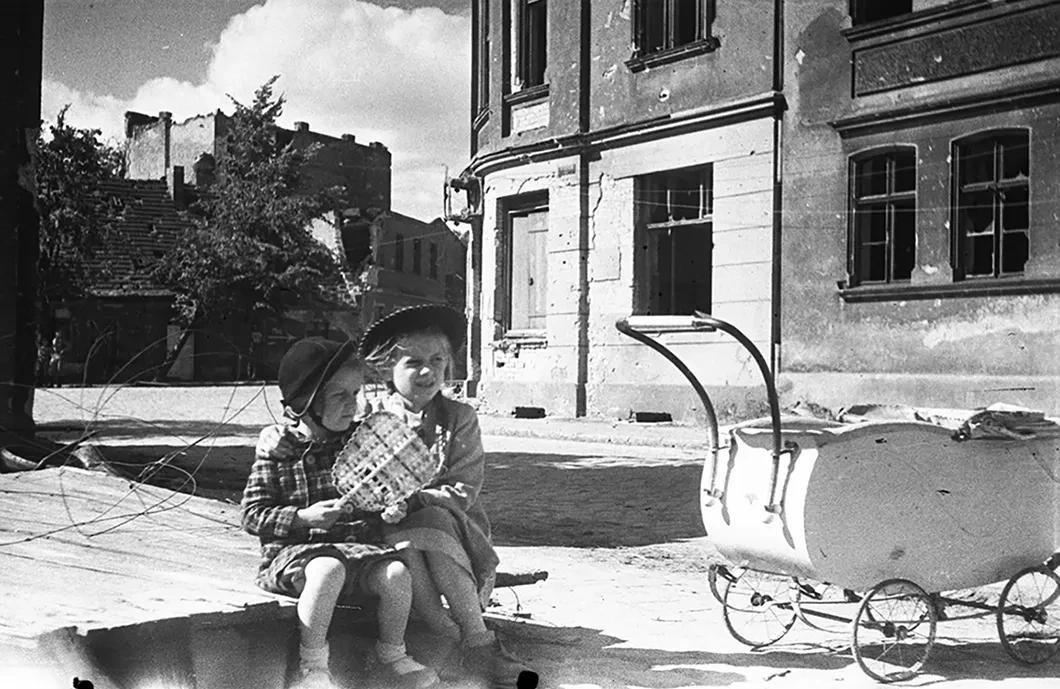
Pictures of Ilya Arons and Valery Ginzburg opened only 75 years later
In August, I returned from Israel to Moscow, and on the way to the Airport taxi driver told me that he was the son of the front -line operator Ilya Arons and his father’s archive and his brother Vladimir were preserved. Another homemade “Berlin” archive was discovered a year before; I shot a film about Alexander Galich and accidentally saw the photos taken by his younger brother Valery Ginzburg. He was an operator, worked with Shukshin, shot the Askoldovsky “commissar”. The paths of archives are inaccessible ...
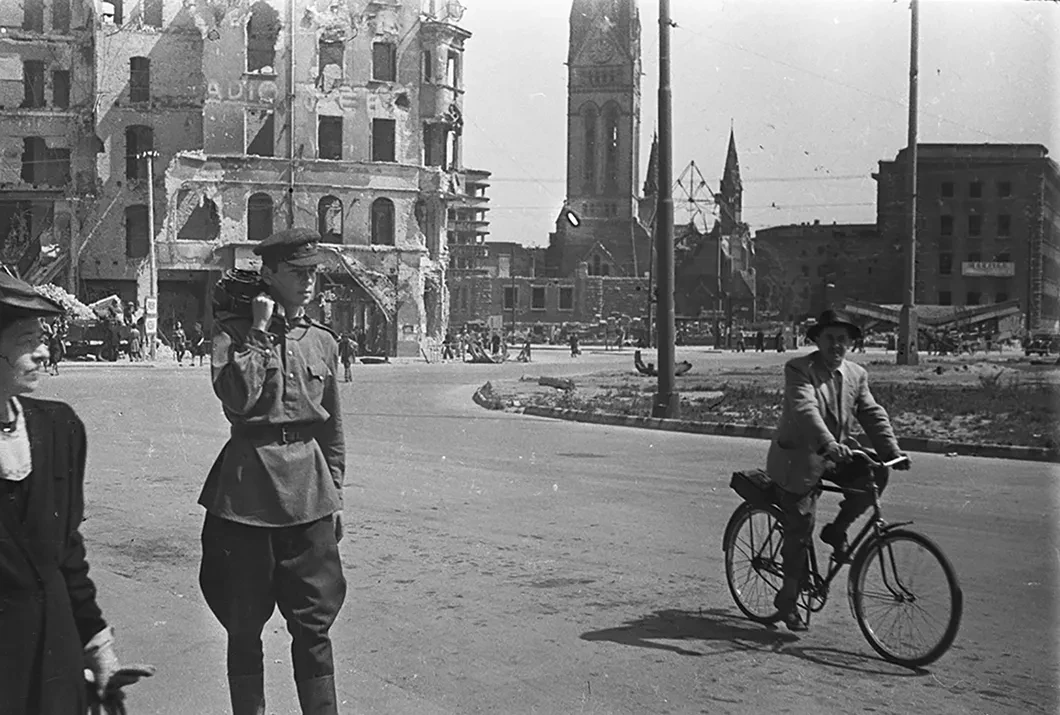
Ilya Aons and Valery Ginzburg saw Berlin in May of the 45th. These are two very different views. One is an experienced front -line operator who understood well what exactly he was taking off. And the other is a student of a warrior who will soon become a brilliant operator, but so far records the moments and atmosphere of those unforgettable days. In the spring of 1945, together with the Soviet Army, they - front -line operators - entered Berlin and captured victory.
The front-line operator Ilya Arons entered the capital of the Reich along with the troops of the 1st Belorussian Front on May 1, 1945. In June, it was this front that was transformed into a group of occupation Soviet troops in Germany, and it was left at its headquarters until 1946. So Ilya Arons became a witness and a chronicle of historical events. All this time he did not part not only with the camera, but also with the camera. But if he shot an official chronicle on camera, then he took photos for himself.
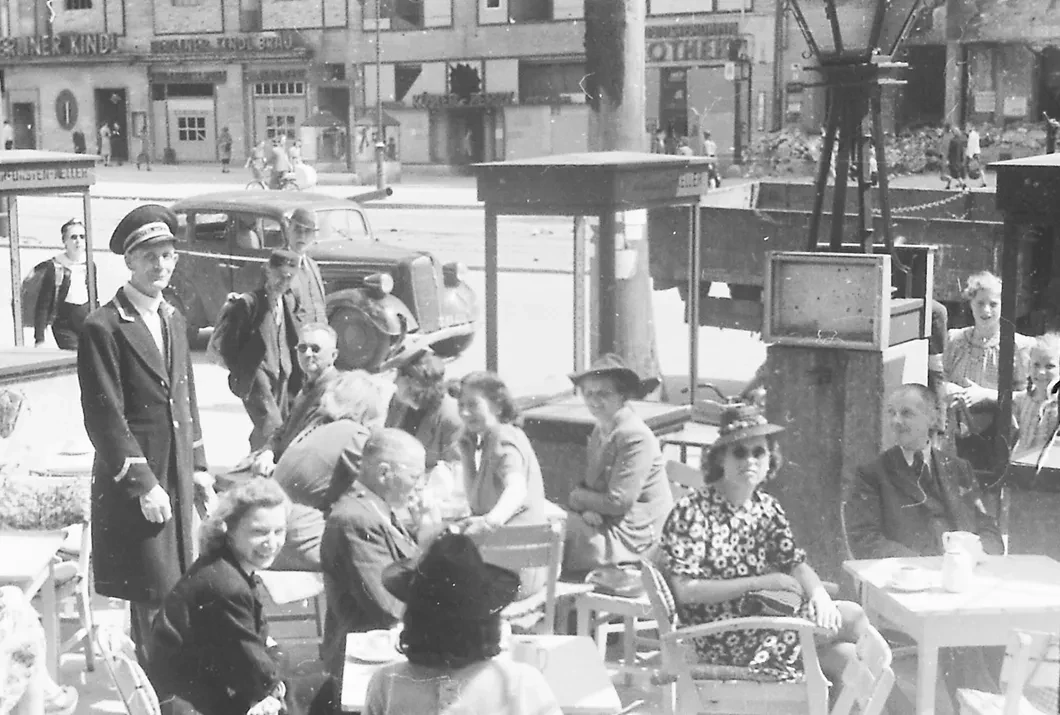
Marshals Zhukov and Rokossovsky, Konstantin Simonov and Roman Carmen, the first meetings with the American allies on Elbe and the commander in chief of the British occupation forces in Germany, Sir Bernard Low Montgomery, the Berlin Cafe and the Roaders ... He filmed the Military Council of the 1st Belarusian Front before Storm of Berlin, signing the capitulation of the capitulation in Germany. Carlshorst and the declaration of the defeat of Germany ... And the operators, transferring cameras to each other, did, as we would say now, something like a “selfie”-against the backdrop of the Reichstag and the Reich Scanning Committee, the Brandenburg Gate and the Elector, and the alarming Berlin and their victorious spring of the 45th arose. Many Berlin photographs, where Ilya Arons in the frame, were taken by his best friend Evgeny Haldey.
Returning to Moscow in the spring of 1946, Ilya Arons put military films in a cardboard box. After almost 30 years, his archive took his sons Vladimir and Alexander to Israel. And there once they opened this box, and a combat cartridge fell out of it. So they began to restore and study the front -line photos of their father ...
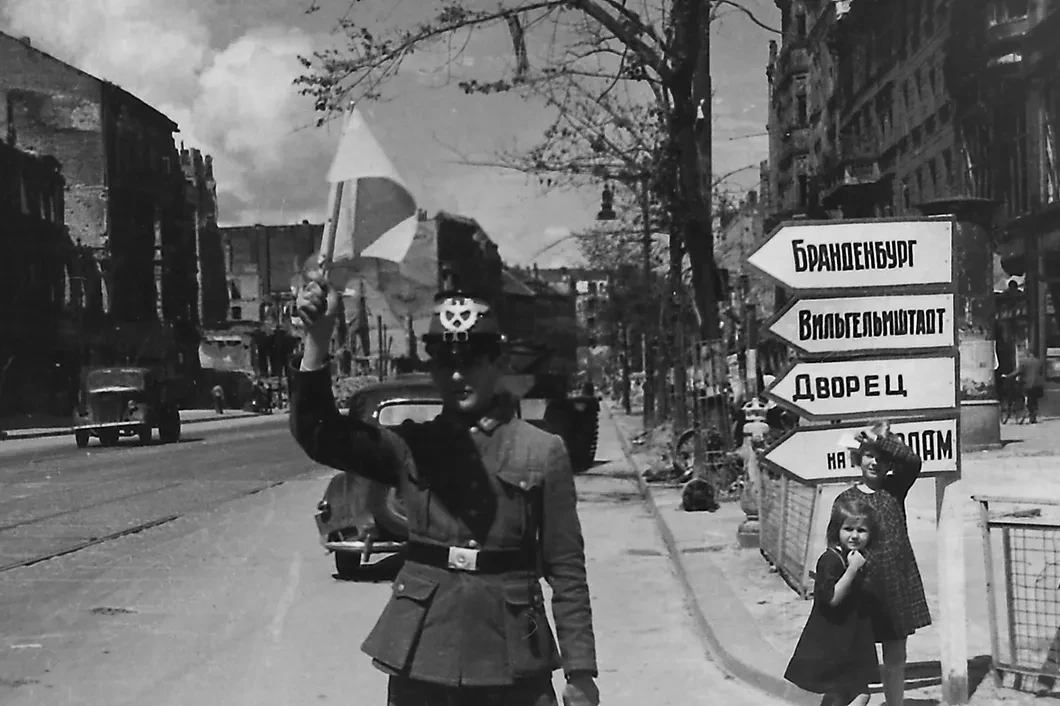
Valery Ginzburg was sent to Germany among the groups of VGIK students in May 1945 - at the Babelsberg film studio, the main center of the film industry of the Third Reich. It was here, in the suburbs of Potsdam, that the propaganda movie magazines were stored from the war “German weekly review” (Die Deutsche Wochenschau). Goebbels personally supervised them, his Ministry of Propaganda brought films from all the occupied countries of Europe to Babelsberg. Students of the Faculty of Operator, under the leadership of Professor VGIK, the best in the country of the film technician Evsey Mikhailovich Goldovsky, were to be selected filmmakers, Zeisov lenses, and installation equipment for export to the USSR. They were given a military uniform and captain's epaulets. So Valery Ginzburg got into Berlin. Even on the way - they rode through Poland - he began to take photos. I put the films into the envelope. They saw the light 75 years later.
Elena Yakovich -
Especially for "new"
PS
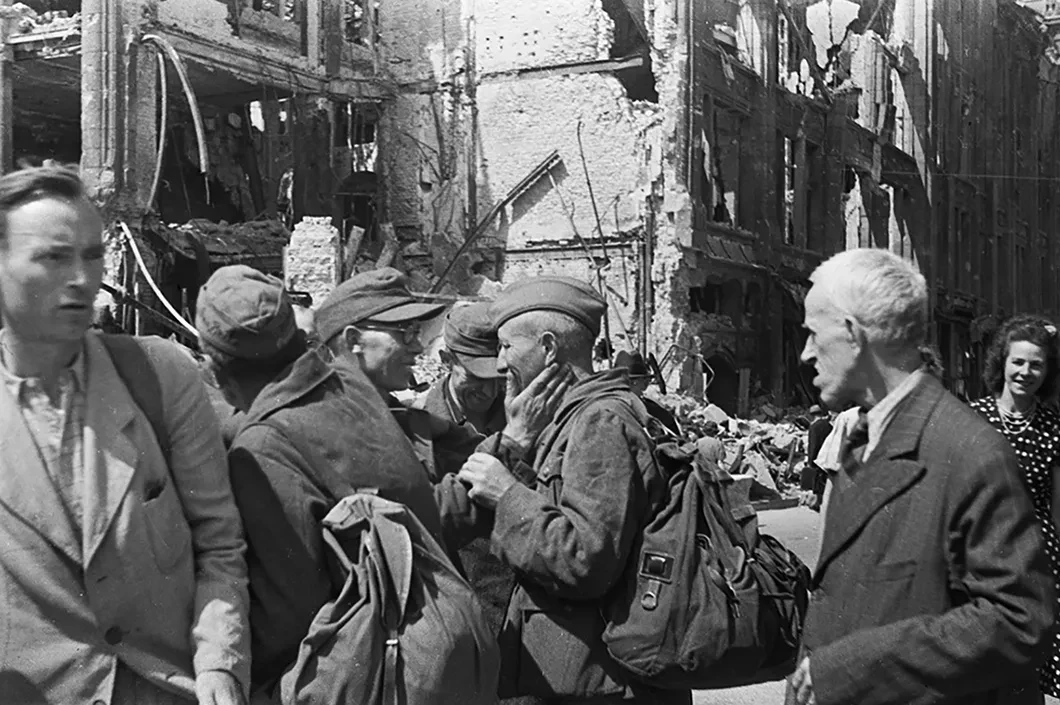
The works of Ilya Aons and Valery Ginzburg are presented at the chronic exhibition “Unknown Berlin, May 45th” at the Jewish Museum and the Center for Tolerance dedicated to Victory Day. It can be seen online on the museum’s website, and live - after quarantine removal
You are sitting at home, and the "new" - comes out!
Dear readers! Our editors, printing house and “Russian Post” work during quarantine. And most newspaper kiosks - no. Your support is important to us, but even more important is that you stay at home. Therefore, now is the time to issue a subscription to the "new newspaper." The postman will deliver it to your address! Sign yourself, parents, grandparents!
How to subscribe: instruction