
Translated material
Doll
This photo is not only about military defeat, but about the defeat of life, about ruins of not only cities, but also human souls
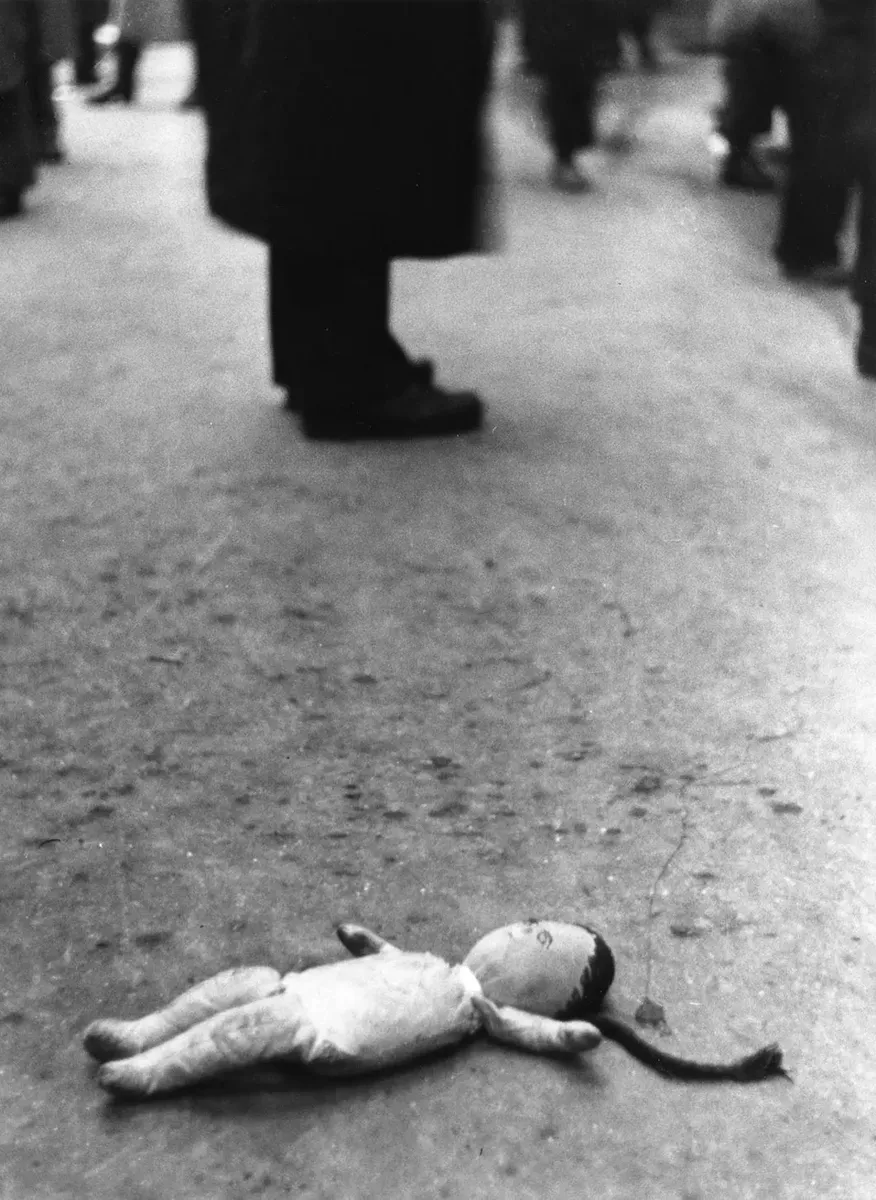
The naked doll lies on the dirty asphalt, spreading the wandering pens. Her pigtail flew to the side and stretched out nearby with a snake. The right hand stained. The doll looks into the sky painted eyes with black eyelashes. In her position and gaze, the complete, absolute helplessness of the creature, which does not even understand what is happening to him.
Why was she abandoned? Where is the little girl who pressed her to her chest? Where is the laughter and affection, surrounding her soft body? How so it turned out that her beloved and good, suddenly threw it out of the stroller, or she fell out of the basket, or fell from the side of the truck, whose body is faster! faster! - Are women and children evacuated from Berlin? The truck left, and she remained lying among black, blurry figures without heads and faces - no one cares about her.
This doll on the dirty Berlin asphalt, photographed by Arthur Grimm in January or February 1945, speaks not only about military defeat, but about the defeat of life, its collapse and decomposition, about the ruins of not only cities, but also human souls. This is a photo of the wordless bitterness and despair, which excludes words. Nothing to say. The end is soon, and it is clear. In the sloppy Berlin January, whose days are dotted with fires, and the nights are anxiously cut through the spotlights, there is only an attentive photographer, seeing what is not visible and indifferent to everyone else: a lost rag doll.
Arthur Grimm was a famous photographer before the war, when he worked with Leni Rifenshtal in the Olympia project. Together with her in 1936 he went to Greece. She made her film, and he was a serious face and clear breast muscles of an almost naked runner with an Olympic torch in his hands and young long -legged Greek women in short tunics against the backdrop of white cracked columns. In his personnel, it was already a strange and fascinating conciseness, as if by some miracle he was able to accurately squeeze the endless, scattering, crushing and chaotic life into a dense and clear rectangle of the frame.
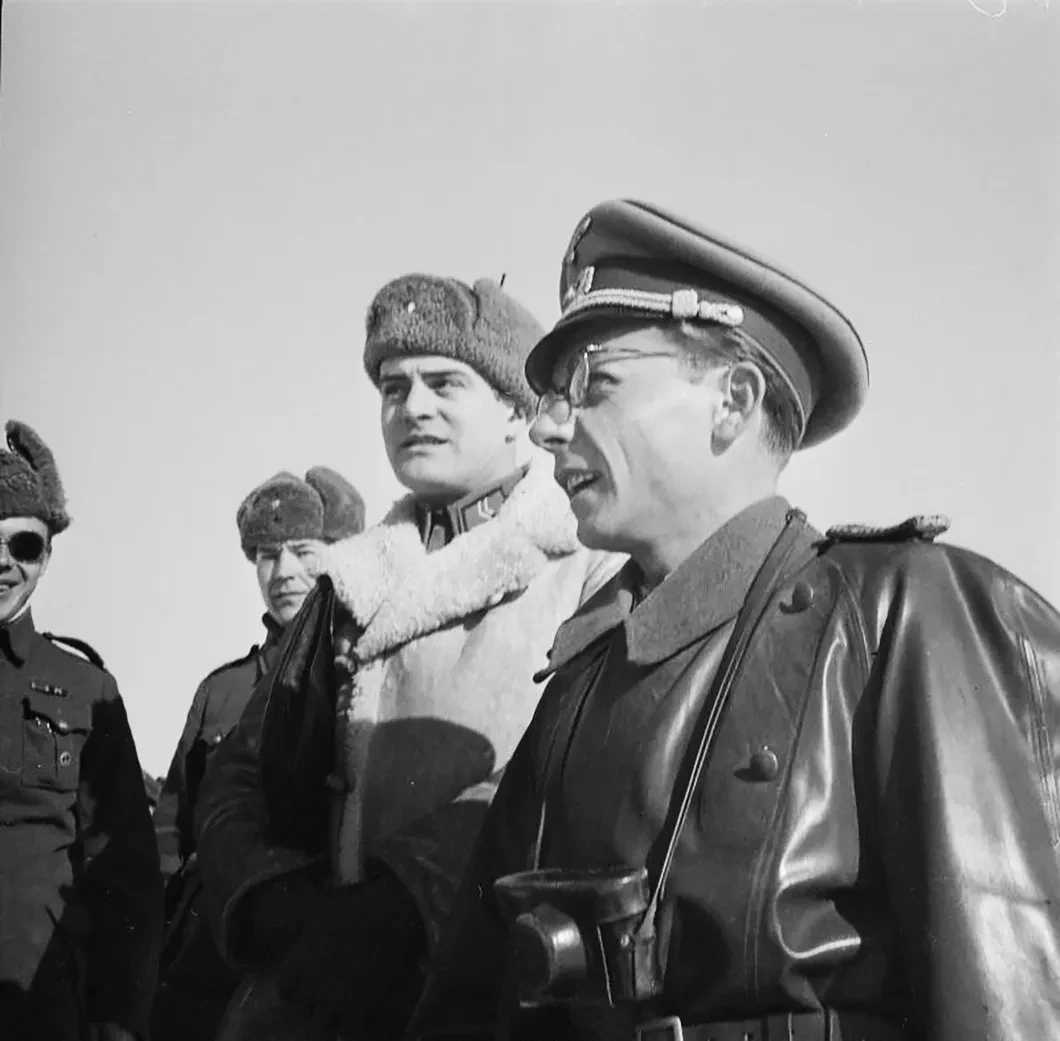
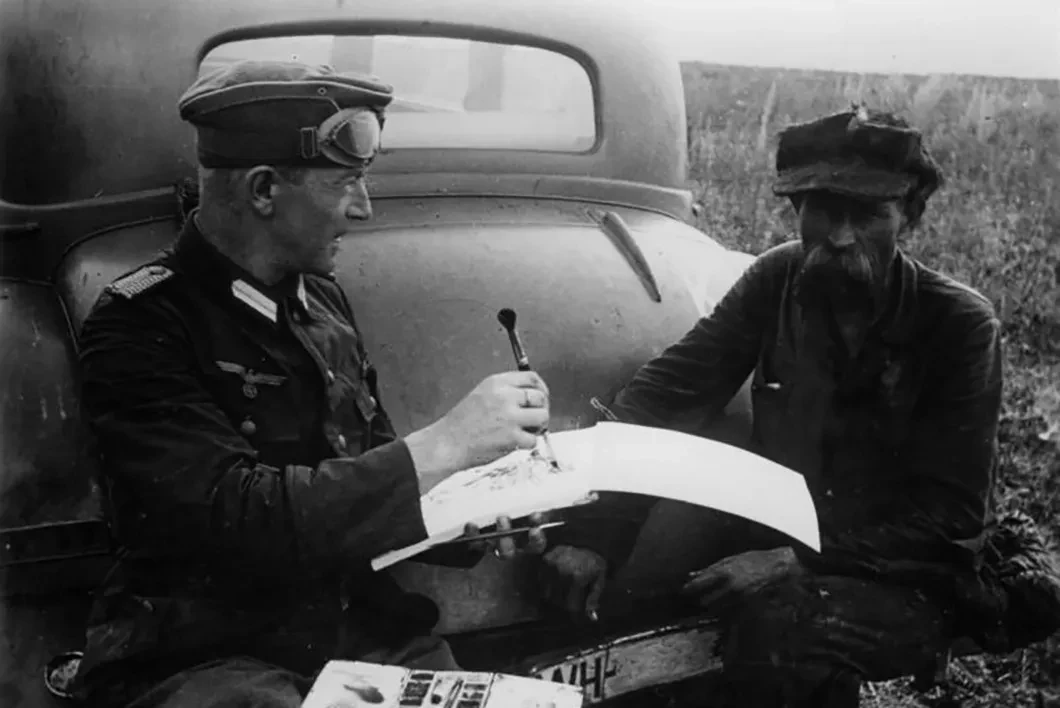
In 1940, Arthur Grimm put on the gray form of the Wehrmacht - all five years of the war he was a proberführer, which can be translated into Russian as a "specialist in military service." He was a specialist in photography, a specialist in catching life in a viewfinder, a propaganda specialist who was designed to show the great acts of the German people from the knees and the whole world to the Germans and the whole world. AS report, a master to catch a moment of life in a frame, he saw a undersized young tanker with protruded ears under a pilot sitting on an armor and childishly rejoicing in a letter received from the house; He saw a hot summer day sitting next to the steamed ground, in the high warm grass, captured by the Soviet Commissioner and German from the field police, holding a military book with a red star seized from a prisoner. The German has a compass on the wrist. It seems they just crouched to talk; But this is an interrogation, and how the commissar is compressed and closed in his pose with his face down downward, with his intertwined legs in boots and with his hands, which he wrapps himself around himself, as if he does not want to give himself, scatter, racing, falling apart in that inconceivable that just, half an hour ago, happened to him.
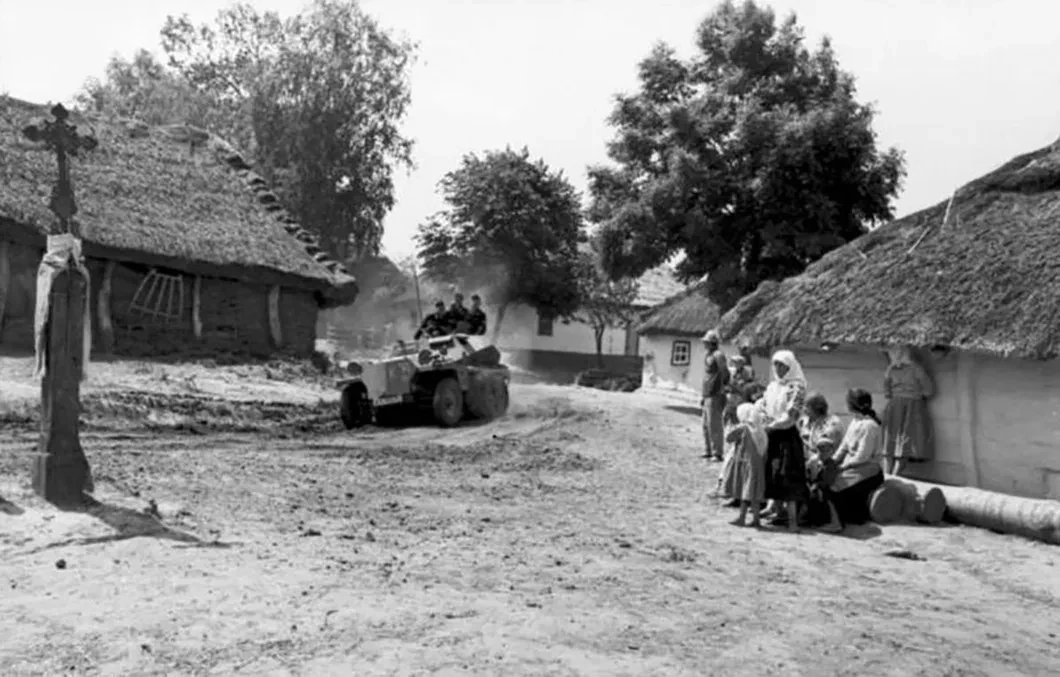
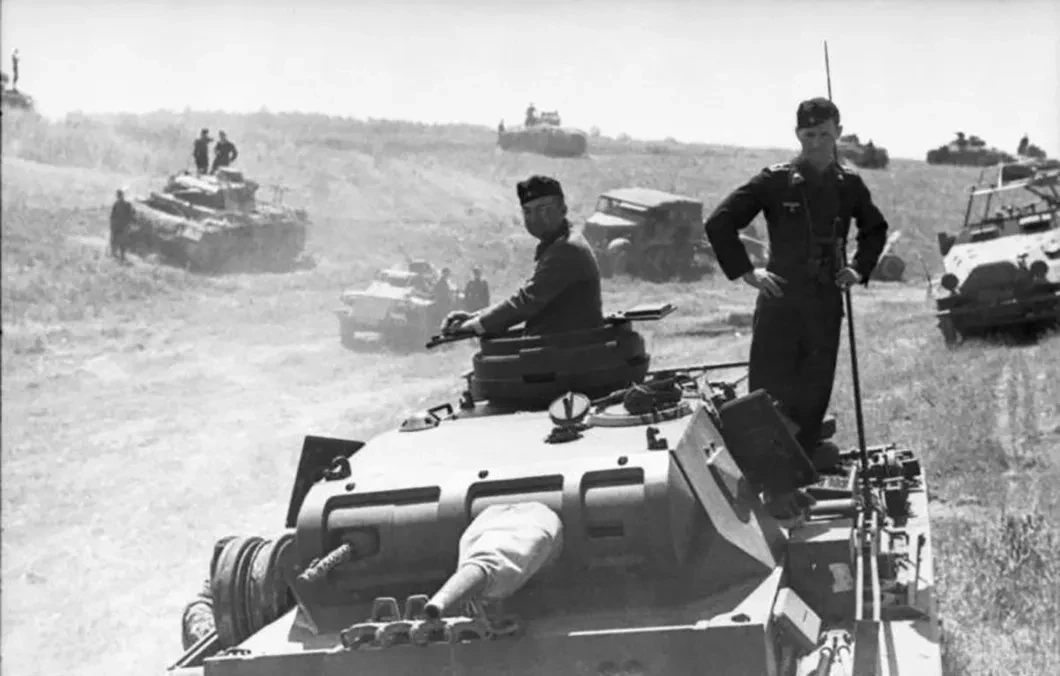
The personnel of Arthur Grimm have no voids, they are always filled with people, details, details, circumstances, objects. They have no voids in the sense that they are not important or random in them, everything in them has a priority value, everything in them is a concentration of life and the concentration of death. The only emptiness that he admits in tanks filled with tanks, motorcycles, guns, roads, ruins, officers, soldiers of the paintings of war is the emptiness of the sky, which he sees, lying down with the camera right behind the backs of the two leading machine gunners. A huge, calm, bottomless sky rises above the steppe in the foothills of the Caucasus, where the surfaces are moving rarely scattered German tanks, and thick puffs of smoke from the oil storage facilities are moving on the horizon along the ground.
We do not know the thoughts of the photographer - neither during the war, nor after he explained anything in his personnel. He was a member of the NSDAP since May 1, 1933 - a day declared by Hitler a festive "Day of National Labor", when one and a half million Germans gathered under the giant red flags with swastikas on the Templekhof field. The date of entry into the party says that he was a convinced, unambiguous fascist who believed in Hitler as a national leader, admiring the return to the father of the Sudet, annexation of Austria and a quick victorious war with Poland. In the newly captured Warsaw, he shot a propaganda action - the search for Polish weapons hidden by Jews in the fresh graves of the fallen Polish soldiers. The editorial task, obviously, sounded like “showing the ugly face of Jewry” and exposing the Jews as defilers of graves, ready to mean vilely to the valiant sons of Germany.
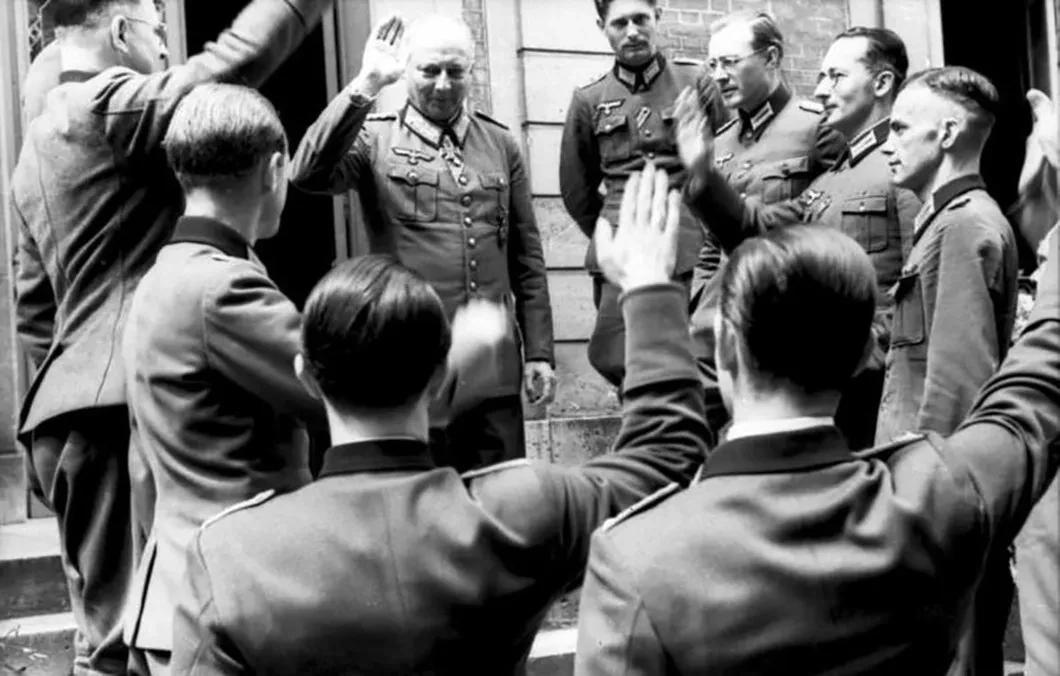
There are few weapons on these frames-the trunk of the Maxim machine gun, without a carriage and a shield, and something on trifles; The Germans themselves brought weapons and dragged him from the frame to the frame in front of the photographer. But much more important than the production, invented at the Ministry of Propaganda, the scenes of life in the occupied Warsaw and the faces of the Jews, to which the Germans on the streets cut the beards with large scissors. With success, this report of Grimm in the Berlin newspaper, whose readers saw the unhappy, humiliated by Warsaw and not causing pity, were successfully held, but we, looking at these personnel of Arthur Grimma stored in the archive today, see something completely different. We see the endless sadness in the eyes of a young man in a hat, we see how the Jew stands in front of the SS with antennae in the crankcase and with a dressing beard, when the scissors are sadly clicking under his chin, see serious, cheerful, living people in long black coats and Ermols, which will all be destroyed.
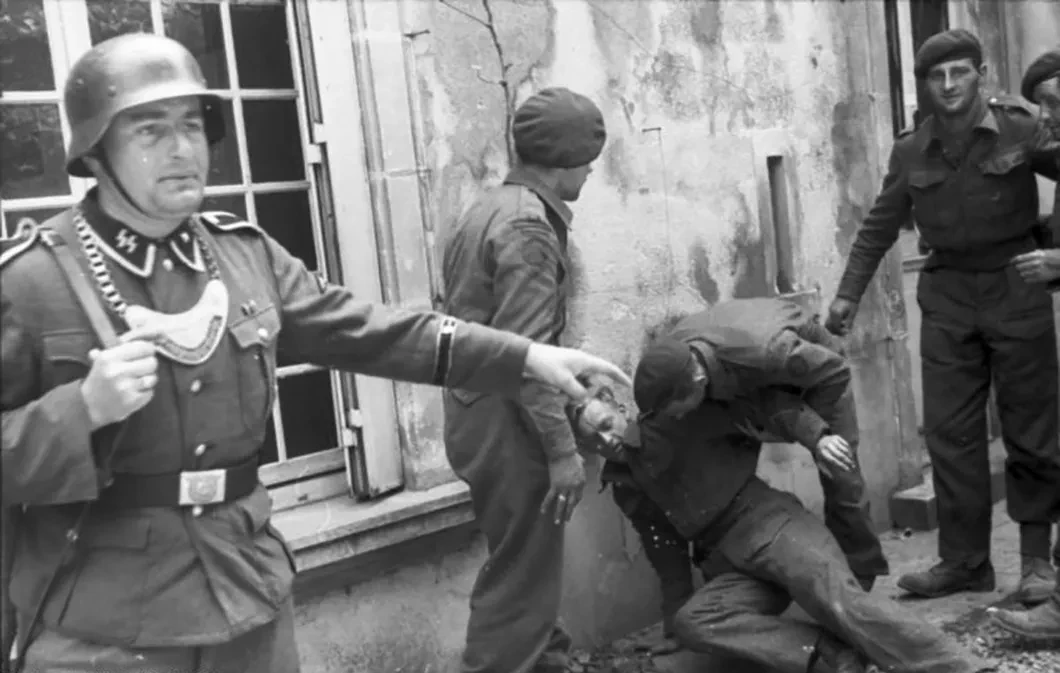
In the Mozdok region in October 1942, Arthur Grimm removes the corpse of a Soviet soldier in the wet, mockery rags that has already begun to decompose in the field. He has legs in windings and boots. The cap flew to the side, on the head of the helmet, and under it a rotten, black, like coal, face, swollen lips and white grinned teeth. And if you look at the frame with an increase, then you see many flies sitting on the corpse. It can be assumed that the task of Sonderführer Arthur Grimm, the general task of all German front -line photographers and propaganda’s mouth, was to show a disgusting and terrible death that awaits those who confront the Reich and Wehrmacht. But his task is not important to us, and it doesn’t matter to us what he saw, making this frame. It is important that we see-abandoned in the field left by his own, forever left without the name of the Red Army soldier, someone’s son, husband and brother. This, with a black face, in a dirty rag, a half -rotten, nameless man is an unknown soldier.
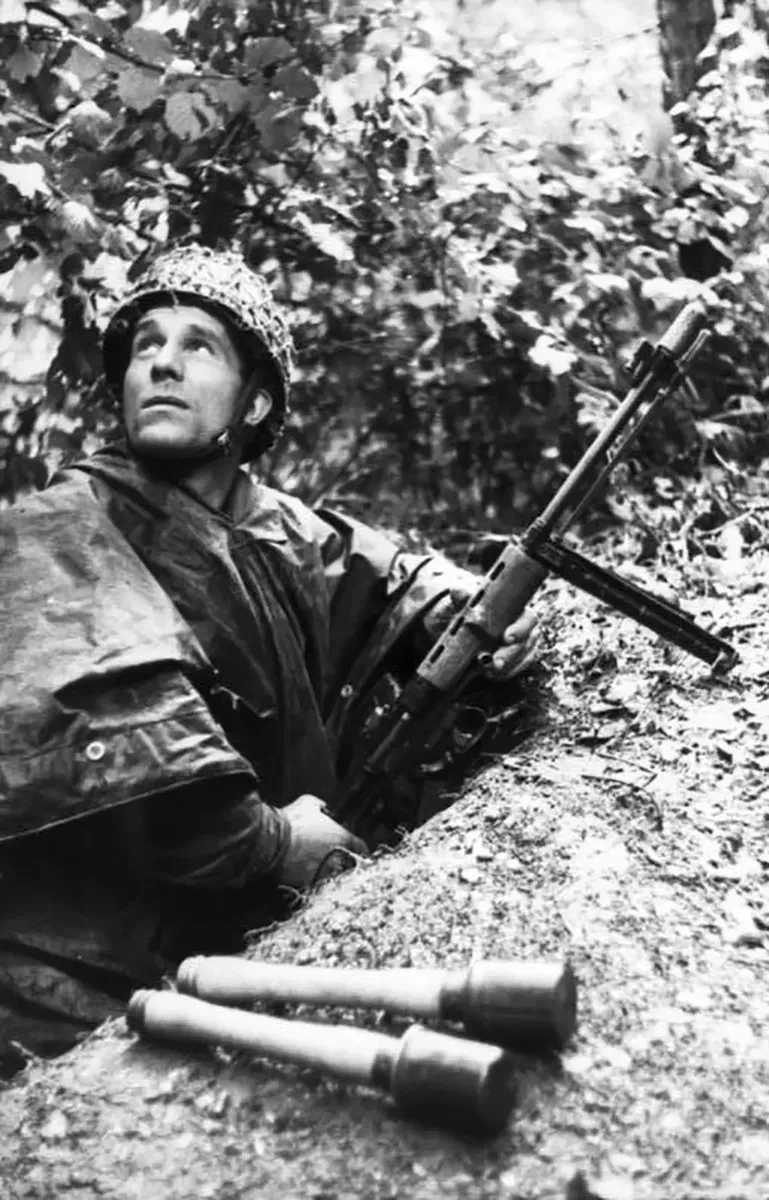
Photographer Arthur Grimm, a star of German military photography, a master of propaganda and accurate angles at the service of the regime, shot until the end of the war, until its last days, when the weapons of people's grenadiers at the Anhalt station, who were already close to Berlin, were entered into the lens, stately German women with bulky children The next massive bombing will open the doors of a giant bomb shelter - and a small rag doll on a dirty asphalt, motionlessly looking into the sky.
You are sitting at home, and the "new" - comes out!
Dear readers! Our editors, printing house and “Russian Post” work during quarantine. And most newspaper kiosks - no. Your support is important to us, but even more important is that you stay at home. Therefore, now is the time to issue a subscription to the "new newspaper." The postman will deliver it to your address! Sign yourself, parents, grandparents!
How to subscribe: instruction