
Translated material
Poisoned soul
In the signatures that Wundshammer took under his military photographs, his hostility is felt for a huge, sad, poorly living country
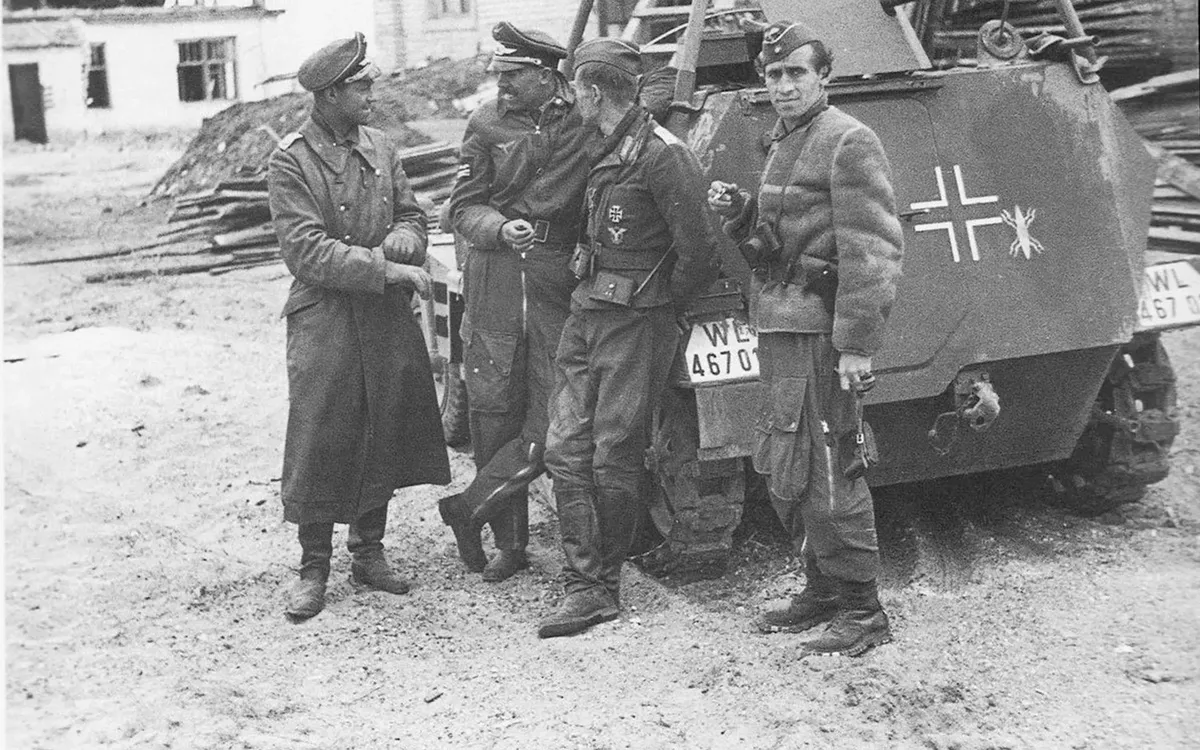
In the last years, Benno Wundshammer wrote a lot. Judging by several published passages, these were multi -page manuscripts in the genre of memories with thoughts - nostalgic memories with angry thoughts.
From the deep past, from the thirties of the fascist years, anti -Semitism crawled up from the depths of his soul - an animal feeling of hatred and the idea that they were to blame for everything.
Nobody wanted to print this in Germany, but Wundshammer, apparently, did not hope. Having fallen from the profession, which fell into poverty, almost poverty, who spent all the money on the treatment of a sick wife, the former Wehrmacht photographer and the top photographer of the Luftwaffe in his manuscripts did not get scores with the past-with the present.
In the present there was democratic Germany, with disgust, spoke of a criminal brown regime, in the present was a curse “fascist pig”, which left people like Wundshammer - and in the past there was a radiant of military adventures and a severe light of war youth.
I was going to read the Wundshammer manuscripts stored in the archive and had already ordered airline tickets and a hotel, but the pandemic prevented.
So they are stored there, forgotten, useless to anyone and almost read.
But the photos of Benno Wundshammer did not disappear and are not forgotten.
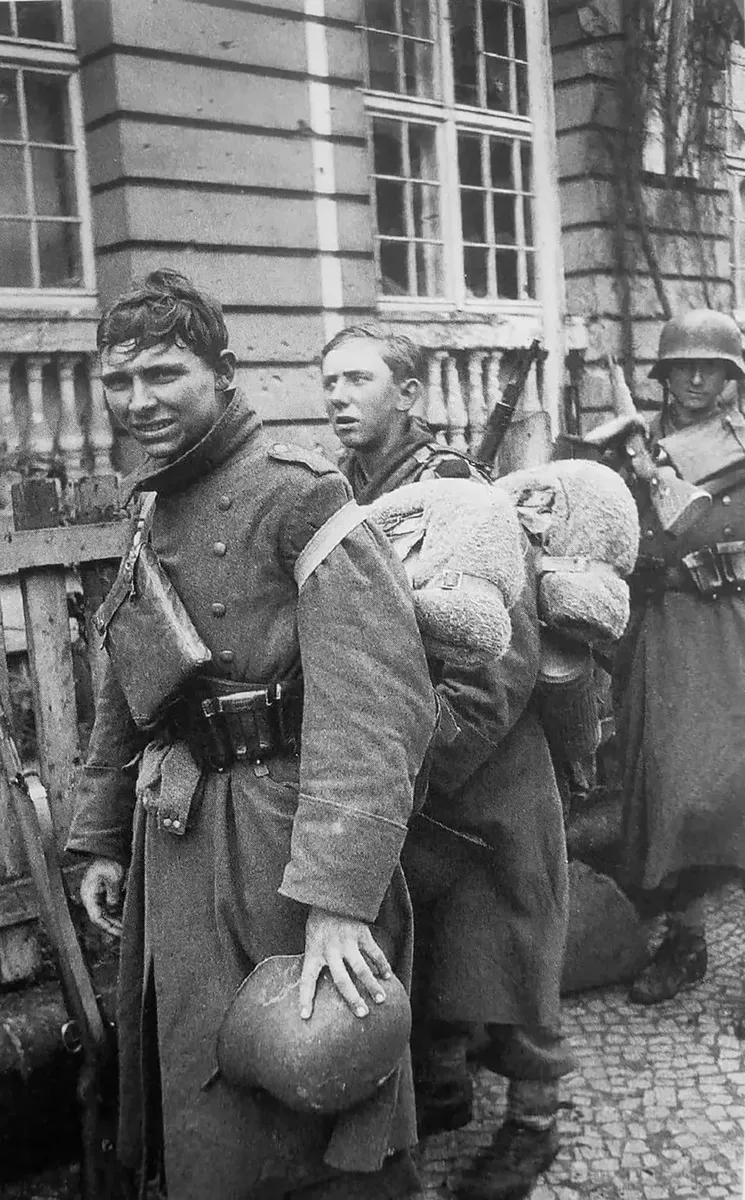
Before the war, he was a photographer as a photographer, one of many young reporters who shot sports, but the war threw him up and sent him to a stunning pause, stunning flights clogged with his impressions, during which he shot alive, dead, wounded, torn, half -rotten, miserable, miserable, terrible, terrible and engaged in the case of war of people. He himself was busy with a business, that is, he shot, removed and shot. In Lithuania, he took off a small Soviet soldier in a long overcoat, a wide step and with a suitcase in his hand, who was walking into German captivity in his hand, under Smolensk he took off four captive Soviet women (three in military uniforms, one in a coat), standing in a deep, viscous, impassable autumn mud, under Murmansk, when he laid snow, he removed the corpses of those killed last year. Red Army soldiers, and in Stalingrad, a small, tight-legged face of a refugee woman, knotted with a knot, putting a crust of bread in her mouth.
Quickly, very quickly Benno Wundshammer, who turned thirty in 1943, became an elite mouth of propaganda, in which 15 thousand people served. He was taken by a regular photographer in the magazine "Signal", which was published to spread outside Germany. Propaganda of a discharge in 27 languages; circulation of 2.4 million copies; The best photographers, the best printing houses, the best paper, a beautiful seal and always eight pages of color tab -
All in order to impress the foreign reader with the grand achievements of the Fuhrer, the optimism of the builders of the new world, the power of the Wehrmacht, the faces of the heroes of the war and the paintings of the terrible death of enemies.
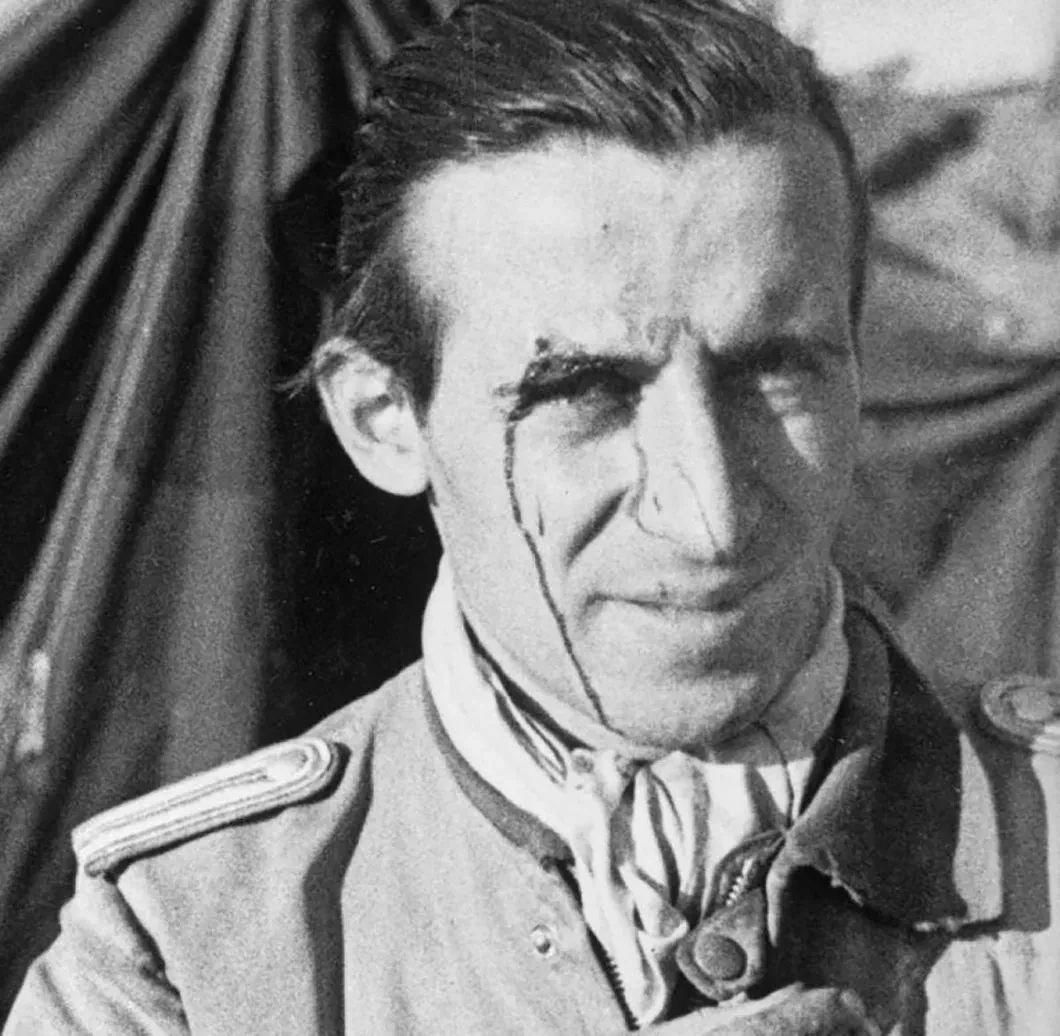
On self -portraits made during the years of unceasing movement and continuous business trips to different fronts, we see Wundshammer satisfied: with a pipe in the mouth, with a dandy white cap on the head, with a narrow bruise through the whole face after one of the departures in Stalingrad and even in a rampant robe in a chair at the beach, at the African theater of military operations, in the army, in the army. Rommel. Did he think about what was happening at all? How will it all end? No, this with cameras, accustomed to traveling on all modes of transport and sleeping every day in a new place, an easy man to climb, a person simply did a job that he liked: shot. Filmed well. I took off perfectly.
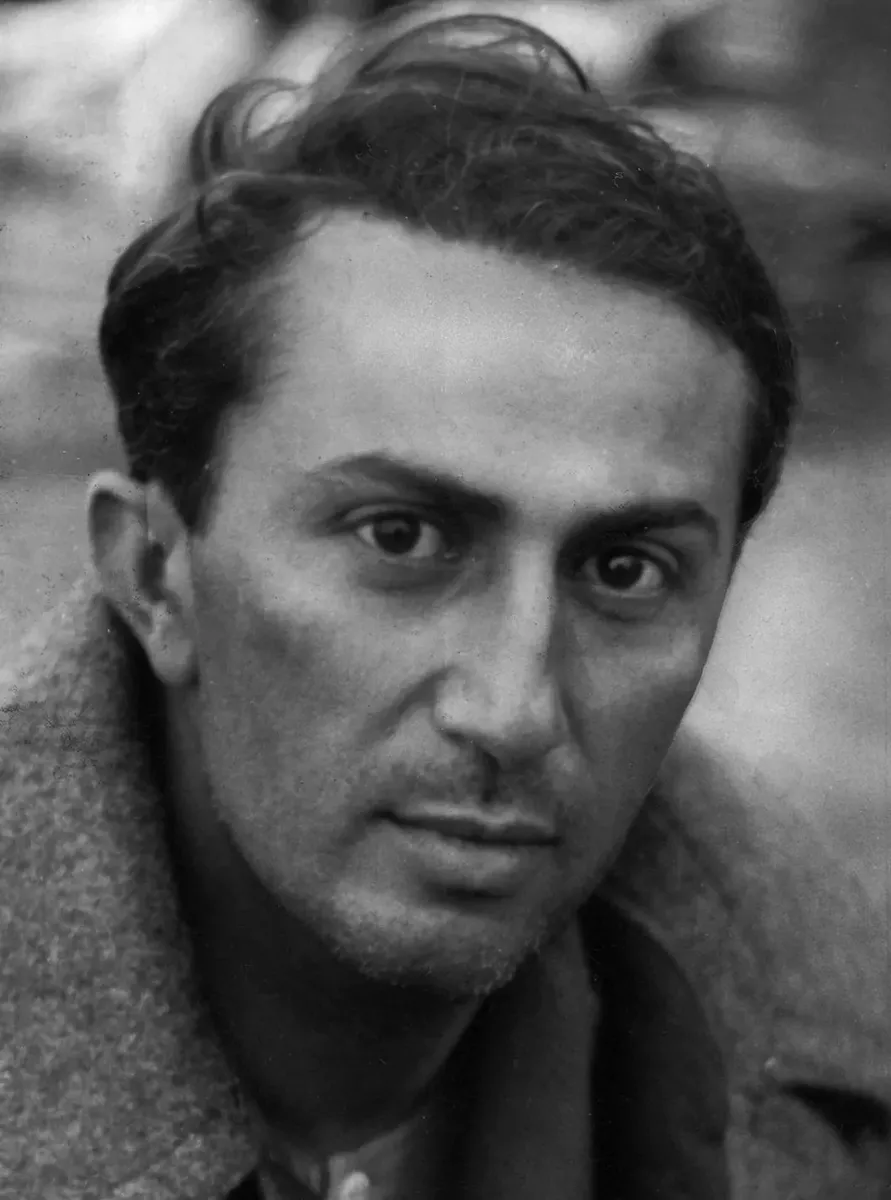
He was not a member of the party and after the war wrote that it just happened that he was born here and was a photographer on the side of Hitler, and he could be born there and be a photographer on the side of Stalin or on someone else and still shoot, shoot and shoot. Sitting in place of the shooter in the cabin of the junker-87 diving bomber, he clearly removed monotonous, dreary, flying under the wing of the fields, and on the ground he took off refugees who were harnessed to the carts with the belongings. Tinking with helmets, flasks, pots, trunks, the infantry goes in his photographs, and he shot it so that the heat of a summer day and the smell of sweat from hundreds of men literally poured from the black and white frame. Soon - or not very soon - many of them have to turn into corpses. He took off the corpses without fear and panic, with the skill of a professional who in any situation thinks about composition and light. And so they are scattered, confused, in a heap on the side of the road along which German technique passes, they were killed suddenly, their lives were suddenly interrupted, so they did not have time to exchange their eyes, or write a farewell letter to their mother, or at least turn to death to death. As ugly, notable, the death in the photographs of Benno Wundshammer, where the dead lie in random poses among the scattered things, flew caps, scattered papers, and sticking out of the bag of a non -useful gas mask.
Benno Wundshammer was in Stalingrad in the summer and autumn of 1942, when there was no question of the environment and death of the sixth army. The sixth army was advancing. In a cap, in a bike jacket, in wide pants with huge deep pockets, convenient to wear notebooks, pens, films, crackers and matches in them, with a gun in a holster on the side, with two cameras and with a cigarette in his hand, in excellent high boots, he was on the outskirts of a city intended for scolding. He also saw the city, again from above-from the cabin of the Junkers-87 bomber, flying over broken quarters, over the ruins of houses, over kilometers, walls without roofs, above the mountains of stone and crushed stone.
He removed the air - spacious, having length, height and depth, gray, smoky, smelling air of war, which smells of burning. He took off the flight of a lonely bomber over a bombed city, a raid by a small black airplane through a huge sky to a ground target. He was in this plane behind the pilot, on the place of the shooter, and then he then wrote in the sidelines of the photograph: "We dive."
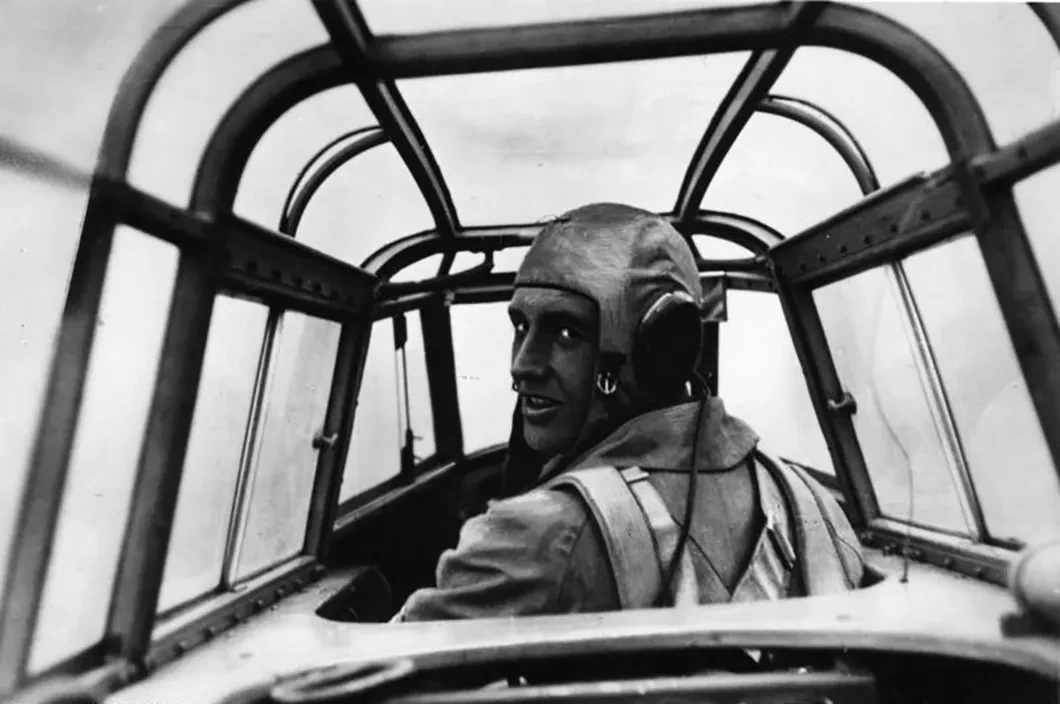
Turning back, over his shoulder, he looks at us with one of his photographs of the fall of 1942, an nameless German pilot-pikist from a narrow cabin of his plane. It was as if he was clamped in a muddy glass tunnel leading to the unknown of the nearest departure, to the close future of the war - a barely noticeable smile is read in the corners of his lips, and his eyes shine furiously in a dim hemose. He is a demon, he is a man who turned into a demon in his cramped, narrow, flying, with a howl falling in a peak and killing life.
In his other photographs, the frozen face of Major Ernst Kommer, the commander of the 2nd squadron of diving bombers Immelman. Wundshammer flew with him, in the cab behind him. It was not without reason that the major froze - the surgeons gathered him from shreds and debris after he was shot down. It seems that the pieces are stiff, chopped, purged skin stretched onto the frame. That's the whole face. A helmet with headphones, flight glasses raised upwards, twisted shoulder straps, visible from under the wide rough belts, a cross on a ring in the collar of a shirt-not only in the face, but in all this person there is not a random drop. Everything random in it is cut by the war. He was removed in the cabin of his car, his little thing, not because it happened, but because he lives on an airplane, he is merged with him, he is a living part of the mechanism. And in the narrow cracks gathered by surgeons, faces live.
After the war, Benno Wundshammer also had an excellent job, the same thing: he shot. His creative charge was not exhausted during the war, he was enough for several decades of the world. He became the fellow traveler of the pilot Hans Bertram on his trip around the world and delighted the German public with paintings by exotic eastern bazaars; He shot funny guys - Italian migrant workers in Wolfsburg, where the new German auto industry produced new "Volkswagen" (he also removed their assembly); And three girls who, holding their arms, walk against the backdrop of ruins along the destroyed streets, he photographed too. The war is over - people laugh. In the fifties, this indefatigable photographer continuously shot a revived life in all its charms, as on the frame, where a fashionable employee of a fashionable house, a laughing model in a lush skirt, put on a high -heeled box. He knew how to, this Benno Wundshammer, knew how to make the production and fashionable shooting and a portrait of the Adenauer politician, and two young actors kissing the actress, and in the foreground are glasses with wine, talking about the happiness of light secular life, which now has a place for consumption, travel, dancing, mods, and happiness. And if so, the ladies need swimwear - and the former military photographer, who was raising the corpses without a moment, now shot on the festive color film of luxurious German models in a bikini, whose tanned shoulders and legs absorbed so many sunlight.
But in the sixties, a generation came, who asked him and his peers: "Where were you, what did you do and how did you allow it all?" And it was impossible to get rid of them, telling military fairy tales about honest Wehrmacht and heroic guys. Wundshammer and the life that it became, entered the clinch. He could not accept the truth within himself that the whole seventies and eighties poured out from the pages of the German press - a documented truth about crimes, the truth about concentration camps and mass killings.
He refused to take the blame on himself. Germany took the blame for the war, but there is no Wundshammer.
Germany conducted denazification, and Benno Wundshammer? His later years turned him into an outcast, which lost contracts in the press and no longer shot, but lived in a small town on the southern outskirts of Bavaria and wrote his multi -page manuscripts. Maybe when the pandemic ends, I still get to them and read it completely and to the end of the story of his life, written and preserved by himself along with front notebooks, diaries, notes and negatives in the folders of the archive.
They did not judge photographers. I do not know a single case when, after the war, they would send at least one photographer from propaganda’s companies to the court. And really, what is the photographer to blame? With totalitarian modes, a person has no choice. He was called up, and he serves. If he is a born photographer, then he will shoot a war, and corpses, and prisoners, and his own, and the enemy. This was done by Wundshammer. Everything in him protested against himself guilty of the fact that he was a photographer of the Wehrmacht and Luftwaffe, because those who accused his generation did not understand and did not want to understand the time and conditions in which they had to live. He wanted respect and understanding, but received contempt, as if he was forever marked by a special seal: a photographer of the Nazi “signal”.
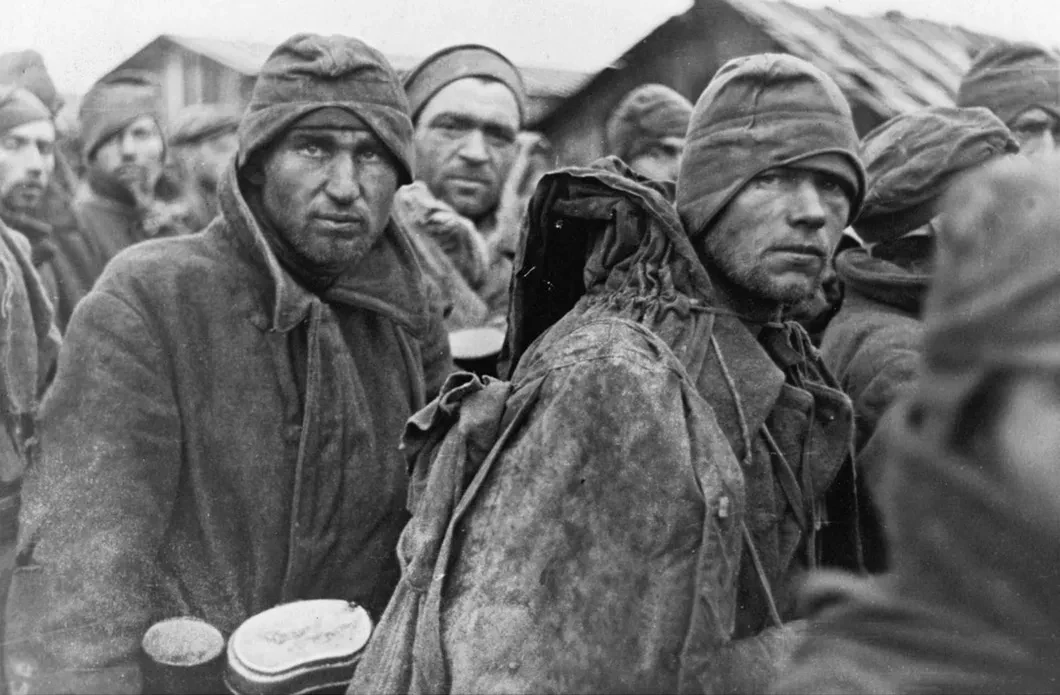
Horrible is his photographs of prisoners, an endless column of wandering to his death under the autumn sky. He made close -ups, portraits. These faces, seeing, will not forget. They are slowly raving in their rags, they are cold. You won’t forget a look that throws us from the fall of 1941 immersed in a dying darkness, a compatriot who already knows his fate. It is impossible to forget the tears and almost madness in the emaciated face of a frozen, unhappy person. Nowhere, Wundshammer did not say anything about his fault - he did not know his guilt. At the end of life, fascism and anti -Semitism appeared on it like cadaveric spots.
In the signatures that Wundshammer took under his military photographs, his hostility is felt to a huge, poor, dull in his fields, sad in his heaven, poorly living, rough, sighed in the mud of the country. In the west of Stalingrad, he photographed a small cemetery, where on the graves the gray unpretentious crosses and plywood with stars, and signed: “Heaps of land, sketched without love. The Bolsheviks have no food. ” Those with whom he fought, he called "Ivanov."
You are sitting at home, and the "new" - comes out!
Dear readers! Our editors, printing house and “Russian Post” work during quarantine. And most newspaper kiosks - no. Your support is important to us, but even more important is that you stay at home. Therefore, now is the time to issue a subscription to the "new newspaper." The postman will deliver it to your address! Sign yourself, parents, grandparents!
How to subscribe: instruction