
Translated material
Novosibirsks indefinitely extended the regime of "general self -isolation"
The regime of “general self -isolation” was indefinitely extended in the Novosibirsk region. It will remain during the "entire period of the regime of increased readiness." The authorities allowed to walk with families, opened cemeteries and markets in areas.
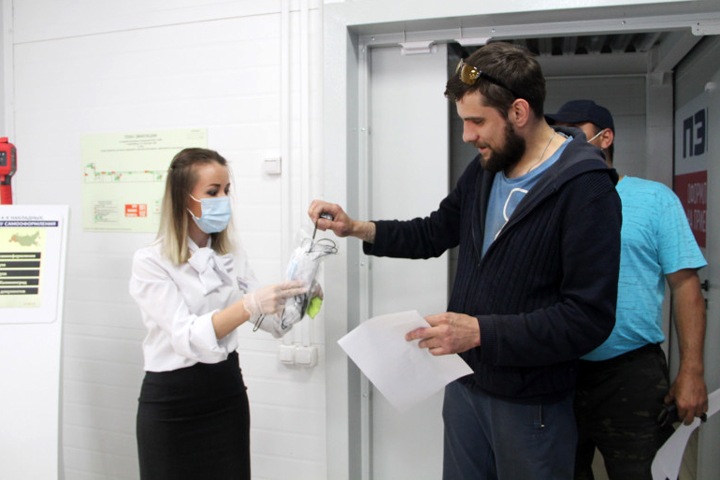
The Governor of the Novosibirsk Region Andrei Travnikov extended the “general self -isolation” for the Novosibirsk “for the entire period of validity of the increased readiness regime”. At a press conference, he specified that the power date was not established. In the decision to introduce an increased readiness regime, there is also no date of its end.
“No more than two people are allowed in sports and in compliance with the social distance, walks are allowed without visiting public places in the amount of no more than two people or as part of a family living at one address,” travikov told reporters on May 11.
Since May 12, it was allowed to resume the activities of food markets, with the exception of markets in Novosibirsk, as well as cemeteries. The governor promised to accept the decision to open other trading facilities "in the near future, after coordination."
In educational institutions, the distance learning regime was extended until the end of the school year.
At the end of March, the Novosibirsk governor introduced the regime of “General Self -Urination”, as all regions of Russia entered. (These measures are established by a separate resolution of the Governor in addition to the regime of the regime on high readiness)
Citizens are ordered not to leave their place of residence with the exception of:
Cases of seeking emergency medical care and cases of direct threat to life and health.
Following the place of work in an organization whose activities are not suspended by decree of the President of the Russian Federation.
Following "the nearest place of acquisition of primary necessity, work, services."
Walking pets at a distance not exceeding 100 meters from the place of residence.
Garbage removal.
Taiga.info told in detail which institutions and companies do not fall under the restrictions on the “mandatory self -isolation” regime. Since April 6, the list of companies that can work has expanded at the expense of industry, construction, mining and manufacturing. On April 11, restrictions were canceled for some companies.
The courts began to fine residents of the Novosibirsk region 20.6.1 Administrative Code of the Russian Federation (failure to fulfill the rules of conduct in an emergency or a threat of its occurrence). The federal authorities introduced it on April 1, 2020 under the pretext of fighting the Pandemia of Coronavirus. Its first part involves fines for citizens from 1 thousand to 30 thousand rubles, for officials - from 10 thousand to 50 thousand rubles, for legal entities - from 100 to 300 thousand rubles. According to its second part , implying proven harm to health or property, fines are even higher. The article implies liability for "failure to fulfill the rules of conduct in the introduction of an increased readiness regime in the territory in which there is a threat of emergency or in the emergency zone." The high readiness regime in the region is formally established on March 18.
On March 25, due to the pandemic of Koronavirus, P-PF President Vladimir Putin signed a decree on “non-working days”, which was supposed to end on April 4. On March 31, almost all regions of Russia introduced the regime of the so -called "general self -isolation." The regional authorities introduced restrictions on their own regulatory acts, but decisions were made after Putin’s meeting with plenipotentiaries in federal districts. Citizens, depending on the formulations, were “prescribed”, “recommended” or in a different form asked to stay at home and not to leave housing without extreme necessity: going to hospitals, shops and in order to throw garbage, walks with pets in a certain radius from the house, as well as to work, which is not limited by the presidential decree .
On April 2, Putin decided to extend the regime of “non-working days while maintaining salaries” until April 30 due to the pandemic of coronavirus, but transferred decisions to the regions to extend or terminate quarantine measures. In some regions, the regime has already been extended, in others they resume the work of some companies. Later, the regime was extended until May 12.
The authorities did not introduce an emergency regime, which allows business and residents to suspend obligations in connection with force majeure. The state did not provide direct financial assistance to citizens limited to credit holidays, the possibility of interest -free loans for paying salaries, deferred fines and penalties for delaying payments for housing and communal services. Moscow mayor Sergei Sobyanin, for example, said : "Budgets are cracked, they will not even be able to provide a healthcare system and so on."